Journal Home Page
OPEN ACCESS
Patient Rights Safeguards and Conditional Acceptance of AI Assisted Diagnosis in Bangladesh
| Jarin Tasnia Risha ORCID: https://orcid.org/0009-0006-5159-7929 Md Al Roman ORCID: https://orcid.org/0009-0005-8224-8556 Ikhtiar Uddin Tamim ORCID: https://orcid.org/0009-0002-1576-0929 Department of Law Shanto-Mariam University of Creative Technology Dhaka, Bangladesh |
| Prof. Dr Kazi Abdul Mannan Department of Business Administration Faculty of Business Shanto-Mariam University of Creative Technology Dhaka, Bangladesh Email: drkaziabdulmannan@gmail.com ORCID: https://orcid.org/0000-0002-7123-132X |
| Corresponding author: Jarin Tasnia Risha: jarintasniarisha@gmail.com |
Rev. med. surg. dent. 2026, 5(4); https://doi.org/10.64907/xkmf.v5.i4.rmsd.1
Submission received: 20 September 2026 / Revised: 25 October 2026 / Accepted: 28 October 2026 / Published: 30 October 2026
Download PDF (590 KB)
Abstract
Acceptance of artificial intelligence in diagnosis raises questions about what people consider useful and which patient safeguards they endorse. This study examines their relationship in 385 adult, AI-aware questionnaire records supplied as empirical data from Bangladesh. Five diagnosis-and-rights statements are analysed separately because their content and low block reliability do not support a validated common acceptance scale. Response distributions, paired endorsement contrasts, eight combinations of rights preferences, Spearman correlations and exploratory logistic models distinguish professional usefulness, information, questioning, human judgement and conditional acceptance. The statement that patient-rights safeguards increase acceptance received 81.6% endorsement, compared with 56.9% for usefulness when AI supports qualified professionals. Information about material AI involvement received 81.0%, opportunities to ask questions 57.7%, and continuing human clinical judgement 63.9%. All three specific safeguards were jointly endorsed by 32.7%. Information preference had a small positive rank association with conditional acceptance after Holm correction. Adjusted information and questioning coefficients were positive but uncertain after correction and sensitivity checks. The findings identify differentiated endorsement of safeguards rather than an observed effect of rights protection on service uptake. They suggest evaluating communication as an opportunity for participation, not merely notification, while keeping normative rights distinct from an adoption strategy. Mixed respondent status, absent verification of patient experience, undocumented recruitment and fieldwork dates, and unresolved Codebook provenance labels restrict generalisation. The study provides an item-specific basis for further research connecting patient communication, professional oversight and conditional acceptance without claiming clinical effectiveness or tested legal knowledge.
Keywords: patient participation; diagnostic support; artificial intelligence; informed communication; conditional acceptance; health law; Bangladesh
1. Introduction
Artificial intelligence can support diagnosis through pattern recognition, information processing and decision support. Its potential usefulness depends on the task, evidence and clinical workflow rather than its description as intelligent. Accounts of the convergence of human and artificial intelligence in medicine emphasise opportunities that extend beyond replacing professional judgement.[1] The relevant governance question is how a tool is used within care, who evaluates its output and how patients participate in decisions that affect them.
The distinction between technical promise and benefit in practice is substantial. Research on implementation identifies challenges in translating models into clinical services, while reviews of AI-versus-clinician studies caution about design, reporting and claims.[2] Public acceptance is a different outcome again. A favourable survey response cannot validate diagnostic accuracy, establish safety or show that a service improves patient outcomes. This article concerns perceptions and safeguard preferences, not the clinical performance of an AI system.
Patient rights introduce obligations and interests that cannot be reduced to willingness to adopt technology. Information, opportunities to question recommendations and access to professional judgement matter to the quality of participation in care. WHO’s Patient Safety Rights Charter provides a normative reference for considering patients’ interests in safe care and supported decision making.[3] Whether respondents endorse these principles, know their legal position or actually experience them are separate empirical questions.
The supplied questionnaire places perceived usefulness, patient information, questioning, continuing human judgement and safeguard-related acceptance within one five-item block. Each statement has a different object. Usefulness asks whether AI can help when supporting qualified professionals. Information and questioning concern what patients should be able to know or do. Continuing human judgement concerns the availability of professional input. The final item asks whether safeguards increase the respondent’s acceptance. Combining them automatically would obscure those distinctions.
In particular, conditional acceptance is not equivalent to current use or unrestricted consent to AI-assisted care. A respondent can agree that safeguards make a technology more acceptable while remaining uncertain that the technology is useful. Similarly, endorsing notification does not establish endorsement of an interactive opportunity to question a recommendation. These combinations are substantively meaningful and should remain visible rather than being treated as measurement error merely because they complicate an adoption model.
The original topic also refers to patient-rights awareness. The instrument, however, contains no scored assessment of knowledge of Bangladeshi law, no identification of specific legal provisions and no check that respondents can use a remedy. Its statements mostly measure preferences or normative expectations. The title and analysis are therefore framed around safeguards and conditional acceptance. This follows the evidence available and avoids interpreting agreement with an ethical principle as verified legal literacy.
Research on acceptance of medical AI has already identified the importance of the care relationship and the way automation is presented. Longoni, Bonezzi and Morewedge examine resistance to medical AI and concerns about whether individual circumstances are recognised.[4] Cadario, Longoni and Morewedge distinguish subjective understanding from understanding of the actual decision process.[5] These findings motivate precise questions about what a safeguard communicates, rather than a presumption that more information always produces appropriate trust.
The present contribution concerns differentiation within a shared survey instrument. It examines whether the respondents who endorse information also endorse questioning and human judgement, and whether a statement linking safeguards to acceptance attracts the same responses as a statement about usefulness. Such comparisons do not identify which safeguard causes acceptance. They establish whether the questionnaire provides grounds for treating those judgements as one coherent preference.
This focus also distinguishes the article from a determination of responsibility for medical errors or an analysis centred on data-privacy trust. The corresponding questionnaire blocks inform context and selected supporting analyses, but they are not combined into a broad model of every governance concern. The principal object is the relationship between patient participation, human judgement and conditional acceptance of diagnosis support. The resulting account is narrower than a claim about all healthcare users in Bangladesh, but more closely aligned with the actual questions.
The objective is to describe the five focal statements and examine how specific safeguard preferences relate to rights-related conditional acceptance. RQ1 asks how usefulness, information, questioning, human judgement and conditional acceptance are distributed. RQ2 asks how their selected endorsement differences and joint patterns compare within respondents. RQ3 asks whether preferences for information, questioning and human judgement are associated with conditional acceptance on the ordered scales. RQ4 asks how selected associations change after adjustment and alternative response coding.
The analysis is exploratory rather than preregistered. The framework guides comparisons among measured statements; it does not create unmeasured mediators, assume a latent rights-awareness score or treat acceptance as evidence of legal compliance. Section 2 develops the conceptual foundation, Section 3 explains data and methods, and Section 4 reports findings. Sections 5 and 6 address interpretation and implications. Section 7 sets out limitations and future research, followed by declarations and exact item wording.
2. Literature Review and Theoretical Foundation
The literature review brings together clinical-AI acceptance, patient participation and governance. The Health Belief Model, accountability analysis and privacy calculus offer selective interpretive perspectives. Their role is to clarify the questions raised by the instrument, rather than to imply that all their constructs were measured. The review distinguishes evidence about respondents’ attitudes from ethical guidance, legal requirements and clinical evaluation.
2.1 Usefulness and the human role in diagnostic support
AI-assisted diagnosis describes assistance within a clinical process, not necessarily autonomous diagnosis. The amount of assistance may vary from prioritising information to recommending an interpretation. The clinician’s ability to assess that contribution depends on the system, the task and the setting. A general claim that AI supports qualified professionals is consequently broader than a judgement about the suitability of a named diagnostic service for a particular person.
Topol discusses medicine in terms of the convergence of human and machine capabilities.[6] That perspective makes collaboration a relevant object of inquiry, but does not establish that every collaboration is beneficial. Gaube and colleagues’ study of clinical decision aids illustrates the importance of how people respond to recommendations.[7] Preserving a human in the workflow is not itself proof that the person can recognise an error, challenge the system or obtain the information needed to decide independently.
This distinction separates DPR1 from DPR4. The usefulness statement assesses a supportive role for AI, whereas the human-judgement statement asks whether clinical judgement should remain available for important decisions. Agreement with one does not logically require the same response to the other. Someone may be unsure of usefulness yet favour human review if AI is deployed. Another may regard AI as useful while interpreting the availability of human judgement in a more limited way. The survey does not explain individual motives, so those possibilities remain hypotheses rather than findings.
Clinical evaluation guidance addresses questions beyond favourable attitudes. DECIDE-AI concerns early-stage live evaluation of AI decision support, while FUTURE-AI provides an international consensus guideline for trustworthy and deployable healthcare AI.[8] These are relevant references for later implementation research. The current questionnaire is not a clinical evaluation and cannot substitute for studies of safety, workflow, performance or patient outcomes.
2.2 Acceptance and the patient perspective
Acceptance can mean willingness to consider a technology, intention to use a service, consent to a specific procedure or actual uptake. These outcomes differ in commitment and context. The DPR5 statement is a self-assessment that patient-rights safeguards increase acceptance. It does not provide a baseline acceptance level, specify a package of safeguards or present a real choice between services. It therefore measures a perceived conditional relationship, not a change observed before and after protection is introduced.
The systematic review by Young and colleagues examines patient and public attitudes towards clinical AI across different study designs and settings.[9] It provides a reason to consider context and heterogeneity rather than assume one universal acceptance response. The present sample likewise includes several recorded statuses and does not establish that respondents have personally used AI-assisted diagnosis. Results are consequently described as adult questionnaire judgements about care rather than patient experience of an existing service.
Experimental work by Longoni and colleagues examines how resistance can relate to concern that medical AI overlooks individual circumstances.[10] This offers an explanation to investigate, not a mechanism established by the current items. There is no measure of perceived uniqueness or perceived individualisation in the workbook. A distinction between usefulness and safeguard-related acceptance cannot be labelled evidence of uniqueness neglect without measuring it.
There is also a normative boundary. Even if a safeguard did not increase willingness to use AI, that would not establish that it is unnecessary. A duty to inform or protect confidential information may stand independently of its effect on uptake. Acceptance research can help identify understanding and concerns, but it should not make patient rights contingent on producing a commercially desirable response.
2.3 Information and the opportunity to ask questions
Disclosure addresses whether people are told that AI materially contributes to a decision. Participation asks whether they can interrogate the recommendation and receive a meaningful response. A notice may be clear but leave no route for clarification. Conversely, a conversation may reveal uncertainties that a short disclosure cannot communicate. These are distinct features of care and should be measured as such.
Park’s web-based experiment examines what patients consider relevant in informed consent for medical AI.[11] The study illustrates that disclosure preferences can be investigated with specified information and decisions. It does not establish that the same preferences hold in Bangladesh or that the present broad information item measures valid consent. DPR2 asks whether patients should be informed; it does not assess comprehension, voluntariness or an actual permission process.
DPR3 separately asks about opportunities to question AI-assisted recommendations. The exact wording does not establish a requirement to reveal source code or provide a complete technical explanation of a model. Clinically relevant communication might instead concern the purpose of the tool, uncertainty, alternatives and the professional’s responsibility. An opportunity to ask matters only if someone can respond in a way the patient can understand; that organisational capacity is not measured here.
Research by Cadario and colleagues distinguishes perceived understanding from objective understanding in medical AI.[12] Ghassemi, Oakden-Rayner and Beam also caution against treating current explainability approaches as a sufficient solution to healthcare-AI concerns.[13] Together, these contributions motivate evaluating what an explanation enables a person to do. Neither supports assuming that more detailed technical information necessarily improves understanding or justifies confidence.
2.4 Accountability and privacy as related governance concerns
Accountability concerns relationships in which actors explain and justify conduct to a forum with opportunities for questioning and consequences. Bovens provides an analytical framework that makes those institutional relationships explicit.[14] In AI-supported care, a complaint route, a responsible clinical team and records of decisions are different components of that architecture. An endorsement of accountability does not establish that any of them exists or functions effectively.
The supporting AME4 item concerns access to complaint and remedy mechanisms after harmful errors. It is relevant because participation before a decision and redress after harm concern different stages. The instrument does not determine whether a particular clinician, organisation or developer is legally liable. It also does not document an actual complaint, injury, contractual relationship or adjudicated decision. Those questions require a separate legal and factual analysis.
Privacy calculus examines decisions that weigh perceived benefits against privacy risks. Dinev and Hart develop this approach in an e-commerce setting.[15] Applying it to health requires care: sensitive information, dependency on care and unequal alternatives can change the meaning of a choice. The present privacy-concern item records concern about unauthorised data use, while the protection item records an expectation of safeguards. Low concern is not the same as consent, and high concern is not proof of a breach.
WHO’s guidance on AI ethics and governance recognises autonomy, safety, accountability and data interests within a broader framework.[16] Its regulatory considerations address the governance of healthcare AI.[17] These materials provide normative and regulatory context, not evidence that the questionnaire has validated a single “ethical acceptance” construct or that any surveyed respondent knows the guidance.
2.5 Theoretical integration and measurement boundaries
The Health Belief Model offers a framework for considering perceived benefits, barriers and health-related motivations. Janz and Becker’s review is a foundational account of its empirical development.[18] The usefulness statement can be discussed as a benefit judgement, but the questionnaire does not specify a condition or measure all relevant susceptibility, severity, cues and action-specific beliefs. The analysis therefore does not present a full test or extension of the model.
An accountability perspective asks who should explain decisions and how questioning or redress operates. Privacy calculus directs attention to the perceived conditions under which information use is acceptable. In this study, these perspectives inform the distinction between a potentially useful diagnostic aid, expectations about participation and a statement linking safeguards to acceptance. They do not establish a causal sequence merely because the concepts can be organised in one diagram.
The same distinction applies to psychometric models. A reflective scale assumes that indicators are manifestations of a common underlying variable under specified conditions. Statements about usefulness, disclosure, participation, human judgement and conditional acceptance are not interchangeable by definition. Low alpha cannot itself prove their dimensional structure, and high alpha would not establish conceptual validity either. Sijtsma’s critique supports treating alpha as limited evidence rather than an automatic certification.[19]
The appropriate strategy is consequently to retain the individual statements, report their distributions and examine selected associations. No reverse scoring, latent patient-rights awareness score, mediation pathway or moderation by an unmeasured institutional feature is imposed. The theoretical contribution is to clarify what needs measuring before such claims could be tested reliably.
2.6 Bangladesh legal and professional context
Domestic professional and statutory materials must be distinguished from international guidance. BMDC publishes a medical-ethics declaration expressing commitments to autonomy, dignity, confidentiality and patient wellbeing. Its telemedicine guidance separately addresses medical ethics, privacy and confidentiality in that setting.[20] The latter is used here as a professional reference for digital care, not as a comprehensive AI-specific statute applicable to every possible diagnostic application.
The official legal database identifies the Personal Data Protection Act 2026, Act No 63, as replacing the earlier ordinances. Its text addresses purpose-related disclosure and security measures, with commencement provisions that distinguish certain sections.[21] The English title here is a descriptive translation of the authoritative Bangla title. The article does not infer that every regulatory mechanism was operational during an undocumented fieldwork period or resolve all exemptions and sector-specific interactions.
These sources support a legally informed discussion, but the survey itself does not assess compliance. No respondent’s data-processing arrangement is described, and no actual diagnostic consent or breach is evaluated. Similarly, an international charter does not become a directly enforceable domestic entitlement merely because it provides a useful benchmark. The discussion therefore identifies recommendations and ethical expectations without presenting them as tested findings about the legal position of individual patients.
2.7 Exploratory framework
Figure 1 identifies the measured outcome and four focal predictors. Conditional acceptance, DPR5, is examined in relation to information, questioning, continuing human judgement and privacy concern, with limited adjustment for training and student status. Usefulness remains a separate descriptive and paired-comparison item rather than being merged into the outcome.
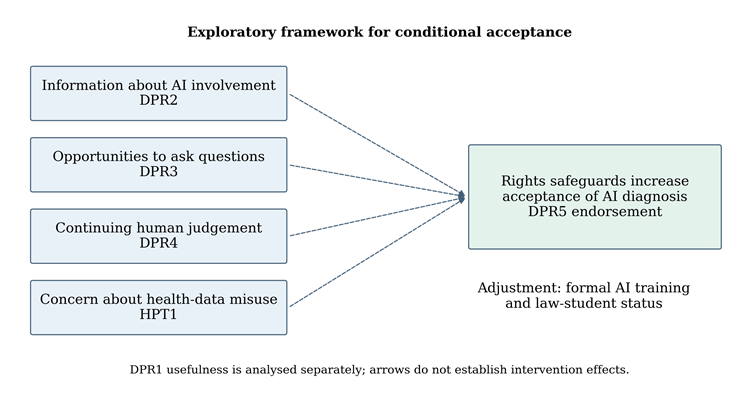
Figure 1. Exploratory framework for rights-related conditional acceptance
Dashed links denote selected conditional associations. The outcome records a statement about safeguards, not observed service uptake. Usefulness and the eight specific-rights response patterns are analysed separately; no causal mediation or moderation is estimated.
The framework leaves competing explanations open. Information and questioning preferences could align with safeguard-related acceptance, but respondents may also endorse a broad safeguard principle without endorsing every specified component. Privacy concern could increase demand for protection, reduce willingness to rely on a service or have little relation to this broadly worded outcome. The analysis estimates those selected relationships rather than asserting that all governance preferences must increase adoption.
3. Methodology
The study uses a quantitative cross-sectional analysis of 385 questionnaire records supplied by the researchers as real data from Bangladesh. It describes perceptions and preferences; no diagnostic model, treatment decision or clinical intervention is evaluated. Reporting separates the numerical records, author-confirmed ethical procedures and fieldwork details not documented in the supplied materials, consistent with observational reporting principles.[22]
3.1 Population and analytical scope
All records affirm consent, adult eligibility and relevant AI awareness. Recorded status comprises 118 law students, 52 law graduates, 61 advocates or legal professionals and 154 other relevant respondents. These categories are not verified patient, clinician or hospital-user roles. The analytical population is therefore a mixed group of adult respondents, not a nationally representative patient sample. A student-restricted sensitivity analysis is reported without relabelling the other categories.
The workbook includes demographic categories, general AI-use experience, training and agreement items. It does not document personal exposure to AI-assisted diagnosis, current illness, a specific healthcare encounter or a particular hospital. “Acceptance” refers to the wording of the statement, not observed service use. “Patient-rights safeguards” describes the topic of the preferences and does not imply that participants passed a test of legal knowledge.
3.2 Sampling target and provenance
Using Cochran’s large-population expression with Z = 1.96, p = 0.50 and e = 0.05 gives 384.16, rounded to 385.[23] This is a conventional planning calculation under sampling assumptions; it does not show that random sampling occurred or establish a national margin of error. The 385 available rows are the analytical dataset. No number of invitations or response rate is inferred from the planning target.
Recruitment dates, distribution channels, a sampling frame and named recruitment sites are not documented. Demographic location categories do not establish where fieldwork was conducted. No separate pilot responses, completion-time results or recorded questionnaire revisions are available, so no completed pilot is claimed. The analysis does not retrospectively replace missing procedural information with a preferred sampling design.
The Codebook describes the identifier sequence and optional contextual comments as synthetic. The numerical answers were supplied as real data; those two labels alone do not establish that the numerical responses were simulated. Comments are excluded and IDs serve only to distinguish rows. The documentation inconsistency requires reconciliation with original collection records, and all analyses are conditional on the supplied numerical data. Statistical screening cannot independently authenticate recruitment.
3.3 Questionnaire and measurement decisions
The instrument uses five ordered categories from strongly disagree to strongly agree and contains four five-item blocks: AI literacy and responsible use, diagnosis and patient rights, accountability for errors, and health-data privacy and trust. Table 1 identifies the focal statements and the limits of their interpretation. Appendix A provides exact wording for all items analysed. The source is the supplied Codebook; no unverified adaptation from a validated scale is asserted.
Table 1. Diagnosis and patient-rights statements and their interpretation
| Item | Focus | Analytical meaning |
| DPR1 | Usefulness when supporting qualified professionals | Perceived usefulness; not observed service use |
| DPR2 | Information about material AI contribution | Normative disclosure preference; not demonstrated consent |
| DPR3 | Opportunity to ask questions | Participation preference; not an observed encounter |
| DPR4 | Human judgement remains available | Preference for clinical access; not a safety assessment |
| DPR5 | Safeguards increase acceptance | Self-reported conditional relationship; model outcome |
Source: supplied Group 12 Codebook. Exact focal and supporting statements appear in Appendix A. No validated overall acceptance or rights-awareness score is assumed.
Five-item coefficient alpha is 0.268 for AIL, 0.319 for DPR, 0.242 for AME and 0.238 for HPT. These values do not justify treating the blocks as validated reflective scales. Alpha is not a test of dimensionality.[24] Given the distinct wording and weak coherence, the analysis reports items separately. It does not estimate SEM paths, composite reliability, AVE, HTMT or a latent awareness score. No item is deleted to improve a preferred association.
3.4 Data screening and retention
All focal responses and model covariates are complete. Twenty-two entries in the optional AI-tool field are missing; that field is not used in the focal analyses. No exact duplicate is found after removing the identifier and contextual-text fields. Six records have a constant response across the DPR block, and none is constant across all 20 agreement items. Constant endorsement across related preferences is not sufficient evidence of careless responding, so those records remain.
There is no scored attention task or timing information. The checks describe coding consistency rather than independently verified participant identity. All 385 observations are retained without imputation, weighting or outcome-dependent exclusions. The original response values are preserved. These decisions support reproducibility while leaving recruitment and measurement limitations visible.
3.5 Descriptive and joint-response analysis
Items are reported using full category counts, means, standard deviations and endorsement proportions. Endorsement combines agree and strongly agree, while neutral responses remain explicit. Pointwise Wilson intervals are supplied under conventional sampling assumptions and do not resolve selection bias.[25] Means and standard deviations describe numerical codes; they do not establish equal psychological distances between categories.
Four paired contrasts compare usefulness with conditional acceptance, information with questioning, information with human judgement, and privacy protection with privacy concern. Exact McNemar tests use discordant pairs; Holm correction covers the four comparisons.[26] Pointwise percentile intervals for percentage-point differences use 10,000 whole-respondent bootstrap resamples.[27] Different wording prevents treating any contrast as an effect of adding a safeguard.
The eight combinations of endorsement for information, questioning and human judgement are also reported. A “not endorsed” position includes neutrality and disagreement rather than opposition alone. The combinations are descriptive patterns, not estimated psychological classes, evidence of actual rights provision or an ethical ranking of respondents.
3.6 Correlations and adjusted analysis
Six selected Spearman correlations retain the ordered item categories. Pointwise bootstrap intervals use 3,000 respondent resamples, with Holm correction across the six tests. The primary adjusted model is binomial logistic regression of DPR5 endorsement, including information, questioning, human judgement, privacy concern, any formal training and law-student status.[28] The four focal agreement items retain their original 1-5 coding; binary covariates compare any training with none and students with other statuses.
The outcome has 314 endorsements and 71 other responses. Heteroskedasticity-robust HC0 sandwich covariance estimates provide pointwise Wald intervals.[29] Holm correction covers the four focal coefficients; the two adjustment variables remain descriptive. Collinearity and model convergence are checked. The specification is exploratory and is not a causal adjustment set or a validated prediction tool.
An ordinal proportional-odds model uses all four observed DPR5 categories as a sensitivity analysis, with observed-information intervals and a separate four-coefficient Holm correction.[30] It assumes common slopes and linear one-point predictor effects. A student-only binary model removes the constant status indicator; it has 118 observations and only 23 non-endorsements, so its estimates warrant particular caution. It is an overlapping sensitivity check, not independent validation. Analyses use Python, pandas, NumPy, SciPy and statsmodels.
3.7 Ethical considerations
Ethical approval for this study was obtained from the Center for Academic & Professional Career Development and Research (CAPCDR), an external institutional body, under approval reference CAPCDR: SMUCT/LLB/SS-0020260908-19. External ethical review was sought because Shanto-Mariam University of Creative Technology does not have an institutional ethics committee responsible for reviewing this type of research.
The authors confirm informed consent before completion, voluntary participation, anonymity and the opportunity to discontinue. All analysed records affirm consent and adult eligibility. The analysis reports aggregates, excludes optional comments and does not seek to identify individuals. It neither uses medical records nor evaluates individual treatment. Discontinuation is not represented as an assurance that an already anonymous submitted record can be located and removed. These safeguards do not establish representative sampling or resolve the source-documentation limitations.
4. Results
The findings concern agreement with the supplied statements. They distinguish marginal endorsement, combinations of specific preferences and conditional associations. Percentages use N = 385 unless another denominator is given. No result is interpreted as evidence that respondents received AI-assisted care or experienced a violation of patient rights.
4.1 Respondent profile
Table 2 describes recorded status and training. These variables locate the sample analytically; they do not verify professional competence, patient status or recruitment through healthcare services. The full sample is retained because the research question concerns the available adult responses rather than an assumed all-student population.
Table 2. Recorded status and AI training
| Measure | Category | Count (%) |
| Recorded status | Other relevant respondent | 154 (40.0%) |
| Law student | 118 (30.6%) | |
| Advocate or legal professional | 61 (15.8%) | |
| Law graduate | 52 (13.5%) | |
| Formal AI training | No | 216 (56.1%) |
| Yes, short orientation | 122 (31.7%) | |
| Yes, course or certified training | 47 (12.2%) |
N = 385. The law-student subset has 118 observations. Status does not establish patient identity or personal experience of AI-assisted care.
The largest status category is other relevant respondents, 154 (40.0%), followed by law students, 118 (30.6%), advocates or legal professionals, 61 (15.8%), and law graduates, 52 (13.5%). There are 208 male respondents (54.0%), 164 female respondents (42.6%), nine preferring not to say and four recorded as other. The largest age group is 21-23 years, 150 (39.0%), followed by 24-26 years, 98 (25.5%).
Dhaka is recorded for 147 (38.2%), district towns for 104 (27.0%), other city corporations for 71 (18.4%), upazila or rural areas for 52 (13.5%) and other locations for 11. Weekly or daily AI use is reported by 269 (69.9%), while 13 report never using AI. Formal training is absent for 216 (56.1%); 122 report a short orientation and 47 a course or certified training. Tool-use experience and awareness eligibility are different questions.
4.2 Diagnosis and rights statement distributions
Table 3 reports all five focal distributions. Conditional acceptance and information receive the highest endorsement, whereas usefulness and opportunities to ask questions attract substantially more neutral responses. The statement content must remain part of the interpretation of these differences.
Table 3. Distributions of the five diagnosis and rights statements
| Item | Counts 1 / 2 / 3 / 4 / 5 | Mean | SD | Endorsed n (%) | 95% CI (%) |
| DPR1 | 3 / 19 / 144 / 166 / 53 | 3.64 | 0.81 | 219 (56.9%) | 51.9 to 61.7 |
| DPR2 | 0 / 7 / 66 / 177 / 135 | 4.14 | 0.76 | 312 (81.0%) | 76.8 to 84.6 |
| DPR3 | 2 / 27 / 134 / 148 / 74 | 3.69 | 0.88 | 222 (57.7%) | 52.7 to 62.5 |
| DPR4 | 1 / 20 / 118 / 187 / 59 | 3.74 | 0.79 | 246 (63.9%) | 59.0 to 68.5 |
| DPR5 | 0 / 3 / 68 / 182 / 132 | 4.15 | 0.73 | 314 (81.6%) | 77.4 to 85.1 |
N = 385. Categories 1-5 run from strongly disagree to strongly agree. Endorsement combines agree and strongly agree. Wilson intervals are pointwise; means and SDs are descriptive.
DPR5, the statement that safeguards increase acceptance, is endorsed by 314 (81.6%; mean 4.15, SD 0.73). Information about material AI involvement is endorsed by 312 (81.0%; mean 4.14, SD 0.76). Human judgement is endorsed by 246 (63.9%; mean 3.74, SD 0.79), questioning opportunities by 222 (57.7%; mean 3.69, SD 0.88), and professional-support usefulness by 219 (56.9%; mean 3.64, SD 0.81).
Neutral responses number 144 for usefulness, 134 for questioning and 118 for human judgement, compared with 66 for information and 68 for conditional acceptance. Strong agreement is also concentrated in the latter two statements: 135 for information and 132 for conditional acceptance, compared with 53, 74 and 59 for usefulness, questioning and human judgement respectively. Lower endorsement therefore does not mean that most respondents reject a principle.
The supporting items show 208 endorsements (54.0%) for awareness of plausible AI inaccuracies, 317 (82.3%) for meaningful oversight in important legal or rights-related decisions, and 311 (80.8%) for complaint and remedy mechanisms. Health-data privacy concern is endorsed by 229 (59.5%), while strong privacy and security protection receives 313 endorsements (81.3%). These figures describe distinct statements, not a common validated rights-awareness score.
4.3 Paired endorsement contrasts
Table 4 preserves respondent pairing when comparing the selected items. The difference is defined as the first statement minus the second. Intervals are pointwise and tests are adjusted within the four-comparison family.
Table 4. Paired endorsement contrasts
| Contrast | First only / second only | Difference pp | 95% CI pp | Holm p |
| DPR1 − DPR5 | 35 / 130 | -24.7 | -30.6 to -18.7 | <0.001 |
| DPR2 − DPR3 | 127 / 37 | 23.4 | 17.4 to 29.4 | <0.001 |
| DPR2 − DPR4 | 111 / 45 | 17.1 | 10.9 to 23.4 | <0.001 |
| HPT2 − HPT1 | 131 / 47 | 21.8 | 15.3 to 28.3 | <0.001 |
N = 385; pp = percentage points. Exact McNemar tests are Holm-adjusted across four comparisons. Pointwise intervals use 10,000 respondent bootstrap resamples. Different item wording prevents interpretation as a safeguard intervention effect.
Usefulness endorsement is 24.7 percentage points lower than conditional acceptance (95% interval −30.6 to −18.7; Holm p < 0.001). The responses differ in 165 records: 35 endorse usefulness alone and 130 conditional acceptance alone. Both are endorsed by 184 (47.8%), while 36 endorse neither. This contrast is not an estimate of an increase caused by safeguards, because the questions ask about different propositions.
Information exceeds questioning by 23.4 percentage points (17.4-29.4; Holm p < 0.001) and human judgement by 17.1 points (10.9-23.4; Holm p < 0.001). Privacy protection exceeds privacy concern by 21.8 percentage points (15.3-28.3; Holm p < 0.001). For that pair, 182 (47.3%) endorse both, 131 protection alone, 47 concern alone and 25 neither. The comparison distinguishes an expectation of protection from a report of concern; it does not measure a privacy violation or willingness to surrender confidentiality.
4.4 Combinations of specific rights preferences
Table 5 reports all combinations of the information, questioning and human-judgement statements. This extends the marginal summaries by showing how support is distributed within the same records. The patterns refer to endorsement of questionnaire wording, not observed care arrangements.
Table 5. Joint patterns of information questioning and human-judgement preferences
| Information DPR2 | Questions DPR3 | Human judgement DPR4 | Count (%) |
| Endorsed | Endorsed | Endorsed | 126 (32.7%) |
| Endorsed | Endorsed | Not endorsed | 59 (15.3%) |
| Endorsed | Not endorsed | Endorsed | 75 (19.5%) |
| Endorsed | Not endorsed | Not endorsed | 52 (13.5%) |
| Not endorsed | Endorsed | Endorsed | 25 (6.5%) |
| Not endorsed | Endorsed | Not endorsed | 12 (3.1%) |
| Not endorsed | Not endorsed | Endorsed | 20 (5.2%) |
| Not endorsed | Not endorsed | Not endorsed | 16 (4.2%) |
N = 385. Categories partition the sample. Not endorsed includes neutral and disagreeing responses; it does not necessarily mean opposition to a safeguard. No latent classes or observed care arrangements are inferred.
All three specific statements are endorsed in 126 records (32.7%). Information and human judgement without questioning are endorsed in 75 (19.5%); information and questioning without human judgement in 59 (15.3%); and information alone in 52 (13.5%). Twenty-five endorse questioning and human judgement without information, 20 human judgement alone, 12 questioning alone and 16 none of the three.
Consequently, high endorsement of notification cannot be used to infer that an equally large group endorses every participatory safeguard. Nor can the other patterns be interpreted as principled opposition to rights. Neutral answers enter the non-endorsement category, and the survey does not ask why a respondent distinguished between statements. The result establishes differentiated preferences, leaving the reasons for them open.
4.5 Ordinal associations
Table 6 reports six selected rank correlations using the original categories. The largest estimate is information with conditional acceptance, rho = 0.158, with a pointwise interval of 0.062 to 0.252. Its raw p-value is 0.0019 and Holm-adjusted p-value 0.011.
Table 6. Selected ordinal associations
| Pair | Spearman ρ | 95% CI | Raw p | Holm p |
| DPR1 / DPR5 | 0.101 | 0.003 to 0.198 | 0.047 | 0.188 |
| DPR2 / DPR5 | 0.158 | 0.062 to 0.252 | 0.002 | 0.011 |
| DPR3 / DPR5 | 0.123 | 0.027 to 0.219 | 0.015 | 0.077 |
| DPR4 / DPR5 | 0.011 | -0.083 to 0.110 | 0.825 | 0.825 |
| HPT1 / DPR5 | 0.094 | -0.011 to 0.200 | 0.066 | 0.197 |
| DPR2 / DPR3 | 0.080 | -0.020 to 0.179 | 0.117 | 0.234 |
N = 385. Pointwise percentile intervals use 3,000 respondent bootstrap resamples. Holm adjustment covers six listed correlations. DPR5 is conditional acceptance; HPT1 is concern about unauthorised data use.
Questioning with conditional acceptance has rho = 0.123 (0.027-0.219), raw p = 0.015 and Holm p = 0.077. Usefulness with conditional acceptance has rho = 0.101, raw p = 0.047 and Holm p = 0.188. Human judgement with conditional acceptance is 0.011, privacy concern with conditional acceptance 0.094, and information with questioning 0.080. Their Holm-adjusted p-values exceed 0.05.
Information therefore has evidence of a small positive bivariate rank association after correction across the selected correlations. This finding should not be conflated with the adjusted logistic model or interpreted as a causal effect of disclosure. The other estimates remain uncertain, and non-significance does not establish that the concepts are unrelated in the population.
4.6 Adjusted conditional-acceptance model
Table 7 presents adjusted odds ratios for endorsement of DPR5. The outcome contrasts agree or strongly agree with the other responses. Each focal odds ratio describes a one-point increase in the corresponding item under the model, with the listed covariates held constant.
Table 7. Adjusted binary model of rights-related conditional acceptance
| Predictor | aOR | 95% CI | Raw p | Holm p |
| Information preference DPR2 | 1.39 | 1.003 to 1.914 | 0.0476 | 0.143 |
| Questioning preference DPR3 | 1.46 | 1.08 to 1.97 | 0.0146 | 0.059 |
| Human judgement DPR4 | 0.97 | 0.68 to 1.39 | 0.877 | 0.877 |
| Privacy concern HPT1 | 1.17 | 0.81 to 1.70 | 0.402 | 0.803 |
| Any formal AI training | 1.55 | 0.89 to 2.71 | 0.121 | — |
| Law-student status | 0.92 | 0.52 to 1.62 | 0.766 | — |
N = 385; DPR5 endorsements = 314, other responses = 71. Focal estimates are per one-point increase; pointwise intervals use HC0 robust covariance. Holm correction covers four focal coefficients. Training and status estimates are descriptive; references are no training and non-student status. aOR = adjusted odds ratio. Additional digits retain the information estimate’s near-threshold lower bound.
The information estimate is 1.39 (95% interval 1.003-1.914), raw p = 0.0476 and Holm p = 0.143. The questioning estimate is 1.46 (1.08-1.97), raw p = 0.0146 and Holm p = 0.059. Their pointwise intervals exclude one, but neither meets the 5% criterion after the four-coefficient correction. Presenting them simply as confirmed predictors would omit that distinction.
Human judgement has an adjusted odds ratio of 0.97 (0.68-1.39; Holm p = 0.877), and privacy concern 1.17 (0.81-1.70; Holm p = 0.803). Any formal training is 1.55 (0.89-2.71), while law-student status is 0.92 (0.52-1.62); these are descriptive covariate estimates. The model converges, and variance-inflation factors range from 1.009 to 1.034. This does not establish that all model assumptions hold or that omitted variables are unimportant.
4.7 Sensitivity and consolidated findings
Table 8 compares the focal estimates under ordinal response coding and restriction to law students. These models are overlapping sensitivity analyses with different outcome contrasts or populations, not independent replications.
Table 8. Ordinal and student-restricted sensitivity estimates
| Predictor | Ordinal aOR (95% CI) | Ordinal Holm p | Student binary aOR (95% CI) |
| Information preference DPR2 | 1.36 (1.05 to 1.75) | 0.071 | 1.10 (0.56 to 2.15) |
| Questioning preference DPR3 | 1.28 (1.02 to 1.59) | 0.092 | 1.51 (0.93 to 2.45) |
| Human judgement DPR4 | 1.01 (0.79 to 1.28) | 0.964 | 1.11 (0.60 to 2.08) |
| Privacy concern HPT1 | 1.22 (0.95 to 1.57) | 0.240 | 1.22 (0.64 to 2.31) |
Ordinal N = 385; DPR5 categories: disagree 3, neutral 68, agree 182, strongly agree 132. Common slopes are assumed; pointwise intervals use observed information. Separate Holm correction covers four ordinal focal coefficients. Student binary n = 118, endorsements = 95; HC0 intervals; status omitted. Only 23 student non-endorsements limit precision. Analyses overlap.
In the ordinal model, information has an odds ratio of 1.36 (1.05-1.75), with raw p = 0.0178 and Holm p = 0.071. Questioning has an odds ratio of 1.28 (1.02-1.59), raw p = 0.0307 and Holm p = 0.092. Human judgement and privacy-concern intervals span one. Among 118 law students, 95 endorse DPR5; all four focal binary-model intervals span one. The student subset is relatively small and has few non-endorsements, limiting precision.
The results consistently distinguish high endorsement of conditional safeguards from lower endorsement of usefulness and some specified participation statements. They also identify heterogeneous combinations of information, questioning and human judgement. The information correlation is small and survives its correction, while the adjusted information and questioning estimates remain uncertain after correction. No intervention effect, causal acceptance pathway or clinical-performance conclusion follows from these findings.
5. Discussion
The principal finding is the uneven alignment of a broad safeguard-related acceptance statement with specific participation preferences and usefulness. This is more informative than a single favourable attitude score, but it requires restraint. The study establishes how the supplied questions were answered, not how people would respond to an implemented patient-rights package or how healthcare institutions currently protect those rights.
5.1 Conditional acceptance differs from perceived usefulness
Conditional acceptance is endorsed by 81.6%, while professional-support usefulness is endorsed by 56.9%. The 130 records endorsing conditional acceptance without usefulness illustrate why the two cannot be treated as equivalent indicators. A respondent may regard safeguards as improving an otherwise uncertain proposition. The questionnaire does not supply a baseline, so even a strongly favourable answer to DPR5 need not mean that the respondent would accept a particular AI-assisted diagnosis.
Acceptance research identifies the relevance of context, perceived individualisation and the human role.[31] Those findings offer possible explanations for future testing, but the present data do not identify which concern accounts for a neutral usefulness response. It would be speculative to attribute it to fear, distrust of clinicians or knowledge of AI errors. The measured difference could also reflect different interpretations of the broad terms in each question.
The practical implication is to evaluate the service and its safeguards separately. A safe, understandable service may remain unattractive for reasons unrelated to rights, and a popular service may still fail safety or ethical requirements. Evaluations should ask whether patients understand an actual proposal, what alternatives exist and what decisions they make. The present contrast identifies a measurement requirement rather than a marketing opportunity to convert safeguard language directly into uptake.
5.2 Information is not the whole of participation
The endorsement of information substantially exceeds the endorsement of questioning. Only 32.7% endorse information, questioning and continuing human judgement together. These patterns should not be described as proof that participants oppose participation: neutrality is common, and the opportunity to ask questions might be interpreted differently across respondents. Nevertheless, the data do not support treating notification as a complete proxy for patient involvement.
Park’s study illustrates how disclosure preferences can be examined using specified decision contexts.[32] The current information item is much more general. It records whether patients should be informed when AI contributes materially, without asking what they should be told, by whom or at which stage. A notification can satisfy a formal communication step yet leave unanswered whether a patient understands the recommendation or can seek clarification.
WHO’s Patient Safety Rights Charter provides a normative reference for supported decisions and patient interests.[33] Applying that perspective requires evaluating the experience of communication, not only whether a label or notice was supplied. A future study could observe whether participants can identify the AI contribution, describe uncertainty, ask a relevant question and understand the response. Those tasks would address participation more directly than an agreement item can.
5.3 Continuing human judgement needs an operational meaning
Human judgement receives 63.9% endorsement, below the information and broad acceptance statements. The supporting general oversight item receives 82.3%, but it refers to important legal or rights-related decisions rather than the same clinical scenario. These different referents prevent treating their percentages as an experiment demonstrating a preference for general over clinical oversight. They instead show why vague oversight language should be refined.
Gaube and colleagues’ work on clinical decision aids draws attention to susceptibility in interaction with recommendations.[34] Keeping a professional available is not enough to show that oversight works. A useful evaluation would examine whether the professional can inspect relevant evidence, recognise limits and depart from an inappropriate recommendation. Patients also need to know who can review a concern and how that review affects the decision.
DECIDE-AI and FUTURE-AI provide relevant guidance for evaluating systems in context.[35] The survey cannot assess those implementation requirements. It can help frame the questions that an evaluation should answer, while the actual safety and performance of a service require evidence beyond expressed support for human involvement.
5.4 Privacy concern and expectations of protection
Privacy protection is endorsed more widely than concern about unauthorised data use. That combination is coherent: a person may regard protection as necessary without reporting strong anxiety, or may be neutral about the likelihood of misuse. Conversely, concern does not establish that a breach has occurred. The distinction between a normative expectation and a perceived risk should remain explicit in both theory and policy.
Privacy calculus offers a language for examining benefit-risk judgements, but its original e-commerce context differs from care.[36] A patient may have limited alternatives or feel unable to decline a useful service. The present questions do not measure an actual disclosure choice, awareness of a data controller or knowledge of downstream uses. They therefore cannot establish that respondents freely traded privacy for diagnostic value.
Bangladesh’s statutory framework and professional commitments are relevant independently of reported concern. The 2026 data-protection text addresses security and purpose-related disclosure, while the BMDC declaration expresses confidentiality commitments.[37] Neither a low concern score nor a favourable acceptance score authorises an institution to disregard applicable requirements. Legal compliance must be evaluated against actual processing and the relevant legal conditions.
5.5 Small associations and sensitivity to analysis
The information correlation survives correction within the selected six-test family, but it is small. The adjusted information and questioning estimates are positive, with pointwise intervals excluding one, yet neither meets the corrected threshold. The ordinal analysis preserves more response information but does not provide corrected confirmation. These are related estimates of different contrasts, not contradictory votes for or against a theory.
Statistical guidance cautions against making a single threshold the entire interpretation.[38] Here, the estimates suggest relationships worth investigating with better measurement and a prospective design. They do not establish that telling patients about AI or allowing questions causes acceptance to rise by a particular amount. The wide student-only intervals also cannot demonstrate that students differ from the rest of the sample.
Measurement limits reinforce this restraint. Alpha is low across all four blocks, but increasing it by selective deletion would not resolve differing item meanings.[39] The model outcome already asserts that safeguards increase acceptance; predictors concern possible safeguards. Some association may therefore reflect conceptual overlap or a general tendency to agree, rather than a distinct adoption mechanism. The present design does not separate those explanations.
5.6 Integrated interpretation
The findings support an account of differentiated expectations. Broad acceptance language, information, questioning, human judgement and usefulness do not behave as interchangeable descriptions of one disposition. Reporting them separately reveals both common support and substantial uncertainty. Joint patterns further show that favourable marginal percentages cannot be used to infer one unified package of rights preferences across respondents.
The legal and ethical implication is to keep rights protection distinct from its possible instrumental effect on adoption. Safeguards should be evaluated for what they enable: understandable communication, meaningful questions, competent review and appropriate handling of personal information. An increase in willingness to use AI could be one outcome, but it would not alone show that the arrangement is safe, lawful or respectful of autonomy. The survey identifies priorities for that evaluation without claiming to complete it.
6. Theoretical and Practical Implications
The implications concern measurement, communication and governance rather than clinical recommendations. The study did not introduce a safeguard package or evaluate an AI diagnostic service. Recommendations are therefore proposals for evaluation, supported by relevant professional and governance materials, not interventions shown to work in these respondents.
6.1 Implications for theory
Future acceptance models should distinguish beliefs about usefulness from conditional statements about safeguards and decisions to use a particular service. A broadly worded outcome such as DPR5 can help identify perceived conditions of acceptance, but it should not serve simultaneously as evidence that those conditions caused adoption. Separate baseline and post-intervention measures would make that distinction testable.
The Health Belief Model should be operationalised for a defined action and health context before claims of confirmation are made.[40] Accountability analysis similarly requires specifying actors, forums and procedures, while privacy calculus requires more than a general concern item.[41] These perspectives can be integrated conceptually, but the integration must be supported by compatible measures and a defensible temporal design.
Joint response patterns can also inform instrument development. Cognitive interviews should investigate why respondents distinguish notification from questions and availability of human judgement. This could reveal interpretation differences, rather than assuming every distinction reflects a stable preference. A subsequent measure should assess its intended construct before being used in latent-variable modelling or mediation tests.
6.2 Implications for healthcare organisations
Institutions considering AI-assisted diagnosis can design communication around a concrete encounter. Information should explain the tool’s role, the professional responsible for the recommendation and the route for further questions. Evaluation should assess whether people understand that account and can use the opportunity for clarification. The objective is informed participation rather than simply higher confidence.
Human review should be defined by the task and the competence needed to assess it. Staff require suitable information and authority to depart from an inappropriate recommendation. A review route should identify who receives the concern, who can reconsider the decision and how the outcome is communicated. WHO guidance and clinical evaluation frameworks offer reference points for that work.[42] The survey does not establish which arrangement is most effective.
Complaint and remedy arrangements should also be understandable before a problem occurs. The supporting AME4 responses show endorsement of the general principle, but not knowledge of an existing channel. Institutions could evaluate whether users can locate the channel and understand its role without disclosing unnecessary medical details. Records of review and responses would permit assessment of whether an accountability procedure operates as intended.
6.3 Policy and societal implications
Policy should distinguish professional duties, statutory requirements and voluntary guidance. WHO documents and the patient-safety charter offer benchmarks, while BMDC materials and applicable domestic law require separate consideration within their scopes.[43] A survey preference cannot replace a legal analysis of consent, confidentiality or responsibility in a particular case.
Data governance should address specific purposes, access, security and disclosure rather than rely on a general promise of privacy. The 2026 Act’s commencement and substantive provisions need to be considered together when assessing a particular processing arrangement.[44] Further research should test comprehension and participation across diverse care settings, including people whose status and service experience are verified, before these findings are generalised to patients throughout Bangladesh.
7. Conclusion Limitations and Future Research
This study analyses separate judgements about AI-assisted diagnosis and patient safeguards in 385 adult, AI-aware records supplied as empirical data from Bangladesh. Conditional acceptance and information attract high endorsement, while usefulness, questioning opportunities and continuing human judgement receive lower endorsement and more neutral responses. The difference between these statements is substantive: acceptance under an unspecified safeguard condition cannot be treated as current willingness to use a diagnostic service.
The joint analysis adds a further contribution. Although information is endorsed by 81.0%, only 32.7% endorse information, questioning and human judgement together. These combinations describe responses to different safeguards; they do not establish actual provision, opposition to rights or verified patient knowledge. The small information correlation survives correction, but adjusted information and questioning associations remain uncertain after multiplicity adjustment and sensitivity analysis.
The principal contribution is to separate adoption language from the practical content of participation. Patient safeguards have a normative role that is not conditional on increasing uptake. Their evaluation should examine understanding, opportunities to raise concerns, review and confidentiality alongside whatever effect they have on acceptance. The present findings help specify those questions without claiming that a rights intervention or clinical technology has been validated.
Important limitations remain. Recruitment, fieldwork dates, a response-rate denominator and a sampling frame are not documented. The sample includes legal and other respondents rather than a verified patient population. Codebook labels for identifiers and comments require reconciliation with collection records; the numerical answers were supplied as real and comments were excluded. These conditions limit both generalisation and independent assessment of provenance.
Self-reported agreement does not measure clinical performance, legal knowledge or actual conduct. Item wording uses different referents and conditions, while low block coherence limits aggregation. The binary outcome loses information; the ordinal sensitivity model assumes common slopes. The student-only model has few non-endorsements and wide intervals. Cross-sectional estimates cannot establish temporal order, and the separate correction families do not remove every consequence of exploratory analytical selection.
Future work should document collection procedures, conduct cognitive interviews and recruit participants whose healthcare roles or experiences are clearly established. A study could present the same diagnostic scenario under specified information, question-and-answer and human-review conditions, measuring comprehension, confidence and choices separately. A prospective design could then examine whether those changes persist and how they relate to actual service experience. This would connect the differentiated expectations identified here to evidence about meaningful participation rather than assume that favourable attitudes already demonstrate it.
Declarations
Ethical approval and oversight
Ethical approval for this study was obtained from the Center for Academic & Professional Career Development and Research (CAPCDR), an external institutional body, under approval reference CAPCDR: SMUCT/LLB/SS-0020260908-19. External ethical review was sought because Shanto-Mariam University of Creative Technology does not have an institutional ethics committee responsible for reviewing this type of research.
Informed consent
The authors confirm informed consent before completion, voluntary participation, anonymity and the opportunity to discontinue. All analysed records contain affirmative consent and adult-eligibility responses.
Data availability
De-identified numerical data and analytical specifications may be requested from the corresponding author, subject to confidentiality and applicable institutional requirements. Contextual comments were excluded.
Funding and competing interests
The authors report no external funding and no competing interests.
Author contributions
Jarin Tasnia Risha: Lead student researcher; conceptualisation; preparation of study materials; data curation; manuscript development. Prof. Dr Kazi Abdul Mannan: Conceptual and methodological guidance; supervision; interpretation of statistical findings; critical review and editing. The project was conducted under his supervision.
Generative AI disclosure
Generative AI assisted literature searching, drafting, language editing, organisation and analytical-code development. Estimates were computed programmatically from the supplied numerical data. The authors remain responsible for analysis, interpretation, source verification and the final manuscript, including compliance with the target journal’s disclosure policy.
Bibliography
Personal Data Protection Act 2026 (Bangladesh), Act No 63 of 2026, ss 1(3), 16-17 and 44
Altman DG and Bland JM, ‘Absence of Evidence Is Not Evidence of Absence’ (1995) 311 BMJ 485
Bangladesh Medical and Dental Council, Code of Medical Ethics: Declaration <https://www.bmdc.org.bd/upl/doc/page/8slYx0Pz5Sqf.pdf> accessed 30 October 2026
Bangladesh Medical and Dental Council, Telemedicine Guidelines (July 2020) section 5.8.1
Bovens M, ‘Analysing and Assessing Accountability: A Conceptual Framework’ (2007) 13 European Law Journal 447
Cadario R, Longoni C and Morewedge CK, ‘Understanding, Explaining, and Utilizing Medical Artificial Intelligence’ (2021) 5 Nature Human Behaviour 1636
Cochran WG, Sampling Techniques (3rd edn, John Wiley & Sons 1977)
Dinev T and Hart P, ‘An Extended Privacy Calculus Model for E-Commerce Transactions’ (2006) 17 Information Systems Research 61
Efron B and Tibshirani RJ, An Introduction to the Bootstrap (Chapman & Hall 1993)
Gaube S and others, ‘Do as AI Say: Susceptibility in Deployment of Clinical Decision-Aids’ (2021) 4 npj Digital Medicine 31
Ghassemi M, Oakden-Rayner L and Beam AL, ‘The False Hope of Current Approaches to Explainable Artificial Intelligence in Health Care’ (2021) 3 Lancet Digital Health e745
Holm S, ‘A Simple Sequentially Rejective Multiple Test Procedure’ (1979) 6 Scandinavian Journal of Statistics 65
Hosmer DW Jr, Lemeshow S and Sturdivant RX, Applied Logistic Regression (3rd edn, John Wiley & Sons 2013)
Janz NK and Becker MH, ‘The Health Belief Model: A Decade Later’ (1984) 11 Health Education Quarterly 1
Kelly CJ and others, ‘Key Challenges for Delivering Clinical Impact with Artificial Intelligence’ (2019) 17 BMC Medicine 195
Lekadir K and others, ‘FUTURE-AI: International Consensus Guideline for Trustworthy and Deployable Artificial Intelligence in Healthcare’ (2025) 388 BMJ e081554
Longoni C, Bonezzi A and Morewedge CK, ‘Resistance to Medical Artificial Intelligence’ (2019) 46 Journal of Consumer Research 629
McCullagh P, ‘Regression Models for Ordinal Data’ (1980) 42 Journal of the Royal Statistical Society Series B 109
McNemar Q, ‘Note on the Sampling Error of the Difference between Correlated Proportions or Percentages’ (1947) 12 Psychometrika 153
Nagendran M and others, ‘Artificial Intelligence versus Clinicians: Systematic Review of Design, Reporting Standards, and Claims of Deep Learning Studies’ (2020) 368 BMJ m689
Park HJ, ‘Patient Perspectives on Informed Consent for Medical AI: A Web-Based Experiment’ (2024) 10 Digital Health, doi:10.1177/20552076241247938
Sijtsma K, ‘On the Use, the Misuse, and the Very Limited Usefulness of Cronbach’s Alpha’ (2009) 74 Psychometrika 107
Topol EJ, ‘High-Performance Medicine: The Convergence of Human and Artificial Intelligence’ (2019) 25 Nature Medicine 44
Vasey B and others, ‘Reporting Guideline for the Early-Stage Clinical Evaluation of Decision Support Systems Driven by Artificial Intelligence: DECIDE-AI’ (2022) 28 Nature Medicine 924
von Elm E and others, ‘The Strengthening the Reporting of Observational Studies in Epidemiology (STROBE) Statement: Guidelines for Reporting Observational Studies’ (2007) 4 PLOS Medicine e296
Wasserstein RL and Lazar NA, ‘The ASA Statement on p-Values: Context, Process, and Purpose’ (2016) 70 American Statistician 129
White H, ‘A Heteroskedasticity-Consistent Covariance Matrix Estimator and a Direct Test for Heteroskedasticity’ (1980) 48 Econometrica 817
Wilson EB, ‘Probable Inference, the Law of Succession, and Statistical Inference’ (1927) 22 Journal of the American Statistical Association 209
World Health Organization, Ethics and Governance of Artificial Intelligence for Health (WHO 2021)
World Health Organization, Patient Safety Rights Charter (WHO 2024)
World Health Organization, Regulatory Considerations on Artificial Intelligence for Health (WHO 2023)
Young AT and others, ‘Patient and General Public Attitudes towards Clinical Artificial Intelligence: A Mixed Methods Systematic Review’ (2021) 3 Lancet Digital Health e599
Appendix A Questionnaire wording
Table A1 reproduces every statement used in the focal and supporting analyses. Their analytical roles follow the wording rather than a claim of validated scale equivalence.
Table A1. Exact wording of analysed statements
| Code | Questionnaire statement |
| DPR1 | AI-assisted diagnosis can be useful when it supports qualified healthcare professionals. |
| DPR2 | Patients should be informed when AI materially contributes to diagnosis or treatment decisions. |
| DPR3 | Patients should have opportunities to ask questions about AI-assisted recommendations. |
| DPR4 | Human clinical judgement should remain available for important healthcare decisions. |
| DPR5 | Patient-rights safeguards increase my acceptance of AI-assisted diagnosis. |
| AIL1 | I understand that generative AI can produce plausible but inaccurate information. |
| AIL5 | I believe meaningful human oversight is necessary when AI affects important legal or rights-related decisions. |
| AME4 | Patients should have access to complaint and remedy mechanisms after harmful AI-related errors. |
| HPT1 | I am concerned about unauthorized use of health data by AI systems. |
| HPT2 | Health data used for AI should receive strong privacy and security protection. |
Source: supplied Group 12 Codebook. Responses range from 1 strongly disagree to 5 strongly agree. No substantive item is reverse-coded.
DPR5 is the adjusted-model outcome. DPR2, DPR3, DPR4 and HPT1 are focal predictors. DPR1, AIL1, AIL5, AME4 and HPT2 support the descriptive and selected paired analyses; none is interpreted as a scored test of patient-rights knowledge.
[1] Eric J Topol, ‘High-Performance Medicine: The Convergence of Human and Artificial Intelligence’ (2019) 25 Nature Medicine 44.
[2] Christopher J Kelly and others, ‘Key Challenges for Delivering Clinical Impact with Artificial Intelligence’ (2019) 17 BMC Medicine 195; Myura Nagendran and others, ‘Artificial Intelligence versus Clinicians: Systematic Review of Design, Reporting Standards, and Claims of Deep Learning Studies’ (2020) 368 BMJ m689.
[3] World Health Organization, Patient Safety Rights Charter (WHO 2024).
[4] Chiara Longoni, Andrea Bonezzi and Carey K Morewedge, ‘Resistance to Medical Artificial Intelligence’ (2019) 46 Journal of Consumer Research 629.
[5] Romain Cadario, Chiara Longoni and Carey K Morewedge, ‘Understanding, Explaining, and Utilizing Medical Artificial Intelligence’ (2021) 5 Nature Human Behaviour 1636.
[6] Topol (n 1).
[7] Susanne Gaube and others, ‘Do as AI Say: Susceptibility in Deployment of Clinical Decision-Aids’ (2021) 4 npj Digital Medicine 31.
[8] Baptiste Vasey and others, ‘Reporting Guideline for the Early-Stage Clinical Evaluation of Decision Support Systems Driven by Artificial Intelligence: DECIDE-AI’ (2022) 28 Nature Medicine 924; Karim Lekadir and others, ‘FUTURE-AI: International Consensus Guideline for Trustworthy and Deployable Artificial Intelligence in Healthcare’ (2025) 388 BMJ e081554.
[9] Albert T Young and others, ‘Patient and General Public Attitudes towards Clinical Artificial Intelligence: A Mixed Methods Systematic Review’ (2021) 3 Lancet Digital Health e599.
[10] Longoni, Bonezzi and Morewedge (n 4).
[11] Hai Jin Park, ‘Patient Perspectives on Informed Consent for Medical AI: A Web-Based Experiment’ (2024) 10 Digital Health, doi:10.1177/20552076241247938.
[12] Cadario, Longoni and Morewedge (n 5).
[13] Marzyeh Ghassemi, Luke Oakden-Rayner and Andrew L Beam, ‘The False Hope of Current Approaches to Explainable Artificial Intelligence in Health Care’ (2021) 3 Lancet Digital Health e745.
[14] Mark Bovens, ‘Analysing and Assessing Accountability: A Conceptual Framework’ (2007) 13 European Law Journal 447.
[15] Tamara Dinev and Paul Hart, ‘An Extended Privacy Calculus Model for E-Commerce Transactions’ (2006) 17 Information Systems Research 61.
[16] World Health Organization, Ethics and Governance of Artificial Intelligence for Health (WHO 2021).
[17] World Health Organization, Regulatory Considerations on Artificial Intelligence for Health (WHO 2023).
[18] Nancy K Janz and Marshall H Becker, ‘The Health Belief Model: A Decade Later’ (1984) 11 Health Education Quarterly 1.
[19] Klaas Sijtsma, ‘On the Use, the Misuse, and the Very Limited Usefulness of Cronbach’s Alpha’ (2009) 74 Psychometrika 107.
[20] Bangladesh Medical and Dental Council, Code of Medical Ethics: Declaration <https://www.bmdc.org.bd/upl/doc/page/8slYx0Pz5Sqf.pdf> accessed 30 October 2026; Bangladesh Medical and Dental Council, Telemedicine Guidelines (July 2020) section 5.8.1.
[21] Personal Data Protection Act 2026 (Bangladesh), Act No 63 of 2026, ss 1(3), 16–17 and 44.
[22] Erik von Elm and others, ‘The Strengthening the Reporting of Observational Studies in Epidemiology (STROBE) Statement: Guidelines for Reporting Observational Studies’ (2007) 4 PLOS Medicine e296.
[23] William G Cochran, Sampling Techniques (3rd edn, John Wiley & Sons 1977).
[24] Sijtsma (n 19).
[25] Edwin B Wilson, ‘Probable Inference, the Law of Succession, and Statistical Inference’ (1927) 22 Journal of the American Statistical Association 209.
[26] Quinn McNemar, ‘Note on the Sampling Error of the Difference between Correlated Proportions or Percentages’ (1947) 12 Psychometrika 153; Sture Holm, ‘A Simple Sequentially Rejective Multiple Test Procedure’ (1979) 6 Scandinavian Journal of Statistics 65.
[27] Bradley Efron and Robert J Tibshirani, An Introduction to the Bootstrap (Chapman & Hall 1993).
[28] David W Hosmer Jr, Stanley Lemeshow and Rodney X Sturdivant, Applied Logistic Regression (3rd edn, John Wiley & Sons 2013).
[29] Halbert White, ‘A Heteroskedasticity-Consistent Covariance Matrix Estimator and a Direct Test for Heteroskedasticity’ (1980) 48 Econometrica 817.
[30] Peter McCullagh, ‘Regression Models for Ordinal Data’ (1980) 42 Journal of the Royal Statistical Society Series B 109.
[31] Young and others (n 9); Longoni, Bonezzi and Morewedge (n 4).
[32] Park (n 11).
[33] WHO, Patient Safety Rights Charter (n 3).
[34] Gaube and others (n 7).
[35] Vasey and others (n 8); Lekadir and others (n 8).
[36] Dinev and Hart (n 15).
[37] Personal Data Protection Act 2026 (n 21); BMDC, Declaration (n 20).
[38] Ronald L Wasserstein and Nicole A Lazar, ‘The ASA Statement on p-Values: Context, Process, and Purpose’ (2016) 70 American Statistician 129; Douglas G Altman and J Martin Bland, ‘Absence of Evidence Is Not Evidence of Absence’ (1995) 311 BMJ 485.
[39] Sijtsma (n 19).
[40] Janz and Becker (n 18).
[41] Bovens (n 14); Dinev and Hart (n 15).
[42] WHO, Ethics and Governance (n 16); Vasey and others (n 8); Lekadir and others (n 8).
[43] WHO, Regulatory Considerations (n 17); WHO, Patient Safety Rights Charter (n 3); BMDC, Telemedicine Guidelines (n 20).
[44] Personal Data Protection Act 2026 (n 21).