Journal Home
OPEN ACCESS
Patient Redress for AI-Related Medical Errors in Bangladesh: A Socio-Legal Survey
| Md Al Roman ORCID: https://orcid.org/0009-0005-8224-8556 Jarin Tasnia Risha ORCID: https://orcid.org/0009-0006-5159-7929 Ikhtiar Uddin Tamim ORCID: https://orcid.org/0009-0002-1576-0929 Department of Law Shanto-Mariam University of Creative Technology Dhaka, Bangladesh |
| Prof. Dr Kazi Abdul Mannan Department of Business Administration Faculty of Business Shanto-Mariam University of Creative Technology Dhaka, Bangladesh Email: drkaziabdulmannan@gmail.com ORCID: https://orcid.org/0000-0002-7123-132X Corresponding author: Md Al Roman: alroman550@gmail.com |
Public healthc. anc. sci. 2026, 6(4); https://doi.org/10.64907/xkmf.v6.i4.phas.1
Submission received: 20 September 2026 / Revised: 25 October 2026 / Accepted: 28 October 2026 / Published: 30 October 2026
Download PDF (525 KB)
Abstract
Responsibility for artificial intelligence (AI) assisted medical decisions encompasses both preventing harm and providing a way to respond when harm occurs. These functions are often combined in empirical measures of accountability, making it difficult to identify which safeguards respondents prioritise. This cross-sectional analysis used 385 adult responses to a common questionnaire on AI, health law and patient rights in Bangladesh. Three preventive statements addressed defined responsibility, independent clinical judgement and organisational and developer safety controls. A separate statement addressed access to complaints and remedies; a fifth elicited anticipated trust under clear accountability. Endorsement was compared within respondents using exact McNemar tests with Holm adjustment. Exploratory regression distinguished prevention and redress as correlates of anticipated trust. Redress was endorsed by 311 respondents (80.8%), exceeding endorsement of each preventive statement by 16.6–20.5 percentage points (all adjusted p < 0.001). The adjusted linear association with anticipated trust was positive for the prevention summary (b = 0.205, 95% CI 0.049 to 0.361; adjusted p = 0.020), but attenuated in inference when trust was dichotomised. The redress coefficient was close to zero in the adjusted linear model (b = 0.001, 95% CI −0.112 to 0.114). These findings distinguish broad endorsement of a patient-facing remedy from covariance with a hypothetical trust judgement. They support evaluating complaint access as a governance outcome in its own right. The survey neither verifies actual use of medical AI nor estimates effects of introducing safeguards.
Keywords: medical artificial intelligence; accountability; patient redress; clinical oversight; conditional trust; Bangladesh.
1. Introduction
An AI system can influence a medical decision even when a clinician formally retains authority to make it. A model may rank cases for urgent review, flag a finding on an image or suggest a diagnostic possibility. Each function can alter what receives attention and when, so accountability concerns the workflow that connects the model to care. A technically plausible output can be wrong for the patient at hand; a well-performing system may also be used in a setting outside its intended scope. Clinical evaluation therefore needs to examine use in context, including who interprets outputs and what happens when clinicians disagree with them.[1]
Responsibility is often described in terms of the actor who should have prevented an error. That question matters, but a patient who suspects harm faces another: where to take a concern and what that forum can do. The patient may know the outcome without knowing whether software was used, which version was in service or what information the clinician saw. The organisation and vendor may hold different parts of the record. If the patient must first reconstruct that division of responsibility to obtain a review, a complaint mechanism can exist on paper and still be hard to use. The ability to secure an intelligible answer is therefore a distinct feature of accountable deployment.[2]
This distinction has consequences for survey design. People can endorse an accessible complaint channel on grounds of fairness even if it has little bearing on how they answer a hypothetical question about trust. They can also regard a provider’s exercise of independent judgement as reassuring while remaining unsure what should happen after an adverse event. Averaging such responses into a single score may be convenient, but makes it harder to distinguish support for each function or to interpret an association with a trust item. Incorporating the trust item itself into the explanatory score introduces part-whole overlap and can create an association by construction.
A further distinction concerns the population to which findings apply. A questionnaire about healthcare does not establish that every respondent has used a clinical AI service, been diagnosed with its assistance or encountered an error. The Group 12 dataset records general AI awareness and a mixture of respondent statuses, including substantial representation from law students, graduates and legal professionals. It does not provide a patient register or a clinical recruitment frame. Respondents’ judgements are relevant to public-facing governance, but they cannot be substituted for reports from people with verified experience of AI-assisted care.
The Bangladesh context makes the distinction between survey evidence and legal authority especially important. The Bangladesh Medical and Dental Council’s telemedicine guidance discusses professional responsibilities and confidentiality in telemedicine, while the Directorate General of Drug Administration (DGDA) has announced approval of a guideline on AI and medical robotics in healthcare. These instruments make local governance a concrete topic for inquiry. Neither the survey nor the fact that regulatory guidance exists settles whether any particular tool was in use, what legal test governs an individual claim, or how a particular patient could recover compensation.[3]
This article examines three questions. First, how often do respondents endorse clear responsibility, independent clinical judgement, safety controls, and access to complaints and remedies? Second, within the same respondents, how much more or less frequently is redress endorsed than each preventive safeguard? Third, how do these positions covary with agreement that clear accountability would increase trust, after accounting for recorded differences in status, location, training and general AI orientation?
The analysis uses the five accountability statements to answer distinct questions. It separates three prospective safeguards from one post-harm item and treats conditional trust as a separate response. Paired contrasts are central because each participant answered each statement. Regression is secondary: it shows whether respondents who differ in a governance judgement also differ in a trust response after limited adjustment. It cannot show what would happen if an institution changed its practice.
The article’s contribution is to show how the ranking of policy preferences and the pattern of statistical associations can tell different stories within the same sample. An endorsed procedural safeguard may merit attention even if it explains little variation in anticipated trust. Conversely, a correlate of anticipated trust is not necessarily a priority that people would choose in a decision involving cost, delay or trade-offs. This distinction gives the evidence a practical use: it can inform which safeguards to investigate and how to evaluate them, without requiring a claim that the sample represents healthcare users nationwide.
The following section develops an account of prevention, answerability and redress. The methodology then sets out why the analysis uses observed statements rather than a latent accountability model. The results present the individual distributions before comparing them within respondents and examining the conditional trust response. The discussion and implications explain what these findings can contribute to governance design and what requires additional clinical or legal evidence.
2. Literature Review and Theoretical Foundation
The theoretical question is how safeguards at different stages of care relate to the judgements people make about AI-assisted decisions. Prevention concerns the conditions under which a tool is used and the steps that reduce foreseeable harm. Redress concerns the ability to raise a concern after harm and obtain a meaningful response. Accountability connects these functions by identifying who must provide an account and to whom. Trust is considered separately as an expectation about the consequences of clear accountability.
2.1 Medical AI as a clinical and organisational intervention
Clinical decision support alters an existing process rather than creating a decision in isolation. For example, a triage model may accelerate the review of patients whose cases it flags. The safety question includes what happens to patients it does not flag, how alerts compete for attention and whether staff have the time and authority to override the recommendation. Guidance on early clinical evaluation asks developers and deployers to investigate such questions under real conditions of use. The need to evaluate interaction with workflow also explains why high performance on a retrospective benchmark is insufficient to establish clinical benefit.[4]
There are distinct sources of failure. A developer can misstate an intended use or understate uncertainty; an organisation can introduce a tool without testing it locally; a clinician can give an output weight that the clinical circumstances do not justify. Some incidents involve several of these conditions. An accountability framework that starts by naming a single party risks missing the information needed to understand the event. A framework that starts with decisions and records can ask, more concretely, who selected the tool, authorised the indication, received the output and decided how to act. Comparative legal work illustrates how these distinctions matter to potential liability, but its conclusions depend on the jurisdiction and cannot be imported into Bangladesh.[5]
2.2 Actor and forum accountability
Bovens understands accountability as a relation between an actor and a forum with the capacity to question and assess conduct. A requirement to identify who is responsible can make it easier to establish that relation. Yet an assignment chart alone does not give an affected person access to a forum. An organisation can allocate duties internally while leaving patients unable to discover whether a model contributed to their treatment, obtain a review or understand the decision reached. Conversely, a patient-facing forum can receive complaints without having the records or authority necessary to examine them. These deficiencies differ and call for different responses.[6]
An account also differs from an explanation of a model’s output. A technical explanation may describe inputs or provide a local approximation of model behaviour. An accountable review asks a broader set of questions: Was the model appropriate for this use? What else was known? Were any warnings ignored? Can the next decision be changed, and can the patient’s position be repaired? Technical explanations may help answer some questions, but they cannot by themselves show how a recommendation was incorporated into care or whether the review was fair.[7]
The preventive items in the survey identify aspects of the actor side of this relation: assign responsibility, retain clinical judgement and maintain safety controls. The redress item brings the forum side into view by asking about access to complaints and remedies. This is an interpretation of item content, not a claim that the items exhaust the theory. The survey does not ask whether respondents prefer a hospital review body, a professional regulator, mediation or litigation; it does not distinguish correction of records from compensation. The endorsement of a bundled item should therefore be interpreted at the level of access to a response.
2.3 Risk appraisal and the boundary of conditional trust
The Health Belief Model offers a supporting account of why safeguards may matter in settings where people perceive a consequential risk. Its original purpose was to explain health actions through appraisals that include susceptibility, severity, benefits and barriers. In this setting, a person may consider the possibility of error, the seriousness of the outcome and the value of oversight. The questionnaire does not separately measure those beliefs or observe a subsequent action. The model is used to explain why risk-related judgements could be relevant, without presenting this study as a test of the model.[8]
Privacy calculus likewise helps distinguish trust from willingness to provide information under a particular set of conditions. The costs and benefits of health data use may matter to whether someone accepts a service, but the focal trust statement here specifically names clear accountability. The common questionnaire contains separate privacy items. Bringing them into a single outcome would shift the interpretation from accountability to a broader judgement about safeguards, and using another conditional trust item as an adjustment variable could obscure what is shared in their wording. The focal analysis accordingly keeps the privacy domain outside the regression specification.[9]
Experimental evidence from medical decision aids shows that advice can influence judgement even when it is incorrect. This makes a commitment to independent review more substantive than an assurance that a human formally signs a decision. Yet survey endorsement of that commitment cannot establish how a clinician would behave under time pressure. Nor can agreement with a conditional trust statement establish that a person would accept an AI-assisted diagnosis when alternatives, waiting times and privacy costs are specified. Studies of medical AI preferences have used explicit choices and manipulated features of the service; these provide a methodological point of comparison for what an item endorsement design can and cannot answer.[10]
2.4 Distinct safeguards in the deployment process
Clear allocation of responsibility is an anticipatory safeguard because it makes decisions auditable. In practical terms, it can identify who may authorise use, who monitors errors and who should intervene when intended use changes. It does not imply that one party is legally responsible in all circumstances. A hospital may designate a contact for an incident and still need records held by a vendor. A clinician’s professional duty and a vendor’s contractual duties answer different questions, and neither tells the reader on its own which legal remedy would be available.[11]
Independent clinical judgement focuses on the decision itself. Human review can protect against inappropriate reliance if the reviewer has access to adequate clinical information and can question the tool. An instruction to exercise judgement has limited value if the institution discourages overrides, the interface hides uncertainty or the clinician sees only a recommendation without context. The questionnaire asks respondents whether providers should avoid blind reliance. It does not ask how much review is needed for a particular risk class or which practices make that review reliable.[12]
Safety controls extend beyond the point of use. They can include local validation before deployment, monitoring for changes after deployment, recording software versions, incident investigation and criteria for restricting use. The organisation and developer may have different means of preventing harm, particularly where the organisation controls the workflow and the developer controls updates. The AME3 wording brings both into the same statement, so it cannot show whether respondents support one party’s responsibilities more strongly than the other’s.[13]
Complaint and remedy access brings the patient’s position into focus. A safe reporting process can identify an emerging technical problem; a remedy process can address what an affected person needs even if no general defect is found. These processes overlap when a complaint generates information useful to safety surveillance, but a safety report need not provide a patient with an explanation or a resolution. The WHO patient safety charter places channels for being heard within a broader set of rights that concern patients’ position in health systems. Its normative guidance does not by itself specify a domestic cause of action.[14]
2.5 Conceptual framework and analytical expectations
Figure 1 links the survey questions to the distinction between prospective safeguards and post-harm access. The solid two-way marker denotes within-respondent comparisons of redress with each preventive statement. The dashed lines represent the associations examined with anticipated trust.
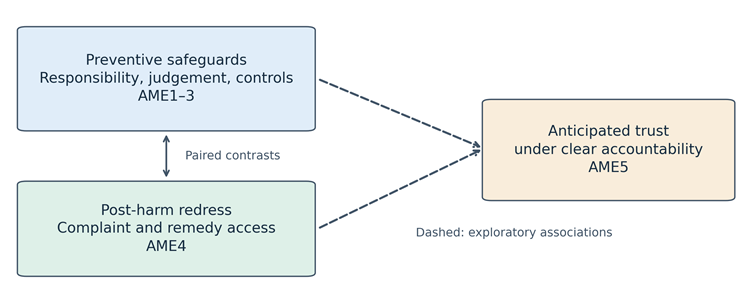
Figure 1. Analytical framework for prevention redress and anticipated trust
The framework does not imply that introducing a safeguard changes trust. It identifies distinct empirical questions using the items actually recorded. In particular, access to a forum is considered as a governance concern even when endorsement of that access does not track the trust response.
This framework motivates examining prevention and redress separately rather than proposing a common latent cause of responses. The survey was already collected, and the analysis is exploratory. There is no empirical reason to assume that endorsement of complaint access will be lower or higher than endorsement of other protections in every population. Nor is there reason to assume that the highest endorsed item will have the largest conditional association with anticipated trust. The paired comparison addresses the first question, while the regression addresses the second.
An association between prevention and anticipated trust is plausible because a person who expects clear responsibility to improve trust may also place value on visible safeguards before an error occurs. An analogous association is possible for redress if respondents consider the prospect of being heard when judging a service. A weak association would have several possible interpretations: high and comparatively homogeneous endorsement, differences in the reasons underlying support, or measurement that does not capture the concrete mechanism people have in mind. The design cannot distinguish these explanations directly. It can, however, show whether broad endorsement and trust-related variation line up in the observed responses.
3. Methodology
This section distinguishes features documented in the study records from decisions made during reanalysis. The unit of analysis is the respondent; all comparisons across statements preserve the within-person structure. The paper follows the reporting logic of cross-sectional observational studies by stating the source, denominators, analytical rules and major constraints on inference.[15]
3.1 Design and data source
The study uses a cross-sectional questionnaire on AI, health law and patient rights. The Group 12 workbook contains a Data sheet, a README and a codebook. The README links the common instrument to three related research titles. The present analysis concerns the medical error and accountability question. It uses the same underlying respondent records as the other Group 12 topics, so results from those topics should not be counted as independent replication. No intervention, clinical assessment or linkage to medical records forms part of this analysis.
3.2 Respondents and analytical sample
The workbook contains 385 uniquely numbered records. Each includes affirmative consent, an adult eligibility response and an affirmative general AI awareness response. No respondent was excluded from the primary analysis. The available documentation does not identify a sampling frame, invitation denominator, exact collection dates or a verified breakdown by collection mode. A response rate and design-based weights cannot therefore be calculated. The observed sample size is reported as the number of analysed records; it is not treated as evidence that a probability-sampling target was achieved. The law-student subset is defined by the current-status field rather than by education level or inferred age.
3.3 Data checks and exclusions
We reconciled the Data and Codebook sheets, checked uniqueness of the sequence field, verified that the 20 agreement items took values from 1 to 5, and checked the numerical and profile fields for blanks. There were no duplicate response and profile patterns after excluding the sequence and contextual text. The tool category “None” was retained as a valid response. The contextual text was excluded without quotation, coding or inclusion in a model. The study team identified the workbook’s synthetic descriptors attached to the sequence and contextual fields as metadata labelling errors; the numerical questionnaire records are treated as empirical responses on that basis.
3.4 Measures and construct boundaries
Table 1 records the analytical roles of the focal items. The preventive summary averages AME1–3 on their original scale, giving each the same weight. AME4 is retained as a separate single-item redress measure and AME5 as the single-item outcome. AIL1–3 are averaged as an observed orientation towards inaccuracy, verification and bias. The adjustment summary does not represent a performance test. The codebook gives the original anchors and Appendix A reproduces the exact wording.
Table 1. Analytical roles of questionnaire items
| Role | Items | Interpretation |
| Prevention | AME1–3 | Equal-weight mean of allocation, clinical judgement and safety controls |
| Redress | AME4 | Single item on access to complaints and remedies after harm |
| Conditional trust | AME5 | Single item on anticipated trust under clear accountability |
| Adjustment | AIL1–3; status, location, training | Observed orientation summary and categorical profile variables |
All ratings retain their original direction. AME5 does not enter either explanatory measure.
The roles differ because AME5 asks about anticipated trust and AME4 addresses access after harm. Neither enters the preventive summary. The sample coefficient alpha for AME1–4 was 0.179. Alpha is not a test of dimensionality, and low internal consistency does not validate a formative measurement model. We therefore retain the original individual items for the main contrasts and use the observed prevention average as a descriptive convenience in the regression. We do not estimate latent scores, mediation or a structural model.[16]
3.5 Endorsement and paired contrasts
All five response categories are reported. Endorsement is defined as a rating of 4 or 5, a direct summary of the response anchors. The Wilson interval describes the uncertainty in each observed proportion under an independent-response working model. These are not national survey margins of error. For each preventive statement, the redress difference is the number who endorse redress alone minus the number who endorse that preventive statement alone, divided by 385. The exact McNemar test uses only the discordant responses for that contrast. We report paired percentile intervals from 10,000 respondent resamples (seed 20261103) and adjust the three test p values by Holm’s method. The bootstrap samples whole records and preserves the relation between answers from the same person.[17]
3.6 Exploratory model and sensitivity checks
We estimate an unadjusted and an adjusted linear model with AME5 as a 1–5 outcome. Both include the preventive summary and the original AME4 rating. The adjusted specification adds the observed AI orientation mean and categorical indicators for current status, location and formal AI training. These variables describe relevant differences in respondent background; they are not a sufficient adjustment set for causal interpretation. Linear coefficients describe average score differences under the working model and HC3 intervals address heteroskedasticity. In each model the two focal p values are Holm adjusted; coefficient intervals are pointwise.[18]
Two sensitivity analyses examine different dependencies. First, the adjusted model is repeated in law students, dropping the constant status term. This is a restriction to a more narrowly defined group; it is not a test of differences between students and other respondents. Second, the outcome is reduced to endorsement and fitted by logistic regression with sandwich standard errors. The odds ratio and linear coefficient answer different questions, since a move from 4 to 5 changes the linear outcome but leaves endorsement unchanged. This sensitivity check assesses dependence on the outcome definition rather than demanding that both models have the same p value.[19]
3.7 Interpretation of precision
Neither confidence intervals nor p values correct for convenience recruitment, unknown dependence within recruitment networks, unmeasured exposure or common item wording. Numerical precision is therefore separated from representativeness and from the practical importance of a difference. The analysis reports raw counts, percentage-point differences and interval estimates to let readers judge the evidence at the level each design can support.
3.8 Ethics and data protection
Ethical approval for this study was obtained from the Center for Academic & Professional Career Development and Research (CAPCDR), an external institutional body, under approval reference CAPCDR: SMUCT/LLB/SS-0020260908-20. External ethical review was sought because Shanto-Mariam University of Creative Technology does not have an institutional ethics committee responsible for reviewing this type of research.
4. Results
The results move from who responded to what respondents endorsed, then compare the safeguards within the same respondents. The association models follow the descriptive comparisons because they answer a narrower question about variation in anticipated trust. All main sample estimates use 385 records.
4.1 Respondent profile
Table 2 presents age, recorded status, location and formal AI training. A majority were aged 21–26 (248/385, 64.4%). Current status was most often “Other relevant respondent” (154, 40.0%) or law student (118, 30.6%). The largest recorded location was Dhaka (147, 38.2%), with 104 responses from district towns (27.0%). More than half reported no formal AI training (216, 56.1%). Short orientation and course or certified training are recorded separately; they do not imply the same duration or content.
Table 2. Sample composition and adjustment variables
| Characteristic | Category | n (%) |
| Age | 21-23 | 150 (39.0%) |
| Age | 24-26 | 98 (25.5%) |
| Age | 18-20 | 60 (15.6%) |
| Age | 31+ | 41 (10.6%) |
| Age | 27-30 | 36 (9.4%) |
| Status | Other relevant respondent | 154 (40.0%) |
| Status | Law student | 118 (30.6%) |
| Status | Advocate or legal professional | 61 (15.8%) |
| Status | Law graduate | 52 (13.5%) |
| Location | Dhaka | 147 (38.2%) |
| Location | District town | 104 (27.0%) |
| Location | Other city corporation | 71 (18.4%) |
| Location | Upazila-rural area | 52 (13.5%) |
| Location | Other | 11 (2.9%) |
| AI training | No | 216 (56.1%) |
| AI training | Yes, short orientation | 122 (31.7%) |
| AI training | Yes, course or certified training | 47 (12.2%) |
Denominator = 385 for every percentage. Categories are based on the workbook.
The composition does not support labelling the full sample a patient cohort. The 231 records classified as law students, law graduates or legal professionals represent 60.0% of the sample. The 154 records in the residual status category cannot be reclassified as patients because no field verifies that status. Although 269 respondents (69.9%) reported weekly or daily or almost daily generative AI use, the frequency question does not refer specifically to clinical AI.
4.2 Endorsement of the five accountability statements
Table 3 gives the full distributions and Wilson intervals. Access to complaints and remedies after harmful AI-related errors was endorsed by 311 respondents (80.8%). The three preventive statements were endorsed by 237 (61.6%) for defined responsibility, 247 (64.2%) for independent clinical judgement and 232 (60.3%) for developer and organisational safety controls. Their observed ordering provides context for the paired contrasts but does not imply that one preventive safeguard was preferred to another in a forced choice.
Table 3. Response distributions for accountability and trust statements
| Item | 1 | 2 | 3 | 4 | 5 | Agree n (%) | 95% CI (%) |
| AME1 | 1 | 22 | 125 | 183 | 54 | 237 (61.6%) | 56.6 to 66.3 |
| AME2 | 1 | 17 | 120 | 185 | 62 | 247 (64.2%) | 59.2 to 68.8 |
| AME3 | 0 | 25 | 128 | 167 | 65 | 232 (60.3%) | 55.3 to 65.0 |
| AME4 | 0 | 1 | 73 | 178 | 133 | 311 (80.8%) | 76.5 to 84.4 |
| AME5 | 0 | 6 | 69 | 170 | 140 | 310 (80.5%) | 76.3 to 84.2 |
Agree combines categories 4 and 5. Intervals are Wilson intervals. Exact wording is in Appendix A.
Neutral answers were more common for preventive statements: 120 to 128 respondents selected category 3 on those items, compared with 73 for redress. Only one respondent disagreed with the redress statement, while 133 strongly agreed. For conditional trust, 310 respondents (80.5%) selected either agree or strongly agree, including 140 in the highest category. These similar marginal percentages are compatible with many different joint distributions. In particular, they do not demonstrate that people who endorsed redress were the same people who anticipated greater trust.
4.3 Within-person redress contrasts
The contrasts in Table 4 ask how often redress was endorsed relative to each preventive item, with the unit of comparison kept at the respondent level. For defined responsibility, 117 endorsed redress without endorsing responsibility definition, while 43 showed the reverse pattern. The net difference was 74 responses, or 19.2 percentage points. Compared with avoidance of blind reliance, there were 115 redress-only and 51 prevention-only responses, a difference of 16.6 points. The contrast with safety controls was the largest at 20.5 points, with 123 versus 44 discordant responses.
Table 4. Within-person differences in endorsement of redress and prevention
| Contrast | Redress only | Prevention only | Gap (pp) | 95% CI (pp) | Holm p |
| AME4 − AME1 | 117 | 43 | 19.2 | 13.0 to 25.5 | <0.001 |
| AME4 − AME2 | 115 | 51 | 16.6 | 10.4 to 23.1 | <0.001 |
| AME4 − AME3 | 123 | 44 | 20.5 | 14.3 to 26.8 | <0.001 |
Exact McNemar tests; percentile intervals from paired respondent bootstrap. Intervals are pointwise; tests are Holm adjusted.
All three exact tests retained adjusted p values below 0.001. The pointwise intervals excluded zero, including the smallest contrast, redress versus avoidance of blind reliance (10.4 to 23.1 points). The discordant counts also show why a ranking by item averages should not be read as universal agreement: every contrast includes a group of respondents whose endorsement pattern runs in the opposite direction. Redress was more consistently endorsed in this sample, but it does not dominate every individual response pattern.
Of the 101 respondents (26.2%) who endorsed all three preventive statements, 84 also endorsed redress and 17 did not. Thus the rate of endorsing all four statements was 21.8%. This is a count of a particular response pattern, not a threshold for being sufficiently concerned about accountability. A person can answer neutrally to a statement about a broad class of controls while favouring some concrete controls. The Spearman correlation between the prevention mean and the original redress score was 0.065, consistent with little rank covariation in this sample.
4.4 Conditional trust associations
Table 5 separates the explanatory summaries from the trust statement and presents both unadjusted and adjusted estimates. The preventive summary had mean 3.718 and standard deviation 0.487. In the two-term unadjusted model, a one-point increase in the summary was associated with a 0.238-point higher conditional trust score. After adjustment, the corresponding estimate was 0.205 (95% CI 0.049 to 0.361; adjusted p = 0.020). A one-point increase is about twice the observed standard deviation of the prevention summary. The estimate corresponds to approximately a 0.10-point difference for a one-standard-deviation contrast, which gives a more familiar sense of its magnitude on the 1–5 outcome.
Table 5. Associations with anticipated trust under clear accountability
| Model (n) | Term | Estimate | 95% CI | Holm p | R² |
| Unadjusted (385) | Prevention | 0.238 | 0.089 to 0.387 | 0.003 | 0.023 |
| Unadjusted (385) | Redress | -0.001 | -0.111 to 0.109 | 0.981 | 0.023 |
| Adjusted (385) | Prevention | 0.205 | 0.049 to 0.361 | 0.020 | 0.058 |
| Adjusted (385) | Redress | 0.001 | -0.112 to 0.114 | 0.982 | 0.058 |
| Law students (118) | Prevention | 0.259 | -0.043 to 0.560 | 0.186 | 0.118 |
| Law students (118) | Redress | 0.168 | -0.068 to 0.404 | 0.186 | 0.118 |
| Binary endorsement (385) | Prevention | 1.568 | 0.892 to 2.755 | 0.236 | 0.047 |
| Binary endorsement (385) | Redress | 0.983 | 0.666 to 1.452 | 0.932 | 0.047 |
Linear rows show unstandardised coefficients, HC3 intervals and ordinary R². Binary endorsement rows show odds ratios, sandwich intervals and McFadden pseudo-R². Each model uses both focal terms; p values are adjusted within the two-term model.
The adjusted redress coefficient was 0.001 (95% CI −0.112 to 0.114; adjusted p = 0.982). The model explained 5.8% of the variance in the trust rating, compared with 2.3% for the two-term unadjusted model. The estimated redress association near zero describes conditional covariation in these measures. Its interval does not establish equivalence, and a direct difference between the prevention and redress coefficients was not tested. They represent a three-item mean and a single item, so equal numeric increments also need not reflect equal changes in the underlying judgements.
4.5 Sensitivity to sample and outcome definition
Within the 118 law students, the point estimate for prevention was 0.259 (95% CI −0.043 to 0.560) and the estimate for redress was 0.168 (95% CI −0.068 to 0.404). Neither met the Holm-adjusted 0.05 threshold. The smaller subgroup supplies less precise estimates and overlaps the full sample. It does not establish whether the relationships differ by status.
When the outcome was endorsement rather than the original five-category score, the adjusted odds ratio for prevention was 1.568 (95% CI 0.892 to 2.755) and for redress 0.983 (95% CI 0.666 to 1.452). Both intervals included one. The prevention estimate remained directionally positive, but evidence of an association depended on how conditional trust was represented. Across models the redress results did not show a stable positive association. Taken together, the comparative endorsements are the clearer result; the regressions identify exploratory patterns that require better differentiated measures and independent data.
5. Discussion
The finding that matters most for governance is the combination of strong redress endorsement and weak evidence that redress ratings covary with anticipated trust. These results describe two distinct features of the sample. The first is the comparative frequency of agreement with particular statements. The second is the extent to which respondents who differ on those statements also differ on a hypothetical judgement about trust. Treating one as a substitute for the other would lose the main empirical contribution.
5.1 Redress as a distinct accountability objective
Within this sample, endorsement of access to complaints and remedies exceeded endorsement of each preventive safeguard by roughly one sixth to one fifth of the sample. The comparisons are stronger than a ranking of means alone because the analysis identifies where the differences arise: more respondents endorsed redress without endorsing the comparator than showed the reverse pattern. Nevertheless, the survey does not observe a choice to fund redress in preference to prevention. A patient may see a complaint route as an uncontroversial entitlement and still consider safety controls indispensable once the controls are described. The item comparison is an empirical difference in agreement with statements as worded.
The actor and forum distinction offers a useful interpretation. A preventive responsibility can exist without an accessible forum, and a forum can receive a complaint even while the distribution of duties is uncertain. A patient should be able to bring an account of harm to an identifiable body without first resolving the technical and legal allocation of blame. This view is consistent with an accountability relation in which a forum can ask questions and assess an explanation. An effective forum also requires a route from its findings to a response. Otherwise, the institution may gather information for future improvement while leaving the claimant without an answer.[20]
The low correlation between prevention and redress and the modest internal consistency of the four items reinforce the value of reporting each statement. These statistics do not prove separate psychological dimensions. Item wording offers other explanations. AME4 identifies the patient as beneficiary, specifies a harmful event and combines two familiar procedural concepts. AME3 names organisations and developers and asks about appropriate controls without giving examples. Differences in familiarity, concreteness and the burden of agreement may matter. A survey experiment that matches actor, specificity and severity across items could test whether the preference persists when these features are held constant.
5.2 Why endorsement and trust associations diverge
More than four fifths endorsed the hypothetical proposition that clear accountability would increase trust. That statement elicits an expectation under a favourable condition; it does not measure a current level of confidence in a specific provider. A person can favour redress and be reluctant to trust a system that performs poorly. Another can be willing to rely on a clinically useful tool but regard complaint access as necessary regardless of personal willingness. Broad endorsement can therefore reflect a procedural judgement whose justification is independent of trust.
The prevention coefficient was modest and did not have the same inferential support after dichotomisation. The original-scale result may reflect differences among neutral, agreeing and strongly agreeing responses that an endorsement threshold removes. It may also reflect common language: defined responsibility in AME1 resembles clear accountability in AME5, and all focal items invite agreement with protections. A favourable response style could contribute to their association. The models cannot resolve these possibilities. Evidence that changing practice alters trust would require a design that varies the safeguard while measuring trust independently, ideally alongside choices or behaviour. Experiments on medical AI preferences illustrate the value of specifying who makes the decision and what the participant is choosing.[21]
The redress estimate near zero should not be used to exclude a complaint pathway from an intervention or to assert that redress never affects trust. The pointwise interval allows small associations in both directions under the linear specification. The item has restricted variation, particularly below neutrality. Moreover, asking whether patients should have access to a remedy is different from describing a forum that can obtain evidence and order a meaningful response. A comparison of these specific features could yield variation absent from a general rights statement. This study also does not demonstrate that prevention is a statistically stronger correlate than redress; the two coefficients were not directly compared on a common measurement scale.
5.3 Implications for interpreting liability claims
Accountability and liability answer related but distinct questions. Accountability asks who explains a decision and who can assess that explanation. Liability concerns the legal conditions for responsibility and relief, which may depend on the claim, the applicable law, the evidence and the actor’s conduct. An institution could make its processes more accountable by preserving a record of how an output was used even while responsibility for a particular injury remains contested. Conversely, naming a possible defendant does not make the relevant record accessible to the patient. Comparative scholarship on potential physician liability illustrates why the standard applied to clinical decisions and the role of software evidence must be analysed in context.[22]
The Bangladesh regulatory setting cannot be described as an empty field. BMDC telemedicine guidance addresses professional responsibilities in that mode of care. DGDA’s medical device registration guidance describes post-market surveillance and vigilance for specified device classes, and DGDA has issued the notice of approval of a guideline on AI and medical robotics in healthcare. This article relies on the notice as evidence of approval, not as evidence of any unexamined substantive provision. Reporting an adverse event to a regulator and addressing a patient complaint have different purposes. The precise application of a device framework to a particular system requires facts about the product and deployment and analysis of the relevant instrument.[23]
The results support a narrow governance proposition: include a patient-facing review route in evaluations rather than inferring its value from trust scores. They do not demonstrate the absence of an existing remedy, the adequacy of existing regulation, or a preference for statutory rather than institutional reform. A legal mapping exercise could identify which routes already exist, what documents each can obtain and what responses each can provide. Such an exercise should be undertaken independently of these endorsement percentages. Combined with patient research, it would allow policymakers to distinguish a gap in formal entitlement from a gap in practical access.
5.4 Relation to clinical governance research
Clinical evaluation and survey research contribute different evidence. A deployment study can document override behaviour, time pressure and the consequences of model recommendations; an opinion survey can reveal which procedural commitments respondents are prepared to endorse. The present findings sit in the latter category. Evidence about automation bias provides a reason to take independent clinical judgement seriously even though its survey endorsement was lower than redress. Clinical safety should therefore not be assigned a lower priority simply because one statement drew fewer agreeing responses. A credible programme pairs patient-facing review with prevention and evaluates each using evidence suited to its function.[24]
6. Theoretical and Practical Implications
The main implication is to evaluate accountability at the stages where it is exercised. Before deployment, the relevant questions concern responsibility and readiness. At the point of care, they concern judgement and documentation. After an incident, they concern access to review and the capacity to respond. The survey identifies support for these functions, while the design of an actual pathway requires institutional, clinical and legal evidence.
6.1 Theoretical implications
This study applies actor–forum accountability by separating endorsement of preventive duties from endorsement of post-harm access and from anticipated trust. The separation helps avoid circular measurement. If the statement that clear accountability would increase trust were included in an accountability score, the score would already contain the judgement it was supposed to explain. Preserving separate measures makes it possible to find strong support for a procedural safeguard alongside weak association with the trust item. The resulting framework is a basis for better measurement rather than a validated model of governance.
Future theory testing should distinguish a person’s beliefs about how likely an error is from beliefs about what can be done after one. Risk appraisal can motivate interest in prevention; procedural standing can motivate interest in redress even among people who perceive little immediate risk. Measuring both mechanisms separately would allow a test of whether they explain different outcomes. The Health Belief Model provides language for the former pathway, but its constructs should be operationalised directly before claims of extension are made.[25]
6.2 Implications for healthcare organisations and developers
Institutions considering deployment could prepare a responsibility record covering who authorises the tool, who can override it, who reviews an incident and which vendor contact can supply technical evidence. The record should be specific to the tool and workflow and updated as versions and roles change. It is useful when staff can retrieve the relevant information during a review, not merely when roles are set out in procurement documents. Procurement terms can address what evidence the vendor will retain, how it can be requested and how to protect patient confidentiality during an investigation. These recommendations concern the design of a record and do not determine liability.[26]
An institution could offer patients a single route for raising a concern about a decision, including when the patient is uncertain whether AI was involved. The institution would then identify the responsible service, review the clinical and technical records, and explain available next steps. The proposed route should accommodate local language needs and patients who cannot use an online form. A receipt or case number, an accessible explanation and a path for escalating an unresolved concern can make the route testable. Organisational policies should identify which staff can access sensitive records and which information may be disclosed. The aim is to make a route understandable without disclosing other patients’ information or requiring technical knowledge from the complainant.[27]
6.3 Evaluation and policy
An evaluation can track whether the patient can find the complaint channel, whether the record needed for review is available, whether the institution provides a reasoned response and how unresolved concerns are escalated. Simulated cases can test the process before actual harm occurs. Prevention should be assessed separately through evidence such as local validation, override review and incident monitoring. Where regulatory reporting duties apply, the reporting pathway can share information with patient review without displacing it. Neither a low complaint count nor a high trust score is sufficient to assess access: low volume may reflect difficulty using the channel, and general trust may coexist with limited knowledge of it.[28]
7. Conclusion Limitations and Future Research
Among the 385 adults in this Bangladesh questionnaire sample, access to complaints and remedies after harmful AI-related medical errors was endorsed more often than defined responsibility, independent clinical judgement or organisational and developer safety controls. The pattern held when each preventive statement was compared with redress within respondents. The difference in endorsement did not translate into a positive redress coefficient in the adjusted trust model. The prevention summary had a modest association with the original trust rating, with weaker evidence when the outcome was defined by agreement alone. The results support keeping redress visible as a governance objective, separate from its possible contribution to trust.
The sample includes many respondents with legal education or professional backgrounds, and clinical AI exposure was not verified. Neither the sampling frame nor the response rate is known. The study cannot estimate national patient preferences, describe actual medical errors or establish how patients behave when confronted with an AI-assisted recommendation. Exact wording matters: a single item combines complaint and remedy, while other items vary in abstraction and actor. The analysis cannot determine whether respondents had the same meaning in mind, whether they prefer a particular form of relief, or how they would weigh a safeguard against cost or delay.
The regression variables are measured at one time and share the same response format. The model does not address unmeasured confounding, response style or temporal order. The student sensitivity analysis has fewer observations and is not an external validation. Dichotomising the outcome also changes the question addressed by the model. The shared instrument supports multiple Group 12 titles, so any synthesis of those papers must take their dependence into account. Documentation of recruitment, collection mode and dates would improve assessment of the sample and should accompany any future reuse.
A follow-up should recruit identifiable categories of healthcare users and document whether AI materially contributed to a recent clinical encounter. Patients, clinicians and legal stakeholders could be sampled separately so that their perspectives are visible. Cognitive interviews could test what participants understand by complaint, remedy and clear responsibility. A factorial vignette could then vary access to an independent review, clarity about responsibility and clinician override authority separately while measuring perceived fairness, trust and service choice with distinct questions. A scenario that includes clinical urgency and costs could test whether endorsements persist when decisions involve trade-offs.
A complementary implementation study could track a complaint from intake to response and determine whether the organisation can reconstruct how the model was used. Such a study would provide evidence about a mechanism this survey cannot observe: the ability to turn a request for an explanation into a review that can change practice or address harm. Connecting this operational evidence to doctrinal analysis of available routes would make the resulting recommendations more directly applicable to healthcare institutions in Bangladesh.
Declarations
Ethical approval and oversight
Ethical approval for this study was obtained from the Center for Academic & Professional Career Development and Research (CAPCDR), an external institutional body, under approval reference CAPCDR: SMUCT/LLB/SS-0020260908-20. External ethical review was sought because Shanto-Mariam University of Creative Technology does not have an institutional ethics committee responsible for reviewing this type of research.
Informed consent
The study manuscript reports that informed consent was obtained before participation. All 385 analysed records affirm consent and adult eligibility.
Data availability
Requests for de-identified numerical data and analysis specifications may be directed to the corresponding author. Sharing is subject to participant confidentiality and applicable institutional requirements.
Funding and competing interests
No external funding or competing interest was disclosed in the available study materials.
Author contributions
Md Al Roman led the student research, developed the research question, organised the survey data and prepared the initial manuscript. Prof. Dr Kazi Abdul Mannan supervised the study, provided conceptual and methodological guidance, contributed to interpretation and critically reviewed the manuscript. Kazi Abdul Mannan is the corresponding author.
Generative AI disclosure
Generative AI assisted literature retrieval, manuscript development, language editing and preparation of analysis code. Numerical estimates were computed programmatically from the supplied workbook. The authors are responsible for verifying and approving the analysis, interpretation and reporting.
Bibliography
Bangladesh Medical and Dental Council, Telemedicine Guidelines (July 2020) section 5.8.1
Bovens M, ‘Analysing and Assessing Accountability: A Conceptual Framework’ (2007) 13 European Law Journal 447
Cadario R, Longoni C and Morewedge CK, ‘Understanding, Explaining, and Utilizing Medical Artificial Intelligence’ (2021) 5 Nature Human Behaviour 1636
Dinev T and Hart P, ‘An Extended Privacy Calculus Model for E-Commerce Transactions’ (2006) 17 Information Systems Research 61
Directorate General of Drug Administration, ‘Notice of Approval of the Guideline on the Regulation of Artificial Intelligence and Medical Robotics in Healthcare, Bangladesh’ (22 April 2026), referring to Health Services Division memorandum dated 15 February 2026
Directorate General of Drug Administration, Registration Guidelines for Medical Devices section 5 <https://dgda.gov.bd/sites/default/files/files/dgda.portal.gov.bd/policies/802ec167_9ba7_4f1b_adde_88871d797f08/2024-02-15-08-52-970321e5d385df48394bdd2d06110efa.pdf> accessed 3 November 2026
Efron B and Tibshirani RJ, An Introduction to the Bootstrap (Chapman & Hall 1993)
Gaube S and others, ‘Do as AI Say: Susceptibility in Deployment of Clinical Decision-Aids’ (2021) 4 npj Digital Medicine 31
Ghassemi M, Oakden-Rayner L and Beam AL, ‘The False Hope of Current Approaches to Explainable Artificial Intelligence in Health Care’ (2021) 3 Lancet Digital Health e745
Holm S, ‘A Simple Sequentially Rejective Multiple Test Procedure’ (1979) 6 Scandinavian Journal of Statistics 65
Hosmer DW Jr, Lemeshow S and Sturdivant RX, Applied Logistic Regression (3rd edn, John Wiley & Sons 2013)
Janz NK and Becker MH, ‘The Health Belief Model: A Decade Later’ (1984) 11 Health Education Quarterly 1
Lekadir K and others, ‘FUTURE-AI: International Consensus Guideline for Trustworthy and Deployable Artificial Intelligence in Healthcare’ (2025) 388 BMJ e081554
Longoni C, Bonezzi A and Morewedge CK, ‘Resistance to Medical Artificial Intelligence’ (2019) 46 Journal of Consumer Research 629
McNemar Q, ‘Note on the Sampling Error of the Difference between Correlated Proportions or Percentages’ (1947) 12 Psychometrika 153
Price WN II, Gerke S and Cohen IG, ‘Potential Liability for Physicians Using Artificial Intelligence’ (2019) 322 JAMA 1765
Sijtsma K, ‘On the Use, the Misuse, and the Very Limited Usefulness of Cronbach’s Alpha’ (2009) 74 Psychometrika 107
Vasey B and others, ‘Reporting Guideline for the Early-Stage Clinical Evaluation of Decision Support Systems Driven by Artificial Intelligence: DECIDE-AI’ (2022) 28 Nature Medicine 924
von Elm E and others, ‘The Strengthening the Reporting of Observational Studies in Epidemiology (STROBE) Statement: Guidelines for Reporting Observational Studies’ (2007) 4 PLOS Medicine e296
Wasserstein RL and Lazar NA, ‘The ASA Statement on p-Values: Context, Process, and Purpose’ (2016) 70 American Statistician 129
White H, ‘A Heteroskedasticity-Consistent Covariance Matrix Estimator and a Direct Test for Heteroskedasticity’ (1980) 48 Econometrica 817
Wilson EB, ‘Probable Inference, the Law of Succession, and Statistical Inference’ (1927) 22 Journal of the American Statistical Association 209
World Health Organization, Ethics and Governance of Artificial Intelligence for Health (WHO 2021)
World Health Organization, Patient Safety Rights Charter (WHO 2024)
World Health Organization, Regulatory Considerations on Artificial Intelligence for Health (WHO 2023)
Appendix A Questionnaire wording
Table A1 gives the precise wording of the focal and adjustment statements so that readers can distinguish endorsement of a safeguard from responses about trust.
Table A1. Exact wording of model and contrast items
| Code | Questionnaire statement |
| AIL1 | I understand that generative AI can produce plausible but inaccurate information. |
| AIL2 | I verify important AI-generated information before relying on it. |
| AIL3 | I understand that AI outputs may reflect bias or incomplete data. |
| AME1 | Responsibility for AI-assisted medical decisions should be clearly defined. |
| AME2 | Healthcare providers should not rely blindly on AI recommendations. |
| AME3 | AI system developers and healthcare organizations should maintain appropriate safety controls. |
| AME4 | Patients should have access to complaint and remedy mechanisms after harmful AI-related errors. |
| AME5 | Clear accountability would increase my trust in AI-enabled healthcare. |
Source: Group 12 Codebook. Response anchors run from 1 strongly disagree to 5 strongly agree.
AME4 refers to both complaint and remedy. AME5 refers to expected trust under clear accountability; it is excluded from the explanatory measures.
[1] World Health Organization, Ethics and Governance of Artificial Intelligence for Health (WHO 2021); Baptiste Vasey and others, ‘Reporting Guideline for the Early-Stage Clinical Evaluation of Decision Support Systems Driven by Artificial Intelligence: DECIDE-AI’ (2022) 28 Nature Medicine 924.
[2] Mark Bovens, ‘Analysing and Assessing Accountability: A Conceptual Framework’ (2007) 13 European Law Journal 447; World Health Organization, Patient Safety Rights Charter (WHO 2024).
[3] Bangladesh Medical and Dental Council, Telemedicine Guidelines (July 2020) section 5.8.1; Directorate General of Drug Administration, ‘Notice of Approval of the Guideline on the Regulation of Artificial Intelligence and Medical Robotics in Healthcare, Bangladesh’ (22 April 2026), referring to Health Services Division memorandum dated 15 February 2026.
[4] Vasey and others (n 1); Karim Lekadir and others, ‘FUTURE-AI: International Consensus Guideline for Trustworthy and Deployable Artificial Intelligence in Healthcare’ (2025) 388 BMJ e081554.
[5] W Nicholson Price II, Sara Gerke and I Glenn Cohen, ‘Potential Liability for Physicians Using Artificial Intelligence’ (2019) 322 JAMA 1765.
[6] Bovens (n 2).
[7] Marzyeh Ghassemi, Luke Oakden-Rayner and Andrew L Beam, ‘The False Hope of Current Approaches to Explainable Artificial Intelligence in Health Care’ (2021) 3 Lancet Digital Health e745.
[8] Nancy K Janz and Marshall H Becker, ‘The Health Belief Model: A Decade Later’ (1984) 11 Health Education Quarterly 1.
[9] Tamara Dinev and Paul Hart, ‘An Extended Privacy Calculus Model for E-Commerce Transactions’ (2006) 17 Information Systems Research 61.
[10] Susanne Gaube and others, ‘Do as AI Say: Susceptibility in Deployment of Clinical Decision-Aids’ (2021) 4 npj Digital Medicine 31; Chiara Longoni, Andrea Bonezzi and Carey K Morewedge, ‘Resistance to Medical Artificial Intelligence’ (2019) 46 Journal of Consumer Research 629; Romain Cadario, Chiara Longoni and Carey K Morewedge, ‘Understanding, Explaining, and Utilizing Medical Artificial Intelligence’ (2021) 5 Nature Human Behaviour 1636.
[11] Price, Gerke and Cohen (n 5); World Health Organization, Regulatory Considerations on Artificial Intelligence for Health (WHO 2023).
[12] Gaube and others (n 10); Vasey and others (n 1).
[13] WHO, Regulatory Considerations (n 11); Lekadir and others (n 4).
[14] WHO, Patient Safety Rights Charter (n 2).
[15] Erik von Elm and others, ‘The Strengthening the Reporting of Observational Studies in Epidemiology (STROBE) Statement: Guidelines for Reporting Observational Studies’ (2007) 4 PLOS Medicine e296.
[16] Klaas Sijtsma, ‘On the Use, the Misuse, and the Very Limited Usefulness of Cronbach’s Alpha’ (2009) 74 Psychometrika 107.
[17] Edwin B Wilson, ‘Probable Inference, the Law of Succession, and Statistical Inference’ (1927) 22 Journal of the American Statistical Association 209; Quinn McNemar, ‘Note on the Sampling Error of the Difference between Correlated Proportions or Percentages’ (1947) 12 Psychometrika 153; Bradley Efron and Robert J Tibshirani, An Introduction to the Bootstrap (Chapman & Hall 1993); Sture Holm, ‘A Simple Sequentially Rejective Multiple Test Procedure’ (1979) 6 Scandinavian Journal of Statistics 65.
[18] Halbert White, ‘A Heteroskedasticity-Consistent Covariance Matrix Estimator and a Direct Test for Heteroskedasticity’ (1980) 48 Econometrica 817; Holm (n 17).
[19] David W Hosmer Jr, Stanley Lemeshow and Rodney X Sturdivant, Applied Logistic Regression (3rd edn, John Wiley & Sons 2013); Ronald L Wasserstein and Nicole A Lazar, ‘The ASA Statement on p-Values: Context, Process, and Purpose’ (2016) 70 American Statistician 129.
[20] Bovens (n 2); WHO, Patient Safety Rights Charter (n 2).
[21] Longoni, Bonezzi and Morewedge (n 10); Cadario, Longoni and Morewedge (n 10).
[22] Price, Gerke and Cohen (n 5).
[23] BMDC, Telemedicine Guidelines (n 3); Directorate General of Drug Administration, Registration Guidelines for Medical Devices section 5 <https://dgda.gov.bd/sites/default/files/files/dgda.portal.gov.bd/policies/802ec167_9ba7_4f1b_adde_88871d797f08/2024-02-15-08-52-970321e5d385df48394bdd2d06110efa.pdf> accessed 3 November 2026; DGDA, Notice of Approval (n 3).
[24] Gaube and others (n 10); Vasey and others (n 1); Lekadir and others (n 4).
[25] Janz and Becker (n 8); Bovens (n 2).
[26] WHO, Regulatory Considerations (n 11); Lekadir and others (n 4).
[27] WHO, Patient Safety Rights Charter (n 2); BMDC, Telemedicine Guidelines (n 3).
[28] DGDA, Registration Guidelines (n 23); Vasey and others (n 1).