MGT-1001-Principle of Management (FDT)
Based On-Robbins and Coulter
Lesson Plan
Prepared by Prof. Dr Kazi Abdul Mannan
PART II: ORGANIZING, LEADING & CONTROLLING
Module 9: Organisational Structure in Fashion Firms
Organisational structure is the framework that defines how tasks, responsibilities, authority, and communication are distributed within an organisation. In fashion firms, organisational structure plays a crucial role because the industry combines creativity, manufacturing, marketing, logistics, and retail operations. Without a clear structure, confusion may arise regarding decision-making, coordination, and accountability.
Fashion organisations range from small boutique studios to multinational corporations. A small design house may operate with only a few employees, while global brands such as Zara or H&M have highly complex structures involving thousands of employees across multiple countries. Therefore, organisational design must align with company size, business goals, and operational strategy.
For Fashion Design & Technology students, understanding organisational structure is essential because they may work in different departments such as design, production, merchandising, sourcing, or marketing. Knowing how departments interact helps students function effectively within professional environments.
9.1 Organisational Design
Organisational design refers to the process of creating a structure that enables an organisation to achieve its objectives efficiently and effectively. It determines:
- Who reports to whom
- How tasks are divided
- How communication flows
- How decisions are made
- How departments coordinate
Organisational design influences productivity, creativity, innovation, and employee satisfaction. In fashion firms, it must balance artistic flexibility with operational efficiency.
9.2 Key Elements of Organisational Design
9.2.1 Work Specialisation
Work specialisation means dividing tasks into smaller activities assigned to different employees according to expertise. Examples in fashion:
- Designers create sketches
- Pattern makers prepare technical patterns
- Sewing operators assemble garments
- Merchandisers coordinate buyers
Advantages:
- Increased efficiency
- Higher skill development
- Faster production
Disadvantages:
- Repetitive work may reduce motivation
- Limited creativity in highly specialised roles
9.2.2 Departmentalisation
Organisations divide activities into departments based on function, product, geography, or customer type. Common departments in fashion firms include:
- Design
- Production
- Marketing
- Merchandising
- Human Resources
- Finance
Departmentalisation improves coordination within specialised areas.
9.2.3 Chain of Command
The chain of command identifies reporting relationships and authority levels. In garment factories:
- Sewing operators report to line supervisors
- Supervisors report to production managers
- Production managers report to factory directors
A clear chain of command reduces confusion and improves accountability.
9.2.4 Span of Control
Span of control refers to the number of employees supervised by one manager.
- Narrow span → closer supervision
- Wide span → greater employee autonomy
Fashion firms with creative teams often prefer moderate supervision to encourage innovation.
9.2.5 Centralisation vs Decentralisation
Centralisation means decision-making authority is concentrated at higher management levels.
Decentralisation distributes authority across departments or regional offices.
Luxury fashion houses may centralise creative decisions to maintain brand consistency, while global retail firms decentralise operational decisions for regional responsiveness.
9.2.6 Formalisation
Formalisation refers to the extent to which rules and procedures guide employee behaviour. Garment manufacturing often requires high formalisation:
- Standard operating procedures
- Quality control guidelines
- Compliance documentation
Creative departments may operate with lower formalisation to encourage artistic freedom.
9.3 Importance of Organisational Design in Fashion
Effective organisational design:
- Improves coordination
- Reduces duplication of work
- Enhances communication
- Increases efficiency
- Supports innovation
- Clarifies responsibilities
Poor organisational design may result in:
- Delayed production
- Communication breakdown
- Conflict between departments
- Reduced creativity
Fashion firms must continuously adapt their structures due to changing technology, globalisation, and consumer trends.
9.4 Functional vs Divisional Structure
Organisations commonly adopt either functional or divisional structures depending on their size and strategy.
9.4.1 Functional Structure
A functional structure groups employees according to specialised functions.
- Typical Functional Departments
- Design
- Production
- Marketing
- Finance
- Merchandising
Advantages:
- High specialization
- Efficient resource utilisation
- Clear career development
- Technical expertise improvement
Disadvantages:
- Communication barriers between departments
- Slow decision-making
- Departmental conflicts
Fashion Example:
In a medium-sized fashion company:
- Designers work together in one department
- Production specialists work separately
- Marketing staff manage branding activities
This structure is effective when the company has:
- Limited product lines
- Stable operations
- Strong need for technical expertise
9.4.3 Divisional Structure
A divisional structure organises operations based on:
- Product categories
- Geographic regions
- Customer groups
Each division functions almost like a separate business unit.
Example Divisions:
- Menswear Division
- Women’s Wear Division
- Sportswear Division
Each division may have its own:
- Designers
- Marketers
- Production teams
Advantages:
- Faster decision-making
- Greater market responsiveness
- Better product focus
- Flexibility in changing markets
Disadvantages:
- Duplication of resources
- Higher operational cost
- Coordination challenges
Fashion Example:
Global brands such as Nike often use divisional structures because different product categories require specialised management strategies.
Comparison Between Functional and Divisional Structures
| Functional Structure | Divisional Structure |
| Organised by expertise | Organised by products/markets |
| Efficient resource sharing | Greater flexibility |
| Strong specialization | Faster response to market changes |
| Slower coordination | Higher operating cost |
Fashion firms may also use matrix structures, combining both systems.
9.5 Fashion Applications
9.5.1 Design Department
The design department is the creative centre of a fashion organisation. It transforms market trends and artistic ideas into actual products.
Main Functions:
a. Trend Research
Designers analyse:
- Fashion shows
- Consumer behavior
- Social media trends
- Cultural influences
b. Concept Development
Design teams create:
- Mood boards
- Colour palettes
- Fabric selections
c. Sketching & Technical Design
Designers prepare:
- Illustrations
- Technical specifications
- Digital garment simulations
d. Sample Development
Design departments collaborate with:
- Pattern makers
- Sample technicians
- Merchandisers
9.5.2 Organisational Roles
Typical positions include:
- Creative Director
- Senior Designer
- Assistant Designer
- Textile Designer
- CAD Specialist
9.5.3 Importance of Collaboration
The design department must coordinate with:
- Production department for feasibility
- Merchandising team for market demand
- Marketing team for brand alignment
Without coordination, designs may become too expensive or impractical for mass production.
9.6 Production Department
The production department converts designs into finished garments efficiently and consistently.
Core Responsibilities
a. Production Planning
Managers determine:
- Production schedules
- Machine allocation
- Workforce distribution
b. Quality Control
Production teams ensure:
- Proper stitching
- Measurement accuracy
- Fabric consistency
c. Cost Management
Production managers monitor:
- Material waste
- Labor productivity
- Energy usage
d. Compliance Monitoring
Factories must comply with:
- Safety regulations
- Labor laws
- Environmental standards
9.7 Key Organisational Roles
- Production Manager
- Line Supervisor
- Quality Control Inspector
- Industrial Engineer
- Maintenance Technician
9.7.1 Challenges in Production
Fashion production faces:
- Tight deadlines
- Seasonal demand fluctuations
- Supply chain disruptions
Efficient organizational structure improves productivity and reduces delays.
9.8 Merchandising Team Structure
Merchandising connects design, production, and market demand. Merchandisers ensure the right products reach customers at the right time and price.
9.8.1 Functions of Merchandising
a. Buyer Communication
Merchandisers communicate with international buyers regarding:
- Product specifications
- Delivery schedules
- Pricing negotiations
b. Product Planning
Merchandising teams analyse:
- Consumer demand
- Sales forecasts
- Seasonal trends
c. Coordination Role
Merchandisers coordinate between:
- Designers
- Production managers
- Suppliers
- Logistics teams
9.8.2 Typical Merchandising Positions
- Head Merchandiser
- Senior Merchandiser
- Assistant Merchandiser
- Sourcing Coordinator
9.8.3 Importance in Fashion Firms
Merchandising influences:
- Profitability
- Inventory management
- Customer satisfaction
Strong merchandising structures help firms respond quickly to market trends.
Organisational structure is essential for the effective functioning of fashion firms. Organisational design determines how departments interact, how authority flows, and how efficiently goals are achieved. Functional and divisional structures each offer advantages depending on company size and strategy.
The design department drives creativity, the production department ensures operational efficiency, and the merchandising department connects products with market demand. Together, these departments form the backbone of successful fashion management.
Understanding organisational structures prepares Fashion Design & Technology students to work effectively in professional fashion environments and eventually manage their own creative enterprises.
Module 10: Human Resource Management (Chapters 11–12)
Human Resource Management (HRM) is the process of managing people effectively within an organisation. In the fashion industry, human resources are among the most valuable assets because fashion depends heavily on creativity, technical skill, teamwork, communication, and customer interaction. Whether in a boutique studio, garment factory, or global fashion corporation, success depends not only on designs and technology but also on the people who create, produce, market, and sell fashion products.
HRM includes activities such as recruitment, training, employee development, performance evaluation, compensation, motivation, and workplace safety. In fashion organisations, managers must handle diverse groups of employees, including designers, sewing operators, merchandisers, retail staff, photographers, marketers, and production supervisors.
The fashion industry is highly dynamic and competitive. Therefore, firms require skilled and adaptable employees capable of responding to changing trends and customer demands. Effective HRM helps organisations attract talented employees, improve productivity, reduce employee turnover, and maintain a positive workplace culture.
For Fashion Design & Technology students, understanding HRM is essential because they may eventually become team leaders, entrepreneurs, production managers, or creative directors responsible for managing people.
10.1 Recruitment
Recruitment is the process of attracting, identifying, and selecting qualified individuals for organisational positions. It is one of the most important functions of Human Resource Management because organisational success largely depends on the quality of employees.
In the fashion industry, recruitment is particularly important because different positions require different combinations of creativity, technical knowledge, communication skills, and practical experience.
10.1.1 Stages of Recruitment
a. Human Resource Planning
Organisations first determine:
- Number of employees needed
- Required qualifications
- Departmental vacancies
For example, a fashion brand launching a new collection may require:
- Additional designers
- Pattern makers
- Sewing operators
- Marketing staff
b. Job Analysis
Job analysis identifies:
- Duties and responsibilities
- Required skills
- Working conditions
Example:
A textile designer position may require:
- CAD software knowledge
- Colour theory understanding
- Fabric development skills
c. Job Advertisement
Fashion firms advertise vacancies through:
- Company websites
- Social media platforms
- Fashion institutes
- Recruitment agencies
Creative industries increasingly use digital portfolios and social media presence as recruitment tools.
d. Candidate Screening
HR departments review:
- CVs
- Portfolios
- Technical skills
- Work experience
In fashion recruitment, portfolios are extremely important because they demonstrate creativity and design capability.
e. Interviews and Testing
Candidates may undergo:
- Technical interviews
- Practical skill tests
- Creative assignments
- Group discussions
For example:
- Designers may present portfolios
- Sewing operators may demonstrate stitching skills
- Retail staff may participate in customer service simulations
10.1.2 Importance of Recruitment in Fashion
Effective recruitment:
- Improves productivity
- Enhances creativity
- Reduces employee turnover
- Builds strong organisational culture
Poor recruitment can result in:
- Skill mismatch
- Low morale
- Reduced product quality
- Financial losses
Therefore, recruitment must balance technical competence, creativity, teamwork, and cultural fit.
10.2 Training
Training is the process of improving employee knowledge, skills, and abilities to perform jobs more effectively.
In fashion organisations, continuous training is essential because:
- Fashion trends change rapidly
- Technology evolves continuously
- Production systems become more advanced
- Consumer expectations increase
10.2.1 Objectives of Training
Training aims to:
- Improve technical skills
- Increase productivity
- Reduce errors and waste
- Improve communication and teamwork
- Enhance employee confidence
10.2.3 Types of Training
a. Orientation Training
Introduces new employees to:
- Organisational culture
- Policies
- Work procedures
b. Technical Training
Focuses on practical skills such as:
- CAD software operation
- Sewing techniques
- Pattern development
- Machine handling
c. Soft Skills Training
Develops:
- Communication
- Leadership
- Customer service
- Problem-solving
d. Safety Training
Particularly important in garment factories to ensure:
- Workplace safety
- Proper machine usage
- Emergency preparedness
10.2.4 Benefits of Training
For organisations:
- Higher efficiency
- Better product quality
- Reduced operational errors
For employees:
- Career development
- Increased motivation
- Greater job satisfaction
Fashion firms that invest in training are often more innovative and competitive.
10.3 Performance Appraisal
Performance appraisal is the systematic evaluation of employee performance and contribution.
It helps organisations:
- Measure productivity
- Identify strengths and weaknesses
- Determine promotions and rewards
- Plan employee development
10.3.1 Methods of Performance Appraisal
a. Supervisor Evaluation: Managers assess employee performance directly.
b. Self-Assessment: Employees reflect on their own achievements and challenges.
c. 360-Degree Feedback: Evaluation from:
- Supervisors
- Colleagues
- Subordinates
- Customers
10.3.2 Performance Criteria in Fashion
Designers:
- Creativity
- Innovation
- Trend responsiveness
Production Workers:
- Productivity
- Accuracy
- Quality consistency
Sales Staff:
- Customer service
- Sales targets
- Communication skills
10.3.3 Importance of Fair Appraisal
Effective appraisal:
- Motivates employees
- Encourages improvement
- Strengthens accountability
Unfair appraisal may create:
- Conflict
- Demotivation
- High turnover
Therefore, evaluations must be transparent, objective, and constructive.
Fashion Applications
10.4 Hiring Designers
Hiring fashion designers requires balancing creativity with technical and professional skills.
10.4.1 Key Evaluation Areas
a. Portfolio Quality
Portfolios demonstrate:
- Creativity
- Technical drawing ability
- Design originality
b. Technical Skills
Employers assess:
- Pattern knowledge
- Fabric understanding
- CAD proficiency
c. Trend Awareness
Designers must understand:
- Consumer preferences
- Global fashion trends
- Sustainability concerns
d. Communication & Teamwork
Designers collaborate with:
- Merchandisers
- Production teams
- Marketing departments
Thus, interpersonal skills are important.
10.4.2 Recruitment Methods
Fashion firms recruit designers through:
- Fashion schools
- Design competitions
- Online portfolio platforms
- Internship programs
A successful hiring process identifies not only artistic talent but also adaptability and professionalism.
10.5 Training Sewing Operators
Sewing operators are essential to garment production quality and efficiency.
10.5.1 Training Areas
a. Machine Operation
Workers learn:
- Industrial sewing machines
- Safety procedures
- Maintenance basics
b. Quality Standards
Operators are trained to:
- Maintain stitch consistency
- Follow measurement specifications
- Reduce defects
c. Productivity Improvement
Training focuses on:
- Time management
- Workflow efficiency
- Team coordination
d. Workplace Safety
Important topics include:
- Ergonomics
- Fire safety
- Emergency response
10.5.2 Benefits of Operator Training
Well-trained operators:
- Produce higher quality garments
- Reduce waste
- Improve production speed
- Enhance factory efficiency
Training also improves worker confidence and job satisfaction.
10.6 Evaluating Sales Staff
Sales staff are the direct connection between fashion brands and customers. Their performance significantly affects customer satisfaction and sales revenue.
10.6.1 Evaluation Criteria
a. Sales Performance
Managers assess:
- Sales targets achieved
- Product conversion rates
b. Customer Service Quality
Employees are evaluated on:
- Communication skills
- Professional behavior
- Problem-solving ability
c. Product Knowledge
Sales staff must understand:
- Fabric types
- Garment features
- Brand identity
d. Teamwork and Discipline
Retail environments require cooperation among employees.
10.6.2 Evaluation Methods
- Customer feedback surveys
- Supervisor observations
- Sales reports
- Mystery shopping programs
10.6.3 Importance of Effective Evaluation
Good evaluation systems:
- Encourage motivation
- Improve customer service
- Identify training needs
Sales staff who feel recognised and supported are more likely to remain loyal and productive.
Human Resource Management is essential for the success of fashion organisations. Recruitment ensures the selection of talented employees, training improves skills and efficiency, and performance appraisal supports employee development and organisational growth.
In fashion firms, people are the foundation of creativity, production, and customer satisfaction. Therefore, effective HRM not only improves business performance but also strengthens organisational culture and innovation.
PART I: FOUNDATIONS OF MANAGEMENT
Module 1: Introduction to Management & Fashion Industry Context
This module introduces Fashion Design & Technology students to the core concept of management and its direct relevance to the fashion industry. Fashion is not only about creativity and aesthetics; it is also a structured business system that requires planning, coordination, leadership, and control. Without management, even the most innovative design ideas cannot reach the market successfully.
1. What is Management? (Conceptual Understanding)
Management can be defined as the process of planning, organising, leading, and controlling resources to achieve organisational goals efficiently and effectively. According to the classical framework discussed by Stephen P. Robbins and Mary Coulter, management is not merely about giving orders; it is about coordinating people and resources to produce desired outcomes.
There are four fundamental functions of management:
- Planning – Setting goals and deciding how to achieve them.
- Organising – Arranging tasks, workflows, and resources.
- Leading – Motivating and directing employees.
- Controlling – Monitoring performance and making corrections.
In the context of fashion, management transforms ideas into tangible products. A designer may sketch a beautiful garment, but without planning raw materials, organising skilled workers, leading teams, and controlling quality standards, the garment will not reach the customer successfully.
Management also involves decision-making under uncertainty. Fashion trends change rapidly. Managers must predict demand, forecast seasonal styles, and manage supply chains across countries. Therefore, management is both an art (creativity and intuition) and a science (analysis and systematic planning).
For Fashion Design students, understanding management means understanding how creativity interacts with business discipline. It enables designers to think beyond the runway and consider budgeting, logistics, customer satisfaction, and sustainability.
2. Who Are Managers in Fashion?
Managers in the fashion industry operate at different levels and in different functional areas. They may not always carry the title “manager,” but their roles involve managerial responsibilities.
2.1 Top-Level Managers
- CEO (Chief Executive Officer)
- Creative Director
- Brand Director
They define vision, brand identity, and long-term strategy.
2.2 Middle-Level Managers
- Production Manager
- Marketing Manager
- Merchandising Manager
- HR Manager
They translate strategy into operational plans.
2.3 First-Line Managers
- Line supervisors in garment factories
- Store managers in retail outlets
- Team leaders in design studios
These managers supervise daily operations.
In global brands like Zara and H&M, management roles are highly structured. There are separate departments for design, sourcing, quality control, logistics, marketing, and retail operations. Each department has managers responsible for achieving performance targets.
In smaller fashion houses, one individual may perform multiple managerial roles. For example, a boutique owner may act as designer, buyer, marketer, and financial controller simultaneously.
Thus, managers in fashion are not limited to business graduates; designers themselves often become managers as they grow their brands.
3. Why Management Matters in Fashion Houses
Fashion is one of the most competitive and fast-changing industries in the world. Effective management ensures:
Time Efficiency: Fashion seasons are short. Late delivery means financial loss.
Cost Control: Fabric, labour, marketing, and logistics costs must be controlled carefully.
Quality Assurance: Poor quality damages brand reputation.
Brand Consistency: Management ensures that all collections align with the brand identity.
Global Coordination: Modern fashion involves global sourcing and distribution networks.
Without strong management, fashion houses may suffer from overproduction, stock wastage, employee dissatisfaction, or ethical controversies.
Management also ensures sustainability. Today’s consumers demand ethical production practices. Managers must balance profit with social responsibility.
4. Fashion Context Application
4.1 Role of Production Manager in Garment Factories
The Production Manager plays a crucial role in transforming designs into finished garments. This role is especially important in garment-producing countries like Bangladesh.
Key Responsibilities:
Production Planning
- Decide production schedule
- Allocate machines and labour
- Ensure timely delivery
Resource Allocation
- Manage fabric, trims, and accessories
- Coordinate with suppliers
Quality Control
- Monitor stitching standards
- Reduce defects
- Ensure compliance with buyer requirements
Cost Management
- Minimise wastage
- Improve productivity
Team Supervision
- Supervise line supervisors
- Handle worker issues
The Production Manager must balance efficiency and worker welfare. In export-oriented factories producing for brands like H&M, compliance standards are strict. Managers must ensure safe working conditions, fair wages, and environmental compliance.
Thus, the Production Manager combines technical knowledge (machinery, textiles) with managerial skills (leadership, planning, decision-making).
4.2 Creative Director vs Operations Manager
In fashion houses, these two roles represent creativity and control.
Creative Director
- Defines artistic vision
- Designs collections
- Leads design team
- Maintains brand identity
Example: Leadership style seen in designers like Karl Lagerfeld emphasised strong artistic authority.
Operations Manager
- Ensures production efficiency
- Manages logistics
- Controls budgets
- Coordinates supply chain
Key Differences:
| Creative Director | Operations Manager |
| Focus on aesthetics | Focus on efficiency |
| Trend forecasting | Cost forecasting |
| Brand storytelling | Process management |
| Creative Director | Operations Manager |
Both roles must collaborate. If creativity ignores cost constraints, the brand may suffer losses. If operations suppress creativity, the brand may lose uniqueness.
Therefore, management ensures a balance between artistic freedom and business discipline.
4.3 Small Boutique vs Multinational Fashion Brand
Small Boutique
- Limited employees
- Personalised service
- Flexible decision-making
- Owner-managed
Advantages:
- Strong customer relationships
- Quick design changes
Challenges:
- Limited capital
- Limited market reach
Multinational Brand
Example: Zara
Characteristics:
- Global supply chain
- Advanced logistics
- Structured management hierarchy
- Large marketing budgets
Advantages:
- Economies of scale
- Strong brand recognition
Challenges:
- Complex coordination
- Bureaucracy
- Higher operational costs
Management complexity increases with size. Boutique management is informal; multinational management is systematic and data-driven.
5. Identifying Management Roles in Zara or H&M
Students will analyze management structures of Zara and H&M.
Step 1: Research Task
Identify:
- CEO
- Creative team
- Operations team
- Marketing department
- Supply chain managers
Step 2: Function Mapping
Match roles with management functions:
- Planning → Collection planning
- Organizing → Factory coordination
- Leading → Design team supervision
- Controlling → Quality inspection
Step 3: Group Discussion
Module 2: Management History & Fashion Evolution
Management theory did not develop overnight; it evolved over more than a century in response to industrial growth, technological advancement, and changing workforce dynamics. For Fashion Design & Technology students, understanding management history is essential because the fashion industry itself evolved alongside industrial revolutions, global trade, and consumer culture.
During the late 19th and early 20th centuries, industries faced the challenge of increasing productivity. Factories needed systematic approaches to organise labour and machines. Early management thinkers focused on efficiency and productivity. Later, scholars realised that human motivation, teamwork, and leadership were equally important. In recent decades, data analytics, forecasting models, and digital technologies have transformed management into a more scientific and strategic discipline.
Fashion reflects this evolution clearly. The transition from handcrafted couture garments to industrial mass production required systematic management principles. Today’s global fashion brands use advanced supply chain analytics, digital marketing, and sustainable management practices. Therefore, the history of management parallels the transformation of the fashion industry, from small ateliers to multinational corporations.
1. Classical, Behavioural, and Quantitative Approaches
Management thought is traditionally categorised into three major approaches: Classical, Behavioural, and Quantitative.
1.1 Classical Approach
The Classical approach emerged during the Industrial Revolution. It emphasised structure, efficiency, and productivity. Major contributors include Frederick Winslow Taylor, Henri Fayol, and Max Weber.
- Scientific Management (Taylor): Focused on improving worker efficiency through standardised tasks and time studies.
- Administrative Theory (Fayol): Introduced management functions such as planning, organising, leading, and controlling.
- Bureaucratic Theory (Weber): Emphasised formal rules, hierarchy, and authority.
Fashion Connection: In garment factories, standardised stitching processes, assembly-line production, and quality checkpoints reflect classical management principles. Efficiency and cost reduction remain central to large-scale apparel manufacturing.
However, the classical approach sometimes ignores human emotions and creativity, an important limitation in fashion design environments.
1.2 Behavioural Approach
By the 1930s and 1940s, scholars realised that productivity depended not only on structure but also on human motivation and relationships. This led to the Behavioral approach.
Key contributors include:
- Elton Mayo
- Abraham Maslow
- Douglas McGregor
This approach emphasised:
- Employee satisfaction
- Leadership style
- Motivation
- Group dynamics
Fashion Connection: Creative teams require emotional support, collaboration, and freedom of expression. Designers cannot perform effectively under rigid factory-style supervision. Behavioural theories help managers motivate creative professionals while maintaining productivity.
1.3 Quantitative Approach
After World War II, management began using mathematical models, statistics, and computer-based analysis. The Quantitative approach includes:
- Operations research
- Forecasting models
- Inventory control systems
- Data-driven decision-making
Fashion Connection: Fast fashion brands rely heavily on sales data, trend forecasting software, and supply chain analytics. Inventory management systems prevent overproduction and reduce waste.
This approach is particularly relevant in global brands such as Zara, where real-time data influences design and production decisions.
2. Briefly explain Fayol’s 14 principles of management
Henri Fayol (1841–1925) was one of the founding figures of modern management theory. He proposed 14 Principles of Management as general guidelines for effective organisational administration. These principles are flexible and adaptable rather than rigid rules.
Below is a brief explanation of each principle:
Division of Work: Work should be divided into small, specialised tasks. Specialisation increases efficiency, skill development, and productivity.
Authority: Managers must have the right to give orders and the power to enforce obedience. Authority should be balanced with responsibility.
Discipline: Employees must respect organisational rules and agreements. Discipline ensures smooth functioning and order.
Unity of Command: Each employee should receive orders from only one superior. This avoids confusion and conflict.
Unity of Direction: Activities with the same objective should be directed by one manager using one plan. It ensures coordinated efforts.
Subordination of Individual Interest to General Interest: Organisational goals should take priority over personal interests. Team success is more important than individual gain.
Remuneration: Employees should receive fair and adequate compensation for their work. Proper payment increases motivation and loyalty.
Centralisation: The degree to which authority is concentrated at the top level. The balance between centralisation and decentralisation depends on organisational needs.
Scalar Chain: A clear line of authority should exist from top management to the lowest ranks. This chain defines communication flow.
Order: There should be a proper place for everything and everyone. Resources and personnel must be arranged systematically.
Equity: Managers should treat employees with fairness, kindness, and justice to build loyalty and commitment.
Stability of Tenure of Personnel: High employee turnover reduces efficiency. Organisations should promote job security to improve performance.
Initiative: Employees should be encouraged to take initiative and suggest ideas. This increases engagement and innovation.
Esprit de Corps: Promoting team spirit and unity fosters harmony and cooperation within the organisation.
3. How Management Thinking Evolved
Management thinking evolved from efficiency-focused systems to human-centred and technology-driven models.
Phase 1: Efficiency Era
Early industrial management prioritised output, speed, and discipline. Workers were treated as components of a machine.
Phase 2: Human Relations Era
Research revealed that social interaction, recognition, and morale significantly influence productivity. Managers began focusing on leadership and motivation.
Phase 3: Systems and Contingency Era
Organisations were viewed as systems interacting with their environment. There was no single “best way” to manage; strategies depended on context.
Phase 4: Modern & Digital Era
Today’s management integrates:
- Sustainability
- Innovation
- Globalization
- Digital transformation
- Artificial intelligence
In fashion, this evolution is visible in the shift from traditional textile workshops to automated smart factories and online retail platforms.
Modern managers must balance:
- Creativity and analytics
- Speed and sustainability
- Global reach and local sensitivity
Thus, management has become multidisciplinary, combining psychology, economics, sociology, and technology.
4. Fashion Applications
4.1 Mass Production vs Couture System
The couture system is rooted in craftsmanship and exclusivity. Historically associated with designers like Coco Chanel, couture garments are custom-made, high-quality, and produced in limited quantities.
Couture Characteristics:
- Handcrafted
- Personalised fittings
- High cost
- Artistic focus
- Low production volume
Management in couture houses emphasises:
- Creative leadership
- Skilled artisans
- Client relationships
- Brand prestige
In contrast, mass production emerged with industrialisation.
Mass Production Characteristics:
- Standardised sizes
- Assembly-line production
- Lower cost
- High volume
- Wider market reach
Management focus shifts to:
- Efficiency
- Cost control
- Supply chain management
- Inventory systems
The key difference lies in management orientation: couture prioritises artistic excellence, while mass production prioritises operational efficiency.
5. Efficiency in Fast Fashion
Fast fashion represents the modern application of classical and quantitative management principles combined with rapid innovation.
Brands such as Zara and H&M operate on:
- Short design-to-retail cycles
- Real-time data analysis
- Flexible supply chains
- Just-in-time production
Efficiency in fast fashion includes:
- Quick trend identification
- Rapid prototyping
- Streamlined logistics
- Inventory minimisation
Management tools used:
- Forecasting software
- ERP systems
- Performance metrics
However, efficiency must be balanced with sustainability concerns, as overproduction contributes to environmental waste.
6. Human Relations in Creative Teams
Creative industries depend heavily on collaboration, innovation, and emotional intelligence.
Fashion design teams include:
- Designers
- Pattern makers
- Textile specialists
- Marketing strategists
Effective management must:
- Encourage idea sharing
- Reduce conflict
- Provide constructive feedback
- Recognize talent
Behavioural management principles are especially important here. Designers require autonomy and recognition, aligning with Maslow’s higher-level needs such as esteem and self-actualisation.
Leadership style also matters. Transformational leadership inspires creativity, whereas overly rigid control may suppress innovation.
In fashion houses, success often depends on how well management nurtures creativity while ensuring deadlines and budgets are respected.
Module 3: Organisational Culture & Fashion Branding
Organisational culture is one of the most powerful forces shaping how fashion brands operate, innovate, and present themselves to the world. In the fashion industry, where creativity, identity, and public image are central, culture is not just an internal matter; it becomes part of the brand’s external personality. A fashion house’s culture influences how employees behave, how decisions are made, how sustainability is approached, and how customers perceive the brand.
For Fashion Design & Technology students, understanding organisational culture helps them see that branding is not only about logos or aesthetics. It is about shared values, beliefs, and practices that guide the organisation’s daily operations and long-term vision.
1. Organisational Culture
Organisational culture refers to the shared values, norms, traditions, and behaviours that shape how members of an organisation think and act. It answers questions such as:
- How do employees interact?
- What behaviours are rewarded?
- How are decisions made?
- What does the organisation stand for?
Culture develops over time through leadership, company history, success stories, and shared experiences. It becomes visible in dress codes, communication styles, workspace design, and even social media tone.
In fashion organisations, culture is particularly significant because creativity and identity are central. A luxury couture house may emphasise exclusivity, craftsmanship, and artistic freedom. A fast fashion retailer may prioritise speed, adaptability, and cost efficiency.
Organisational culture can be categorised into several types:
- Innovative Culture – Encourages experimentation and risk-taking.
- Outcome-Oriented Culture – Focuses on results and performance targets.
- People-Oriented Culture – Values teamwork and employee well-being.
- Detail-Oriented Culture – Emphasises precision and quality control.
In fashion branding, culture directly influences brand personality. For example:
- A brand promoting minimalism often reflects a disciplined, detail-oriented internal culture.
- A youth-oriented brand reflects energetic and flexible internal practices.
A strong culture:
- Increases employee loyalty
- Reduces internal conflict
- Strengthens brand identity
- Enhances customer trust
However, a toxic culture, such as extreme pressure without support, can damage creativity and lead to high employee turnover.
Thus, organisational culture is the invisible foundation upon which fashion branding is built.
2. Values & Ethics
Values are the core principles that guide an organisation’s decisions and behaviour. Ethics refers to moral standards concerning what is right or wrong.
In fashion, values and ethics have become increasingly important due to:
- Labour rights concerns
- Environmental damage
- Consumer activism
- Social media transparency
Core organisational values may include:
- Integrity
- Sustainability
- Innovation
- Inclusivity
- Fairness
Ethical issues in fashion often involve:
- Child labour
- Unsafe factory conditions
- Unfair wages
- Environmental pollution
- Cultural appropriation
A fashion brand’s ethical stance influences consumer trust. Modern customers, especially younger generations, prefer brands aligned with social responsibility.
Ethical management involves:
- Fair treatment of workers
- Transparent supply chains
- Honest marketing
- Environmentally responsible production
Ethics is not just about compliance with law; it is about moral accountability. For Fashion Design students, ethical awareness is crucial when selecting materials, working with suppliers, or designing culturally sensitive collections.
An organisation’s long-term success depends not only on profitability but also on ethical credibility.
3. Fashion Applications
3.1 Sustainable Fashion Culture
Sustainable fashion culture refers to a company-wide commitment to environmentally and socially responsible practices. It goes beyond marketing slogans and becomes embedded in organisational behaviour.
Key components include:
Eco-Friendly Materials
- Organic cotton
- Recycled polyester
- Low-impact dyes
Waste Reduction
- Zero-waste pattern cutting
- Recycling textile scraps
Circular Fashion
- Repair services
- Clothing recycling programs
Carbon Footprint Reduction
- Energy-efficient factories
- Sustainable packaging
A sustainable culture requires leadership commitment. Employees at all levels must understand environmental goals and integrate them into daily decisions.
In design studios, sustainability influences fabric selection. In production units, it affects water and energy usage. In marketing departments, it shapes brand storytelling.
A genuine sustainable culture builds long-term brand value and reduces environmental harm.
3.2 Ethical Sourcing
Ethical sourcing refers to obtaining raw materials and labour responsibly and fairly.
In the fashion industry, sourcing includes:
- Textile suppliers
- Dyeing factories
- Sewing units
- Accessory manufacturers
Ethical sourcing requires:
- Fair Wages: Workers must receive adequate compensation.
- Safe Working Conditions: Factories must meet safety standards.
- No Child Labour: Strict compliance monitoring.
- Supplier Transparency: Clear documentation of supply chain stages.
After global industrial accidents and labour rights movements, brands have increased monitoring of suppliers. Ethical sourcing now includes audits, certifications, and public sustainability reports.
Ethical sourcing not only protects workers but also reduces reputational risk. Consumers increasingly demand traceability, knowing where and how their garments are produced.
For Fashion Technology students, understanding sourcing ethics is essential for responsible brand development.
3.3 Patagonia Sustainability Model
Patagonia is widely recognised as a global leader in sustainable fashion.
Key Sustainability Practices:
- Use of Recycled Materials: Patagonia incorporates recycled polyester and organic cotton in many products.
- Repair and Reuse Programs: The “Worn Wear” initiative encourages customers to repair rather than replace garments.
- Environmental Activism: The company donates a portion of profits to environmental causes.
- Transparency: Patagonia publicly shares information about suppliers and environmental impact.
- Mission-Driven Culture: The company’s mission emphasises environmental responsibility over short-term profit.
Patagonia’s organisational culture reflects strong environmental values. Employees are encouraged to participate in environmental activism. Leadership prioritises long-term ecological sustainability.
This model demonstrates how culture and branding align. Sustainability is not a marketing tool; it is central to the company’s identity.
4. Compare Ethical Fashion Brand vs Fast Fashion Culture
Students will analyse differences between an ethical fashion brand (e.g., Patagonia) and a fast fashion brand (e.g., Zara or H&M).
Key Comparison Areas:
Organizational Culture
- Ethical Brand: Sustainability-focused, mission-driven.
- Fast Fashion: Speed-focused, trend-driven.
Production Approach
- Ethical Brand: Limited production, durable products.
- Fast Fashion: High-volume, rapid production cycles.
Environmental Impact
- Ethical Brand: Reduced waste, eco-friendly materials.
- Fast Fashion: Higher environmental footprint.
Pricing Strategy
- Ethical Brand: Higher price reflecting quality and ethics.
- Fast Fashion: Affordable pricing through scale efficiency.
Consumer Perception
- Ethical Brand: Trusted, responsible.
- Fast Fashion: Trendy, accessible.
Module 4: Global Management in Fashion
The fashion industry is one of the most globalised industries in the world. A garment designed in Italy may use cotton from India, be stitched in Bangladesh, marketed in France, and sold in the United States. This interconnected system requires strong global management strategies. For Fashion Design & Technology students, understanding global management is essential because fashion is not confined to one country; it operates within international networks of production, trade, and cultural exchange.
Global management involves coordinating activities across multiple countries while adapting to different economic, political, and cultural environments. It requires knowledge of international trade policies, cross-cultural communication, global supply chains, and market trends.
1. Globalisation
Globalisation refers to the increasing integration of economies, markets, cultures, and communication systems worldwide. In business terms, it means organisations operate beyond national borders and compete in international markets.
In fashion, globalisation has transformed the industry in several ways:
- Global Supply Chains: Brands source raw materials and labour from different countries to reduce costs and increase efficiency.
- Global Branding: International brands maintain consistent identities across markets while adapting to local preferences.
- Technology & Communication: Digital platforms allow brands to reach global consumers instantly.
- Consumer Influence: Social media spreads fashion trends globally within hours.
Globalisation offers opportunities:
- Larger customer base
- Lower production costs
- Access to diverse talent
However, it also creates challenges:
- Complex logistics
- Political risks
- Currency fluctuations
- Cultural misunderstandings
Global managers must balance standardisation (keeping brand consistency) with localisation (adapting to local tastes).
For example, a winter collection sold in Northern Europe may not suit tropical climates. Global fashion managers must plan production and marketing strategies accordingly.
2. International Trade
International trade involves the exchange of goods and services across national borders. In fashion, trade includes:
- Exporting garments
- Importing textiles
- Cross-border retail distribution
Trade is influenced by:
- Tariffs and quotas
- Trade agreements
- Currency exchange rates
- Customs regulations
Trade agreements between countries can reduce import duties, making garments more affordable. Conversely, trade restrictions can increase costs and disrupt supply chains.
Fashion companies must understand:
- Documentation requirements
- Shipping procedures
- Customs clearance processes
- Payment methods (e.g., letters of credit)
International trade also exposes companies to exchange rate risks. Currency fluctuations can affect profit margins significantly.
For fashion exporters, maintaining compliance with international standards, such as safety and labelling requirements, is essential to avoid penalties.
3. Cultural Differences
Cultural differences influence consumer preferences, workplace behaviour, and marketing strategies.
In fashion:
- Colour symbolism varies by culture.
- Modesty standards differ across societies.
- Body size standards vary by region.
- Holiday seasons affect product demand.
Managers must understand:
- Communication styles
- Negotiation approaches
- Workplace expectations
For example, direct communication may be appreciated in some Western countries, while indirect communication may be preferred in parts of Asia.
Cultural awareness prevents misunderstandings in global teams and helps brands design culturally appropriate products.
Fashion marketing must adapt to:
- Religious sensitivities
- Climate conditions
- Local fashion traditions
Ignoring cultural factors can lead to brand controversy or product rejection.
4. Fashion Applications
4.1 Garment Production in Bangladesh
Bangladesh is one of the world’s largest garment exporters. The Ready-Made Garment (RMG) sector plays a crucial role in the global fashion supply chain.
Key characteristics:
- Cost-Competitive Labour: Competitive wages attract global buyers.
- Large Production Capacity: Factories produce millions of garments monthly.
- Export-Oriented Industry: A major portion of production is exported to Europe and North America.
- Compliance Improvements: After industrial reforms, many factories upgraded safety standards.
Global brands rely on Bangladesh for:
- T-shirts
- Denim
- Knitwear
- Casual apparel
Management challenges include:
- Maintaining compliance
- Ensuring worker safety
- Meeting strict delivery deadlines
- Managing energy and infrastructure limitations
For Fashion Technology students, understanding Bangladesh’s role highlights the importance of global production management and ethical responsibility.
4.2 Fashion Markets in Europe & USA
Europe and the United States represent major consumer markets for fashion.
European Market:
- Strong luxury segment (Italy, France)
- Emphasis on sustainability
- Strict environmental regulations
- Seasonal fashion cycles
United States Market:
- Large retail chains
- Diverse consumer base
- Strong e-commerce presence
- Fast fashion demand
Consumers in these regions expect:
- High quality
- Trend responsiveness
- Transparent sourcing
- Competitive pricing
Brands must comply with:
- Labelling laws
- Consumer protection regulations
- Environmental standards
Marketing strategies differ:
- European consumers may value heritage and craftsmanship.
- U.S. consumers often prioritise comfort and lifestyle branding.
Global managers must tailor products and campaigns to meet these market expectations.
4.3 Export Management
Export management involves planning, coordinating, and controlling international sales operations.
Key responsibilities include:
- Market Research: Identifying potential foreign markets.
- Buyer Communication: Negotiating contracts and prices.
- Documentation: Preparing invoices, packing lists, and certificates of origin.
- Logistics Coordination: Managing shipping, freight forwarding, and customs clearance.
- Payment Management: Handling international financial transactions securely.
Effective export management reduces:
- Delivery delays
- Financial risks
- Legal complications
Export managers must monitor:
- Exchange rates
- Trade policy changes
- Shipping disruptions
In fashion, timely delivery is critical because trends are seasonal. A delayed shipment may lose market relevance. Technology now supports export management through digital tracking systems and automated documentation. For Fashion Design & Technology students, understanding export management prepares them for careers in international merchandising, sourcing, and supply chain coordination.
Global management in fashion requires understanding globalisation, international trade systems, and cultural diversity. The industry depends on cross-border production networks, export-oriented manufacturing, and culturally sensitive marketing strategies.
By mastering global management principles, Fashion Design & Technology students can position themselves as professionals capable of working in international fashion houses, export firms, and multinational retail brands.
Module 5: Social Responsibility & Sustainability
The fashion industry is deeply connected to environmental and social issues. From cotton farming to garment disposal, every stage of the fashion supply chain has environmental and human consequences. As global awareness grows, companies are increasingly expected to operate responsibly. Social responsibility and sustainability are no longer optional; they are essential for long-term survival.
For Fashion Design & Technology students, understanding social responsibility means recognising that design decisions influence not only style and profit but also people and the planet.
1. Corporate Social Responsibility (CSR)
Corporate Social Responsibility (CSR) refers to a company’s obligation to operate ethically and contribute positively to society. It goes beyond profit-making and includes social, environmental, and ethical responsibilities.
CSR in fashion includes:
- Worker Welfare: Ensuring safe working conditions and fair wages.
- Environmental Protection: Reducing pollution, carbon emissions, and waste.
- Community Engagement: Supporting local communities through development programs.
- Transparent Reporting: Publishing sustainability reports and audit results.
CSR operates at multiple levels:
- Economic Responsibility – Be profitable and sustainable.
- Legal Responsibility – Follow laws and regulations.
- Ethical Responsibility – Do what is morally right.
- Philanthropic Responsibility – Contribute voluntarily to society.
Fashion brands are under constant public scrutiny due to social media and global activism. Consumers now demand transparency in sourcing and manufacturing processes.
CSR also enhances brand reputation. Companies that demonstrate social commitment often build stronger customer loyalty and employee satisfaction.
However, CSR must be authentic. “Greenwashing” (false sustainability claims) can damage trust and credibility.
2. Sustainability
Sustainability refers to meeting present needs without compromising the ability of future generations to meet theirs. In fashion, sustainability addresses environmental, social, and economic dimensions.
The fashion industry faces major sustainability challenges:
- High water consumption
- Chemical pollution
- Textile waste
- Carbon emissions
- Overproduction
Sustainable fashion focuses on:
- Eco-Friendly Materials: Organic cotton, recycled fibres, biodegradable fabrics.
- Energy Efficiency: Renewable energy in factories.
- Circular Economy: Reusing, recycling, and repairing garments.
- Durable Design: Creating long-lasting products rather than disposable fashion.
Sustainability requires strategic planning and innovation. Managers must balance profitability with environmental responsibility.
Consumers increasingly support brands that align with sustainable values. Therefore, sustainability is not only ethical but also strategic for long-term competitiveness.
3. Fashion Applications
3.1 Green Textiles
Green textiles refer to fabrics produced using environmentally friendly methods. Traditional textile production consumes large amounts of water, chemicals, and energy.
Examples of green textiles include:
- Organic cotton (grown without harmful pesticides)
- Bamboo fibre
- Recycled polyester
- Tencel (lyocell)
- Hemp fabric
Green textile production aims to:
- Reduce water usage
- Minimise chemical discharge
- Lower carbon emissions
- Ensure biodegradability
Technology plays a key role in developing sustainable dyes and waterless dyeing systems. Fashion designers influence sustainability by selecting eco-friendly fabrics during the design stage. Managers must coordinate with certified suppliers and verify environmental standards. Although green textiles may be more expensive initially, they create long-term environmental and reputational benefits.
3.2 Waste Management in Garment Factories
Garment production generates significant waste, including:
- Fabric scraps
- Defective garments
- Packaging materials
- Chemical waste
Effective waste management strategies include:
- Lean Production: Minimising excess materials through better pattern planning.
- Recycling Programs: Converting textile scraps into new fibres or products.
- Energy Recovery: Using waste for energy generation.
- Efficient Cutting Techniques: Zero-waste pattern design.
Waste reduction lowers production costs and environmental impact. It also improves operational efficiency. Many international buyers require factories to follow environmental compliance standards. Proper waste management is now a competitive advantage.
3.3 Fair Wages & Compliance
Fair wages ensure workers receive adequate compensation for their labour. Compliance refers to meeting legal and ethical standards in factory operations.
Key compliance areas include:
- Minimum wage laws
- Safe working conditions
- Reasonable working hours
- No child labour
- Freedom of association
Global fashion brands often conduct factory audits to ensure suppliers meet compliance standards.
Fair wages improve:
- Worker motivation
- Productivity
- Social stability
Non-compliance can result in:
- Brand reputation damage
- Legal penalties
- Loss of buyer contracts
Managers must ensure that cost reduction does not come at the expense of human dignity.
4. Case Discussion: Rana Plaza Implications for Global Fashion Supply Chain
The Rana Plaza building collapse in Bangladesh in 2013 was one of the most tragic industrial disasters in the history of the garment industry. The building housed several garment factories producing clothing for international brands.
The disaster exposed serious weaknesses in:
- Factory safety standards
- Regulatory enforcement
- Global supply chain transparency
Immediate Implications:
- Global attention to worker safety
- Increased compliance monitoring
- Formation of international safety agreements
- Stronger factory inspection systems
The tragedy forced global brands to reconsider their supply chain management practices. Buyers realised that outsourcing production does not remove ethical responsibility.
Long-Term Implications:
- Enhanced building safety inspections
- Greater transparency in supplier disclosure
- Strengthened labour rights awareness
- Increased consumer demand for ethical sourcing
It also highlighted the risks of cost-driven production models where safety standards may be compromised.
For managers, Rana Plaza became a lesson in:
- Ethical responsibility
- Risk management
- Crisis response
- Stakeholder accountability
Global brands now emphasise sustainable sourcing and social audits more seriously. Compliance departments expanded, and international collaborations were formed to improve factory conditions. For Fashion Design & Technology students, this case demonstrates that management decisions, especially regarding cost, sourcing, and oversight, have real human consequences. The Rana Plaza incident reshaped global fashion supply chains and strengthened the importance of CSR and sustainability in modern management practices.
Social responsibility and sustainability are central to modern fashion management. CSR ensures ethical operations, sustainability protects environmental resources, and compliance safeguards worker welfare. The Rana Plaza tragedy serves as a powerful reminder that effective management must prioritise both profit and people.
Module 6: Decision Making for Fashion Managers
Decision-making is one of the most critical responsibilities of managers in the fashion industry. Every stage, from design concept to retail display, requires choices that influence cost, quality, speed, and brand image. Because fashion is fast-moving and highly competitive, decisions often need to be made under uncertainty and time pressure. Effective decision-making ensures that creativity is transformed into profitable and sustainable outcomes.
Fashion managers must make both routine operational decisions and complex strategic decisions. Understanding decision-making frameworks helps students become structured, confident, and analytical professionals.
1. Types of Decisions
Decisions in management are commonly classified into several categories:
1.1 Programmed vs Non-Programmed Decisions
Programmed Decisions are routine and repetitive. They follow established rules and procedures.
Example in fashion:
- Reordering standard fabric
- Approving routine purchase orders
- Scheduling production shifts
Non-Programmed Decisions are unique and require creative solutions. Example:
- Launching a new sustainable clothing line
- Entering a new international market
- Responding to a sudden trend shift
1.2 Strategic, Tactical, and Operational Decisions
Strategic Decisions
- Long-term
- Made by top management
- High impact
Example:
- Expanding to Europe or the USA
- Positioning the brand as luxury or affordable
Tactical Decisions
- Made by middle managers
- Focused on implementing strategy
Example:
- Selecting marketing channels
- Choosing supplier contracts
Operational Decisions
- Daily management decisions
Example:
- Managing store inventory
- Assigning production tasks
1.3 Structured vs Unstructured Decisions
- Structured Decisions rely on data and established methods.
- Unstructured Decisions rely on judgment and creativity.
Fashion management involves both structured (inventory planning) and unstructured (design theme selection) decisions.
2. Rational vs Intuitive Decision-Making
Managers use different approaches when making decisions.
2.1 Rational Decision-Making
The rational model follows a logical sequence:
- Identify the problem
- Analyze alternatives
- Evaluate consequences
- Select the best option
This approach relies on data, research, and objective analysis.
In fashion:
- Analysing sales reports before restocking
- Comparing supplier prices and quality
- Studying consumer surveys
Advantages:
- Reduces risk
- Data-driven
- Systematic
Limitations:
- Time-consuming
- Requires complete information (often unavailable)
2.2 Intuitive Decision-Making
Intuition relies on experience, instincts, and pattern recognition. It is common in creative industries.
In fashion:
- A designer sensing an emerging trend
- A creative director selecting a bold colour palette
- A buyer predicting seasonal demand
Advantages:
- Quick decisions
- Useful in uncertain environments
- Encourages creativity
Limitations:
- Subjective
- Risk of bias
In practice, successful fashion managers combine rational analysis with creative intuition.
3. Fashion Applications
3.1 Selecting Fabric Suppliers
Choosing fabric suppliers is a critical managerial decision. It affects cost, quality, delivery speed, and brand reputation.
Key evaluation criteria:
- Quality standards
- Price competitiveness
- Delivery reliability
- Compliance with labour and environmental regulations
- Certification (organic, sustainable)
Managers often use rational analysis:
- Comparing quotations
- Reviewing supplier audits
- Evaluating production capacity
However, experience and trust also influence decisions.
Long-term partnerships may provide stability and consistency. Poor supplier selection can result in:
- Delayed shipments
- Quality defects
- Compliance violations
Thus, supplier selection requires both analytical evaluation and strategic relationship management.
3.2 Forecasting Fashion Trends
Trend forecasting is partly scientific and partly intuitive.
Rational Tools:
- Sales data analysis
- Market research surveys
- Social media analytics
- Historical trend patterns
Intuitive Elements:
- Designer creativity
- Cultural observation
- Fashion show analysis
- Street style inspiration
Trend forecasting determines:
- Colors
- Silhouettes
- Fabrics
- Price range
Accurate forecasting reduces overproduction and financial risk. Poor forecasting leads to unsold inventory. Modern fashion companies use digital analytics software, but creative instinct remains essential.
3.3 Pricing Strategies
Pricing decisions influence brand positioning and profitability.
Common pricing approaches:
Cost-Based Pricing: Price = Production Cost + Profit Margin (Common in manufacturing).
Value-Based Pricing: Price based on perceived customer value. (Used by luxury brands.)
Competitive Pricing: Setting prices based on competitors.
Penetration Pricing: A low initial price to attract customers.
Pricing must consider:
- Target market
- Production cost
- Brand image
- Market competition
Luxury brands use high pricing to signal exclusivity. Fast fashion brands use lower pricing to increase volume.
Incorrect pricing may:
- Damage brand image
- Reduce profit margin
- Decrease customer trust
Thus, pricing is both a strategic and financial decision.
Decision-making is the core skill of fashion managers. By understanding different types of decisions and balancing rational analysis with intuition, Fashion Design & Technology students can develop the confidence and competence required to manage design, production, and marketing effectively.
Module 7: Planning in Fashion Business
Planning is the foundation of successful management. In the fashion industry, where trends change rapidly and competition is intense, effective planning reduces uncertainty and increases the likelihood of success. Planning involves setting objectives, developing strategies, and outlining tasks and schedules to achieve desired outcomes. For Fashion Design & Technology students, understanding planning helps transform creative ideas into structured, market-ready ventures.
Planning in fashion must balance creativity with financial discipline. A beautiful design alone is not enough; there must be production timelines, marketing strategies, and financial forecasts behind it.
1. Strategic Planning
Strategic planning refers to long-term planning that defines an organisation’s overall direction. It is usually conducted by top-level management and focuses on answering three key questions:
- Where are we now?
- Where do we want to go?
- How will we get there?
In the fashion business, strategic planning includes:
- Brand positioning (luxury, mid-range, sustainable, youth-focused)
- Target market identification
- Competitive strategy
- Market expansion plans
- Sustainability commitments
Strategic planning often involves tools such as SWOT analysis (Strengths, Weaknesses, Opportunities, Threats). For example, a new fashion brand may identify:
- Strength: Unique design concept
- Weakness: Limited capital
- Opportunity: Growing demand for eco-fashion
- Threat: Established competitors
Strategic planning also requires environmental scanning, monitoring economic trends, technological changes, and cultural shifts. Without a strategy, a fashion brand may lose identity, mismanage resources, or fail to compete effectively. Strategic planning provides direction and ensures all departments, design, production, marketing, and finance, work toward a common goal.
2. Business Model
A business model describes how a company creates, delivers, and captures value. It explains how the brand makes money.
Key components of a fashion business model include:
- Value Proposition: What makes the brand unique? (e.g., sustainable fabrics, custom tailoring)
- Customer Segments: Who are the target customers?
- Revenue Streams: Retail sales, online sales, wholesale, subscriptions
- Cost Structure: Production, marketing, labour, logistics
- Distribution Channels: Online platforms, boutiques, department stores
- Key Partnerships: Suppliers, manufacturers, logistics providers
Fashion business models vary:
- Fast fashion: High volume, low margin
- Luxury couture: Low volume, high margin
- Sustainable fashion: Ethical focus with premium pricing
- Direct-to-consumer (DTC): Online-based sales
A strong business model ensures financial sustainability. Many creative startups fail not because of poor design but because of weak business models. Understanding business models helps students think like entrepreneurs.
3. Goal Setting
Goal setting is the process of defining specific, measurable objectives.
Effective goals follow the SMART principle:
- Specific
- Measurable
- Achievable
- Relevant
- Time-bound
Examples in fashion:
- Increase online sales by 20% within 12 months
- Launch three seasonal collections per year
- Reduce production waste by 15%
Goals can be categorised as:
- Strategic Goals – Long-term objectives
- Tactical Goals – Department-level targets
- Operational Goals – Daily performance targets
Goal alignment ensures that designers, production managers, and marketing teams work toward common objectives. Clear goals improve motivation, accountability, and performance evaluation.
4. Fashion Applications
4.1 Starting a Boutique Brand
Launching a boutique brand requires careful planning.
Step 1: Define Brand Identity
- Target market (women, youth, bridal, eco-conscious)
- Design philosophy
- Price positioning
Step 2: Market Research
- Competitor analysis
- Customer demand assessment
- Location selection
Step 3: Financial Planning
- Startup capital requirements
- Cost estimation (rent, inventory, marketing)
- Break-even analysis
Step 4: Supplier Selection
- Fabric sourcing
- Production method (in-house or outsourced)
Step 5: Marketing Strategy
- Social media promotion
- Influencer collaboration
- Launch event
Boutique brands benefit from:
- Personal customer relationships
- Flexible decision-making
Challenges include:
- Limited budget
- Brand visibility
Proper planning reduces risk and improves sustainability.
4.2 Planning a Fashion Show
A fashion show requires detailed operational planning.
Key planning elements include:
- Theme Selection: Align with seasonal collection.
- Budget Planning: Venue cost, models, lighting, marketing.
- Timeline Development: Rehearsals, fittings, media invitations.
- Team Coordination: Designers, choreographers, makeup artists.
- Marketing Promotion: Press releases, social media campaigns.
Risk management is also important:
- Backup lighting
- Emergency logistics
- Crowd control
A successful fashion show enhances brand visibility and customer engagement.
4.3 Market Segmentation
Market segmentation divides customers into groups with similar characteristics.
Common segmentation types:
- Demographic: Age, gender, income
- Geographic: Country, climate, urban/rural
- Psychographic: Lifestyle, values, personality
- Behavioural: Buying habits, brand loyalty
Example:
- Youth streetwear brand targets 18–25 urban customers.
- Luxury bridal brand targets high-income clients.
Segmentation helps:
- Focus marketing efforts
- Develop relevant designs
- Optimise pricing strategy
Without segmentation, marketing becomes ineffective, and resources are wasted.
5. A Simple Fashion Startup Business Plan
Step 1: Executive Summary
Brief description of:
- Brand name
- Mission statement
- Product type
- Target market
Step 2: Market Analysis
- Identify target customers
- Analyse competitors
- Define market gap
Step 3: Product Strategy
- Describe collection theme
- Select fabric types
- Outline production method
Step 4: Marketing Plan
- Social media strategy
- Launch campaign
- Pricing strategy
Step 5: Operations Plan
- Supplier selection
- Production schedule
- Quality control measures
Step 6: Financial Plan
- Estimated startup cost
- Pricing structure
- Expected revenue
Step 7: Sustainability Strategy
- Eco-friendly materials
- Ethical sourcing
Planning is the backbone of successful fashion business management. Strategic planning provides direction, business models ensure profitability, and goal setting drives performance. By applying planning principles, Fashion Design & Technology students can transform creative ideas into structured, market-ready enterprises.
Module 8: Entrepreneurship & Innovation in Fashion
Entrepreneurship and innovation are the driving forces behind growth in the fashion industry. While traditional fashion businesses focused mainly on seasonal collections and physical retail stores, today’s fashion landscape is shaped by creative entrepreneurs, technology integration, sustainability movements, and digital platforms. For Fashion Design & Technology students, understanding entrepreneurship and innovation is essential to building future-ready fashion brands.
Entrepreneurship allows individuals to transform creative ideas into profitable ventures, while innovation ensures that those ventures remain competitive in an ever-changing global market.
1. Entrepreneurship
Entrepreneurship refers to the process of starting and managing a new business by identifying opportunities, taking risks, and organising resources to create value.
An entrepreneur in fashion may:
- Launch a clothing brand
- Create a sustainable textile company
- Develop a fashion technology platform
- Start a fashion consultancy
Key characteristics of successful fashion entrepreneurs include:
Vision: Ability to identify emerging trends and future opportunities.
Risk-taking: Investing money, time, and creativity despite uncertainty.
Innovation: Introducing new designs, materials, or business models.
Resilience: Overcoming competition, financial pressure, and market rejection.
Customer Focus: Understanding and responding to consumer needs.
Entrepreneurship in fashion can take many forms:
- Boutique startups
- Online direct-to-consumer brands
- Sustainable fashion labels
- Fashion tech ventures
Unlike managers who operate within existing systems, entrepreneurs create new systems. They develop business plans, secure funding, build teams, and manage operations.
Fashion students must think beyond design skills and develop entrepreneurial thinking, combining creativity with strategic planning and financial awareness.
2. Innovation Process
Innovation is the process of turning creative ideas into practical, marketable solutions. It is not just invention; it involves implementation. The innovation process typically includes:
Idea Generation: Inspiration from trends, technology, sustainability needs, or customer feedback.
Idea Screening: Evaluating feasibility, cost, and market demand.
Development: Prototyping designs, testing fabrics, experimenting with technology.
Commercialisation: Launching the product into the market.
In fashion, innovation may occur in:
- Design (new silhouettes, adaptive clothing)
- Materials (recycled fabrics, smart textiles)
- Production methods (3D knitting, automation)
- Business models (subscription fashion, resale platforms)
Innovation can be:
- Incremental (small improvements in fabric quality)
- Radical (introducing wearable technology)
The fashion industry is highly trend-sensitive, so innovation must align with market demand. A creative idea without customer acceptance may fail commercially. Successful innovation requires collaboration between designers, engineers, marketers, and supply chain managers.
3. Fashion Applications
3.1 Fashion Tech Startups
Fashion technology startups combine design with digital tools and engineering.
Examples of fashion tech innovations include:
- AI-driven trend forecasting
- 3D virtual garment simulation
- Smart fabrics that monitor health
- Virtual fitting rooms
- Blockchain for supply chain transparency
Fashion tech startups focus on solving industry problems such as:
- Excess inventory
- Size mismatch returns
- Lack of supply chain transparency
- Overproduction
These startups often require interdisciplinary knowledge, design, programming, data analytics, and business strategy. Opportunities in fashion tech are expanding due to:
- Growth of online shopping
- Consumer demand for personalisation
- Sustainability concerns
Fashion students should consider learning digital tools such as CAD software, 3D modelling, and data-driven design.
3.2 Digital Fashion
Digital fashion refers to clothing designed for virtual environments rather than physical production. It includes:
- Virtual garments for gaming avatars
- Augmented reality fashion filters
- Metaverse fashion collections
- NFT-based fashion items
Digital fashion reduces material waste because garments exist only digitally. It also opens new creative possibilities, designs that defy physical limitations.
Advantages:
- No production cost
- No inventory waste
- Global distribution via digital platforms
Challenges:
- Limited consumer awareness
- Technological barriers
- Intellectual property issues
Digital fashion represents a new entrepreneurial opportunity for young designers who are comfortable with digital tools and online platforms.
3.3 E-Commerce Fashion Brands
E-commerce has transformed fashion entrepreneurship.
Online fashion brands operate through:
- Company websites
- Social media platforms
- Online marketplaces
Benefits include:
- Lower overhead cost (no physical store rent)
- Global customer reach
- Data analytics for customer behaviour tracking
- Direct-to-consumer pricing
However, challenges include:
- Intense online competition
- Return management
- Logistics and shipping coordination
- Digital marketing expenses
Successful e-commerce brands focus on:
- Strong visual identity
- Influencer marketing
- Fast delivery
- Customer engagement
For fashion entrepreneurs, digital presence is no longer optional; it is essential.
4. Example: Nike Innovation Strategy
Nike is one of the most innovative companies in the global fashion and sportswear industry. Its innovation strategy combines technology, design excellence, sustainability, and digital transformation.
4.1 Product Innovation
Nike continuously develops advanced performance materials such as lightweight fabrics and responsive cushioning technologies. Its Flyknit technology reduces material waste by knitting shoes from a single thread structure.
This innovation:
- Improves athletic performance
- Reduces production waste
- Strengthens brand reputation
4.2 Digital Innovation
Nike invests heavily in digital platforms:
- Mobile apps for customer engagement
- Personalised product recommendations
- Data-driven marketing strategies
By using customer data analytics, Nike customises products and improves user experience.
4.3 Sustainability Innovation
Nike focuses on:
- Recycled materials
- Carbon footprint reduction
- Circular production systems
This aligns with global consumer demand for sustainable fashion.
4.4 Business Model Innovation
Nike shifted from wholesale distribution to a stronger Direct-to-Consumer (DTC) model through its online stores and branded outlets. This allows:
- Higher profit margins
- Better customer data collection
- Stronger brand control
4.5 Research & Development Investment
Nike invests significantly in R&D, showing that innovation requires continuous financial commitment.
From Nike’s innovation strategy:
- Innovation must align with brand identity.
- Technology enhances creativity.
- Sustainability is a competitive advantage.
- Digital transformation is essential for growth.
- Continuous improvement ensures long-term success.
Nike demonstrates that entrepreneurship does not end after launching a brand. Even large companies must behave entrepreneurially to stay competitive.
Entrepreneurship and innovation are essential for success in modern fashion management. Creative ideas must be supported by strategic planning, technology integration, and customer focus.
Fashion Design & Technology students should:
- Develop an entrepreneurial mindset
- Embrace digital tools
- Focus on sustainable innovation
- Explore emerging opportunities in fashion tech
Innovation is not optional in fashion; it is the key to survival and growth.
MGT 1001
Lecture: 1
Introduction and Nature of Management
Who Is a Manager?
Where Do Managers Work?

Management Functions
Management Skills
1. Introduction
Management is universal in the modern industrial world. Modern societies are often described as ‘Societies of Organisations’. In the modern day, each of us is associated. With some kind of organisations like colleges, hospitals, business enterprises, banks, insurance corporations, transport corporations, religious and social organization etc., all these organisations affect our lives in many ways despites difference in their functioning and approaches, all the organisations are trying to achieve their own objectives. Organisations cannot achieve the objectives effortlessly; several activities have to be performed cohesively.
Organisations require the making of decisions, the coordination of activities, the handling of people, and the evaluation of performance directed toward group objectives. Numerous managerial activities have their own particular approach to specific types of problems and are discussed under different headings as business management, bank management, transport management, tourism management, financial management, production management, Marketing management, and personnel and management. All have some common Principles or elements. The management functions facilitate the performance of activities of the organisation in a systematic fashion to accomplish the objectives.
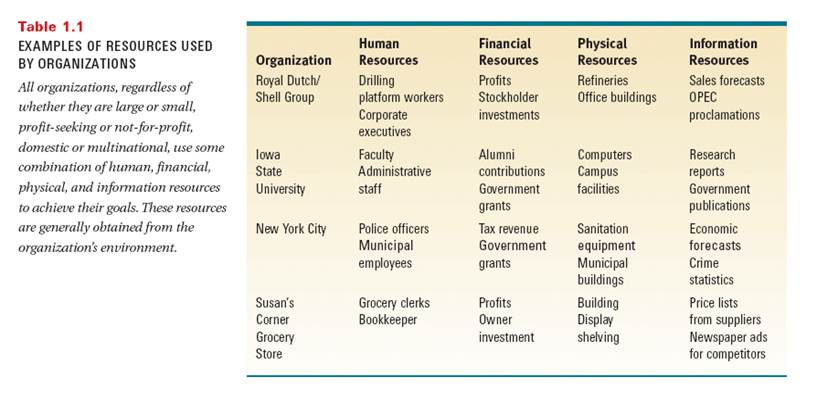
2. Meaning and Definition of Management
Management means many things to many people. Economist regards it as a factor of production. Socialist views it as a class or group of persons. While Management practitioners treat it as a process. The trade unionist considers Management as an exploiting set of people. In simple terms. ‘Management is what a manager does, Mary Parker Follett says. Management, in its true sense, is a process by which an organization realizes its objectives in a planned way.
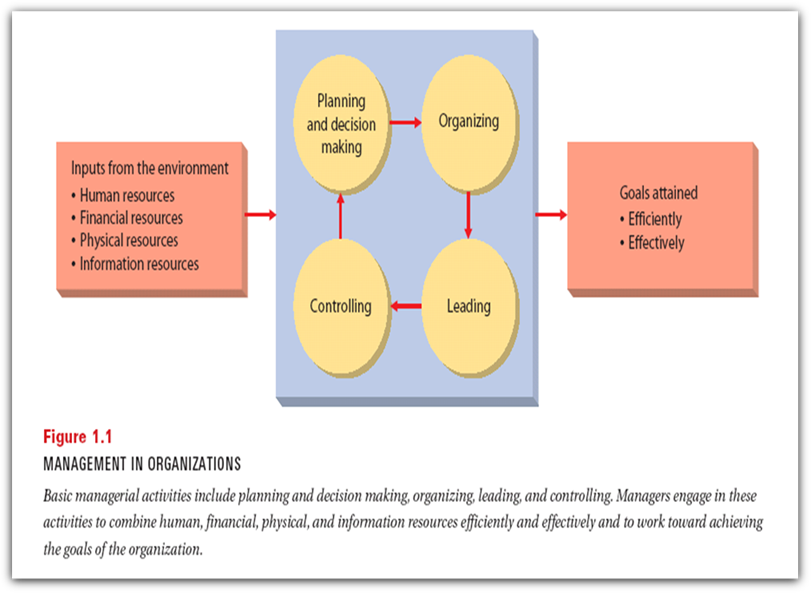
Management is basically concerned with ideas, things and people; it is very difficult to define the term Management precisely. In fact, there are various definitions of management. But none has been universally accepted. Nor can any definition cover all the facets of Management, given its dynamic nature. The following are a few definitions of Management given by eminent authors on the subject.
According to Griffin, “Management is a set of activities (including planning and decision making, organising, leading and controlling) directed at an organisation’s resources (human, financial, physical and information) to achieve organisational goals efficiently and effectively”.
According to James A.F. Stoner, “Management is the process of planning, organising, leading and controlling efforts of organisation members and of using all other organisational resources to achieve stated organisational goals.”
According to Dr Jarnes Lundy, “Management is a task of planning, coordinating, motivating and controlling the efforts of others towards specific objectives.”
Peter F. Drucker defines Management as “an economic industrial society”. !t means taking action to make the desired results pass.”
E.F.L. Breach is defined as. “Management is concerned with seeing that the job gets done; its tasks are centred on planning and guiding the operations that are going on in the enterprise”
According to George R. Terry. Management is a distinct process consisting of planning, organising, actuating and controlling, performed to determine and accomplish the objectives by the use of people and resources.
Almost all the above definitions suggest the following:
- Management is a process because all managers, irrespective of their levels in the organization engage in certain interrelated activities in order to achieve the desired goals.
- Managers use all the resources of the organisation, both physical and human.
- Management aims at achieving the organisation’s goals. To achieve the objectives, every organisation uses certain inputs like materials and machinery. money and the service of men. These inputs are drawn from the environment in which the organisation exists. Whether an organisation is engaged in business or not, the various inputs are judiciously used to produce the outputs. This process, which involves the conversion of inputs into outputs, is common to all organisations, and it is shown in the following exhibit.
2.1 INPUT-OUTPUT MODEL
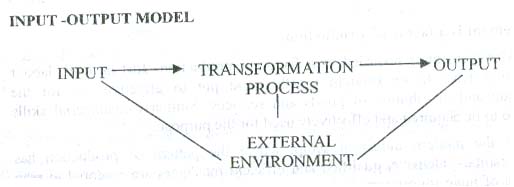
This output of the firm may be a physical product or service. Since a business organisation is an economic entity, the justification for its existence lies in producing goods and services that satisfy the needs of the people. This raises the question of effectiveness in transforming the inputs into outputs. How effectively the goods and services are produced is a matter of concern for any society, given the scarcity of resources. Effective management plays a crucial role in this context.
3. Nature of Management
In spite of the growing importance of management as an academic discipline, immensely contributing to the quality of human life, the concept is still clouded by certain misconceptions. No doubt, management as an academic body of knowledge has come a long way in the last few years. It has grown in saturation and gained acceptance all over the world. Yet, it is a paradox that the term Management continues to be the most misunderstood and misused. A study of the process of management reveals the following points about the nature of management.
3.1 Management is a Universal process
Where there is human activity, whether individual or joint, there is management. The process of management can be noticed in all spheres of life. The basic nature of management activity is the same whether the organisation to be managed is a family, a club, a trade union, a trust, a municipality, a business concern or the government. Slight variations in approach and style may be there from organisation to organisation, but the management activity is basically the same everywhere.
3.2 Management is a factor of production
Management is regarded as a factor of production. Just as land, labour and capital have to be brought together and put to effective use for the production and distribution of goods and services. Similarly, managerial skills also have to be acquired and effectively used for the purpose.
In the modern industrial setup, where the pattern of production has become capital- intensive, qualified and efficient managers are essential to reap the fruits of huge investment in business. In fact, the more important role would be the role of management.
3.3 Management is Goal- Oriented:
The most important goals of all management activity are to accomplish the objectives of an enterprise. These objectives may be economic, socio-economic, and management at different levels seeks to achieve these in different ways. But at all times, management has definite objectives to pursue, and it employs all the resources as it commands – men, money, materials, machines and methods in the pursuit of the objectives.
3.4 Management is Supreme in Thought and Action:
Determination of the objectives of an enterprise tests the collective wisdom and sense of imagination of its management. The objectives should be neither too high sounding or difficult to achieve, nor too low-pitched to rob workers of their sense of achievement. But mere setting of objectives will be of no avail if there is no vigorous action to achieve them.
Management scores over other activities with respect. It sets realisable objectives and then masterminds action on all fronts to accomplish the Managers belong to that rare breed of men who are not only aware of what to be achieved and how, but also possess the capability and courage to accept the challenges of doing it.
3.5 Management is a Group Activity:
The basic requirement of successful management is the replacement of with “we”. An enterprise will not be able to achieve its objectives if only one or a few individuals or departments thereof are efficient, the rest being indifferent. For example, even the best performance by the production department will become meaningless if the sales department does not make efforts to sell the products or if the finance department does not ensure adequate financing.
3.6 Ensures Availability of Resources:
For the success of an enterprise, it is necessary that all the human and physical resources at its disposal men money, materials, machines, etc., are efficiently coordinated to attain the maximum levels of productivity. It is well known that the combined productivity of different resources will always be much higher than the total of the individual productivity of each resource. The test of managerial ability lies in coordinating the various resources to achieve maximum combined productivity. With proper management, one plus one does not mean two, but eleven. This is also called the multiplier effect of management activity.
3.7 Management is a Dynamic Function:
Management is a dynamic function of a collective enterprise which is constantly engaged in casting and recasting the enterprise in the world of an ever-changing business environment. Not only this, but it also sometimes initiates moves that reform and alter the business environment. If an enterprise is well-equipped to face the changes in the business environment brought about by economic, social, political, technological or human factors, it can soon adapt itself to a changed environment or innovate to attune itself to it. For example, in the face of a fall in the demand for a particular product, the enterprise can be kept in readiness to explore new markets or switch over to the production of new goods with ready demand.
3.8 Management is a Social Science:
Management consists of getting things done by others, which involves dealing with individuals, each one of whom has a different level of sensitivity, understanding and dynamism. In fact, no definite principles or rules can be laid down in respect of human behaviour; these change from individual to individual and from situation to situation. No doubt, a manager may seek guidelines from the established principles and rules, but he cannot base his decisions on them.
Management as an activity has carved out for itself an important place in society. In fact, there is an interaction between management and society. While society influences managerial actions, managerial actions influence society. By their decisions, management of large undertakings influences the economic, social, political, religious, moral and institutional behaviour of the members of society. This has created an impact on the social and moral obligations of business management, which cannot be easily ignored.
3.9 Management is a System of Authority:
It is the job of management to bring about a harmonious arrangement and pattern among the different resources employed in an undertaking. In fact, its role as a factor of production puts an obligation on it to be methodical in plans and procedures, and systematic and regular in their implementation. For this, it is necessary that the authority vested in the management is to be exercised properly and correctly. This calls for well-defined lines of command, delegation of suitable authority and responsibility at all levels of decision-making. Unless there is a proper balance between authority and responsibility at each level of decision-making, the organisation might not succeed in the task of accomplishing its objective.
3.10 Management is a Profession:
Management makes a judicious use of available means (various factors of production) to accomplish (organisational aims and objectives). To achieve this successfully, managers need to possess managerial knowledge and training. Moreover, they have to conform to a recognised code of conduct and remain conscious of their social and human obligations. And for this, they are amply rewards are well paid and well provided by the organisation for which they work. Moreover, they enjoy considerable social prestige too.
4. NEED FOR MANAGEMENT
Management is an essential accompaniment of all social organisations, and it is to be found everywhere as a distinct, separate and dominant activity. The importance of management cannot be overemphasised. The significance of Management may be outlined in the following paragraphs.
4.1 To Meet the Challenges of Change.
In recent years, the challenge of change has become intense and critical. The complexities of modern business can be overcome only by scientific management.
4.2 For effective utilisation of the Seven M’s:
There are seven M’s in business, viz., men, materials, money, machines, methods, markets and management. Management stands at the top of all these Ms: It determines and controls all other factors of business.
4.3 For the Development of Resources:
Good management procures good business by creating vital, dynamic and life- giving force in the organisation.
4.4 Management Directs the Organisation:
Just as the mind directs and controls the body to fulfil its desire, similarly, management directs and controls the organisation to achieve the desired goal.
4.5 Integrate various interests:
In the group efforts, there are various interest group and they put pressure on other groups for maximum share in the total output. Management balances this pressure and integrates the various interests.
4.6 Management provides Stability:
In modern society, the management provides stability by changing and modifying the resources in accordance with the changing environment of society.
4.7 Management Provides Innovation:
Management provides new ideas, imaginations and vision to the organisation and necessary leadership for better and greater performance.
4.8 Management: Provide coordination and establish team spirit:
Management coordinates the activities of the different departments in an enterprise and establishes team spirit amongst the personnel.
4.9 Management tackles business Problems:
Goods management serves as a friend, philosopher and guide in tackling business problems. It provides a tool for the best way to do a task.
4.10 A tool of Human Development:
Management is necessary not only for direct things, but also for the development of men. It makes the personality of the people and attempts to raise their efficiency and productivity.
Questions
1. Define Management. Discuss the meaning of Management with reference to the definitions given by different authors.
2. “Management is a process.” Explain this statement in the light of managerial functions.
3. What is the Input-Output Model? Explain it briefly and discuss its significance in management.
4. “Management is a Universal Process.” Explain the statement with suitable examples.
5. Discuss the Nature of Management. Explain any five characteristics in detail.
6. Why is Management considered both a Social Science and a Profession? Explain with appropriate arguments.
7. Discuss the Need for Management in modern organisations. Explain any five points.
Article Titles-MGT 1001-FDT
| SL | Title | Student Name and ID | ORCID ID | Google Scholar ID |
| Prof. Dr Kazi Abdul Mannan ID: 25012-039 | 0000-0002-7123-132X | citations?user=u10AYtIAAAAJ&hl=en | ||
| 1. | Exploring Creative Leadership Practices in Fashion Design Studios: A Qualitative Inquiry | |||
| 2. | Managerial Decision-Making in Sustainable Fashion Startups: A Phenomenological Study | |||
| 3. | Understanding Team Dynamics in Fashion Technology Projects: Insights From Designers and Managers | |||
| 4. | The Role of Organizational Culture in Fashion Innovation: A Multiple Case Study | |||
| 5. | Navigating Change Management in Fashion Retail Digitization: A Qualitative Exploration | |||
| 6. | Design Thinking and Strategic Management in Fashion Tech Firms: Practitioner Perspectives | |||
| 7. | Managing Creative Conflict in Collaborative Fashion Design Teams: An Interpretive Study | |||
| 8. | Leadership Styles and Designer Performance in Luxury Fashion Houses: A Narrative Approach | |||
| 9. | Qualitative Insights Into Talent Development and Retention in Fashion Technology Departments | |||
| 10. | Ethnographic Perspectives on Decision-Making Processes in Fashion Design Education | |||
| 11. | Exploring Manager–Designer Relationships and Their Impact on Product Innovation | |||
| 12. | The Influence of Corporate Governance on Ethical Fashion Practices: Voices From the Industry | |||
| 13. | From Concept to Consumer: Managerial Practices in Fashion Supply Chain Integration | |||
| 14. | Stakeholder Engagement in Sustainable Fashion Technology Initiatives: A Qualitative Analysis | |||
| 15. | Organizational Change and Digital Transformation in Fashion Design Firms: Lived Experiences | |||
| 16. | The Impact of Leadership Communication on Creative Outcomes in Fashion Labs | |||
| 17. | Negotiating Innovation and Commercial Viability: Managers’ Perspectives in Emerging Fashion Brands | |||
| 18. | Understanding Managerial Support for Technological Adoption in Fashion Design Studios | |||
| 19. | Case Study of Strategic Planning Practices in High-End Fashion Tech Organizations | |||
| 20. | Collaborative Leadership and Co-Creation in Fashion Technology Development | |||
| 21. | The Role of Informal Networks in Decision Making in Fashion Design Management | |||
| 22. | Exploring Managerial Challenges in Sustainable Material Implementation in Fashion Design | |||
| 23. | Qualitative Insights Into Risk Management Practices in Fashion Product Development | |||
| 24. | Organizational Learning and Innovation Culture in Fashion Tech Startups: A Grounded Theory Study | |||
| 25. | Empowering Women Leaders in Fashion Technology: A Phenomenological Approach | |||
| 26. | Managerial Perspectives on Consumer-Driven Innovation in the Fashion Industry | |||
| 27. | Qualitative Study of Leadership Influence on Technological Creativity in Fashion Firms | |||
| 28. | Interpreting Managerial Strategies for Balancing Aesthetics and Functionality in Fashion Tech | |||
| 29. | Understanding Conflict Resolution and Creative Freedom in Fashion Design Teams | |||
| 30. | Navigating Organizational Identity and Brand Management in Fashion Technology Companies | |||