Journal Home
OPEN ACCESS
Caution about AI Generated News Editorial Accountability and Support for Proportionate Regulation in Bangladesh
| Mahmudul Hasan ORCID: https://orcid.org/0009-0008-3946-1476 Md. Mirajul Islam ORCID: https://orcid.org/0009-0008-5560-7201 Nusrat Zahan Nishi ORCID: https://orcid.org/0009-0009-0516-4075 Department of Law Shanto-Mariam University of Creative Technology Dhaka, Bangladesh |
| Prof. Dr Kazi Abdul Mannan Department of Business Administration Faculty of Business Shanto-Mariam University of Creative Technology Dhaka, Bangladesh Email: drkaziabdulmannan@gmail.com ORCID: https://orcid.org/0000-0002-7123-132X Corresponding author: Mahmudul Hasan: mdmahmudulhasansohan1970@gmail.com |
J. state gov. mass media. 2026, 4(4); https://doi.org/10.64907/xkmf.v04i04.jsgmm.4
Submission received: 20 September 2026 / Revised: 25 October 2026 / Accepted: 28 October 2026 / Published: 30 October 2026
Download (PDF)
Abstract
Generative artificial intelligence complicates the relationship between news credibility and demands for regulation. Caution about substantially AI-generated news need not imply rejection of editorially supervised assistance, while support for accountability need not imply support for unrestricted content controls. This study examines these distinctions in 385 adult, AI-aware questionnaire records supplied as empirical data from Bangladesh. It analyses five separate statements concerning caution, labelling, accuracy accountability, oversight-related trust and proportionate regulation, with supporting awareness and verification items. Low five-item block reliabilities preclude treating the questionnaire as a validated latent-variable model. Analyses combine response distributions, paired contrasts, joint endorsement patterns, rank correlations and exploratory adjusted logistic regression. Accuracy accountability received 84.2% endorsement and oversight-related trust 83.1%, compared with 69.4% for caution, 68.8% for appropriate labelling and 66.8% for proportionate rules respecting lawful expression. Caution and oversight-related trust were jointly endorsed by 57.7%. Accountability exceeded rules endorsement by 17.4 percentage points, while similar aggregate labelling and rules percentages concealed differing responses in 170 records. No selected correlation or focal binary-model coefficient met the 5% threshold after Holm adjustment. The oversight coefficient was positive but sensitive to response coding and sample restriction. The findings distinguish epistemic caution, editorial responsibility and conditional regulatory support rather than demonstrating a causal trust-to-regulation pathway. They support evaluating particular disclosures and oversight procedures against both informational outcomes and expressive rights. Mixed respondent status, undocumented recruitment and fieldwork dates, single-item measurement and unresolved source-documentation labels constrain generalisation. The contribution is an item-specific account of news governance preferences that does not equate favourable survey responses with verified competence or a mandate for coercive regulation.
Keywords: news credibility; editorial accountability; artificial intelligence; conditional trust; media governance; freedom of expression; Bangladesh
1. Introduction
Generative artificial intelligence can assist translation, summarisation and news production while also enabling convincing fabrication. The distinction between assistance and deception depends on the information, its presentation and the editorial process. A report prepared with AI may accurately represent independently checked evidence; a human-written report may be false. Audiences therefore confront a problem of evaluating claims and responsibility rather than simply identifying which production tool was used. Scholarship on information disorder supplies a useful distinction between the characteristics of a message and the circumstances in which it is produced and circulated.[1]
News credibility also depends on cues that are easier to imitate than the practices they represent. A professional style, familiar format or confident tone can invite acceptance without demonstrating verification. Research on online credibility examines the cognitive heuristics through which people navigate information-rich settings.[2] The present study asks how judgements about AI news relate to editorial safeguards and regulatory preferences when these are measured separately.
The problem has a legal dimension because measures directed at deception may affect lawful reporting and expression. Bangladesh’s constitutional framework protects speech and press freedom subject to the qualifications specified in article 39. International human-rights standards separately require restrictions on expression to satisfy defined conditions, including necessity and proportionality.[3] A survey showing concern about AI-generated material cannot by itself establish that a particular restriction is lawful, effective or publicly authorised.
The research problem links trust in AI-generated news with the perceived need for digital media regulation. The available questionnaire, however, does not contain a validated general trust scale or an unqualified demand for more regulation. Its focal items ask about caution when news is substantially AI-generated, appropriate labelling, continuing organisational responsibility for accuracy, trust associated with transparent editorial oversight, and proportionate rules that respect lawful expression. These statements concern different judgements. Their wording matters to the interpretation of every result.
Caution can coexist with confidence in a supervised process. Equally, a person may endorse editorial accountability without endorsing the particular formulation of regulatory rules. These possibilities are lost when responses are collapsed into one “trust and regulation” score. An aggregate correlation could then combine attitudes towards news, expectations of publishers and preferences about public authority without establishing which relationship it represents. The first empirical task is consequently to describe the individual statements and their joint response patterns.
There is a parallel risk of treating a favourable regulatory response as support for all regulatory instruments. The rules item expressly conditions support on addressing harmful uses while respecting lawful expression. It does not ask about imprisonment, blocking, licensing, surveillance or a named statute. Interpreting it as approval of those measures would change the question answered. The distinction between an expressed preference and a legally justified institutional response is central to this article.
Experimental research shows that disclosure can change reactions to AI-labelled news and that the meaning audiences attach to the label matters.[4] A cross-national longitudinal study examines AI literacy, attitudes towards AI and trust in AI news across the United States, Spain and Chile.[5] These studies motivate careful measurement, but their designs and populations do not provide Bangladesh-specific estimates for the present questionnaire.
The current contribution concerns the relationship between different governance judgements within the same records. Marginal percentages can show that two statements receive similar support while concealing substantial individual disagreement. Conversely, different endorsement rates do not establish that respondents reject the lower-endorsed principle: neutral answers remain possible, and the statements impose different conditions. Analysing both marginal distributions and joint patterns makes these limits visible.
The study also distinguishes its contribution from a deepfake-detection or sharing-behaviour analysis. It does not score respondents’ ability to detect manipulated content, observe what they share, or estimate the prevalence of false news. Its focus is the separation of epistemic caution, editorial responsibility, oversight-related trust and conditional rules support. This narrower scope follows the actual instrument and offers a basis for a better specified future governance study.
The objective is to examine how the five focal news-governance statements are endorsed and associated within the supplied Bangladesh survey records. Four questions organise the analysis. RQ1 asks how responses are distributed across caution, labelling, accountability, oversight-related trust and proportionate rules. RQ2 asks whether caution and oversight-related trust coexist, and whether similar marginal support for labels and rules conceals differing individual responses. RQ3 asks how selected pairs are associated on their ordered scales. RQ4 asks how rules endorsement relates to caution, oversight-related trust, error awareness and reported source checking after limited adjustment.
These are exploratory questions, specified for analysis of the available instrument. They are not presented as preregistered hypotheses. The article retains a theoretical framework but does not fit unmeasured mediators or claim that a cross-sectional association identifies the effect of a governance intervention. Section 2 develops the framework, Section 3 describes methods, Section 4 reports results, and Sections 5-7 address interpretation, implications and limitations. Section 8 records the declarations.
2. Literature Review and Theoretical Foundation
The theoretical foundation separates judgements about information from expectations about organisations and public rules. Credibility research helps explain the role of cues and verification; media-literacy research identifies relevant evaluative practices; and the Theory of Planned Behavior clarifies why statements of belief or intention cannot be equated with observed conduct. The integration guides the interpretation of individual items rather than assuming that their conceptual proximity establishes a common latent construct.
2.1 AI news and information credibility
AI-generated news is not a single exposure category. It may mean automated drafting under editorial control, a synthetic image illustrating a real event, a fabricated report or the alteration of an authentic source. The focal questionnaire itself distinguishes content generated substantially by AI from AI-assisted news subject to transparent oversight. A comparison of those responses therefore concerns different propositions, not a controlled comparison of identical news with and without supervision.
Metzger and Flanagin describe how credibility judgements in online environments use cognitive heuristics.[6] This perspective suggests that source reputation, contextual consistency and apparent endorsement can shape evaluation when direct verification is costly. Yet a cue is not proof. For AI-assisted journalism, an oversight claim might indicate a process worth investigating, or it might simply serve as a reassuring label. The questionnaire measures agreement that transparent oversight increases trust, without checking whether respondents could identify meaningful oversight.
Deepfake scholarship likewise distinguishes uncertainty from successful deception. Vaccari and Chadwick examine synthetic political video in relation to deception, uncertainty and news trust.[7] The legal analysis of deepfakes by Chesney and Citron connects fabrication to privacy, democratic and security concerns.[8] Neither contribution licenses assuming that all AI media is false or that all uncertainty requires suppression. The appropriate object of evaluation remains the particular claim and the evidence available for it.
Trust should also be distinguished by its referent. Confidence in an organisation, acceptance of one factual claim and confidence in a technology can vary independently. The present item ANR4 refers to trust in AI-assisted news under transparent editorial oversight. It is not a direct rating of confidence in a named outlet, an actual editorial procedure or a specific news item. ANR1 expresses caution rather than a reverse-worded general trust measure. Reversing its score would erase that conceptual difference.
2.2 Disclosure and editorial accountability
Disclosure offers information about production, while accuracy assessment concerns whether the report is correct. Altay and Gilardi’s experiments show that AI labels can lower perceived accuracy and willingness to share across headlines of differing veracity and origin; participants’ interpretation of automation helps explain these responses.[9] A disclosure can therefore serve a legitimate informational purpose without necessarily improving every dimension of judgement. Label design should be evaluated against defined outcomes rather than assumed to restore trust.
This distinction motivates separating ANR2 from ANR3. A label states that AI was involved where appropriate; continuing accountability states that a news organisation remains responsible for accuracy despite that involvement. A publisher can satisfy a disclosure expectation while failing to correct an error. Conversely, a fully checked report may still require a clear account of material AI contribution. The two principles address different responsibilities, and common support does not establish that respondents interpret them identically.
ANR3 also differs from a proposal to make AI systems legal persons or to transfer liability automatically to developers. It records a judgement about organisational accountability. The instrument does not specify a civil cause of action, a professional code, a sanction or the division of responsibility between a publisher and an external supplier. Those are separate doctrinal and policy questions. The present analysis keeps the normative expectation distinct from a conclusion about existing legal liability.
Transparent oversight could include responsibility for checking claims, tracing sources and correcting errors. However, the questionnaire provides no experiment in which those components are varied. The study therefore cannot identify the effect of a correction policy or disclosure design. Its descriptive contribution is to establish whether respondents agree with the oversight-related trust statement and how that response aligns with caution and rules support.
2.3 AI literacy and verification practices
AI literacy includes understanding capabilities and limitations and critically evaluating use. Long and Magerko provide a competency-based account extending beyond operational familiarity.[10] In the present data, AIL1 measures self-reported awareness that generative AI can produce plausible inaccuracies. It does not test whether a respondent recognises an actual error. AIL2 reports verification before reliance. DVI2 and DVI3 refer more specifically to checking sources and seeking corroboration when digital content is suspicious or authenticity uncertain.
These differences matter because agreement with a general practice need not translate into performance in a difficult case. Lateral-reading research examines evaluation through checking information beyond the original site.[11] Digital-literacy intervention research in the United States and India evaluates discernment using information tasks rather than treating favourable self-description as the outcome.[12] Those designs supply examples for future assessment; their results cannot be reproduced by a questionnaire asking whether a respondent generally checks sources.
Accuracy-prompt research further treats information evaluation as responsive to attention and decision context. Pennycook and colleagues investigate whether directing attention towards accuracy changes sharing, while Pennycook and Rand synthesise experiments on accuracy prompts.[13] Such work motivates interventions that can be tested against observable decisions. The present cross-sectional records contain no randomised prompt or subsequent sharing trace. Source checking is therefore a reported practice covariate, not a verified behavioural mediator.
AI use frequency is also not equivalent to literacy. A frequent user may encounter more opportunities to verify information without knowing how to do so effectively. A person who reports no generative-AI use may still encounter AI-generated news. The eligibility screen establishes awareness, while the frequency item concerns use; neither establishes the frequency or quality of exposure to AI-assisted journalism. The analysis adjusts for frequent use descriptively and avoids interpreting it as a measure of expertise.
2.4 Theory of planned behaviour and the limits of inference
Ajzen’s Theory of Planned Behavior relates intention to attitudes, subjective norms and perceived behavioural control, with behaviour also depending on control and opportunity.[14] It is relevant because the instrument contains beliefs, reported practices and a policy preference. These domains should be distinguished rather than placed automatically on one causal path. The statement that oversight increases trust is not an observed change in confidence, and support for rules is not an intention to comply with a particular legal duty.
A full test of the theory would require action-specific measures with compatible targets and times. For example, a study could define a particular AI-assisted report, state its disclosure and oversight conditions, ask about the intention to share, and observe a later choice. Norms and perceived control would need separate operationalisation. The supplied instrument does not provide those measures. Its broad items cannot confirm the complete theoretical sequence or reveal whether trust causes compliance.
The integration with credibility and media literacy therefore provides an interpretive discipline. Credibility concerns what is believed and why; literacy concerns evaluative competencies and practices; the behavioural framework distinguishes those antecedents from action. None establishes that low inter-item coherence can be solved by adding a structural path. Measurement must fit the object of the claim before a statistical model can be given a theoretical meaning.
2.5 Regulation and expressive rights
The rules statement is explicitly conditional: harmful uses should be addressed through proportionate measures that respect lawful expression. This formulation leaves open which institution should act, which conduct warrants intervention and which remedy is suitable. UNESCO’s platform-governance guidelines offer a framework placing freedom of expression and access to information alongside accountability and institutional responsibilities.[15] They are guidance, not a Bangladesh statute or evidence that respondents have read or support the document.
The domestic legal context also requires precision. The authoritative Bangla text identifies the 2026 Cyber Protection Act, Act No 81, as replacing the 2025 ordinances through section 51. The July 2026 amendment, Act No 99, removes section 20.[16] English titles here are descriptive translations of the Bangla statutory titles. The survey does not test knowledge of either enactment, and no causal effect of a legislative change is estimated.
Constitutional and international standards provide normative constraints that remain relevant regardless of an endorsement percentage. Article 39 and article 19 of the ICCPR address expression within their respective legal frameworks, while General Comment No 34 elaborates the conditions for permissible restrictions.[17] Popular concern may motivate investigation, but it does not displace these standards. The empirical question is about expressed preferences, whereas the legal question concerns the justification and procedure for a specific measure.
2.6 Exploratory framework
Figure 1 distinguishes the five focal statements and the adjusted analysis. The primary outcome is endorsement of proportionate rules, ANR5. Four focal predictors are caution, ANR1; oversight-related trust, ANR4; error awareness, AIL1; and source checking, DVI2. Frequency and recorded student status provide limited adjustment. Labelling and accountability are compared descriptively with rules support rather than combined with it into one outcome.
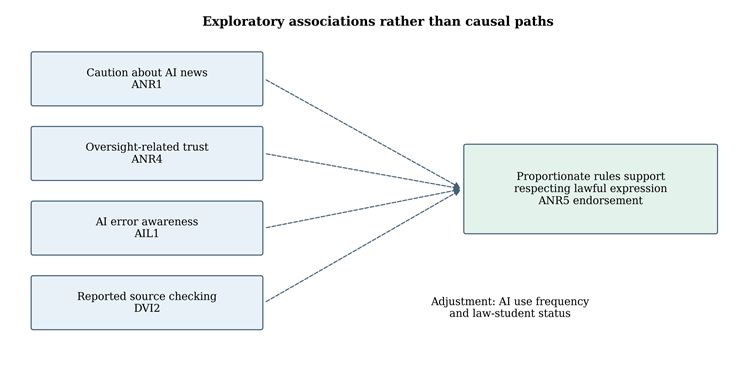
Figure 1. Exploratory framework for proportionate rules support
Dashed links denote the selected conditional associations. Labelling and accountability are examined separately through distributions and paired comparisons. No causal mediation or moderation pathway is estimated.
The framework does not assert that all relationships are positive or causal. A cautious respondent might favour safeguards, distrust the effectiveness of regulation or favour editorial rather than state action. An oversight-positive respondent might support proportionate rules or regard strong journalism as sufficient. These competing possibilities make item-specific estimation more defensible than a predetermined claim that distrust inevitably produces regulatory demand.
3. Methodology
This study analyses a cross-sectional numerical questionnaire dataset supplied by the researchers as real data from Bangladesh. Reporting separates author-confirmed participant protections, procedures implemented during analysis and field details not established by the workbook. This approach follows the transparency objective of observational reporting guidance.[18]
3.1 Design and analytical population
The unit is an individual coded questionnaire record. All 385 records contain affirmative consent, adult eligibility and relevant AI awareness. Recorded status identifies 227 law students, 81 law graduates, 47 advocates or legal professionals and 30 other relevant respondents. The article consequently describes this mixed sample and examines the law-student subset separately. It does not classify all respondents as students or claim that the data represent Bangladesh’s general news audience.
The workbook records residence or work location, broad education and AI experience. It does not identify specific outlets, individual news exposures or observed sharing decisions. Reactions to AI news are therefore treated as general self-reported judgements. The study is exploratory and was not preregistered; its selection of items and comparisons reflects inspection of the supplied questionnaire structure, not an independent confirmatory test.
3.2 Sample size and source documentation
A conventional Cochran calculation with Z = 1.96, p = 0.50 and e = 0.05 gives 384.16, rounded to 385.[19] The available dataset contains 385 records. Numerical agreement with this planning target does not establish probability sampling, a national margin of error, a completed target of 400 or 428 invitations. No response rate is reconstructed without a documented denominator.
Fieldwork dates, recruitment channels, named sampling sites and a sampling frame are not supplied. A separate pilot dataset and records of instrument revision are also unavailable. The manuscript therefore makes no claim that a particular pilot was completed or that specified respondents were randomly recruited. Demographic locations are response categories, not documentation of where invitations were distributed.
The Codebook describes the respondent sequence and optional contextual comments as synthetic. The numerical responses were supplied as real data; the labels alone do not establish that those responses were simulated. The optional comments are excluded, IDs are used only to distinguish rows, and no qualitative findings are derived from text. The residual documentation inconsistency requires reconciliation with original collection records; numerical analysis does not authenticate recruitment.
3.3 Questionnaire and measurement
The instrument uses five ordered categories from strongly disagree to strongly agree. Four five-item blocks cover AI literacy, deepfake verification, AI news and regulation, and responsible social-media behaviour. Table 1 maps the five focal ANR statements and their analytical limits; Appendix A reproduces their exact wording with the supporting items. Sources for the item wording are the supplied Codebook, rather than an unverified claim that the statements constitute previously validated scales.
Table 1. Focal news-governance items and their interpretation
| Item | Focus | Analytical meaning |
| ANR1 | Caution about substantially AI-generated news | Caution; not a reverse-coded trust scale |
| ANR2 | Appropriate labelling | Disclosure preference; not accuracy judgement |
| ANR3 | Organisational accuracy accountability | Normative responsibility; not a liability finding |
| ANR4 | Trust associated with transparent oversight | Conditional self-report; not an intervention effect |
| ANR5 | Proportionate rules respecting lawful expression | Conditional preference; binary model outcome |
Source: supplied Group 14 Codebook. Exact wording and supporting items appear in Appendix A.
Five-item coefficient alpha is 0.129 for AIL, 0.341 for DVI, 0.228 for ANR and 0.317 for MSB. These values, together with the different response objects, do not support a validated common score. Alpha is not itself a dimensionality test.[20] No selective item deletion, latent trust score, AVE, HTMT, composite reliability or SEM path is reported. The analysis retains separate statements and does not reverse caution into a trust measure.
3.4 Data screening and retention
All focal items and model covariates are complete. Sixteen optional AI-tool entries are missing, but that field is not used in the analyses. No exact duplicate is found after excluding the identifier and contextual-text field. Nine records give a constant response across the five ANR items; none gives a constant response across all 20 agreement items. These observations are retained because constant agreement across related statements does not by itself establish careless responding.
The checks establish consistency of available coding rather than independent participant identity. There is no timing information or scored attention task. All 385 rows are retained, without imputation, weighting or outcome-dependent exclusions. Codes and recorded item responses remain unchanged. The analysis distinguishes screening for data structure from verification of fieldwork provenance.
3.5 Descriptive and paired analysis
Each focal item is reported using its complete response counts, mean, standard deviation and endorsement proportion. Endorsement combines agree and strongly agree; neutral responses remain explicit in the distributions. Pointwise Wilson intervals summarise uncertainty under conventional sampling assumptions and do not correct selection bias.[21] Means are descriptive summaries of ordered categories, not proof of equal psychological distances between responses.
Three within-person contrasts compare caution with oversight-related trust, labelling with rules, and accountability with rules. Exact McNemar tests use discordant endorsement pairs, with Holm correction across the three tests.[22] Pointwise percentile intervals for percentage-point differences use 10,000 whole-respondent bootstrap resamples, preserving pairing.[23] Joint counts report both endorsed, first only, second only and neither. Differing content and conditions prevent interpreting the contrasts as intervention effects or rankings of intrinsic importance.
3.6 Associations and adjusted models
Six selected Spearman correlations use the ordered item responses. Pointwise bootstrap intervals use 3,000 respondent resamples; Holm adjustment treats the six tests as one family. The primary adjusted analysis is a binomial logistic model of ANR5 endorsement with six predictors. Four focal predictors retain their original 1-5 scores; frequency distinguishes weekly-or-more use, and status distinguishes law students. The model includes an intercept and estimates conditional associations rather than a causal adjustment set.[24]
The binary outcome has 257 endorsements and 128 other responses. Heteroskedasticity-robust (HC0) sandwich covariance estimates supply pointwise Wald intervals.[25] Holm adjustment covers the four focal coefficients; covariates remain descriptive. An ordinal proportional-odds model retains ANR5’s four observed categories as a sensitivity analysis, using observed-information intervals and separate four-coefficient Holm correction.[26] It assumes common slopes and a linear one-point predictor association. A student-only binary model removes the constant status indicator. Sensitivity estimates are not independent replications. Computation uses Python, pandas, NumPy, SciPy and statsmodels.
3.7 Ethics and participant protection
Ethical approval for this study was obtained from the Center for Academic & Professional Career Development and Research (CAPCDR), an external institutional body, under approval reference CAPCDR: SMUCT/LLB/SS-0020260908-27. External ethical review was sought because Shanto-Mariam University of Creative Technology does not have an institutional ethics committee responsible for reviewing this type of research.
The authors confirm informed consent before questionnaire completion, voluntary participation, anonymity and the option to discontinue. All analysed records affirm consent and adult eligibility. Only aggregate results are reported, contextual comments are excluded, and no attempt is made to identify individuals. Discontinuation is not represented as a promise to locate an already anonymous submitted response. These safeguards do not establish representative sampling or resolve the source-documentation limits described above.
4. Results
The results describe the supplied questionnaire records and distinguish response prevalence from within-person alignment and adjusted associations. Percentages use N = 385 unless another denominator is stated. The tables report exploratory estimates without interpreting a favourable response as observed accuracy, trustworthiness or compliance.
4.1 Sample composition
Table 2 presents recorded status and AI-use frequency. The mixed composition determines the scope of the main analysis and provides the basis for a separate student-restricted sensitivity check. It does not establish that any status group is representative of its wider population.
Table 2. Recorded respondent status and AI-use frequency
| Measure | Category | Count (%) |
| Current status | Law student | 227 (59.0%) |
| Law graduate | 81 (21.0%) | |
| Advocate or legal professional | 47 (12.2%) | |
| Other relevant respondent | 30 (7.8%) | |
| AI-use frequency | Weekly | 165 (42.9%) |
| Daily or almost daily | 105 (27.3%) | |
| Monthly | 66 (17.1%) | |
| Less than monthly | 38 (9.9%) | |
| Never | 11 (2.9%) |
N = 385. Law students form a separately recorded subset of 227. Residence and status categories do not establish a sampling frame.
Law students account for 227 records (59.0%), graduates for 81 (21.0%), advocates or legal professionals for 47 (12.2%), and other respondents for 30 (7.8%). The largest age category is 21-23 years, with 140 (36.4%), followed by 24-26 with 88 (22.9%). There are 187 female respondents (48.6%), 183 male respondents (47.5%), ten who prefer not to say and five recorded as other.
Dhaka is recorded for 159 (41.3%), district towns for 82 (21.3%), upazila or rural areas for 72 (18.7%), other city corporations for 63 (16.4%) and other locations for nine. Weekly or daily AI use is reported by 270 (70.1%); 11 report never using it. Training is absent for 210 (54.5%), while 115 report a short orientation and 60 a course or certified training. Awareness eligibility does not imply personal tool use.
4.2 Distribution of the five focal statements
Table 3 retains the five response categories so that neutral answers are distinguishable from disagreement. The highest means concern organisational accountability and oversight-related trust. Endorsement varies more widely than a common “positive attitude” label would suggest.
Table 3. Distributions of the five focal statements
| Item | Counts 1 / 2 / 3 / 4 / 5 | Mean | SD | Endorsed n (%) | 95% CI (%) |
| ANR1 | 1 / 10 / 107 / 183 / 84 | 3.88 | 0.78 | 267 (69.4%) | 64.6 to 73.7 |
| ANR2 | 0 / 16 / 104 / 192 / 73 | 3.84 | 0.78 | 265 (68.8%) | 64.0 to 73.3 |
| ANR3 | 0 / 2 / 59 / 159 / 165 | 4.26 | 0.73 | 324 (84.2%) | 80.2 to 87.5 |
| ANR4 | 0 / 2 / 63 / 150 / 170 | 4.27 | 0.75 | 320 (83.1%) | 79.1 to 86.5 |
| ANR5 | 0 / 11 / 117 / 185 / 72 | 3.83 | 0.76 | 257 (66.8%) | 61.9 to 71.3 |
Categories 1-5 run from strongly disagree to strongly agree. N = 385. Endorsement combines agree and strongly agree. Wilson intervals are pointwise; means and SDs are descriptive.
Accuracy accountability is endorsed by 324 respondents (84.2%), while 320 (83.1%) endorse the statement that transparent editorial oversight increases trust. Their means are 4.26 and 4.27, with standard deviations of 0.73 and 0.75. Caution is endorsed by 267 (69.4%; mean 3.88, SD 0.78), appropriate labelling by 265 (68.8%; mean 3.84, SD 0.78), and proportionate rules by 257 (66.8%; mean 3.83, SD 0.76).
Neutral responses are substantial for caution (107), labelling (104) and rules (117), compared with accountability (59) and oversight-related trust (63). Strong agreement is recorded by 165 for accountability and 170 for oversight-related trust, versus 84 for caution, 73 for labelling and 72 for rules. Consequently, lower endorsement of the latter statements cannot be described simply as active rejection.
The supporting items also differ: error awareness is endorsed by 240 (62.3%), general verification before reliance by 325 (84.4%), source checking before sharing suspicious content by 265 (68.8%) and corroboration when authenticity is uncertain by 278 (72.2%). These are self-reports under different conditions, rather than observed performance in matched tasks.
4.3 Paired contrasts and joint patterns
Table 4 reports the three paired comparisons. Differences are computed as the first item minus the second. Exact tests and respondent bootstrap intervals preserve the common respondents, rather than treating the marginal percentages as independent samples.
Table 4. Paired endorsement contrasts
| Contrast | First only / second only | Difference pp | 95% CI pp | Holm p |
| ANR1 − ANR4 | 45 / 98 | -13.8 | -19.5 to -8.1 | <0.001 |
| ANR2 − ANR5 | 89 / 81 | 2.1 | -4.4 to 9.1 | 0.591 |
| ANR3 − ANR5 | 106 / 39 | 17.4 | 11.7 to 23.4 | <0.001 |
N = 385; pp = percentage points. Exact McNemar tests are Holm-adjusted across three comparisons. Pointwise intervals use 10,000 respondent bootstrap resamples. Statements have different content and conditions.
Caution endorsement is 13.8 percentage points lower than oversight-related trust (95% interval −19.5 to −8.1; Holm p < 0.001). Accountability exceeds rules endorsement by 17.4 points (11.7 to 23.4; Holm p < 0.001). Labelling exceeds rules by only 2.1 points, with an interval from −4.4 to 9.1 and Holm p = 0.591. The latter result does not establish equivalence, particularly because no equivalence margin was specified.
Table 5 shows why marginal comparisons need joint counts. Caution and oversight-related trust are not logical opposites, and a similar prevalence of labelling and rules support does not imply that the same respondents endorse both.
Table 5. Joint endorsement of the selected statement pairs
| Pair | Response pattern | Count (%) |
| ANR1 / ANR4 | Both endorsed | 222 (57.7%) |
| First only | 45 (11.7%) | |
| Second only | 98 (25.5%) | |
| Neither | 20 (5.2%) | |
| ANR2 / ANR5 | Both endorsed | 176 (45.7%) |
| First only | 89 (23.1%) | |
| Second only | 81 (21.0%) | |
| Neither | 39 (10.1%) | |
| ANR3 / ANR5 | Both endorsed | 218 (56.6%) |
| First only | 106 (27.5%) | |
| Second only | 39 (10.1%) | |
| Neither | 22 (5.7%) |
N = 385. ANR1: caution; ANR4: oversight-related trust; ANR2: labelling; ANR3: accountability; ANR5: proportionate rules. Non-endorsement includes neutrality and disagreement.
Caution and oversight-related trust are jointly endorsed by 222 (57.7%). Forty-five endorse caution alone, 98 oversight-related trust alone and 20 neither. Thus, the higher oversight percentage does not mean that caution disappears among oversight-positive respondents. The items describe different production conditions, so the combination is not a demonstrated change in trust after an intervention.
Labelling and rules are jointly endorsed by 176 (45.7%). Eighty-nine endorse labelling only, 81 rules only and 39 neither. The two responses differ in 170 records (44.2%), despite a marginal difference of only eight endorsements. Accountability and rules are jointly endorsed by 218 (56.6%); 106 endorse accountability only, 39 rules only and 22 neither. These patterns concern agreement with the supplied formulations, not a choice between mutually exclusive legal instruments.
4.4 Selected ordinal associations
Table 6 uses the original ordered categories rather than the binary endorsement summaries. The six comparisons address selected conceptual relationships; they do not form an exhaustive search for all possible correlations in the questionnaire.
Table 6. Selected Spearman correlations
| Pair | Spearman ρ | 95% CI | Raw p | Holm p |
| ANR1 / ANR4 | 0.089 | -0.010 to 0.187 | 0.080 | 0.402 |
| ANR1 / ANR5 | 0.060 | -0.037 to 0.158 | 0.238 | 0.950 |
| ANR4 / ANR5 | 0.117 | 0.018 to 0.212 | 0.022 | 0.133 |
| ANR2 / ANR3 | 0.022 | -0.077 to 0.119 | 0.671 | 1.000 |
| AIL1 / ANR1 | 0.035 | -0.063 to 0.132 | 0.490 | 1.000 |
| DVI2 / ANR5 | 0.037 | -0.059 to 0.135 | 0.468 | 1.000 |
N = 385. Pointwise percentile intervals use 3,000 respondent bootstrap resamples. Holm adjustment covers the six listed correlations. AIL1 is error awareness; DVI2 is reported source checking.
The largest rank association is oversight-related trust with rules support, rho = 0.117, with a pointwise interval of 0.018 to 0.212. Its raw p-value is 0.022 and Holm-adjusted p-value 0.133. Caution with oversight-related trust has rho = 0.089, while caution with rules is 0.060. The remaining correlations are small: labelling with accountability is 0.022, error awareness with caution 0.035, and source checking with rules 0.037.
No selected correlation meets the 5% threshold after Holm adjustment. This is compatible with uncertain and generally small measured associations, not proof that the underlying concepts are unrelated. The intervals are pointwise; the fact that one excludes zero before adjustment should not be represented as simultaneous confirmation across the family.
4.5 Adjusted rules-endorsement model
Table 7 reports conditional odds ratios from the primary binary model. Each focal estimate is per one-point increase on its original agreement scale. The outcome contrasts rules endorsement with all other responses, including neutral answers.
Table 7. Adjusted binary model of proportionate rules endorsement
| Predictor | aOR | 95% CI | Raw p | Holm p |
| Caution ANR1 | 1.11 | 0.85 to 1.46 | 0.446 | 1.000 |
| Oversight-related trust ANR4 | 1.34 | 1.0004 to 1.7841 | 0.0496 | 0.199 |
| Error awareness AIL1 | 1.07 | 0.83 to 1.38 | 0.587 | 1.000 |
| Source checking DVI2 | 1.01 | 0.76 to 1.35 | 0.920 | 1.000 |
| Weekly-or-more AI use | 1.21 | 0.76 to 1.93 | 0.425 | — |
| Law-student status | 1.27 | 0.82 to 1.96 | 0.285 | — |
N = 385; endorsements = 257, other responses = 128. Focal estimates are per one-point increase; intervals use HC0 robust covariance. Holm adjustment covers four focal coefficients. Covariates are descriptive; reference categories are less frequent use and non-student status. aOR = adjusted odds ratio. The additional digits preserve the near-threshold oversight estimate.
Oversight-related trust has an adjusted odds ratio of 1.34, with a pointwise interval from 1.0004 to 1.78. Its raw p-value is 0.0496, but Holm p = 0.199. Rounding the lower interval to 1.00 should not obscure how close the unadjusted estimate is to the conventional threshold. The estimate is exploratory and is not classified as a confirmed association after correction.
Caution has an adjusted odds ratio of 1.11 (0.85-1.46; Holm p = 1.000), error awareness 1.07 (0.83-1.38; Holm p = 1.000), and source checking 1.01 (0.76-1.35; Holm p = 1.000). Weekly-or-more use is 1.21 (0.76-1.93) and law-student status 1.27 (0.82-1.96). These covariate estimates are descriptive. The model converges, and variance-inflation factors range from 1.010 to 1.026, giving no indication of problematic linear collinearity among these predictors.
4.6 Sensitivity and consolidated findings
Table 8 compares focal estimates under the ordinal outcome and restriction to law students. The ordinal model retains disagree, neutral, agree and strongly agree responses; no respondent strongly disagrees with ANR5. The student analysis includes 227 observations and 156 endorsements.
Table 8. Ordinal and law-student sensitivity estimates
| Predictor | Ordinal aOR (95% CI) | Ordinal Holm p | Student binary aOR (95% CI) |
| Caution ANR1 | 1.12 (0.88 to 1.43) | 1.000 | 1.20 (0.84 to 1.74) |
| Oversight-related trust ANR4 | 1.36 (1.06 to 1.75) | 0.070 | 1.20 (0.82 to 1.77) |
| Error awareness AIL1 | 1.08 (0.86 to 1.36) | 1.000 | 1.26 (0.92 to 1.74) |
| Source checking DVI2 | 1.07 (0.84 to 1.37) | 1.000 | 1.02 (0.70 to 1.49) |
Ordinal model: N = 385, ANR5 counts 11 disagree, 117 neutral, 185 agree, 72 strongly agree. Common slopes are assumed; intervals use observed information. Separate Holm adjustment covers four ordinal coefficients. Student binary model: n = 227, endorsements = 156; HC0 robust intervals; status indicator omitted. Intervals are pointwise and the analyses overlap.
The ordinal oversight-related trust estimate is 1.36 (1.06-1.75), with raw p = 0.0176 and Holm p = 0.070. Its interval and raw p-value do not override the adjusted result. Other ordinal focal intervals span one. The student-only binary oversight estimate is 1.20 (0.82-1.77), and all four student focal intervals span one. Restriction therefore leaves substantial uncertainty rather than establishing a difference between students and other respondents.
Across the analyses, three descriptive findings are clear within these records: accountability and oversight-related trust receive relatively high endorsement; caution often coexists with oversight-related trust; and similar labelling and rules percentages conceal substantial response differences. The selected association estimates are weaker and sensitive to specification. No causal pathway, mediated mechanism or general population preference has been established.
5. Discussion
The principal finding is differentiation among news-governance judgements. Respondents commonly endorse organisational responsibility and oversight-related trust, yet neither those levels nor the joint patterns establish confidence in actual journalism or support for a specific restriction. The discussion connects the measured distinctions to credibility and governance scholarship while maintaining the boundary between descriptive responses and intervention evidence.
5.1 Caution alongside oversight-related trust
The 222 records endorsing both caution and oversight-related trust show that the two responses can coexist. This is understandable at the level of their wording: one concerns substantially AI-generated content, and the other AI-assisted news with transparent oversight. A person can be wary of unverified automation while expecting editorially supervised assistance to deserve more confidence. The responses therefore do not justify coding caution as the absence of trust.
Credibility research offers a way to frame this distinction without assuming the mechanism has been measured. Online audiences may use process or source cues, while their reliance on those cues depends on context.[27] The present item does not establish whether oversight is actually effective or whether a respondent can distinguish a credible oversight claim from a promotional one. A favourable answer can identify an expectation worth testing, but it cannot certify an organisation’s verification practices.
Experimental label findings reinforce the need to specify what AI involvement means to an audience.[28] This study did not expose participants to matched reports under different labels. It consequently cannot infer that adding an oversight statement would increase trust by the paired difference observed here. A future experiment should hold factual content and source constant while varying the assistance and review described, then measure accuracy judgements and sharing separately.
5.2 Accountability does not imply a mandate for unrestricted rules
Accountability receives more endorsement than the conditional rules statement. This could reflect the different content, breadth or interpretation of the statements; the current data do not identify why individuals chose neutral responses. It would be speculative to describe the difference as a preference for self-regulation, distrust of government or opposition to freedom of expression. None of those alternatives was directly measured.
The distinction nevertheless has a practical legal implication. A claim that publishers remain responsible for accuracy is more specific about the responsible actor than a statement supporting proportionate rules. The latter bundles an objective, an approach and a rights condition without defining an enforcement mechanism. Institutional analysis must therefore identify who acts, under which standard, with what evidence and through which remedy before moving from an endorsement percentage to a policy recommendation.
UNESCO’s governance guidance supplies a relevant normative framework, while constitutional and international expression standards constrain the design of restrictions.[29] These sources support a careful evaluation of procedure and justification. They do not make the survey a test of legal compliance. An unpopular restriction can still require legal scrutiny, and a popular one is not made permissible simply through survey approval.
5.3 Similar margins conceal distinct respondents
The labelling and rules percentages are close, but 170 respondents differ in their binary endorsement. This finding demonstrates an analytical point with substantive importance: two aggregate levels cannot be treated as evidence that a single group consistently supports one coherent package. A policy report presenting only the two percentages might miss that distinction and overstate the coherence of public preferences.
Nor does discordance imply irrationality. Appropriate labelling and proportionate regulation are not identical interventions, and each phrase leaves room for interpretation. A respondent may see labels as one kind of rule, or may distinguish an editorial practice from public regulation. Without follow-up questions, both possibilities remain open. The study reports response combinations rather than assigning an unmeasured motive to each group.
Research distinguishing AI labels from veracity labels is relevant because identifying production origin does not directly resolve whether a claim is true.[30] The appropriate next question is which information a label conveys and how it affects calibrated judgement. Evaluating labels, correction notices and regulatory explanations as distinct instruments would give the observed preference differences a clearer behavioural referent.
5.4 Weak associations and the limits of general literacy claims
The selected correlations are small, and no focal primary-model coefficient meets the corrected threshold. These results do not show that literacy or source checking is unimportant. AIL1 concerns awareness of plausible inaccuracies, whereas rules support concerns a conditional governance preference. Knowing that errors occur may inform several different responses rather than one predictable policy stance. Similarly, reporting a checking practice does not reveal how well it is performed.
The longitudinal work of Goyanes and colleagues examines literacy, attitudes and AI-news trust across three national settings.[31] Its design and constructs differ from the present cross-sectional single-item analysis. The current findings cannot disprove that model, test its mediation or establish a Bangladesh-specific equivalent. They instead identify why comparable constructs, temporal ordering and measurement validation would be necessary for that comparison.
Media-literacy and accuracy-prompt experiments offer models of evaluating a defined intervention against a defined informational task.[32] Such designs address competence or decisions more directly than this survey can. The implication is to develop stronger measures and tasks, not to conclude that an uncertain questionnaire coefficient invalidates educational efforts.
5.5 Specification sensitivity and measurement quality
The oversight coefficient illustrates why reporting only an unadjusted threshold would be misleading. The primary binary estimate is just below raw p = 0.05 but not after Holm correction. The ordinal sensitivity estimate is somewhat stronger, yet remains above 0.05 after its correction, and the student-only interval is wide. The models estimate related but different contrasts and rely on different response information. Their variation should remain visible.
Statistical guidance cautions against reducing interpretation to whether a p-value crosses a threshold, and absence of clear evidence does not establish a zero association.[33] Here, effect sizes and intervals suggest a possible positive oversight relationship that needs better designed investigation. They do not justify asserting a robust causal determinant of regulation, nor can the student restriction be used as an independent replication because it overlaps the full sample.
Low block alpha further limits structural interpretation. As Sijtsma explains, alpha cannot establish the internal structure of a test.[34] The questionnaire combines different governance objects, so the response is not to delete items until a preferred coefficient appears. Researchers should first specify the intended construct, develop compatible indicators and assess whether a reflective model is appropriate. Until then, item-level findings are the more transparent account.
5.6 Integrated interpretation
Together, the results support a differentiated description rather than a validated trust-to-regulation chain. Epistemic caution, editorial accountability and proportionate rules support can coexist without aligning strongly across every individual response. The levels identify commonly endorsed statements; the paired and joint analyses identify different combinations; and the adjusted models show uncertainty about selected relationships. These are complementary forms of evidence, not interchangeable tests of one hypothesis.
The legal contribution is to preserve those distinctions when interpreting opinion about AI media. Concern about credibility does not specify the institution or power needed to address it. An oversight-positive response does not prove that a particular editorial policy works. A regulatory preference does not remove the need to establish harm, a lawful objective and a proportionate remedy. This approach produces questions that can guide future evidence collection without using the survey to claim authority it does not possess.
6. Theoretical and Practical Implications
The implications concern measurement, newsroom practice and the evaluation of regulation. They identify proposals for testing rather than interventions shown to work in this sample. The study did not implement an editorial protocol, change a platform label or observe a regulatory decision.
6.1 Implications for theory and measurement
The first implication is to define the referent of trust. Future models should distinguish confidence in AI as a tool, confidence in an outlet’s process and acceptance of a particular factual claim. A general caution item should not be reverse-scored into any of these outcomes without evidence. The relatively high endorsement of ANR4 makes oversight a useful experimental factor, but a factor is not a validated mediator merely because it appears in a conceptual framework.
Second, policy preferences should specify an actor, conduct and response. Questions could distinguish publisher disclosure, platform provenance tools, correction duties, independent review and particular state interventions. The rights conditions should remain explicit so that an apparent preference for action is not interpreted as approval of unrestricted authority. A study can then evaluate whether preferences change with harm severity, error risk and the availability of less restrictive alternatives.
Third, credibility, literacy and behavioural theory should be connected through compatible measures. The Theory of Planned Behavior requires clearer action targets and prospective measures than this dataset supplies.[35] Validation could combine cognitive interviews, a multi-item scale and tasks involving real and fabricated reports. Assessing these components separately would distinguish knowledge, intention and performance rather than assigning a causal meaning to one favourable self-report.
6.2 Implications for news organisations and platforms
News organisations can make responsibility visible through named editorial ownership, source tracing and accessible correction procedures. The survey indicates endorsement of the general accountability principle, but providers should evaluate actual understanding and outcomes rather than advertise that endorsement as proof of effectiveness. A practical evaluation could test whether readers locate supporting evidence, recognise uncertainty and identify how to request a correction.
Disclosure should state what assistance occurred. A label could distinguish routine language assistance from material drafting or synthetic imagery, while explaining the review performed. Experimental evidence suggests that readers’ assumptions about automation influence their response to AI labels.[36] Therefore, the objective should be informed, calibrated assessment rather than maximising trust regardless of accuracy. Both false reassurance and indiscriminate distrust can undermine useful communication.
Platforms and educators can evaluate source-checking support through tasks with observable decisions. Lateral reading and digital-literacy research provide relevant approaches, while accuracy prompts offer another intervention to examine.[37] Local testing should assess comprehension, errors and accessibility in the language and device conditions of intended users. The present data cannot establish whether such measures outperform other options or how long their effects last.
6.3 Implications for policy and expressive rights
The rules item supports investigating proportionate safeguards, not assuming approval of a named law. Policy assessment should identify the specific harm, affected rights, responsible actor and available remedies. It should examine evidence for effectiveness and less restrictive options, including corrections and independent review. Constitutional protections and article 19 standards remain part of that assessment independently of the survey percentages.[38]
Legal references must also remain current. The 2026 Act and July amendment form part of the context; reliance solely on the 2023 Act or the replaced 2025 ordinances would misstate that context.[39] This article does not undertake a comprehensive doctrinal analysis of all offences or procedures. Its empirical contribution is to specify what the opinion items measure and what they leave unresolved before more detailed legal recommendations are advanced.
7. Conclusion Limitations and Future Research
This study examines news-governance judgements in 385 adult, AI-aware records supplied as empirical survey data from Bangladesh. Accountability and oversight-related trust attract high endorsement; caution, appropriate labelling and proportionate rules also receive majority endorsement but more neutral responses. Caution and oversight-related trust coexist in 57.7% of records. Similar overall labelling and rules percentages conceal substantial within-person differences, while the selected associations remain uncertain after multiplicity adjustment.
The contribution is a clearer interpretation of the assigned trust-and-regulation problem. The available instrument cannot establish general trust in AI news or demand for unrestricted regulatory intervention. It can show how respondents answer distinct statements about production, responsibility and conditional safeguards. Keeping those response objects separate prevents an attractive aggregate score from being given a meaning that the questionnaire did not measure.
Several limitations materially constrain inference. Recruitment, dates, response-rate documentation and a sampling frame are unavailable. The mixed sample is not a verified national audience sample. Codebook labels concerning the identifier and comments require reconciliation with collection records; the numerical data were supplied as real and comments were excluded. Screening cannot authenticate fieldwork. These limitations must remain part of the evidential status of the results.
Measurement is also limited. Single statements use different conditions and combine broad concepts. Agreement may reflect interpretation, self-presentation or the particular wording rather than a stable trait. There is no objective accuracy task, repeated observation, named news outlet or observed sharing outcome. Cross-sectional associations cannot establish temporal order. Dichotomisation loses information, while the ordinal sensitivity model assumes common slopes and linear score effects. The correction families are finite and exploratory, not a guarantee against all analytical selection.
Future research should begin by documenting field procedures and refining the instrument through cognitive interviews. It should separate beliefs about automation, editorial processes and particular claims, and ask about specific regulatory actions. Task-based assessments could examine source tracing and correction comprehension alongside confidence. Multi-item measures should be validated before testing latent mediation or moderation; the present block labels do not supply that validation.
A subsequent experiment could hold a news report’s factual content constant while varying disclosure and documented oversight. A longitudinal design could examine whether verified experience predicts later trust and policy preferences. Both should evaluate calibration and expressive-rights consequences, rather than treating increased confidence or increased support for regulation as inherently desirable. This would connect the differentiated preferences identified here to evidence about what news-governance practices actually achieve.
Declarations
Ethical approval and oversight
Ethical approval for this study was obtained from the Center for Academic & Professional Career Development and Research (CAPCDR), an external institutional body, under approval reference CAPCDR: SMUCT/LLB/SS-0020260908-27. External ethical review was sought because Shanto-Mariam University of Creative Technology does not have an institutional ethics committee responsible for reviewing this type of research.
Informed consent
The authors confirm informed consent before completion, voluntary participation, anonymity and the opportunity to discontinue. All analysed records contain affirmative consent and adult-eligibility responses.
Data availability
De-identified numerical data and analytical specifications may be requested from the corresponding author, subject to confidentiality and applicable institutional requirements. Contextual comments were excluded.
Funding and competing interests
The authors report no external funding and no competing interests.
Author contributions
Mahmudul Hasan: Lead student researcher; conceptualisation; study materials; data curation; manuscript development. Prof. Dr Kazi Abdul Mannan: Conceptual and methodological guidance; supervision; interpretation of statistical findings; critical review and editing. The project was conducted under his supervision.
Generative AI disclosure
Generative AI assisted literature searching, drafting, language editing, organisation and analytical-code development. Estimates were computed programmatically from the supplied numerical data. The authors remain responsible for analysis, interpretation, source verification and the final manuscript, including compliance with the target journal’s disclosure policy.
Bibliography
The Constitution of the People’s Republic of Bangladesh, art 39
International Covenant on Civil and Political Rights (adopted 16 December 1966, entered into force 23 March 1976) 999 UNTS 171, art 19
Cyber Protection Act 2026 (Bangladesh), Act No 81 of 2026, ss 1 and 51
Cyber Protection (Amendment) Act 2026 (Bangladesh), Act No 99 of 2026, s 2
Ajzen I, ‘The Theory of Planned Behavior’ (1991) 50 Organizational Behavior and Human Decision Processes 179
Altay S and Gilardi F, ‘People Are Skeptical of Headlines Labeled as AI-Generated, Even If True or Human-Made, Because They Assume Full AI Automation’ (2024) 3 PNAS Nexus pgae403
Altman DG and Bland JM, ‘Absence of Evidence Is Not Evidence of Absence’ (1995) 311 BMJ 485
Chesney B and Citron D, ‘Deep Fakes: A Looming Challenge for Privacy, Democracy, and National Security’ (2019) 107 California Law Review 1753
Cochran WG, Sampling Techniques (3rd edn, John Wiley & Sons 1977)
Efron B and Tibshirani RJ, An Introduction to the Bootstrap (Chapman & Hall 1993)
Goyanes M, Utz S and Gil de Zúñiga H, ‘Trust in AI News, AI Literacy, and the Mediating Role of Artificial Intelligence Attitudes: A Longitudinal Study across Diverse Societies’ (2026) 7 Computers in Human Behavior: Artificial Humans 100279
Guess AM and others, ‘A Digital Media Literacy Intervention Increases Discernment between Mainstream and False News in the United States and India’ (2020) 117 Proceedings of the National Academy of Sciences 15536
Holm S, ‘A Simple Sequentially Rejective Multiple Test Procedure’ (1979) 6 Scandinavian Journal of Statistics 65
Hosmer DW Jr, Lemeshow S and Sturdivant RX, Applied Logistic Regression (3rd edn, John Wiley & Sons 2013)
Long D and Magerko B, ‘What Is AI Literacy? Competencies and Design Considerations’ in Proceedings of the 2020 CHI Conference on Human Factors in Computing Systems (ACM 2020) 1
McCullagh P, ‘Regression Models for Ordinal Data’ (1980) 42 Journal of the Royal Statistical Society Series B 109
McNemar Q, ‘Note on the Sampling Error of the Difference between Correlated Proportions or Percentages’ (1947) 12 Psychometrika 153
Metzger MJ and Flanagin AJ, ‘Credibility and Trust of Information in Online Environments: The Use of Cognitive Heuristics’ (2013) 59 Journal of Pragmatics 210
Pennycook G and others, ‘Shifting Attention to Accuracy Can Reduce Misinformation Online’ (2021) 592 Nature 590
Pennycook G and Rand DG, ‘Accuracy Prompts Are a Replicable and Generalizable Approach for Reducing the Spread of Misinformation’ (2022) 13 Nature Communications 2333
Sijtsma K, ‘On the Use, the Misuse, and the Very Limited Usefulness of Cronbach’s Alpha’ (2009) 74 Psychometrika 107
UN Human Rights Committee, ‘General Comment No 34: Article 19, Freedoms of Opinion and Expression’ (12 September 2011) UN Doc CCPR/C/GC/34, paras 22-36
UNESCO, Guidelines for the Governance of Digital Platforms: Safeguarding Freedom of Expression and Access to Information through a Multi-Stakeholder Approach (UNESCO 2023)
Vaccari C and Chadwick A, ‘Deepfakes and Disinformation: Exploring the Impact of Synthetic Political Video on Deception, Uncertainty, and Trust in News’ (2020) 6(1) Social Media + Society, doi:10.1177/2056305120903408
von Elm E and others, ‘The Strengthening the Reporting of Observational Studies in Epidemiology (STROBE) Statement: Guidelines for Reporting Observational Studies’ (2007) 4 PLOS Medicine e296
Wardle C and Derakhshan H, Information Disorder: Toward an Interdisciplinary Framework for Research and Policy Making (Council of Europe report DGI(2017)09, 2017)
Wasserstein RL and Lazar NA, ‘The ASA Statement on p-Values: Context, Process, and Purpose’ (2016) 70 American Statistician 129
White H, ‘A Heteroskedasticity-Consistent Covariance Matrix Estimator and a Direct Test for Heteroskedasticity’ (1980) 48 Econometrica 817
Wilson EB, ‘Probable Inference, the Law of Succession, and Statistical Inference’ (1927) 22 Journal of the American Statistical Association 209
Wineburg S and McGrew S, ‘Lateral Reading and the Nature of Expertise: Reading Less and Learning More When Evaluating Digital Information’ (2019) 121(11) Teachers College Record 1
Appendix A Questionnaire wording
Table A1 reproduces all statements used in the focal and supporting analyses. Item labels describe their wording rather than asserting validated scales.
Table A1. Exact wording of analysed statements
| Code | Questionnaire statement |
| ANR1 | I am cautious about trusting news content generated substantially by AI. |
| ANR2 | AI-generated news should be clearly labelled where appropriate. |
| ANR3 | News organizations should remain accountable for accuracy even when AI tools are used. |
| ANR4 | Transparent editorial oversight increases my trust in AI-assisted news. |
| ANR5 | I support proportionate rules that address harmful uses of AI-generated media while respecting lawful expression. |
| AIL1 | I understand that generative AI can produce plausible but inaccurate information. |
| AIL2 | I verify important AI-generated information before relying on it. |
| DVI2 | I check the source before sharing suspicious or sensational digital content. |
| DVI3 | I look for corroborating evidence when media authenticity is uncertain. |
Source: supplied Group 14 Codebook. Responses range from 1 strongly disagree to 5 strongly agree. No substantive item is reverse-coded.
The five ANR statements concern different judgements. The model uses ANR5 endorsement as its outcome; AIL2 and DVI3 are supporting descriptive items and are not adjusted-model predictors.
[1] Claire Wardle and Hossein Derakhshan, Information Disorder: Toward an Interdisciplinary Framework for Research and Policy Making (Council of Europe report DGI(2017)09, 2017).
[2] Miriam J Metzger and Andrew J Flanagin, ‘Credibility and Trust of Information in Online Environments: The Use of Cognitive Heuristics’ (2013) 59 Journal of Pragmatics 210.
[3] The Constitution of the People’s Republic of Bangladesh, art 39; International Covenant on Civil and Political Rights (adopted 16 December 1966, entered into force 23 March 1976) 999 UNTS 171, art 19; UN Human Rights Committee, ‘General Comment No 34: Article 19, Freedoms of Opinion and Expression’ (12 September 2011) UN Doc CCPR/C/GC/34, paras 22–36.
[4] Sacha Altay and Fabrizio Gilardi, ‘People Are Skeptical of Headlines Labeled as AI-Generated, Even If True or Human-Made, Because They Assume Full AI Automation’ (2024) 3 PNAS Nexus pgae403.
[5] Manuel Goyanes, Sonja Utz and Homero Gil de Zúñiga, ‘Trust in AI News, AI Literacy, and the Mediating Role of Artificial Intelligence Attitudes: A Longitudinal Study across Diverse Societies’ (2026) 7 Computers in Human Behavior: Artificial Humans 100279.
[6] Metzger and Flanagin (n 2).
[7] Cristian Vaccari and Andrew Chadwick, ‘Deepfakes and Disinformation: Exploring the Impact of Synthetic Political Video on Deception, Uncertainty, and Trust in News’ (2020) 6(1) Social Media + Society, doi:10.1177/2056305120903408.
[8] Bobby Chesney and Danielle Citron, ‘Deep Fakes: A Looming Challenge for Privacy, Democracy, and National Security’ (2019) 107 California Law Review 1753.
[9] Altay and Gilardi (n 4).
[10] Duri Long and Brian Magerko, ‘What Is AI Literacy? Competencies and Design Considerations’ in Proceedings of the 2020 CHI Conference on Human Factors in Computing Systems (ACM 2020) 1.
[11] Sam Wineburg and Sarah McGrew, ‘Lateral Reading and the Nature of Expertise: Reading Less and Learning More When Evaluating Digital Information’ (2019) 121(11) Teachers College Record 1.
[12] Andrew M Guess and others, ‘A Digital Media Literacy Intervention Increases Discernment between Mainstream and False News in the United States and India’ (2020) 117 Proceedings of the National Academy of Sciences 15536.
[13] Gordon Pennycook and others, ‘Shifting Attention to Accuracy Can Reduce Misinformation Online’ (2021) 592 Nature 590; Gordon Pennycook and David G Rand, ‘Accuracy Prompts Are a Replicable and Generalizable Approach for Reducing the Spread of Misinformation’ (2022) 13 Nature Communications 2333.
[14] Icek Ajzen, ‘The Theory of Planned Behavior’ (1991) 50 Organizational Behavior and Human Decision Processes 179.
[15] UNESCO, Guidelines for the Governance of Digital Platforms: Safeguarding Freedom of Expression and Access to Information through a Multi-Stakeholder Approach (UNESCO 2023).
[16] Cyber Protection Act 2026 (Bangladesh), Act No 81 of 2026, ss 1 and 51; Cyber Protection (Amendment) Act 2026 (Bangladesh), Act No 99 of 2026, s 2.
[17] Constitution of Bangladesh (n 3); ICCPR (n 3); Human Rights Committee (n 3).
[18] Erik von Elm and others, ‘The Strengthening the Reporting of Observational Studies in Epidemiology (STROBE) Statement: Guidelines for Reporting Observational Studies’ (2007) 4 PLOS Medicine e296.
[19] William G Cochran, Sampling Techniques (3rd edn, John Wiley & Sons 1977).
[20] Klaas Sijtsma, ‘On the Use, the Misuse, and the Very Limited Usefulness of Cronbach’s Alpha’ (2009) 74 Psychometrika 107.
[21] Edwin B Wilson, ‘Probable Inference, the Law of Succession, and Statistical Inference’ (1927) 22 Journal of the American Statistical Association 209.
[22] Quinn McNemar, ‘Note on the Sampling Error of the Difference between Correlated Proportions or Percentages’ (1947) 12 Psychometrika 153; Sture Holm, ‘A Simple Sequentially Rejective Multiple Test Procedure’ (1979) 6 Scandinavian Journal of Statistics 65.
[23] Bradley Efron and Robert J Tibshirani, An Introduction to the Bootstrap (Chapman & Hall 1993).
[24] David W Hosmer Jr, Stanley Lemeshow and Rodney X Sturdivant, Applied Logistic Regression (3rd edn, John Wiley & Sons 2013).
[25] Halbert White, ‘A Heteroskedasticity-Consistent Covariance Matrix Estimator and a Direct Test for Heteroskedasticity’ (1980) 48 Econometrica 817.
[26] Peter McCullagh, ‘Regression Models for Ordinal Data’ (1980) 42 Journal of the Royal Statistical Society Series B 109.
[27] Metzger and Flanagin (n 2).
[28] Altay and Gilardi (n 4).
[29] UNESCO (n 15); Constitution of Bangladesh (n 3); Human Rights Committee (n 3).
[30] Altay and Gilardi (n 4).
[31] Goyanes, Utz and Gil de Zúñiga (n 5).
[32] Guess and others (n 12); Pennycook and others (n 13); Pennycook and Rand (n 13).
[33] Ronald L Wasserstein and Nicole A Lazar, ‘The ASA Statement on p-Values: Context, Process, and Purpose’ (2016) 70 American Statistician 129; Douglas G Altman and J Martin Bland, ‘Absence of Evidence Is Not Evidence of Absence’ (1995) 311 BMJ 485.
[34] Sijtsma (n 20).
[35] Ajzen (n 14).
[36] Altay and Gilardi (n 4).
[37] Wineburg and McGrew (n 11); Guess and others (n 12); Pennycook and Rand (n 13).
[38] Constitution of Bangladesh (n 3); ICCPR (n 3); Human Rights Committee (n 3).
[39] Cyber Protection Act 2026 (n 16); Cyber Protection (Amendment) Act 2026 (n 16).