Journal Home
OPEN ACCESS
Perceived Usefulness and Willingness to Consider AI Legal Assistants for Preliminary Guidance in Bangladesh
Md. Hasibul Hasan ORCID: https://orcid.org/0009-0006-3323-2993 Chowdhury Niamul Fahmid ORCID: https://orcid.org/0009-0009-3939-0564 Tanjila Jerin ORCID: https://orcid.org/0009-0000-8610-8343 Department of Law Shanto-Mariam University of Creative Technology Dhaka, Bangladesh |
| Prof. Dr Kazi Abdul Mannan Department of Business Administration Faculty of Business Shanto-Mariam University of Creative Technology Dhaka, Bangladesh Email: drkaziabdulmannan@gmail.com ORCID: https://orcid.org/0000-0002-7123-132X Corresponding author: Md. Hasibul Hasan: hsb.official78@gmail.com |
J. polic. recomm. 2026, 5(4); https://doi.org/10.64907/xkmf.v5i4.jopr.5
Submission received: 20 September 2026 / Revised: 25 October 2026 / Accepted: 28 October 2026 / Published: 30 October 2026
Download PDF (2 MB)
Abstract
AI legal assistants may expand preliminary information access, but perceived usefulness and willingness to consider a service should not be equated with improved access to justice. This study examines their alignment using 385 adult, consenting, AI-aware responses from Bangladesh, collected through a mixed online and in-person questionnaire approach. The legally oriented sample includes 227 law students. Low internal consistency across four questionnaire blocks motivates item-level analysis rather than composite mediation. Methods combine full response distributions, paired endorsement contrasts, joint response patterns, rank correlations and adjusted binary and ordinal models. Basic access, time saving and convenience have identical means of 3.85, yet 44.9% of respondents differ in endorsement between time saving and basic access. Willingness to consider preliminary AI guidance is endorsed by 63.9%; 30.4% jointly endorse time saving, convenience and willingness. The conditional statement that transparent explanations increase willingness receives 87.5% endorsement, exceeding general willingness by 23.6 percentage points. No focal coefficient survives multiplicity correction in the primary adjusted binary model; the nominal barrier-reduction association also does not persist in ordinal sensitivity analysis. The findings reveal broadly favourable marginal evaluations without a reliably established individual pathway from perceived benefits to willingness. The contribution is to distinguish informational convenience, prospective consideration and justice outcomes, while showing how similar averages conceal different respondent configurations. Implications favour task-specific information support, verifiable sources and human referral, evaluated through comprehension and completed service pathways. The results concern perceptions within a legally oriented sample, not demonstrated improvements in legal assistance, procedural fairness or dispute resolution.
Keywords: preliminary legal guidance; perceived usefulness; access to justice; legal technology; conditional willingness; Bangladesh; human oversight
1. Introduction
Access to justice involves more than the availability of a legal text or a digital answer. People need to recognise a problem, understand possible courses of action and reach an institution or professional able to respond. Technology can assist some of these steps, but its contribution depends on the task and the surrounding service system. A people-centred justice framework therefore asks whether a service addresses users’ legal needs rather than assuming that a technically accessible interface is sufficient. This distinction provides the starting point for examining AI legal assistants in Bangladesh.[1]
Legal technology encompasses information retrieval, document analysis, issue identification and decision support. These functions differ from professional representation and adjudication. Work on AI and legal analytics describes how computational tools can support legal practice, while analysis of changes in legal work identifies opportunities to reorganise tasks. Neither perspective implies that an unverified chatbot answer can replace a legally accountable service. For research, the relevant unit of value must be specified: faster preliminary information, better comprehension and successful legal-aid referral are different outcomes.[2]
Bangladesh’s digital legal-aid initiatives make this question practically relevant. UNDP reported in August 2026 that a digital legal-aid system was being advanced across eight districts, with intended functions including applications, case tracking, lawyer assignment and notifications. This establishes a context of service digitalisation, not evidence that a public generative-AI legal adviser was deployed or evaluated. The present questionnaire is not an evaluation of that programme.[3]
Perceived usefulness is often used to explain a person’s interest in technology. In legal services, usefulness might mean obtaining basic information conveniently or reducing time spent locating a starting point. Willingness to consider using such a service remains a separate judgement. A person may consider AI useful for others yet prefer professional assistance for a personal matter. Conversely, someone may be willing to try a system while remaining uncertain about its ability to improve substantive legal outcomes.
The central problem is therefore alignment: do favourable views of particular benefits coincide within respondents, and are those views associated with willingness to consider preliminary AI guidance? Similar group averages cannot answer that question. Two questions can receive nearly identical aggregate endorsement even if many individuals agree with one and remain neutral on the other. An analysis that reports only composite means can obscure the mismatch and imply a coherent adoption pathway that has not been established.
Legal accuracy adds a second dimension. Research has documented errors in public-facing language models and in specialised legal research products. These findings concern evaluated systems and tasks, rather than every possible AI service, but they show why usefulness cannot be inferred from fluent presentation alone. A perception survey can identify expectations; it cannot demonstrate that those expectations are technically or legally justified.[4]
The study addresses an inferential gap between three levels commonly combined in legal-AI discussion: expected informational benefits, prospective consideration of a service and realised access to justice. The Group 2 questionnaire contains statements relevant to each discussion, but it does not measure completed legal-aid use or dispute outcomes. Its usefulness block also includes an intention-like item alongside beliefs about benefits. Combining these into one predictor would blur the distinction that the research seeks to explain.
A second gap concerns the visibility of response heterogeneity. Marginal agreement indicates how often a statement is endorsed; joint patterns indicate whether the same respondents endorse related statements. The latter matters when proposing that usefulness leads to willingness. The article examines both levels and evaluates a limited adjusted model without treating weakly coherent item blocks as reliable latent constructs. This approach supplies a more precise foundation for subsequent service and behavioural research.
The objective is to examine perceived benefits of preliminary AI legal assistance and their alignment with willingness to consider use. RQ1 asks how the five usefulness and consideration statements are distributed. RQ2 asks whether similar marginal evaluations conceal discordant individual responses across access, time saving, convenience and willingness. RQ3 asks whether selected benefit and source-identification statements are associated with willingness after adjustment and multiplicity correction. RQ4 asks how conclusions change when the outcome retains its ordered categories or the analysis is restricted to law students.
The distinctive contribution is the separation of aggregate similarity from individual alignment. The article uses the common Group 2 questionnaire to examine perceived informational usefulness as a distinct research question. It does not organise the analysis around chatbot trust as a latent mediator or around actual legal-aid accessibility among verified justice seekers. Conditional trust and service-support items instead contextualise the meaning of willingness. This keeps the analysis aligned with the title while recognising the instrument’s limits.
The contribution is also methodological. Measurement diagnostics determine the level at which inference is defensible; paired and joint analyses reveal information lost in block averages; adjusted models test limited associations with uncertainty. The paper does not substitute an elaborate statistical model for evidence of valid measurement. Its practical contribution is to identify which questions a legal-information service should answer before favourable attitudes are translated into claims about justice improvement.
Section 2 develops the theoretical and legal foundations and exploratory propositions. Section 3 describes the dataset, mixed collection mode, measurement decisions and methods. Section 4 presents distributions, discordance, joint patterns and adjusted results. Section 5 interprets their implications for usefulness and willingness. Section 6 develops theoretical and practical implications. Section 7 concludes with limitations and future research; declarations, questionnaire wording and OSCOLA references follow.
2. Literature Review and Theoretical Foundation
The theoretical task is to connect technology evaluations to justice-relevant questions without collapsing them into a single outcome. This section uses perceived usefulness as the primary behavioural perspective, appropriate reliance as a supporting account of trust, and people-centred justice as the normative frame. Their integration motivates exploratory item-level questions rather than a claim that the full theories are measured or validated by this questionnaire.
2.1 AI assistants and preliminary legal information
An AI legal assistant can support tasks such as locating information, explaining terminology or helping a user formulate questions. Preliminary information can help a person decide where to seek assistance, while case-specific legal advice requires attention to facts, jurisdiction, current authority and professional responsibility. A survey statement about basic guidance should consequently be interpreted at that level. It cannot stand in for accurate advice, successful representation or an effective remedy.
Susskind’s account of online courts addresses how technology can change justice services and their organisation. Its relevance is the service perspective: digital delivery should be assessed through what it enables people to do. However, an online court, an institutional case-management portal and a generative legal assistant are not equivalent technologies. Evidence or arguments concerning one cannot simply be transferred to another. The present analysis concerns respondents’ evaluations of preliminary AI guidance, not the performance of a court or digital legal-aid platform.[5]
2.2 Perceived usefulness and technology acceptance
Davis’s formulation of perceived usefulness concerns the belief that a technology improves performance. Applied here, respondents may evaluate whether AI makes basic legal information faster or more convenient to obtain. This application is narrower than a claim about justice outcomes. It also requires separating a benefit belief from willingness to act, because intention is not itself one of the benefits the technology is expected to deliver.[6]
UTAUT2 extends technology acceptance to consumer contexts and includes performance-related evaluations alongside social, resource and other considerations. The theory is relevant to voluntary exploration of AI tools, but the present questionnaire does not operationalise its complete construct set. Price value, hedonic motivation, habit and a full facilitating-conditions measure are absent. The article therefore uses acceptance theory to motivate selected relationships, not to claim confirmation or extension of the full UTAUT2 model.[7]
Within the supplied usefulness block, PUA1 concerns basic access, PUA2 time saving, PUA3 usefulness for people facing barriers and PUA4 convenience. PUA5 concerns the respondent’s willingness to consider a service. The first four statements describe expected benefits, whereas the fifth records prospective consideration. Treating all five as interchangeable indicators would incorporate the outcome into the predictor and obscure the substantive distinction. The analysis instead preserves their separate meanings.
2.3 Trust and appropriate reliance
Trust in an online service is not identical to believing that an interface is useful. Research integrating trust with technology acceptance distinguishes confidence in a service provider from evaluations of the technology. That distinction matters where users cannot easily inspect the correctness of information. A legal assistant can feel convenient while its sources, jurisdictional scope or responsibility arrangements remain unclear.[8]
Lee and See’s account of appropriate reliance provides a more suitable objective than maximising trust. Reliance should respond to a system’s actual capability and context. In this study, source identification and professional oversight are conditional statements about what might increase trust; they do not measure reliance on an evaluated service. Similarly, caution about verification is not necessarily the opposite of trust. A user may be willing to explore AI while recognising a need to check consequential information.[9]
The trust block’s wording has important consequences for analysis. TAIL3 expresses a norm about stating limitations, TAIL4 expresses caution and TAIL5 states that explanations increase willingness. These statements should not automatically be treated as manifestations of one reflective trust construct. The study selects source identification, TAIL1, as one focal predictor and uses other statements descriptively. It does not treat the block as a measured mediation mechanism.
2.4 Access to justice as a distinct evaluative standard
The people-centred justice perspective focuses on legal needs and the pathways through which they are addressed. Its role here is to constrain interpretation: an increase in information availability is potentially useful, but it is only one part of access. The OECD’s 2023 recommendation connects digital transformation with people-centred services, while retaining attention to barriers experienced by those who cannot easily use technology. This is policy guidance, not a Bangladesh legal obligation or a finding about the present respondents.[10]
Recent OECD work likewise directs attention towards effective services and institutional responsiveness. For AI assistance, this motivates measuring whether a user can understand the next step and reach appropriate help. The normative argument does not require every preliminary interaction to resolve a case. It requires the claim of improved access to match the outcome actually measured. Here, respondents’ willingness and expected benefits remain the empirical endpoints.[11]
SDG target 16.3 establishes equal access to justice as a development objective. The present questionnaire cannot estimate progress towards that target. It records neither a representative population’s legal needs nor actual access to dispute-resolution mechanisms. Its SDG relevance is conceptual and prospective: it helps specify how legal-information technologies might be evaluated without mistaking acceptance for fulfilment of the target.[12]
2.5 Evidence on legal productivity and accuracy
Choi, Monahan and Schwarcz’s randomised study of legal tasks reports consistent gains in speed with more limited and uneven improvements in output quality. This provides an empirical reason to separate time saving from substantive performance. It does not imply that the same effect applies to lay justice seekers in Bangladesh: the participants, tasks, language and institutional setting differ. The study nevertheless shows that even an actual productivity effect should be described in relation to the outcome measured.[13]
Dahl and colleagues document legal hallucinations in evaluated public-facing models. Magesh and colleagues examine specialised legal research products and show that retrieval-based systems also require careful evaluation. These studies concern particular versions and legal tasks. They support verification and task-specific assessment rather than a universal assertion that AI is either reliable or unusable. The present responses contain no system outputs against which either technical proposition could be tested.[14]
Human-AI interaction research adds another qualification. Explanations and human involvement do not automatically deliver better joint performance. Work on complementary team performance examines this question through actual decision tasks, while cognitive-forcing research investigates ways of reducing overreliance. Their relevance is methodological: evaluate what users do with support, rather than relying solely on whether they say support sounds beneficial. Neither intervention is implemented in this survey.[15]
2.6 Bangladesh legal and institutional context
The Legal Aid Services Act 2000 supplies the institutional basis for public legal assistance in Bangladesh. The 2026 amendment is relevant to digital access: section 24 substitutes the application provision and expressly permits direct or online applications to specified legal-aid offices. The amendment also contains commencement provisions for particular mediation-related measures and repeals earlier amending ordinances with savings. Accordingly, a current account should distinguish the 2026 Act from the superseded ordinances and avoid assuming identical commencement across every provision.[16]
This legal framework does not establish that AI-generated legal advice is authorised, correct or equivalent to assistance by a qualified professional. An online application channel is a service-access mechanism, not a generative-AI quality standard. For this article, its significance is that preliminary guidance can be judged against a concrete next step: helping an eligible person find and use the appropriate official route. The survey does not test eligibility assessment, application completion or appeal outcomes.
UNDP’s January 2026 account describes co-design work for digital legal-aid services. Together with its later rollout report, it indicates an institutional concern with service pathways rather than a standalone answer interface. These reports provide context only. Respondents are not identified as users of the initiative, and survey perceptions cannot be attributed to its activities.[17]
2.7 Exploratory propositions
Four exploratory propositions guide the adjusted analysis. E1 expects stronger agreement with time saving to be associated with greater willingness to consider preliminary AI guidance. The rationale is performance value, although expected speed may be insufficient where verification is costly. E2 expects perceived usefulness for people facing conventional barriers to be positively associated with willingness. This relates a general benefit judgement to personal consideration without assuming that the respondent experiences those barriers.
E3 expects convenience to be positively associated with willingness. The proposition remains distinct from E1 because fewer interaction steps and less effort are not identical to shorter elapsed time. E4 expects conditional trust in clearly sourced information to be positively associated with willingness. This is a limited application of trust reasoning; no actual source display or service performance is observed. The propositions were developed for exploratory reanalysis and are not presented as preregistered confirmatory hypotheses.
Their examination requires attention to both distributions and associations. Similar endorsement rates do not establish that benefit statements are interchangeable; weak correlations do not negate a potential benefit demonstrated elsewhere. Paired comparisons answer whether endorsement differs within records, whereas regression estimates conditional relationships between respondents’ scores. These distinct questions are retained throughout the results.
2.8 Conceptual framework
Figure 1 specifies the four focal predictors and the consideration outcome. Any formal AI training and law-student status are limited adjustment variables. The framework is associative: no temporal sequence, mediator or moderator is estimated. Access-to-justice outcomes remain outside the measured model and provide the normative standard for future evaluation. Keeping that boundary visible prevents an intention model from being labelled a demonstration that AI improves justice.
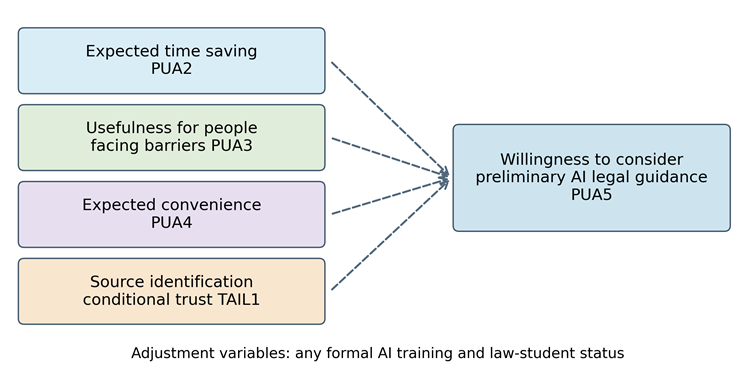
Figure 1. Exploratory framework for preliminary legal-guidance consideration
Dashed links denote estimated associations, not causal effects. The primary binary outcome is PUA5 endorsement; ordinal sensitivity retains its observed response categories. Benefit alignment and the conditional explanation statement are analysed separately. Access-to-justice outcomes are not measured by this model.
3. Methodology
The statistical specification is matched to the questionnaire wording and measurement evidence. It treats the records as real questionnaire data and distinguishes recorded eligibility, the collection mode confirmed by the research team, and fieldwork details not available for reanalysis. The resulting design supports exploration of perceptions and prospective consideration, with explicit limits on population and causal inference.
3.1 Design and analytical unit
The design is a cross-sectional adult questionnaire study. One row represents one recorded respondent, with five-category agreement statements and demographic or AI-use fields. No AI system is assigned, tested or observed. Respondents are not followed into a legal-aid interaction. Consequently, the study cannot establish whether perceived benefits precede willingness or whether either leads to actual service use. Observational reporting principles inform the disclosure of eligibility, missingness, analysis choices and limitations.[18]
3.2 Population and data documentation
The Group 2 workbook contains README, Data and Codebook sheets. The Data sheet comprises 385 records and 35 columns. All observations record consent, age of at least 18 and relevant AI awareness. The profile is legally oriented, including law students, graduates, legal professionals and other relevant respondents. No screening field establishes a current legal problem, legal-aid eligibility or prior use of an AI legal assistant. These respondents therefore cannot be described collectively as verified justice seekers.
The research team supplied the numerical responses as real data. In line with its clarification of the project workbooks, two Codebook entries using “synthetic” are treated as clerical labelling errors rather than descriptions of the numerical observations. Respondent_ID is used only as a row index; optional contextual text is excluded. Collection dates, invitation totals, detailed recruitment locations and mode-specific counts were not supplied for this analysis. These omissions limit reconstruction of fieldwork, rather than changing the numerical denominator.
3.3 Collection mode and sampling
The research team confirms mixed online and in-person questionnaire collection. The available file does not identify each respondent’s mode, specific recruitment channels, probabilities of selection or a complete sampling frame. The analysis consequently does not claim random selection, a population response rate or mode-adjusted estimates. Possible differences between online and in-person administration cannot be evaluated from the recorded variables.
The realised sample is N = 385. Cochran’s large-population benchmark with 95% confidence, p = 0.50 and 0.05 precision gives about 384.2, conventionally rounded up to 385. That arithmetic does not establish a five-percentage-point population margin of error for an undocumented sampling design. The law-student subset comprises 227 observations and is used only as a sensitivity analysis. No target of 400, pilot exclusion or a priori model power calculation is asserted without documentation.[19]
3.4 Measures and analytical roles
Responses range from 1 strongly disagree to 5 strongly agree. The four nominal five-item blocks cover AI literacy, usefulness, trust-related statements and legal-aid accessibility. Their exact wording comes from the supplied Codebook; published theories guide interpretation but are not claimed as validated sources of these exact item combinations. Table 1 separates benefit beliefs from the consideration outcome.
Table 1. Benefit statements and preliminary-guidance consideration
| Code | Statement focus | Analytical role |
| PUA1 | Basic legal guidance easier to access | Perceived information access; descriptive |
| PUA2 | Reduced time to preliminary information | Time-saving expectation; focal predictor |
| PUA3 | Useful for people facing conventional barriers | Benefit for others; focal predictor |
| PUA4 | Convenience of basic legal information | Convenience expectation; focal predictor |
| PUA5 | Would consider preliminary AI guidance | Prospective consideration; outcome |
| TAIL1 | Trust more with sources clearly identified | Conditional trust statement; focal predictor |
Source: supplied Group 2 Codebook. Theory informs interpretation; exact items are not claimed as validated adaptations. Appendix A gives wording. PUA5 is not part of a composite predictor.
PUA5 is the primary outcome because it asks whether the respondent would consider preliminary AI legal guidance. PUA2, PUA3 and PUA4 represent time saving, usefulness in the presence of barriers and convenience. TAIL1 supplies the source-identification condition. PUA1 supports descriptive, paired and correlation analyses. Other statements contextualise oversight, limitations and accessibility; they do not establish actual institutional performance. Appendix A reproduces every analysed statement.
3.5 Measurement assessment and pilot documentation
No verifiable pilot report or cognitive-interview record was provided. A completed pilot is therefore not claimed. Cronbach’s alpha is calculated for each block to assess whether a reflective composite interpretation is supportable. Values range from 0.118 to 0.192. Alpha is not itself a test of validity or dimensionality, but these values do not justify using the blocks as reliable reflective scales. Mixing benefit beliefs, intentions, norms and caution also creates a content-level reason to keep items separate.[20]
The analysis does not delete statements to maximise reliability, report unestimated latent loadings or infer mediation from overlapping averages. Composite reliability, AVE and HTMT are not estimated because no latent measurement model is specified. Individual-item results remain limited by self-report and measurement error; the approach narrows inference rather than eliminating those limitations.
3.6 Screening and descriptive methods
All focal responses and model variables are complete and within the one-to-five range. The AI-tool field records “None” in 15 cases; this is a valid response category rather than a missing value. No blank cells are present in the supplied Data sheet. No exact duplicate is found after excluding identifier and contextual text. Eleven records give a constant answer across the five usefulness items, while none gives one constant answer across all 20 substantive statements. The eleven are retained because block-level consistency alone is insufficient evidence of inattentiveness. Response times and dedicated attention-check fields are unavailable.
Endorsement combines categories 4 and 5; not endorsed includes neutral and disagreeing responses. Counts, percentages, means and SDs are reported, with pointwise Wilson intervals for proportions. Four within-person contrasts use exact McNemar tests, Holm correction across that family and 10,000 respondent bootstrap resamples for pointwise difference intervals. Discordance is the proportion endorsing exactly one statement in a pair. Joint patterns partition responses without assigning latent classes or competency levels.[21]
3.7 Association models and sensitivity analysis
Six selected Spearman correlations retain the ordered item categories. Pointwise percentile intervals use 3,000 respondent bootstrap resamples; Holm correction covers the six correlations. The primary binomial model estimates PUA5 endorsement using original one-to-five scores on PUA2, PUA3, PUA4 and TAIL1, adjusted for any formal training and law-student status. Odds ratios use HC0 robust sandwich covariance, and a separate Holm family covers the four focal coefficients. Score linearity in the log odds is assumed.[22]
Ordinal logistic sensitivity analysis retains PUA5’s four observed categories and assumes common slopes across cumulative thresholds. Its intervals use observed information; proportional odds is not established as an independently verified property. A student-restricted binary model omits status and repeats correction across four focal coefficients. These overlapping analyses assess sensitivity to coding and sample composition rather than provide independent replication. No mediation, moderation, predictive deployment model or causal effect is estimated. Statistical assessment considers uncertainty and specification as well as p-values.[23]
3.8 Participant protection and ethical reporting
The research team confirms informed consent and confidentiality. Participation concerns adult, non-interventional questionnaire responses, and all analysed records contain affirmative consent and adult-eligibility entries. The ethical approach rests on voluntary participation, explanation of the study, the ability to discontinue questionnaire completion, minimal personal information and aggregate reporting, consistent with the project safeguards previously described by the team. An anonymous completed response cannot necessarily be located for subsequent removal; discontinuation before submission should therefore not be described as guaranteed post-submission deletion.
Ethical approval for this study was obtained from the Center for Academic & Professional Career Development and Research (CAPCDR), an external institutional body, under approval reference CAPCDR: SMUCT/LLB/SS-0020260908-17. External ethical review was sought because Shanto-Mariam University of Creative Technology does not have an institutional ethics committee responsible for reviewing this type of research.
4. Results
The results distinguish favourable marginal evaluations from alignment within respondents. The denominator is 385 throughout the main analysis. Endorsement refers to agreement categories 4 and 5, not demonstrated skill or actual use. Paired contrasts, joint patterns and conditional models answer different questions and are reported separately to avoid treating a similar average as evidence of a common individual pathway.
4.1 Respondent profile
Law students account for 227 observations (59.0%), graduates for 73 (19.0%), advocates or legal professionals for 58 (15.1%) and other relevant respondents for 27 (7.0%). Table 2 presents these categories and formal training, which define the adjustment variables. No formal AI training is reported in 205 records; 143 report a short orientation and 37 a course or certified training.
Table 2. Recorded status and formal AI training
| Measure | Category | Count (%) |
| Status | Law student | 227 (59.0%) |
| Law graduate | 73 (19.0%) | |
| Advocate or legal professional | 58 (15.1%) | |
| Other relevant respondent | 27 (7.0%) | |
| Training | No | 205 (53.2%) |
| Yes, short orientation | 143 (37.1%) | |
| Yes, course or certified training | 37 (9.6%) |
N = 385. Student-restricted n = 227. Neither status nor training verifies legal need, legal-aid eligibility or use of an AI legal assistant.
The largest age category is 21–23 years (169; 43.9%), followed by 24–26 (84; 21.8%), 18–20 (53; 13.8%), 31 or above (46; 11.9%) and 27–30 (33; 8.6%). There are 209 male responses, 169 female responses, five prefer-not-to-say responses and two other responses. Dhaka accounts for 150 observations, district towns 86, other city corporations 78, upazila or rural areas 61 and other locations ten. Weekly or daily AI use totals 277 (71.9%). The duration field records 14 never-users and the frequency field 13; neither identifies experience with a legal-specific service.
4.2 Usefulness and consideration distributions
Table 3 reports all response categories for the five PUA statements. Basic access, time saving and convenience have identical means of 3.849, rounded to 3.85. Their SDs and category distributions nevertheless differ. Perceived usefulness for people facing conventional barriers has mean 3.87, and willingness to consider preliminary guidance has mean 3.81.
Table 3. Distributions of usefulness and consideration statements
| Item | Counts 1 / 2 / 3 / 4 / 5 | Mean | SD | Endorsed n (%) | 95% CI (%) |
| PUA1 | 0 / 11 / 117 / 176 / 81 | 3.85 | 0.78 | 257 (66.8%) | 61.9 to 71.3 |
| PUA2 | 1 / 20 / 104 / 171 / 89 | 3.85 | 0.84 | 260 (67.5%) | 62.7 to 72.0 |
| PUA3 | 1 / 17 / 97 / 185 / 85 | 3.87 | 0.81 | 270 (70.1%) | 65.4 to 74.5 |
| PUA4 | 0 / 20 / 104 / 175 / 86 | 3.85 | 0.82 | 261 (67.8%) | 63.0 to 72.3 |
| PUA5 | 0 / 14 / 125 / 168 / 78 | 3.81 | 0.80 | 246 (63.9%) | 59.0 to 68.5 |
N = 385. Categories 1–5 run from strongly disagree to strongly agree. Endorsed = 4 or 5. Wilson intervals are pointwise, conditional on the records; they do not correct selection bias. Means and SDs are descriptive.
Endorsement is 257 (66.8%) for basic access, 260 (67.5%) for time saving, 270 (70.1%) for barrier-related usefulness and 261 (67.8%) for convenience. Willingness is endorsed by 246 (63.9%), with a Wilson interval of 59.0%–68.5%. PUA5 also contains 125 neutral responses and 14 disagreeing responses; no strongly disagree response is recorded. Grouping the 139 non-endorsements does not mean that all are opposed to AI guidance.
Supporting statements show a different range of endorsement. Conditional source identification receives 260 (67.5%), professional oversight 266 (69.1%), explicit limitations 325 (84.4%) and caution without verification 329 (85.5%). Transparent explanations increasing willingness receives 337 (87.5%). Navigation to assistance receives 276 (71.7%), after-hours availability 265 (68.8%), geographic reach 249 (64.7%) and human support when needed 253 (65.7%). Complementary use with legal-aid professionals receives 330 (85.7%). These are reported expectations and preferences rather than verified service attributes.
4.3 Measurement and screening findings
Alpha is 0.183 for AI literacy, 0.118 for usefulness, 0.192 for trust-related statements and 0.175 for accessibility. The results do not support treating the four blocks as reliable reflective composites. In particular, inclusion of willingness within the usefulness block would combine an outcome with benefit judgements. The present results therefore concern exact statements, not a latent usefulness-to-trust-to-accessibility process.
The absence of focal missingness preserves a common denominator for the paired and multivariable analyses. Retaining the eleven constant-usefulness records avoids imposing an undocumented attention criterion. These screening findings do not establish the authenticity of each individual answer or exclude every response-quality problem; they identify the checks the file permits. No timing, recruitment clustering or administration-mode comparison is available.
4.4 Similar marginal endorsement and individual discordance
Table 4 reports three benefit-related comparisons and one conditional-willingness comparison. For the first three pairs, adjusted p-values equal 1.000. Their pointwise intervals span both positive and negative differences. The results therefore do not establish a systematic net endorsement difference, and they are not equivalence tests.
Table 4. Paired differences and offsetting endorsement discordance
| Contrast | First only / second only | Discordant % | Difference pp | 95% CI pp | Holm p |
| PUA2 − PUA1 | 88 / 85 | 44.9 | 0.8 | -5.7 to 7.3 | 1.000 |
| PUA4 − PUA3 | 84 / 93 | 46.0 | -2.3 | -9.1 to 4.4 | 1.000 |
| PUA5 − PUA1 | 74 / 85 | 41.3 | -2.9 | -9.1 to 3.6 | 1.000 |
| TAIL5 − PUA5 | 120 / 29 | 38.7 | 23.6 | 17.9 to 29.4 | <0.001 |
N = 385; pp = percentage points. Discordant means endorsing exactly one statement. Exact McNemar tests corrected across four pairs. Pointwise intervals use 10,000 respondent bootstrap resamples. TAIL5 is a conditional self-report; its contrast is not an explanation treatment effect. Null tests do not establish equivalence.
Time saving exceeds basic access by 0.8 percentage points, yet 173 records (44.9%) endorse only one of those statements: 88 time saving only and 85 basic access only. Convenience is 2.3 points lower than barrier-related usefulness, while 177 records (46.0%) are discordant: 84 convenience only and 93 barrier usefulness only. Willingness is 2.9 points lower than basic access, with 159 discordant records (41.3%): 74 willingness only and 85 basic access only. Thus, small net differences coexist with substantial offsetting individual responses.
The fourth contrast has a different pattern. Conditional explanation-related willingness exceeds general willingness by 23.6 points, with interval 17.9–29.4 and Holm-adjusted p below 0.001. There are 217 endorsements of both statements, 120 conditional-explanation-only endorsements, 29 general-willingness-only endorsements and 19 endorsing neither. This compares differently worded questionnaire statements, not responses before and after an actual explanation intervention.
4.5 Joint patterns of benefits and willingness
Table 5 partitions the sample using time saving, convenience and willingness. All three are endorsed in 117 records (30.4%). The eight patterns display how respondents’ benefit expectations and consideration can combine even where marginal rates are similar. These are observed binary combinations, not profiles derived from a classification algorithm.
Table 5. Joint patterns of time saving convenience and consideration
| Time PUA2 | Convenience PUA4 | Consideration PUA5 | Count (%) |
| Yes | Yes | Yes | 117 (30.4%) |
| Yes | Yes | No | 57 (14.8%) |
| Yes | No | Yes | 53 (13.8%) |
| Yes | No | No | 33 (8.6%) |
| No | Yes | Yes | 53 (13.8%) |
| No | Yes | No | 34 (8.8%) |
| No | No | Yes | 23 (6.0%) |
| No | No | No | 15 (3.9%) |
N = 385. Yes denotes endorsement; No includes neutral and disagreeing responses. Rows partition the sample. These are observed combinations, not latent classes, adoption stages or observed service use.
Fifty-seven records (14.8%) endorse time saving and convenience without endorsing willingness. Two other combinations each contain 53 records (13.8%): time saving plus willingness without convenience, and convenience plus willingness without time saving. Thirty-three endorse time saving alone, 34 convenience alone and 23 willingness alone. Fifteen endorse none. Neutral responses remain included in the not-endorsed category, so these combinations do not establish categorical rejection or a fixed stage of acceptance.
4.6 Selected rank correlations
Table 6 uses the original response categories to examine selected associations. Basic access and willingness have the largest listed correlation, rho = 0.132, but their Holm-adjusted p-value is 0.058. None of the six listed correlations remains below 0.05 after correction. Pointwise bootstrap intervals and family-adjusted p-values address different uncertainty criteria and should not be treated as interchangeable.
Table 6. Selected ordinal associations with consideration
| Pair | Spearman ρ | 95% CI | Raw p | Holm p |
| PUA2 / PUA5 | 0.076 | -0.029 to 0.179 | 0.138 | 0.611 |
| PUA3 / PUA5 | 0.079 | -0.021 to 0.170 | 0.122 | 0.611 |
| PUA4 / PUA5 | 0.007 | -0.094 to 0.108 | 0.885 | 1.000 |
| PUA1 / PUA5 | 0.132 | 0.033 to 0.232 | 0.010 | 0.058 |
| TAIL1 / PUA5 | 0.023 | -0.077 to 0.123 | 0.658 | 1.000 |
| PUA2 / PUA4 | -0.074 | -0.172 to 0.024 | 0.146 | 0.611 |
N = 385. Pointwise percentile intervals use 3,000 respondent bootstrap resamples. Holm correction covers six correlations. An unadjusted interval excluding zero does not imply a family-corrected result below 0.05.
Time saving and willingness have rho = 0.076; barrier-related usefulness and willingness rho = 0.079; convenience and willingness rho = 0.007; and conditional source trust and willingness rho = 0.023. Time saving and convenience have rho = −0.074. These small estimates do not support a strong monotonic alignment among the selected statements in this sample. They also do not prove that the underlying benefits are unimportant or equivalent across respondents.
4.7 Adjusted binary model of consideration
The main model includes 246 PUA5 endorsements and 139 other responses. It converges, with predictor VIFs from 1.008 to 1.056. Table 7 reports pointwise HC0 intervals and four-coefficient Holm correction. Low collinearity in the selected predictors does not establish valid latent constructs or sufficient control of selection and confounding.
Table 7. Adjusted binary model of preliminary-guidance consideration
| Predictor | aOR | 95% CI | Raw p | Holm p |
| Time saving PUA2 | 1.18 | 0.93 to 1.51 | 0.176 | 0.528 |
| Barrier-related usefulness PUA3 | 1.36 | 1.04 to 1.77 | 0.026 | 0.103 |
| Convenience PUA4 | 1.12 | 0.87 to 1.45 | 0.383 | 0.766 |
| Source identification TAIL1 | 1.00 | 0.76 to 1.31 | 0.992 | 0.992 |
| Any formal AI training | 0.99 | 0.64 to 1.53 | 0.963 | — |
| Law-student status | 0.98 | 0.64 to 1.50 | 0.915 | — |
N = 385; PUA5 endorsements = 246; other responses = 139. Item estimates are per one-point increase; HC0 robust pointwise intervals. Holm correction covers four focal coefficients. Training/status references: no training and non-student. aOR = adjusted odds ratio.
Barrier-related usefulness has adjusted odds ratio 1.36, interval 1.04–1.77 and raw p = 0.026, but corrected p = 0.103. Time saving has adjusted odds ratio 1.18, convenience 1.12 and source identification 1.00; their pointwise intervals include one. None of the four focal estimates is retained below 0.05 after correction. Any formal training and student status have adjusted odds ratios 0.99 and 0.98, respectively, with intervals spanning one. These adjustment coefficients are not estimates of educational or training effects.
4.8 Sensitivity analyses and summary
The ordinal outcome has 14 disagree, 125 neutral, 168 agree and 78 strongly agree responses. In that model, barrier-related usefulness has adjusted odds ratio 1.20, interval 0.95–1.51 and corrected p = 0.522. Table 8 compares the four ordinal estimates with the student-restricted binary estimates. Neither analysis retains a focal coefficient below 0.05 after its correction.
Table 8. Ordinal and student-restricted sensitivity estimates
| Predictor | Ordinal aOR (95% CI) | Ordinal Holm p | Student aOR (95% CI) | Student Holm p |
| Time saving PUA2 | 1.17 (0.94 to 1.46) | 0.522 | 1.17 (0.86 to 1.61) | 0.953 |
| Barrier-related usefulness PUA3 | 1.20 (0.95 to 1.51) | 0.522 | 1.30 (0.93 to 1.83) | 0.513 |
| Convenience PUA4 | 1.03 (0.82 to 1.29) | 1.000 | 1.10 (0.78 to 1.55) | 1.000 |
| Source identification TAIL1 | 1.05 (0.83 to 1.33) | 1.000 | 1.09 (0.77 to 1.56) | 1.000 |
Ordinal N = 385; PUA5 counts: disagree 14, neutral 125, agree 168, strongly agree 78. Common slopes assumed; observed-information intervals. Student binary n = 227; endorsements = 145; HC0 intervals. Separate Holm families cover four focal coefficients in each model. Analyses overlap and are exploratory.
Among students, 145 of 227 (63.9%) endorse willingness and 82 do not. Their barrier-related usefulness estimate is 1.30 with interval 0.93–1.83, while the other focal intervals also span one. Across the exploratory analyses, E1–E4 are not retained as corrected associations. This is a statement about these specifications and measures, not a finding that benefit beliefs or source transparency can never relate to behaviour. The clearest descriptive findings concern marginal favourability, offsetting discordance and the more strongly endorsed conditional-explanation statement.
5. Discussion
The central finding is that favourable evaluations do not establish a coherent individual route to willingness. Similar means and endorsement rates conceal respondents who endorse different combinations of access, time saving and convenience. The adjusted models add a complementary caution: the selected benefit and source conditions do not produce a corrected association with consideration. These findings refine the usefulness question while retaining access to justice as a separate evaluative objective.
5.1 Similar averages do not imply the same users
The identical means for basic access, time saving and convenience could encourage a conclusion that respondents perceive one common benefit. Their category distributions and paired responses show why that conclusion would be too strong. Nearly 45% differ in endorsement between time saving and basic access. A small net difference occurs because the two discordant directions approximately offset, not because most respondents answer both statements identically.
This distinction matters when applying acceptance theory. Benefit beliefs can be conceptually related without being empirically interchangeable. A person may expect rapid information while remaining uncertain that it is easier to use, or expect convenient access without trusting the next legal step. These are plausible interpretations rather than explanations established by the data. The measures do not identify why a respondent selected a particular category, and a cognitive interview would be needed to investigate that reasoning.[24]
For service design, the result favours asking task-specific questions. A request for a plain-language definition differs from identifying the correct legal-aid office or preparing a submission. An average favourable score cannot identify which task a user finds useful. Legal design research’s emphasis on user requirements and testable interventions provides an appropriate direction for follow-up work, with respondents explaining what they need to accomplish and prototypes assessed against that need.[25]
5.2 Usefulness and personal consideration remain distinct
The 70.1% endorsement of barrier-related usefulness is a judgement about potential benefits for people facing conventional obstacles. The 63.9% endorsement of willingness is a prospective statement about the respondent. Their difference cannot establish that a person needs the service, has experienced a legal problem or would decline assistance in practice. The questionnaire does not verify those conditions. The primary model’s nominal barrier coefficient should therefore be interpreted cautiously even before multiplicity correction.
UTAUT2 recognises a broader set of conditions relevant to technology use than a single performance belief. Applying that perspective suggests that consideration could depend on resources, service availability and experience not captured here. It does not permit filling those gaps with assumed mechanisms. The full model is untested, and failure to retain the selected coefficients is not a rejection of acceptance theory. It marks the limits of this operationalisation and sample.[26]
The distinction is particularly important in legal information. A person can endorse a potential social benefit without choosing an untested channel for a consequential problem. Conversely, someone may be willing to try preliminary guidance without expecting it to resolve a dispute. The study’s outcome is deliberately modest: considering a service. Future work should distinguish initial exploration, verified information use, professional referral and subsequent action rather than compress those steps into a single adoption label.
5.3 Conditional explanations and general consideration
The 23.6-point contrast between explanation-related willingness and general consideration is the largest selected paired difference. It indicates greater agreement with a conditional proposition about transparency. It is not evidence that providing explanations would increase use by that amount. No explanation was shown, no service was varied and the two items differ in wording and scope. The 120 conditional-only records identify a useful group for further research, not a measured treatment-responsive segment.
Trust reasoning helps formulate that research. Appropriate reliance depends on the match between a system’s capability and a user’s response, rather than confidence alone. An explanation can make an answer seem credible while leaving its legal basis wrong. Empirical human-AI work shows why explanation should be assessed through decision performance and reliance, not only reported preference. The relevant experiment would therefore measure comprehension, recognition of limits and appropriate referral alongside willingness.[27]
The source-identification coefficient near one does not show that sources are unnecessary. TAIL1 records a conditional self-assessment, and the outcome records general consideration. Neither evaluates whether a citation is valid or whether a user opens it. The resulting association cannot answer the design question of whether verified sources improve safe use. A legal assistant should be evaluated for accuracy and sourcing even where these survey responses do not align strongly with consideration.
5.4 Convenience and justice outcomes
The respondents’ support for possible navigation, after-hours information and geographic reach concerns expected service attributes. It does not establish that a person obtained assistance more quickly, understood a right correctly or completed a legal-aid application. This boundary is supported by people-centred justice reasoning: effectiveness must be assessed in relation to legal needs and pathways, not simply the availability of an information channel.[28]
Evidence on actual legal-task performance further illustrates the distinction. Choi and colleagues’ experimental results separate improvements in speed from improvements in quality. The present time-saving item captures neither directly; it asks what a respondent believes AI can do. Convergence with a plausible external finding cannot convert an expectation into measured performance. The appropriate implication is to design local tests that record both time and accuracy for specified tasks.[29]
For Bangladesh, digital legal-aid development creates a concrete opportunity for such evaluation. Preliminary guidance could be tested for correct office identification, clarity about application steps and successful transfer to a human service. This is a proposed research design, not a claim that the current public platform contains an AI assistant or that respondents have used it. Programme context and survey evidence remain distinct sources of information.[30]
5.5 Uncertainty and unsupported associations
No selected rank correlation or focal adjusted coefficient remains below 0.05 after family correction. The nominal binary barrier association weakens under ordinal coding, while the restricted student model is imprecise. A defensible interpretation reports those changes rather than privileging the most favourable p-value. The ordinal model preserves more category information but adds assumptions about common slopes; it is not automatically the final arbiter of the relationship.
The lack of a corrected association is also not evidence that all effects are exactly zero. Restricted variation, self-report, measurement error and unmeasured legal experience may affect the estimates. Statistical guidance supports considering uncertainty, measurement and design alongside thresholds. The study therefore does not announce either successful validation or definitive rejection of a usefulness mechanism. Its estimates provide information for better measurement and future sampling.[31]
Low alpha values reinforce a separate point: the original four blocks should not be treated as validated reflective scales. This does not prove that numerical data are artificial, nor does it invalidate every descriptive statement. Items can differ because they ask about benefits, norms and intentions. The appropriate response is to investigate content and response processes, with transparent validation in a new sample, rather than select items solely to improve a coefficient.[32]
5.6 Integrated interpretation for legal information services
Taken together, the findings favour a task-specific view of usefulness. Broadly favourable expectations coexist with divergent individual answers, conditional transparency preferences and weak corrected association with prospective consideration. The data do not establish trust as a mediator or use frequency as a moderator. Those mechanisms require their own defensible measures and design, and cannot be recovered by relabelling the existing blocks.
Technical evidence about legal errors makes the governance implication concrete. Published evaluations of public models and specialised products show why accuracy checks remain necessary even when a user expects convenience. The survey contributes to understanding expectations; technical audits and service evaluations address reliability and outcomes. A justice-oriented assessment needs those evidence types to remain distinct and then be considered together.[33]
6. Theoretical and Practical Implications
The implications follow from the distinction between perceived benefits, prospective consideration and realised service outcomes. The analysis does not establish that AI improves access to justice, but it identifies how research and design can test that proposition more precisely. Recommendations below are grounded in the observed distinctions and relevant literature; they are not measured intervention effects.
6.1 Theoretical implications
First, the article refines the operational boundary of perceived usefulness. Time saving, basic access and convenience should not be assumed interchangeable simply because they have equal means. Acceptance reasoning remains useful, but its constructs must be measured without incorporating consideration into the benefit predictor. The contribution is a clearer specification of what an item-level study tests, rather than a claim to validate a new general theory.[34]
Second, marginal similarity and individual alignment are different properties. Paired discordance shows how opposing responses can cancel in an aggregate comparison. Joint patterns show which benefits and intentions coexist. These analyses add substantive information without treating respondents as fixed psychological types. Future latent models should explain this structure with content-valid measures rather than assume that a favourable overall average establishes a common factor.
Third, people-centred justice supplies a distinct criterion for evaluating technology. Consideration can be a preliminary condition for service engagement, but it cannot constitute a justice outcome by definition. A theoretical extension would require evidence linking clearly measured expectations to completed pathways and outcomes over time. The present results motivate that linkage without estimating it.[35]
6.2 Practical implications for legal aid and technology providers
Providers should specify the task an assistant is intended to support. Preliminary explanations, office navigation and document preparation require different accuracy checks and escalation arrangements. User research should ask whether a person can complete the intended next step, with independent review of information quality. The discordant responses support investigating such differences rather than designing around an average usefulness score.
A second priority is verifiable information. Services can identify jurisdiction, source and currency, state limits in plain language and provide a practical route to qualified human support. A source link should be checked for relevance to the assertion, not merely for existence. NIST’s generative-AI risk profile provides a framework for considering risks such as confabulation and human interaction; it should inform task-specific controls rather than be treated as a certification that a product is safe.[36]
Evaluation should separately record time, comprehension, correct next-step identification, referral completion and harmful misunderstanding. High satisfaction or increased willingness can accompany inaccurate answers and should not be used alone as success measures. Legal professionals and intended users should participate in testing, including people with limited digital access. Human-centred design provides a process for developing and testing those requirements rather than assuming the questionnaire has already identified an optimal interface.[37]
6.3 Policy and societal implications
Bangladesh’s statutory allowance for online legal-aid applications offers a concrete service pathway around which preliminary guidance can be organised. It does not create a general AI-advice entitlement or guarantee the correctness of automated outputs. Policy should distinguish service digitalisation from deployment of a language model and require evidence appropriate to each function.[38]
SDG-oriented evaluation should ask whether barriers to assistance are reduced for people with actual legal needs. It should preserve accessible human channels and avoid making digital competence a new condition for obtaining help. The present study contributes perception evidence from a legally oriented sample; it does not estimate population access or target 16.3 achievement.[39]
7. Conclusion Limitations and Future Research
This study examines perceived benefits and willingness to consider preliminary AI legal guidance using 385 real questionnaire records in Bangladesh. Basic access, time saving and convenience share the same average score, yet 44.9% of respondents differ in endorsement between time saving and basic access. Only 30.4% jointly endorse time saving, convenience and willingness. These findings show why favourable averages cannot establish a coherent individual pathway from benefit expectations to consideration.
The primary adjusted model does not retain a focal coefficient after multiplicity correction, and the nominal barrier association is not sustained in ordinal sensitivity analysis. The conditional explanation statement is more strongly endorsed than general willingness, but its paired difference is not a causal effect. The defensible conclusion is therefore limited: respondents express substantial interest in potential informational benefits, while alignment and behavioural implications remain uncertain. Neither improved legal assistance nor improved access to justice was measured.
The article contributes a distinction between aggregate favourability and within-person response configuration. It also separates expected usefulness from willingness and justice outcomes, allowing perceived usefulness to be investigated without relying on an unsupported composite mediation model. The resulting framework places preliminary information within a broader service pathway while preserving the empirical boundary of the questionnaire. This supports more precise follow-up research and avoids converting an acceptance result into a claim about legal effectiveness.
The legally oriented sample contains 227 students and is not established as representative of justice seekers or the national population. Mixed online and in-person collection is confirmed, but dates, mode-specific counts and detailed recruitment records were unavailable. Self-report, weak block coherence, single-item error and neutral-response coding limit interpretation. Cross-sectional associations cannot establish direction, and adjustment is restricted to recorded training and status. Ordinal common slopes are assumed, and analyses are exploratory rather than preregistered. No system outputs, legal needs, actual use or completed justice pathways are observed.
Future studies should document fieldwork dates, recruitment, administration mode and eligibility tied to actual legal needs. Cognitive interviews can investigate why respondents distinguish convenience, speed and access. An independent validation sample should separate benefit beliefs, conditional trust and prospective use before estimating latent pathways. Experiments can compare verified preliminary guidance with conventional information routes, recording accuracy and time alongside understanding. Longitudinal studies can then examine whether consideration leads to safe use, referral and assistance. Such designs would connect the current perception evidence to the service outcomes required for a stronger access-to-justice claim.
Ethical approval and oversight
Ethical approval for this study was obtained from the Center for Academic & Professional Career Development and Research (CAPCDR), an external institutional body, under approval reference CAPCDR: SMUCT/LLB/SS-0020260908-17. External ethical review was sought because Shanto-Mariam University of Creative Technology does not have an institutional ethics committee responsible for reviewing this type of research.
Informed consent
The research team confirms informed consent and confidentiality. All analysed records contain affirmative consent and adult-eligibility responses. Participation was voluntary, with the opportunity to discontinue questionnaire completion.
Data availability
De-identified numerical data and analytical specifications may be requested from the corresponding author, subject to confidentiality and applicable requirements. Optional contextual text was excluded.
Funding and competing interests
No external funding source or competing interest was disclosed in the materials supplied for this manuscript.
Author contributions
Md. Hasibul Hasan: conceptualisation, preparation of study materials, organisation and curation of data, manuscript development. Prof. Kazi Abdul Mannan: conceptual and methodological guidance, supervision, interpretation of statistical findings, critical review and editing. The student project was conducted under his supervision.
Generative AI disclosure
Generative AI assisted literature retrieval, drafting, editing, organisation and analytical code development. Estimates were computed programmatically from numerical survey responses. Authors retain responsibility for analysis, interpretation, references and reporting.
Bibliography
Alarie B, Niblett A and Yoon AH, ‘How Artificial Intelligence Will Affect the Practice of Law’ (2018) 68(suppl 1) University of Toronto Law Journal 106
Altman DG and Bland JM, ‘Absence of Evidence Is Not Evidence of Absence’ (1995) 311 BMJ 485
Ashley KD, Artificial Intelligence and Legal Analytics: New Tools for Law Practice in the Digital Age (Cambridge University Press 2017)
Autio C and others, Artificial Intelligence Risk Management Framework: Generative Artificial Intelligence Profile (NIST AI 600-1, National Institute of Standards and Technology 2024), doi:10.6028/NIST.AI.600-1
Bansal G and others, ‘Does the Whole Exceed Its Parts? The Effect of AI Explanations on Complementary Team Performance’ in Proceedings of the 2021 CHI Conference on Human Factors in Computing Systems (ACM 2021), doi:10.1145/3411764.3445717
Buçinca Z, Malaya MB and Gajos KZ, ‘To Trust or to Think: Cognitive Forcing Functions Can Reduce Overreliance on AI in AI-Assisted Decision-Making’ (2021) 5(CSCW1) Proceedings of the ACM on Human-Computer Interaction, art 188
Choi JH, Monahan AB and Schwarcz D, ‘Lawyering in the Age of Artificial Intelligence’ (2024) 109 Minnesota Law Review 147
Cochran WG, Sampling Techniques (3rd edn, John Wiley & Sons 1977)
Dahl M and others, ‘Large Legal Fictions: Profiling Legal Hallucinations in Large Language Models’ (2024) 16 Journal of Legal Analysis 64
Davis FD, ‘Perceived Usefulness, Perceived Ease of Use, and User Acceptance of Information Technology’ (1989) 13 MIS Quarterly 319
Efron B and Tibshirani RJ, An Introduction to the Bootstrap (Chapman & Hall 1993)
Gefen D, Karahanna E and Straub DW, ‘Trust and TAM in Online Shopping: An Integrated Model’ (2003) 27 MIS Quarterly 51
Hagan MD, ‘A Human-Centered Design Approach to Access to Justice: Generating New Prototypes and Hypotheses for Intervention to Make Courts User-Friendly’ (2018) 6 Indiana Journal of Law and Social Equality 199
Holm S, ‘A Simple Sequentially Rejective Multiple Test Procedure’ (1979) 6 Scandinavian Journal of Statistics 65
Hosmer DW Jr, Lemeshow S and Sturdivant RX, Applied Logistic Regression (3rd edn, John Wiley & Sons 2013)
Lee JD and See KA, ‘Trust in Automation: Designing for Appropriate Reliance’ (2004) 46 Human Factors 50
Magesh V and others, ‘Hallucination-Free? Assessing the Reliability of Leading AI Legal Research Tools’ (2025) 22 Journal of Empirical Legal Studies 216
McCullagh P, ‘Regression Models for Ordinal Data’ (1980) 42 Journal of the Royal Statistical Society Series B 109
McNemar Q, ‘Note on the Sampling Error of the Difference between Correlated Proportions or Percentages’ (1947) 12 Psychometrika 153
OECD, Making Justice Systems More Effective and People Centred: Advancing a Responsive Rule of Law (OECD Publishing 2025), doi:10.1787/e02fd90b-en
OECD, OECD Framework and Good Practice Principles for People-Centred Justice (OECD Publishing 2021), doi:10.1787/cdc3bde7-en
OECD, Recommendation of the Council on Access to Justice and People-Centred Justice Systems (12 July 2023) OECD/LEGAL/0498
Sijtsma K, ‘On the Use, the Misuse, and the Very Limited Usefulness of Cronbach’s Alpha’ (2009) 74 Psychometrika 107
Susskind R, Online Courts and the Future of Justice (Oxford University Press 2019)
UN General Assembly, Transforming Our World: The 2030 Agenda for Sustainable Development (25 September 2015) UN Doc A/RES/70/1, target 16.3
United Nations Development Programme, ‘Accelerating Digital Legal Aid in Bangladesh: Justice Within Reach for All’ (28 January 2026) <https://www.undp.org/bangladesh/news/accelerating-digital-legal-aid-bangladesh-justice-within-reach-all> accessed 31 October 2026
United Nations Development Programme, ‘Digital Legal Aid Services to Improve Access to Justice’ (16 August 2026) <https://www.undp.org/bangladesh/press-releases/digital-legal-aid-services-improve-access-justice> accessed 31 October 2026
Venkatesh V, Thong JYL and Xu X, ‘Consumer Acceptance and Use of Information Technology: Extending the Unified Theory of Acceptance and Use of Technology’ (2012) 36 MIS Quarterly 157
von Elm E and others, ‘The Strengthening the Reporting of Observational Studies in Epidemiology (STROBE) Statement: Guidelines for Reporting Observational Studies’ (2007) 4 PLOS Medicine e296
Wasserstein RL and Lazar NA, ‘The ASA Statement on p-Values: Context, Process, and Purpose’ (2016) 70 American Statistician 129
White H, ‘A Heteroskedasticity-Consistent Covariance Matrix Estimator and a Direct Test for Heteroskedasticity’ (1980) 48 Econometrica 817
Wilson EB, ‘Probable Inference, the Law of Succession, and Statistical Inference’ (1927) 22 Journal of the American Statistical Association 209
Appendix A Questionnaire wording
Table A1 reproduces every statement used in the focal and supporting analyses. Their analytical roles follow the wording rather than a claim of validated scale equivalence.
Table A1. Exact wording of analysed statements
| Code | Questionnaire statement |
| PUA1 | AI-based legal information can make basic legal guidance easier to access. |
| PUA2 | AI legal assistants can reduce the time needed to obtain preliminary legal information. |
| PUA3 | AI-enabled services can be useful for people who face barriers to conventional legal services. |
| PUA4 | AI legal tools can improve the convenience of obtaining basic legal information. |
| PUA5 | I would consider using an AI legal service for preliminary legal guidance. |
| TAIL1 | I would trust AI legal information more when its sources are clearly identified. |
| TAIL2 | I would trust an AI legal service more if a qualified legal professional provides oversight. |
| TAIL3 | I believe AI legal tools should clearly state their limitations. |
| TAIL4 | I am cautious about acting on AI-generated legal information without verification. |
| TAIL5 | Transparent explanations increase my willingness to use AI legal services. |
| ALSA1 | AI-assisted legal aid could help people understand where to seek legal assistance. |
| ALSA2 | AI could make legal information available outside normal office hours. |
| ALSA3 | AI-assisted legal aid could improve access for people living far from legal service providers. |
| ALSA4 | Human support should remain available when AI legal aid cannot address a user’s needs. |
| ALSA5 | I would support responsible use of AI to complement, not replace, legal aid professionals. |
| AIL1 | I understand that generative AI can produce plausible but inaccurate information. |
| AIL2 | I verify important AI-generated information before relying on it. |
| AIL5 | I believe meaningful human oversight is necessary when AI affects important legal or rights-related decisions. |
Source: supplied Group 2 Codebook. Responses range from 1 strongly disagree to 5 strongly agree. No substantive item is reverse-coded.
PUA5 is the primary model outcome. PUA2, PUA3, PUA4 and TAIL1 are focal predictors. The remaining statements support specified descriptive and paired analyses. None measures actual service use, referral completion or a justice outcome.
Table of Legislation
Legal Aid Services Act 2000 (Bangladesh), Act No 6 of 2000, as amended
Legal Aid Services (Amendment) Act 2026 (Bangladesh), Act No 45 of 2026, ss 1(2), 24 and 35
[1] OECD, OECD Framework and Good Practice Principles for People-Centred Justice (OECD Publishing 2021), doi:10.1787/cdc3bde7-en.
[2] Kevin D Ashley, Artificial Intelligence and Legal Analytics: New Tools for Law Practice in the Digital Age (Cambridge University Press 2017); Benjamin Alarie, Anthony Niblett and Albert H Yoon, ‘How Artificial Intelligence Will Affect the Practice of Law’ (2018) 68(suppl 1) University of Toronto Law Journal 106.
[3] United Nations Development Programme, ‘Digital Legal Aid Services to Improve Access to Justice’ (16 August 2026) <https://www.undp.org/bangladesh/press-releases/digital-legal-aid-services-improve-access-justice> accessed 31 October 2026.
[4] Matthew Dahl and others, ‘Large Legal Fictions: Profiling Legal Hallucinations in Large Language Models’ (2024) 16 Journal of Legal Analysis 64; Varun Magesh and others, ‘Hallucination-Free? Assessing the Reliability of Leading AI Legal Research Tools’ (2025) 22 Journal of Empirical Legal Studies 216.
[5] Richard Susskind, Online Courts and the Future of Justice (Oxford University Press 2019).
[6] Fred D Davis, ‘Perceived Usefulness, Perceived Ease of Use, and User Acceptance of Information Technology’ (1989) 13 MIS Quarterly 319.
[7] Viswanath Venkatesh, James YL Thong and Xin Xu, ‘Consumer Acceptance and Use of Information Technology: Extending the Unified Theory of Acceptance and Use of Technology’ (2012) 36 MIS Quarterly 157.
[8] David Gefen, Elena Karahanna and Detmar W Straub, ‘Trust and TAM in Online Shopping: An Integrated Model’ (2003) 27 MIS Quarterly 51.
[9] John D Lee and Katrina A See, ‘Trust in Automation: Designing for Appropriate Reliance’ (2004) 46 Human Factors 50.
[10] OECD, Recommendation of the Council on Access to Justice and People-Centred Justice Systems (12 July 2023) OECD/LEGAL/0498.
[11] OECD, Making Justice Systems More Effective and People Centred: Advancing a Responsive Rule of Law (OECD Publishing 2025), doi:10.1787/e02fd90b-en.
[12] UN General Assembly, Transforming Our World: The 2030 Agenda for Sustainable Development (25 September 2015) UN Doc A/RES/70/1, target 16.3.
[13] Jonathan H Choi, Amy B Monahan and Daniel Schwarcz, ‘Lawyering in the Age of Artificial Intelligence’ (2024) 109 Minnesota Law Review 147.
[14] Dahl and others (n 4); Magesh and others (n 4).
[15] Gagan Bansal and others, ‘Does the Whole Exceed Its Parts? The Effect of AI Explanations on Complementary Team Performance’ in Proceedings of the 2021 CHI Conference on Human Factors in Computing Systems (ACM 2021), doi:10.1145/3411764.3445717; Zana Buçinca, Maja Barbara Malaya and Krzysztof Z Gajos, ‘To Trust or to Think: Cognitive Forcing Functions Can Reduce Overreliance on AI in AI-Assisted Decision-Making’ (2021) 5(CSCW1) Proceedings of the ACM on Human-Computer Interaction, art 188.
[16] Legal Aid Services Act 2000 (Bangladesh), Act No 6 of 2000, as amended; Legal Aid Services (Amendment) Act 2026 (Bangladesh), Act No 45 of 2026, ss 1(2), 24 and 35.
[17] United Nations Development Programme, ‘Accelerating Digital Legal Aid in Bangladesh: Justice Within Reach for All’ (28 January 2026) <https://www.undp.org/bangladesh/news/accelerating-digital-legal-aid-bangladesh-justice-within-reach-all> accessed 31 October 2026.
[18] Erik von Elm and others, ‘The Strengthening the Reporting of Observational Studies in Epidemiology (STROBE) Statement: Guidelines for Reporting Observational Studies’ (2007) 4 PLOS Medicine e296.
[19] William G Cochran, Sampling Techniques (3rd edn, John Wiley & Sons 1977).
[20] Klaas Sijtsma, ‘On the Use, the Misuse, and the Very Limited Usefulness of Cronbach’s Alpha’ (2009) 74 Psychometrika 107.
[21] Edwin B Wilson, ‘Probable Inference, the Law of Succession, and Statistical Inference’ (1927) 22 Journal of the American Statistical Association 209; Quinn McNemar, ‘Note on the Sampling Error of the Difference between Correlated Proportions or Percentages’ (1947) 12 Psychometrika 153; Sture Holm, ‘A Simple Sequentially Rejective Multiple Test Procedure’ (1979) 6 Scandinavian Journal of Statistics 65; Bradley Efron and Robert J Tibshirani, An Introduction to the Bootstrap (Chapman & Hall 1993).
[22] David W Hosmer Jr, Stanley Lemeshow and Rodney X Sturdivant, Applied Logistic Regression (3rd edn, John Wiley & Sons 2013); Halbert White, ‘A Heteroskedasticity-Consistent Covariance Matrix Estimator and a Direct Test for Heteroskedasticity’ (1980) 48 Econometrica 817; Holm (n 21).
[23] Peter McCullagh, ‘Regression Models for Ordinal Data’ (1980) 42 Journal of the Royal Statistical Society Series B 109; Ronald L Wasserstein and Nicole A Lazar, ‘The ASA Statement on p-Values: Context, Process, and Purpose’ (2016) 70 American Statistician 129.
[24] Davis (n 6).
[25] Margaret D Hagan, ‘A Human-Centered Design Approach to Access to Justice: Generating New Prototypes and Hypotheses for Intervention to Make Courts User-Friendly’ (2018) 6 Indiana Journal of Law and Social Equality 199.
[26] Venkatesh, Thong and Xu (n 7).
[27] Lee and See (n 9); Bansal and others (n 15).
[28] OECD, Framework (n 1).
[29] Choi, Monahan and Schwarcz (n 13).
[30] UNDP, Digital Legal Aid (n 3).
[31] Wasserstein and Lazar (n 23); Douglas G Altman and J Martin Bland, ‘Absence of Evidence Is Not Evidence of Absence’ (1995) 311 BMJ 485.
[32] Sijtsma (n 20).
[33] Dahl and others (n 4); Magesh and others (n 4).
[34] Davis (n 6); Venkatesh, Thong and Xu (n 7).
[35] OECD, Recommendation (n 10); OECD, Making Justice Systems (n 11).
[36] Chloe Autio and others, Artificial Intelligence Risk Management Framework: Generative Artificial Intelligence Profile (NIST AI 600-1, National Institute of Standards and Technology 2024), doi:10.6028/NIST.AI.600-1.
[37] Hagan (n 25).
[38] Legal Aid Services (Amendment) Act 2026.
[39] UNGA (n 12); OECD, Recommendation (n 10).