Journal Home
OPEN ACCESS
Agritourism as a Pathway for Rural Economic Diversification and Sustainable Tourism Development in Bangladesh: A Secondary Data Analysis
| Mahin Jamal ORCID: https://orcid.org/0009-0007-1550-7444 Prof. Dr Kazi Abdul Mannan ORCID: https://orcid.org/0000-0002-7123-132X Department of Business Administration Faculty of Business Shanto-Mariam University of Creative Technology Dhaka, Bangladesh |
Corresponding author: Mahin Jamal: mahinjamal2017@gmail.com
j. agric. vet. marine sci. 2026, 4(4); https://doi.org/10.64907/xkmf.v4.i4.javms.1
Submission received: 12 August 2026 / Revised: 20 September 2026 / Accepted: 23 September 2026 / Published: 25 September 2026
Download PDF (889 KB)
Abstract
Agritourism is increasingly used to connect agricultural production, rural livelihoods, local food, culture and visitor experiences, yet Bangladesh has not developed the sector at a scale commensurate with its agricultural and rural resource base. This study evaluates agritourism as a pathway for rural economic diversification and sustainable tourism development in Bangladesh using secondary data for 2020-2026 and a structured synthesis of recent scholarly literature and national policy documents. The analysis combines World Bank and ILO-linked indicators, Bangladesh Bureau of Statistics census evidence, Bangladesh Tourism Board guidelines, World Travel & Tourism Council estimates, and peer-reviewed studies on agritourism, rural tourism and community-based tourism. The evidence shows a strong structural rationale for agritourism: agriculture, forestry and fishing accounted for 12.0% of GDP in 2020 and 11.16% in 2024; agriculture employed 42.55% of total employment in 2020, 44.74% in 2024 and 44.26% in 2025; and 67.32% of the population remained rural in 2024. The 2022 census further reported that 50.99% of rural workers aged 10 years and above were engaged in agriculture. On the demand side, WTTC estimated domestic visitor spending at BDT 910.7 billion in 2024, compared with international visitor spending of BDT 44.0 billion, indicating that Bangladesh’s tourism market is overwhelmingly domestic and therefore potentially compatible with short-haul rural and farm experiences. Thematic analysis identifies six opportunity domains: direct farm sales, farm-to-table food experiences, farm stays, agricultural education, recreation, and culture-based experiences. It also identifies seven binding constraints: access and infrastructure, hospitality capability, finance, digital visibility, safety and hygiene, institutional fragmentation, and environmental or cultural over-commercialization. The paper proposes an integrated framework linking agricultural resources, enabling institutions, agritourism business models, visitor value, livelihood outcomes and sustainability safeguards. The study concludes that agritourism should be treated not as resort development in rural settings but as a diversified farm and community enterprise strategy that preserves the primacy of agriculture while generating complementary income, employment and place-based tourism value.
Keywords: agritourism; rural tourism; farm diversification; community-based tourism; sustainable livelihoods; Bangladesh
1. Introduction
Tourism is changing from a predominantly sightseeing-oriented activity toward a broader experience economy in which visitors seek local food, nature, culture, learning, authenticity and direct interaction with host communities. Agritourism is one expression of this transition. It uses working farms, agricultural landscapes, food systems and rural culture as the basis for visitor experiences while retaining a functional relationship with agriculture. The literature commonly associates agritourism with farm-income diversification, local enterprise development, rural employment, experiential learning and the preservation of landscapes and cultural practices (Ammirato et al., 2020; Rosalina et al., 2021; Martinus et al., 2024; Grilli et al., 2024). Recent reviews also position agritourism as a potentially important instrument for the Sustainable Development Goals when economic, social and environmental outcomes are assessed together rather than separately (Bhatta et al., 2026; Nguyen & Cong, 2026).
The relevance of agritourism to Bangladesh arises from the coexistence of a large rural population, a substantial agricultural workforce, diverse agro-ecological zones and a tourism sector whose demand is heavily domestic. World Bank data show that agriculture, forestry and fishing represented 12.0% of GDP in 2020 and 11.16% in 2024, while agricultural employment rose from 42.55% of total employment in 2020 to 44.74% in 2024 before easing to 44.26% in 2025 (World Bank, 2026a, 2026b). The apparent gap between agriculture’s share of GDP and its share of employment underscores the importance of raising value added per rural worker and broadening farm-linked income opportunities. The 2022 Population and Housing Census reported that 50.99% of rural workers aged ten years and above were engaged in agriculture, compared with 13.27% in urban areas (Bangladesh Bureau of Statistics [BBS], 2023).
Agritourism can address this structural challenge because it monetizes not only agricultural output but also agricultural experience. A mango orchard may produce fruit, but it can also support orchard visits, harvesting experiences, farm-to-table meals, photography, retail sales and educational tours. A tea estate may sell tea while simultaneously offering plantation walks, processing demonstrations, tasting, interpretation and rural accommodation. A fishing community may combine harvesting, culinary experiences, boat-based interpretation and local retail. Such diversification does not require every farm to become a resort. Instead, it allows farms and rural communities to assemble complementary products from assets that already exist.
Bangladesh also has an emerging policy basis for this transition. The Bangladesh Tourism Board has issued Agricultural Tourism Guidelines 2022 and Rural Tourism Guidelines 2022, alongside guidelines for cultural, river, haor, wildlife and other specialized tourism segments (Bangladesh Tourism Board [BTB], 2022a, 2022b). This is important because agritourism cuts across several policy domains: agriculture, rural development, tourism, food safety, local government, transport, environmental management and small-enterprise finance. International experience shows that when those domains remain institutionally disconnected, rural tourism initiatives often struggle with fragmented support, weak standards and limited market access (Rosalina et al., 2021; Zielinski et al., 2020).
The article from which the present study is developed identified a broad range of prospective Bangladeshi agritourism experiences, including direct farm sales, agricultural education, farm hospitality, recreation, local culture, tea estates, orchards, fisheries, flower gardens, weaving communities and floating markets. The present research advances that descriptive discussion into a secondary-data research design. It asks whether Bangladesh’s current demographic, agricultural and tourism structure supports a credible agritourism development pathway; which destination clusters and business models are most plausible; what constraints are likely to prevent scaling; and what integrated framework can guide policy and enterprise development.
1.1 Research Problem
Bangladesh has extensive agricultural and rural resources, but tourism activity remains concentrated in a limited set of established destinations, while many rural communities continue to depend on low-productivity or climate-sensitive livelihoods. Existing Bangladesh tourism research has examined sustainable tourism, community development, indigenous participation, the Sundarbans, rural destinations and community-based tourism, but agritourism remains conceptually and empirically underdeveloped as a national development strategy. The policy gap is therefore not simply the absence of farms with tourism potential; it is the absence of an integrated evidence base linking agricultural structure, tourism demand, rural livelihoods, enterprise models, community participation and sustainability safeguards.
1.2 Research Objectives
- To assess the structural rationale for agritourism in Bangladesh using recent secondary indicators for agriculture, employment, rural population and tourism demand.
- To identify agritourism resource clusters and feasible business models in Bangladesh.
- To analyze the potential contribution of agritourism to farm-income diversification, employment, entrepreneurship, local value chains and sustainable tourism.
- To identify major institutional, infrastructural, financial, managerial, environmental and socio-cultural constraints.
- To propose an integrated agritourism development framework and policy agenda for Bangladesh.
1.3 Research Questions
- RQ1. What do recent secondary indicators reveal about the economic and social rationale for agritourism in Bangladesh?
- RQ2. Which agricultural resources and destination clusters are most compatible with agritourism products?
- RQ3. Through what mechanisms can agritourism contribute to farm-income diversification, rural employment and tourism diversification?
- RQ4. What constraints could prevent agritourism from producing inclusive and sustainable outcomes?
- RQ5. What policy and management framework is appropriate for Bangladesh?
2. Literature Review and Conceptual Foundation
This section reviews the key theoretical and empirical literature relevant to agritourism, rural tourism, farm diversification, community participation, visitor experience, and sustainability. It establishes the conceptual foundation for interpreting agritourism within the socioeconomic and institutional context of Bangladesh.
2.1 Defining Agritourism
Agritourism sits within the wider field of rural tourism but is distinguished by its direct connection with agricultural production, agricultural land, farm households or food systems. The field remains conceptually diverse: some definitions require a working farm, while others include broader agriculture-related experiences such as food processing, farmers’ markets or agricultural heritage. The structured review by Ammirato et al. (2020) shows that the agritourism literature has developed around economic, social and environmental sustainability themes, while Rosalina et al. (2021) identify location, sustainability, community-based features and visitor experience as central dimensions of rural tourism.
For this study, agritourism is defined as paid or value-generating visitor activity that is meaningfully connected to agricultural production, farm life, agricultural landscapes, local food systems or rural agricultural culture. This definition excludes rural resorts that use a village setting but have no substantive agricultural relationship. It includes farm visits, pick-your-own activities, farm stays, farm-to-table meals, agricultural education, livestock or fisheries experiences, farm shops, festivals linked to harvests, and complementary cultural activities where agriculture remains a central component.
2.2 Agritourism as Farm Diversification
The farm-diversification literature treats agritourism as one way to reduce exposure to commodity-price volatility, seasonality and production risk. Grilli et al. (2024) emphasize that diversification can stabilize income and may occur through on-farm or connected non-farm activities. Agritourism is especially relevant because it uses land, buildings, knowledge, family labor, local identity and landscape as economic assets without necessarily displacing production. Earlier work on farm tourism similarly demonstrated that diversification can help sustain farms but may also reshape farmer identities and labor roles (Brandth & Haugen, 2011). More recent studies show that diversified agritourism business models can improve resilience during shocks by allowing operators to reorganize products, channels and visitor experiences (Brune et al., 2023; Chin & Musa, 2021).
2.3 Community Participation, Equity and Rural Development
Rural tourism is often promoted as a community-development instrument, but benefits are neither automatic nor evenly distributed. Community-based tourism research emphasizes participation, local control, benefit sharing and capacity building as conditions for sustainable outcomes (Zielinski et al., 2020; Krittayaruangroja et al., 2023; Nguyen & Nguyen, 2026). Homestay research also shows that community tourism can support poverty reduction, women’s participation and settlement sustainability, but may generate negative outcomes when local capacity, environmental limits or distributional issues are ignored (Pasanchay & Schott, 2021; Janjua et al., 2021). For Bangladesh, this issue is especially important in indigenous and ecologically sensitive destinations. Studies in the Chittagong Hill Tracts warn that tourism can generate human and cultural capital while simultaneously reproducing exclusion or contested representation if communities are absent from decision-making (Islam et al., 2024; Sajib, 2026).
2.4 Visitor Experience, Authenticity and Market Demand
Agritourism competes in an experience market, not merely an accommodation market. Recent research identifies authenticity, interaction, learning and location as core experiential dimensions (Martinus et al., 2024). Tea-estate research shows that destination image, nostalgia, flow and cultural identity can influence behavioral intention (Zhang et al., 2022), while visitor satisfaction is central to repeat visitation and recommendation (Azazz & Elshaer, 2026; Sustainable Agritourism for Farm Profitability, 2024). This suggests that Bangladesh should avoid copying generic resort models. Its comparative advantage lies in place-specific experiences: seasonal mango harvesting in Rajshahi, tea cultivation in Sylhet and Srimangal, flowers in Godkhali, floating agricultural markets in Jhalakathi, fisheries and hilsa culture in Chandpur, jhum-linked agricultural interpretation in the Hill Tracts, and farm-based food experiences across the country.
2.5 Sustainability and the Need for Safeguards
Agritourism may support economic diversification and environmental stewardship, but uncontrolled growth can create congestion, waste, cultural commodification, land-use change and unequal benefit distribution. Li et al. (2024) show that rural tourism can contribute to sustainable village development while also disrupting traditional systems when visitor demand dominates local priorities. Bangladesh evidence from the Sundarbans and the Hill Tracts similarly highlights the importance of resilience, political inclusion and local voice (Islam et al., 2024; Islam et al., 2025; Sajib, 2026). A sustainable agritourism strategy must therefore incorporate carrying capacity, environmental standards, cultural consent, equitable benefit sharing and continuous monitoring rather than assuming that any tourism activity in a rural area is inherently sustainable.
3. Methodology
This section explains the research design, data sources, study period, and analytical procedures used to examine the prospects of agritourism in Bangladesh. The study relies entirely on secondary data and combines descriptive statistical evidence with thematic analysis of policy documents and scholarly literature.
3.1 Research Design
The study adopts a qualitative-dominant secondary-data design combining descriptive statistical analysis with thematic evidence synthesis. The unit of analysis is the agritourism development system of Bangladesh rather than individual farms. The approach is appropriate because agritourism-specific national statistics are not yet systematically compiled, while relevant evidence is distributed across agricultural, demographic, labor, tourism, policy and scholarly sources. The study therefore triangulates multiple secondary datasets to establish the structural context and uses peer-reviewed research to interpret mechanisms, opportunities and risks.
3.2 Data Sources and Time Window
The principal empirical window is 2020-2026. Quantitative indicators were obtained from the World Bank’s World Development Indicators, ILO-modelled employment series accessed through the World Bank, the BBS Population and Housing Census 2022, BBS agricultural publications, WTTC’s 2024 Bangladesh Economic Impact factsheet, and Bangladesh Tourism Board policy and guideline documents. Scholarly evidence was selected primarily from peer-reviewed publications published between 2020 and 2026, supplemented by a small number of foundational studies where needed for conceptual continuity. Sources were included when they addressed at least one of five themes: agritourism, rural tourism, community-based tourism, farm diversification, or sustainable rural livelihoods.
3.3 Analytical Procedure
The analysis proceeded in four stages. First, recent national indicators were organized to establish the agricultural, rural and tourism demand context. Second, prospective agritourism resources identified in the original article were reorganized into destination clusters and matched with feasible visitor products. Third, peer-reviewed findings were coded thematically under income diversification, employment and entrepreneurship, visitor experience, community participation, sustainability, and implementation constraints. Fourth, the quantitative and qualitative evidence was integrated into a conceptual framework linking resource inputs, enabling conditions, business models, visitor value, livelihood outcomes and sustainability safeguards. Because the study does not estimate causal effects, all impact claims are framed as evidence-based potential rather than measured national agritourism impacts.
4. Results
This section presents the principal findings derived from the secondary-data analysis. The results are organized around Bangladesh’s agricultural and rural structure, tourism demand, potential agritourism clusters, feasible business models, development contributions, and major implementation constraints.
4.1 Structural Rationale: Agriculture, Rurality and Tourism Demand
Before assessing specific agritourism opportunities, it is necessary to examine whether Bangladesh’s broader socioeconomic structure provides a suitable foundation for such development. Accordingly, this subsection analyzes recent indicators relating to agriculture, agricultural employment, rural population, and national economic performance.
Table 1. Selected Bangladesh structural indicators, 2020-2025
| Indicator | 2020 | 2021 | 2022 | 2023 | 2024/2025 |
| Agriculture, forestry & fishing (% of GDP) | 12.00 | 11.63 | 11.22 | 11.00 | 11.16 (2024); 11.4 (2025) |
| Employment in agriculture (% total) | 42.55 | 43.47 | 43.67 | 45.37 | 44.74 (2024); 44.26 (2025) |
| Rural population (% total) | 68.88 | 68.60 | 68.33 | 67.84 | 67.32 (2024) |
| GDP growth (%) | 3.4 | 6.9 | 7.1 | 5.8 | 4.2 (2024); 3.5 (2025) |
Sources: World Bank/ILO-linked WDI series.
Table 1 shows why agritourism is economically relevant even as agriculture’s GDP share remains around one-tenth of the economy. Agriculture employed more than two-fifths of workers throughout 2020-2025. In 2024, agriculture’s 11.16% share of GDP contrasted with a 44.74% share of employment. This is not a direct productivity calculation, but it signals a large labor concentration in a sector that generates a much smaller share of national value added. Agritourism cannot resolve that structural imbalance by itself; however, it can create additional value from existing farm assets and rural labor without requiring complete occupational exit from agriculture.
The rural population base is also large. World Bank estimates indicate that 67.32% of the population was rural in 2024, while the 2022 census counted 27.82 million rural households and reported that 50.99% of rural workers aged ten years and above were engaged in agriculture (BBS, 2023). These figures imply a large potential supplier base for farm-linked experiences and a large domestic population familiar with agricultural culture. They also indicate that any national agritourism strategy should be designed as a rural-enterprise policy rather than solely as a tourism promotion campaign.
4.2 Tourism Demand Is Predominantly Domestic
Table 2. Bangladesh Travel & Tourism indicators.
| WTTC indicator | 2019 | 2023 | 2024 estimate | 2034 forecast |
| Total Travel & Tourism GDP contribution | BDT 860.9 bn | BDT 1.02 tn | BDT 1.09 tn | BDT 1.77 tn |
| Total Travel & Tourism jobs | 1.74 m | 2.14 m | 2.18 m | 2.50 m |
| Domestic visitor spending | BDT 729.4 bn | BDT 843.6 bn | BDT 910.7 bn | BDT 1.50 tn |
| International visitor spending | BDT 34.7 bn | BDT 42.7 bn | BDT 44.0 bn | BDT 65.1 bn |
Source: WTTC (2024); 2024 values are estimates and 2034 values are forecasts.
WTTC’s 2024 research estimated total Travel & Tourism GDP contribution at BDT 1.09 trillion and 2.18 million jobs. More importantly for agritourism, estimated domestic visitor spending was BDT 910.7 billion compared with only BDT 44.0 billion in international visitor spending. Domestic expenditure therefore accounted for about 95% of visitor spending in the WTTC profile. This market structure favors agritourism because farm and rural tourism products are often short-haul, repeatable, weekend-oriented and accessible to families, schools, universities and domestic groups. It also reduces the strategic risk of designing agritourism exclusively around foreign tourists, whose volumes and preferences can be more volatile.
4.3 Resource and Destination Clusters
Table 3. Illustrative agritourism clusters and product-market fit in Bangladesh.
| Cluster/location | Core resource | Feasible products | Primary market logic |
| Sylhet-Srimangal-Panchagarh | Tea estates and processing | Tea walks, plucking, factory interpretation, tasting, farm stay | Domestic leisure, education, international niche |
| Rajshahi-Chapainawabganj | Mango/lychee orchards, silk | Seasonal harvest, orchard dining, direct sales, silk demonstration | Family groups, food tourists, schools |
| Godkhali, Jashore | Flower production | Garden tours, photography, flower purchase, workshops | Urban weekend visitors, events market |
| Bhimruli/Jhalakathi | Floating agricultural market and guava | Boat-market experience, food, farm sourcing, photography | Domestic experiential tourism |
| Chandpur and coastal districts | Hilsa, fisheries, dried fish | Fishing interpretation, culinary tourism, processing tours | Food tourism and education |
| Chittagong Hill Tracts | Jhum farming, indigenous agriculture and culture | Guided agricultural interpretation, food, crafts, homestay where locally consented | High-value cultural/nature tourism |
| Sundarbans fringe | Honey, fisheries, rural livelihoods | Honey interpretation, local enterprise, food, conservation education | Eco-rural tourism under strict safeguards |
| Tangail and craft villages | Weaving linked to rural households | Homestay, weaving participation, farm-food-craft package | Culture and learning market |
The cluster approach is preferable to a single national template because Bangladesh’s agricultural landscapes, production calendars and cultural settings vary substantially. Tea tourism, orchard tourism, fisheries tourism and flower tourism require different infrastructure, seasonality management, safety protocols and interpretation skills. Cluster development also allows multiple micro-enterprises to participate: one household may provide meals, another transport, another guiding, another crafts, and a farm may provide the primary agricultural experience. This distributes expenditure more widely and reduces the pressure on every farmer to provide a complete tourism package.
4.4 Feasible Agritourism Business Models
Direct farm-to-consumer sales: Farm gates, seasonal markets and pick-your-own activities can shorten value chains and allow farmers to capture a larger share of consumer expenditure. Visitors may pay both for the experience and for produce. The model is relatively low-capital and can be piloted around fruit, flowers, dairy, vegetables, fish and processed foods.
Farm-to-table food experiences: Bangladesh’s food traditions create an especially strong opportunity. Farm meals can connect fresh ingredients, local recipes, women-led food enterprises and agricultural storytelling. Research on agritourism and local food systems suggests that tourism can reinforce local food networks when procurement and value retention remain local (Musa, 2022).
Farm stays and homestays: Rural accommodation can extend visitor length of stay and increase local spending, but it requires minimum standards for sanitation, water, privacy, fire safety and booking reliability. The rural homestay literature shows both strong livelihood potential and the need for governance and quality control (Janjua et al., 2021; Pasanchay & Schott, 2021).
Agricultural education: Schools, universities, families and professional groups can generate structured demand for learning about crops, livestock, aquaculture, food processing, climate adaptation and rural entrepreneurship. This market can reduce seasonality because educational visits can be scheduled throughout the academic year.
Recreation and seasonal events: Boating, traditional games, harvest festivals, orchard walks, farm photography and cultural performances can complement agricultural experiences. These should remain secondary to the agricultural core and should be designed around safety, carrying capacity and community consent.
Training and enterprise services: Mature agritourism clusters can support training centers, guide services, booking platforms, branding, packaging, food safety assistance and business-development services. Such supporting enterprises are necessary for scaling beyond isolated demonstration farms.
4.5 Potential Development Contributions
First, agritourism can diversify household and farm revenue. The key mechanism is not an increase in crop yield but an increase in the number of revenue channels attached to the same resource base. A farm can generate income from produce, admission, food, accommodation, activities, training and retail. Diversification research identifies risk reduction and income stabilization as important rationales for such strategies (Grilli et al., 2024). Evidence from agritourism enterprises also indicates that diversified models can strengthen resilience during shocks (Brune et al., 2023).
Second, agritourism can create employment beyond farming. Guides, cooks, drivers, cleaners, interpreters, digital marketers, photographers, artisans, food processors and event workers can all participate. This is especially significant for women and young people who may not own land. Bangladesh research already demonstrates the importance of women entrepreneurs in Sundarbans tourism and the potential of community-based tourism to support women’s micro-enterprise in the Haor Basin (Islam et al., 2022; Pathan, 2026).
Third, agritourism can strengthen local value chains. When visitors consume local food, purchase produce and crafts, use local transport and stay in community accommodation, tourism expenditure circulates across a broader rural economy. This multiplier logic is stronger when external leakage is limited. Therefore, cluster governance should prioritize local procurement and transparent benefit-sharing rather than allowing a single outside operator to control the full value chain.
Fourth, agritourism can diversify Bangladesh’s tourism geography. Instead of concentrating demand in a small number of coastal, heritage or hill destinations, seasonally programmed farm products can spread trips across districts and across the year. Such dispersal may reduce pressure on crowded destinations while creating new reasons for short domestic trips.
Fifth, agritourism can support cultural and environmental stewardship when tourism value depends on maintaining the landscape, food tradition, craft or farming practice that attracts visitors. However, this relationship is conditional. Rural tourism can also commodify culture or intensify environmental pressure. Bangladesh research on indigenous representation and the Sundarbans reinforces the need for local control, environmental limits and political inclusion (Sajib, 2026; Islam et al., 2025).
4.6 Constraints and Risks
The evidence identifies seven binding constraints. The first is physical access: road quality, local transport, sanitation, safe water, signage and emergency access determine whether a rural attraction can receive visitors. Second, many farmers possess agricultural expertise but not hospitality, pricing, interpretation, service-recovery or digital-booking skills. Third, access to small-scale finance may be difficult because agritourism combines agricultural and service-sector risk. Fourth, weak digital visibility prevents rural operators from reaching urban consumers; yet recent Bangladesh research shows that social media and tourist knowledge are important in sustainable-tourism perceptions (Neger et al., 2026). Fifth, food hygiene, accommodation quality and visitor safety can damage destination reputation if minimum standards are absent. Sixth, institutional fragmentation may arise because agritourism falls between tourism, agriculture, local government and SME policy. Seventh, unplanned growth can produce waste, noise, land conversion, cultural staging and unequal benefit capture.
5. Discussion
This section interprets the empirical findings in relation to the wider literature and the specific development context of Bangladesh. Particular attention is given to the strategic suitability of agritourism, domestic market potential, community participation, livelihood diversification, inclusion, and sustainability.
5.1 Agritourism Fits Bangladesh’s Structural Conditions
The strongest finding is that Bangladesh has both a supply rationale and a demand rationale for agritourism. On the supply side, agriculture still employs roughly forty-four percent of the workforce, while two-thirds of the population is rural. On the demand side, domestic visitor spending dominates tourism expenditure. This combination is favorable for small-scale, short-distance, experience-based rural tourism. The model can therefore develop without waiting for large growth in international arrivals. This is strategically important because many agritourism products-day visits, seasonal fruit trips, farm meals, educational tours and weekend stays-are naturally suited to domestic consumers.
5.2 Agritourism Should Be Treated as Enterprise Diversification, Not Rural Resort Construction
A central policy distinction is necessary. A resort located beside farmland is not automatically agritourism. If tourism infrastructure displaces agricultural activity or reduces farmers to decorative labor, the model loses its developmental logic. Agritourism should preserve agriculture as a productive and interpretive core. This is consistent with the international literature emphasizing authenticity, interaction and learning (Martinus et al., 2024) and with sustainability research warning against tourism-led disruption of village systems (Li et al., 2024). Bangladesh’s comparative advantage is not the replication of generic accommodation; it is the conversion of authentic agricultural processes into safe, marketable and locally controlled experiences.
5.3 Domestic Market Orientation Is a Major Strategic Advantage
The very large difference between domestic and international visitor spending changes how agritourism should be marketed. Early-stage farms do not need expensive international-market positioning. They can target urban families, schools, universities, corporate groups and domestic special-interest travelers. Digital booking, social media storytelling and seasonal calendars can connect city demand with nearby rural clusters. Over time, successful destinations can add international products, particularly tea, food, craft, wetland and indigenous-cultural experiences. This sequencing reduces capital intensity and allows quality systems to mature before international scaling.
5.4 Community Participation Is an Economic Requirement, Not Only a Social Principle
Community participation is often presented as an ethical objective, but in agritourism it is also central to product quality. Visitors seek local stories, food, farming knowledge and social interaction. Removing communities from ownership therefore weakens authenticity and increases leakage. Bangladesh research finds that community awareness, involvement and attachment influence perceived tourism benefits and support for sustainable development (Kumar et al., 2023; related Bangladesh community studies). In sensitive settings, especially the Hill Tracts, participation must include meaningful consent, representation and control over cultural presentation rather than only low-wage employment.
5.5 Women and Youth Can Capture Non-Land-Based Opportunities
Agritourism can widen rural enterprise participation because many revenue streams do not require land ownership. Women may lead food preparation, homestay management, craft production, online sales or visitor services; youth may provide guiding, photography, transport, digital marketing and booking support. The Bangladesh evidence on tiger-widow entrepreneurs in the Sundarbans and women’s micro-enterprise in the Haor Basin illustrates how tourism can open livelihood pathways while also revealing gendered barriers and ecological vulnerability (Islam et al., 2022; Pathan, 2026). Targeted skills, finance and safeguarding measures are therefore necessary if inclusion is to move beyond rhetoric.
5.6 Sustainability Requires Measurable Limits
The literature does not support the assumption that small-scale or rural tourism is automatically sustainable. A successful agritourism policy needs measurable operating standards: waste management, water use, food safety, visitor numbers, land-use protection, local procurement, benefit distribution and grievance mechanisms. In ecologically sensitive locations, carrying capacity and seasonal closures may be more important than maximizing visitor numbers. In culturally sensitive areas, community authority over representation should be explicit. These safeguards convert sustainability from a promotional claim into a management system.
6. Proposed Integrated Agritourism Development Framework
Building on the empirical findings and literature review, this study proposes an integrated framework for sustainable agritourism development in Bangladesh. The framework illustrates how agricultural resources, enabling conditions, business models, visitor experiences, economic outcomes, and sustainability safeguards can operate as an interconnected development system.
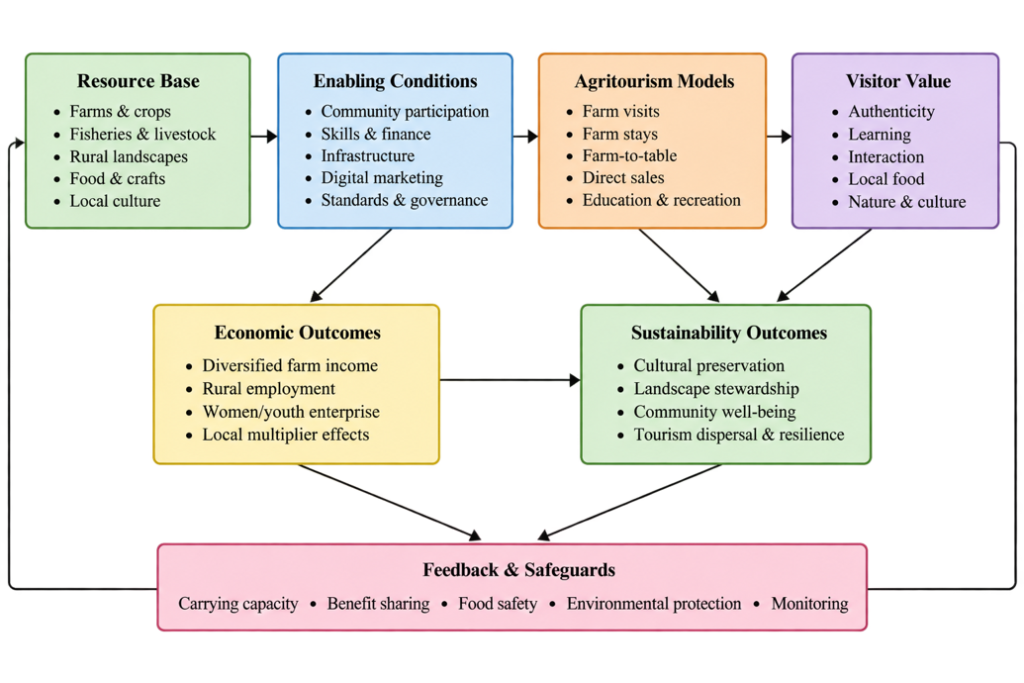
Figure 1. Integrated Agritourism Development Framework for Bangladesh.
Figure 1 synthesizes the study’s findings. The framework begins with the resource base-farms, fisheries, food, rural landscapes and culture. These assets become tourism products only when enabling conditions are present: community participation, business skills, finance, infrastructure, digital market access, standards and institutional coordination. The next layer consists of agritourism business models such as farm visits, direct sales, farm stays, food experiences, education and recreation. Those models generate visitor value through authenticity, learning, interaction, local food and a sense of place. Economic outcomes include diversified farm income, employment and local enterprise, while broader sustainability outcomes include cultural preservation, landscape stewardship, community well-being and tourism dispersal. A feedback layer-carrying capacity, benefit sharing, environmental safeguards, food safety and monitoring-prevents growth from undermining the assets that make the destination attractive.
7. Policy and Management Recommendations
The findings indicate that realizing the potential of agritourism will require coordinated interventions rather than isolated farm-level initiatives. Based on the evidence presented in this study, the following policy and management recommendations are proposed to support the gradual, inclusive, and sustainable development of agritourism in Bangladesh.
Establish pilot agritourism clusters rather than a nationwide one-size-fits-all scheme. Pilot clusters should be selected using transparent criteria: agricultural distinctiveness, road access, community interest, market proximity, environmental capacity and availability of complementary services. Initial candidates may include tea, orchard, flower, floating-market, fisheries and craft-linked clusters.
Create a joint agritourism coordination mechanism. Bangladesh Tourism Board, agriculture agencies, local government, SME/finance institutions and food-safety authorities should use a common operational framework. The existing Agricultural Tourism and Rural Tourism Guidelines provide a starting policy platform but require implementation protocols, roles and monitoring indicators.
Introduce tiered registration and minimum standards. A low-cost registration pathway should distinguish day-visit farms, food experiences, farm stays and larger facilities. Standards should cover sanitation, safe water, food hygiene, emergency procedures, pricing transparency, insurance where relevant, environmental management and truthful marketing.
Build farmer and community capability. Training should prioritize hospitality basics, interpretation, costing, digital marketing, customer service, record keeping, food safety, waste management and simple business planning. Training should be delivered locally and tied to practical enterprise preparation rather than classroom certification alone.
Develop small-scale finance products. Credit lines or matching grants should focus on modest improvements-sanitation, kitchen upgrades, visitor shelters, signage, booking systems, safety equipment and accessibility-rather than capital-intensive resort construction. Repayment schedules should account for seasonality.
Build a national digital discovery and booking layer. A verified agritourism directory could display location, seasonal products, prices, safety standards, booking contacts, language capacity and visitor limits. Digital visibility is particularly important because domestic demand can be mobilized quickly through social media and urban networks.
Protect community ownership and cultural consent. Benefit-sharing arrangements should be transparent. Cultural performances, indigenous representation and access to community spaces should be governed by local consent. External investors should complement rather than displace community enterprises.
Use sustainability indicators from the beginning. Pilot destinations should track local procurement, farmer income from tourism, women/youth participation, visitor satisfaction, waste, water, land-use change and complaints. Growth decisions should depend on these indicators rather than visitor volume alone.
8. Theoretical and Practical Contributions
The paper contributes in three ways. First, it reframes agritourism in Bangladesh as a farm- and community-diversification strategy rather than merely a new tourism niche. Second, it integrates recent national structural indicators with the international agritourism literature, showing why the combination of a large agricultural workforce, a predominantly rural population and domestic tourism demand creates a plausible development space. Third, the proposed framework connects resource inputs, enabling institutions, visitor experience, economic outcomes and sustainability safeguards in a single system. This helps bridge a recurring divide between tourism promotion and rural-development policy.
Practically, the analysis suggests that Bangladesh can begin with low- and medium-capital products rather than expensive infrastructure. Day visits, seasonal harvest experiences, farm meals, direct sales, educational tours and small homestays can be piloted quickly if standards and community governance are in place. The most important early investment may therefore be coordination, skills, digital market access and trust-building rather than construction.
9. Limitations and Future Research
The study has four principal limitations. First, Bangladesh does not yet publish a dedicated national agritourism statistical series, so the paper infers development potential from broader agriculture, rural and tourism indicators. Second, the study does not estimate causal impacts or profitability at farm level. Third, destination examples are illustrative and should not be treated as investment feasibility assessments. Fourth, WTTC tourism indicators are modelled estimates and forecasts and are not directly equivalent to national Tourism Satellite Account statistics.
Future research should therefore proceed in three stages. A first stage should map existing agritourism-like enterprises and create a national typology. A second stage should survey farmers, residents and tourists to estimate willingness to participate, willingness to pay, preferred experiences, perceived risks and distributional expectations. A third stage should evaluate pilot clusters using quasi-experimental or longitudinal methods. Farm-level studies could test whether agritourism participation increases household income stability, women’s economic participation or youth employment. Visitor studies could test a model linking destination image, authenticity, learning and interaction to perceived value, satisfaction, revisit intention and willingness to recommend. Spatial research could combine GIS accessibility, agricultural specialization, population density and market proximity to rank potential clusters.
10. Conclusion
This study finds a substantial structural case for agritourism in Bangladesh. Agriculture remains central to employment, most of the population is still rural, and tourism demand is overwhelmingly domestic. These conditions create an opportunity to convert farms, fisheries, food systems, crafts and rural landscapes into complementary visitor experiences that generate additional value without abandoning agricultural production. The opportunity is strongest where products are seasonal, authentic, learnable and locally controlled.
Agritourism should not, however, be equated with building resorts in villages. Its distinctive economic logic is the diversification of farm and community assets. The best-performing model for Bangladesh is therefore likely to be a cluster-based system combining working agriculture with direct sales, food, education, recreation, small-scale accommodation and local cultural experiences. The cluster should be supported by training, finance, digital access, quality standards and coordinated governance.
The broader implication is that agritourism can connect agricultural policy with tourism policy and rural enterprise development. If community participation, environmental limits, cultural consent and benefit sharing are embedded from the beginning, agritourism can contribute to income diversification, local employment, women and youth entrepreneurship, tourism dispersal and place-based sustainability. If these safeguards are ignored, the same process can produce cultural commodification, land-use pressure and economic leakage. Bangladesh therefore has a credible agritourism opportunity, but its success will depend less on promotional branding than on institutional design, local ownership and disciplined implementation.
References
Ammirato, S., Felicetti, A. M., Raso, C., Pansera, B. A., & Violi, A. (2020). Agritourism and sustainability: What we can learn from a systematic literature review. Sustainability, 12(22), 9575. https://doi.org/10.3390/su12229575
Azazz, A. M. S., & Elshaer, I. A. (2026). Sustainable agritourism under the shadow of nostalgia: How pro-environmental behavior and motivation influence revisit and recommendation intentions. Sustainability, 18(12), 5808. https://doi.org/10.3390/su18125808
Bangladesh Bureau of Statistics. (2023). Population and Housing Census 2022: National Report, Volume I. Statistics and Informatics Division, Government of Bangladesh.
Bangladesh Bureau of Statistics. (2026). Agriculture Census 2019: National and analytical reports. Statistics and Informatics Division, Government of Bangladesh.
Bangladesh Tourism Board. (2022a). Agricultural Tourism Guideline 2022. Government of Bangladesh.
Bangladesh Tourism Board. (2022b). Rural Tourism Guideline 2022. Government of Bangladesh.
Bhatta, K., et al. (2026). Agritourism and sustainability: Advancing the Sustainable Development Goals (SDGs). Tourism Review, 81(3), 1121-1135. https://doi.org/10.1108/TR-10-2024-0900
Brandth, B., & Haugen, M. S. (2011). Farm diversification into tourism: Implications for social identity? Journal of Rural Studies, 27(1), 35-44. https://doi.org/10.1016/j.jrurstud.2010.09.002
Brune, S., Knollenberg, W., & Vilá, O. (2023). Agritourism resilience during the COVID-19 crisis. Annals of Tourism Research, 99, 103538. https://doi.org/10.1016/j.annals.2023.103538
Chin, W. L., & Musa, S. F. P. D. (2021). Agritourism resilience against COVID-19: Impacts and management strategies. Cogent Social Sciences, 7(1), 1950290. https://doi.org/10.1080/23311886.2021.1950290
Giampiccoli, A., Mtapuri, O., & Dłużewska, A. (2020). Investigating the intersection between sustainable tourism and community-based tourism. Tourism, 68(4), 415-433. https://doi.org/10.37741/t.68.4.4
Grilli, G., Pagliacci, F., & Gatto, P. (2024). Determinants of agricultural diversification: What really matters? A review. Journal of Rural Studies, 103365. https://doi.org/10.1016/j.jrurstud.2024.103365
Hossain, M. E., & Sardar, S. (2026). Community based tourism development in ethnic community: An empirical study on Rajshahi City, Bangladesh. International Journal of Hospitality & Tourism Management, 10(1), 84-96. https://doi.org/10.11648/j.ijhtm.20261001.18
Islam, F., et al. (2024). Tourism development and post-conflict reconciliation in the Chittagong Hill Tracts, Bangladesh: A community capitals framework approach. Community Development, 55(1). https://doi.org/10.1080/15575330.2022.2163266
Islam, M. T., et al. (2025). Antecedents of sustainable tourism development in Sundarbans, Bangladesh with the moderation of political instability and mediation of destination resilience. Tourism Planning & Development, 22(5), 808-836. https://doi.org/10.1080/21568316.2024.2347222
Islam, S., et al. (2022). Role of Sundarbans bagh bidhwa entrepreneurs in tourism. Annals of Tourism Research, 97, 103486. https://doi.org/10.1016/j.annals.2022.103486
Janjua, Z. U. A., Krishnapillai, G., & Rahman, M. (2021). A systematic literature review of rural homestays and sustainability in tourism. SAGE Open, 11(2). https://doi.org/10.1177/21582440211007117
Krittayaruangroja, K., Suriyankietkaew, S., & Hallinger, P. (2023). Research on sustainability in community-based tourism: A bibliometric review and future directions. Asia Pacific Journal of Tourism Research, 28, 1031-1051. https://doi.org/10.1080/10941665.2023.2276477
Kumar, D., Zulkifli, N., & Ray, N. (2023). Identifying critical factors for sustainable tourism and local community development: Evidence from select destinations in Bangladesh. ASEAN Journal on Hospitality and Tourism, 21(1), 124-135. https://doi.org/10.5614/ajht.2023.21.1.09
Li, Y., Ismail, M. A., & Aminuddin, A. (2024). How has rural tourism influenced the sustainable development of traditional villages? A systematic literature review. Heliyon, 10(4), e25627. https://doi.org/10.1016/j.heliyon.2024.e25627
Martinus, K., Boruff, B., & Nunez Picado, A. (2024). Authenticity, interaction, learning and location as curators of experiential agritourism. Journal of Rural Studies, 108, 103294. https://doi.org/10.1016/j.jrurstud.2024.103294
Moon, F., & Saha, K. (2025). Strategies of integrated tourism for sustainable rural development: A case study in Bogaiya Village, Sylhet, Bangladesh. Journal of Architectural/Planning Research and Studies, 22(2), Article 272862. https://doi.org/10.56261/jars.v22.272862
Musa, S. F. P. D. (2022). The contributions of agritourism to the local food system. Consumer Behavior in Tourism and Hospitality, 17(2). https://doi.org/10.1108/CBTH-10-2021-0251
Neger, M., Rahid, A. O., Jamil, M. A., et al. (2026). Evaluating the determinants of sustainable tourists perceptions and tourist well being in Bangladesh. Discover Sustainability, 7, 321. https://doi.org/10.1007/s43621-026-02634-x
Nguyen, N. V., & Cong, H. N. (2026). Agritourism and rural development pathways for sustainable livelihoods. Journal of Human, Earth, and Future, 7(2), 621-641. https://doi.org/10.28991/HEF-2026-07-02-018
Nguyen, T. Q. H., & Nguyen, Q. V. (2026). Research trends in community-based tourism: A bibliometric analysis. Global Economics Research, 2(1), 100023. https://doi.org/10.1016/j.ecores.2026.100023
Pasanchay, K., & Schott, C. (2021). Community-based tourism homestays’ capacity to advance the Sustainable Development Goals: A holistic sustainable livelihood perspective. Tourism Management Perspectives, 37, 100784. https://doi.org/10.1016/j.tmp.2020.100784
Pathan, M. D. (2026). Community-based tourism and women’s micro-entrepreneurship in the Haor Basin of Bangladesh: Navigating empowerment, gendered barriers, and ecological vulnerability. Journal of Tourism Theory and Research, 12(1).
Rosalina, P. D., Dupre, K., & Wang, Y. (2021). Rural tourism: A systematic literature review on definitions and challenges. Journal of Hospitality and Tourism Management, 47, 134-149. https://doi.org/10.1016/j.jhtm.2021.03.001
Sajib, S. M. S. A. (2026). “We are a community, not a commodity”: The politics of representation in tourism in CHT, Bangladesh. Journal of Travel Research. Advance online publication. https://doi.org/10.1177/00472875251411978
Siddiqui, S. A., Parahoo, S., Sadi, M. A. N., & Afzal, M. N. I. (2021). Rural tourism as a transformative service of community well-being: A systematic literature review. International Journal of Sustainable Development and Planning, 16(6), 1081-1090. https://doi.org/10.18280/ijsdp.160609
World Bank. (2026a). Agriculture, forestry, and fishing, value added (% of GDP) – Bangladesh. World Development Indicators.
World Bank. (2026b). Employment in agriculture (% of total employment), modeled ILO estimate – Bangladesh. World Development Indicators.
World Bank. (2026c). Rural population (% of total population) – Bangladesh. World Development Indicators.
World Travel & Tourism Council. (2024). Bangladesh: 2024 annual research – Key highlights. WTTC Economic Impact Research.
Zhang, S., Liang, J., Ma, Y., Chen, Y., & He, Q. (2022). Destination image, nostalgic feeling, flow experience and agritourism: An empirical study of Yunling Tea Estate in Anxi, China. Frontiers in Psychology, 13, 954299. https://doi.org/10.3389/fpsyg.2022.954299
Zielinski, S., Jeong, Y., Kim, S.-i., & Milanés, C. B. (2020). Why community-based tourism and rural tourism in developing and developed nations are treated differently? A review. Sustainability, 12(15), 5938. https://doi.org/10.3390/su12155938