Fourth Industrial Revolutions
Class 1: Introduction to Industrial Revolutions
1.1 Introduction
Human civilisation has experienced several major transformations in production systems, communication, transportation, and economic organisation throughout history. These transformations are commonly known as Industrial Revolutions. Each industrial revolution introduced new technologies that changed the way people lived, worked, communicated, and interacted with society. From steam engines to artificial intelligence (AI), industrial revolutions have continuously reshaped the global economy and human civilisation.
Currently, the world is experiencing the Fourth Industrial Revolution (4IR), a period characterised by rapid technological innovation, digital transformation, automation, and the integration of intelligent systems into everyday life. Unlike previous industrial revolutions, 4IR combines physical, digital, and biological technologies, creating unprecedented changes in industries, education, law, healthcare, governance, and social structures.
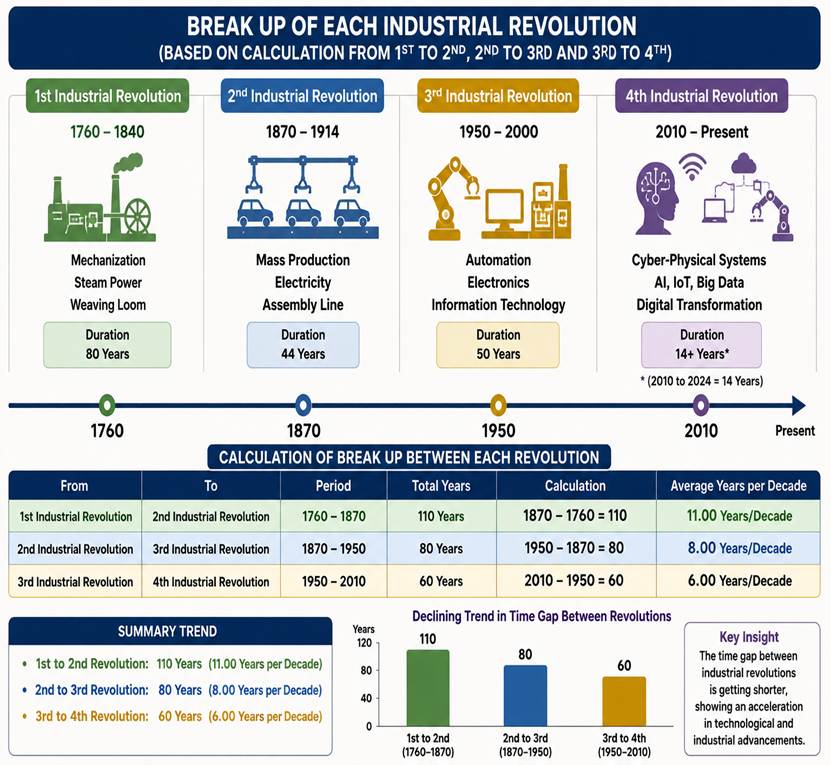
Understanding the historical development of industrial revolutions is essential for students because it helps explain how modern society evolved and why technological change has become a central force in economic and social development. It also enables learners to critically examine the opportunities and challenges associated with emerging technologies such as robotics, big data, blockchain, cloud computing, biotechnology, and machine learning.
This class introduces the concept of industrial revolutions from the First Industrial Revolution to the Fourth Industrial Revolution. It discusses the historical evolution of these revolutions and highlights the major characteristics of the Fourth Industrial Revolution, including automation, connectivity, digitalisation, and artificial intelligence. The lesson also explores how the 4IR is influencing employment, education, governance, business, and legal systems worldwide, including in developing countries such as Bangladesh.
1.2 1st → 4th Industrial Revolution
1.2.1 The First Industrial Revolution (1760-1840)
The First Industrial Revolution began in Britain during the late eighteenth century and later spread to Europe and North America. Before this revolution, most economic activities were based on agriculture and manual labour. Production mainly took place in small workshops or homes using simple hand tools. The introduction of mechanised production transformed this traditional economic structure.
The most important innovation of the First Industrial Revolution was the steam engine, significantly improved by James Watt. Steam power enabled factories to operate large machines that increased production speed and efficiency. Textile manufacturing became one of the earliest industries to adopt mechanisation through inventions such as the spinning jenny and power loom.
Transportation also improved significantly during this period. Steam-powered locomotives and ships facilitated faster movement of goods and people, contributing to industrial growth and international trade. Coal and iron industries expanded rapidly because they were essential for operating machines and building infrastructure.
The First Industrial Revolution also brought major social changes. Many people migrated from rural areas to urban industrial centres in search of employment. Cities grew rapidly, creating new social classes such as industrial workers and factory owners. However, workers often faced poor working conditions, long working hours, low wages, and unsafe environments.
Although the First Industrial Revolution increased productivity and economic growth, it also generated social inequality and environmental pollution. Nevertheless, it marked the beginning of modern industrial society and laid the foundation for future technological advancements.
1.2.2 The Second Industrial Revolution (1870-1914)
The Second Industrial Revolution began in the late nineteenth century and continued until the outbreak of the First World War. This period is sometimes referred to as the Technological Revolution because it introduced electricity, mass production, and scientific innovation into industrial activities.
One of the defining features of this revolution was the widespread use of electricity. Electric power replaced steam energy in many industries, enabling more efficient and flexible production systems. Factories became larger and more productive, while electric lighting improved working conditions.
The development of assembly line production transformed manufacturing industries, especially the automobile industry. Henry Ford popularised mass production techniques through the assembly line system, making products more affordable and accessible to ordinary people.
Communication technologies also advanced rapidly during this era. The invention of the telephone by Alexander Graham Bell and the expansion of telegraph networks improved global communication. Railways expanded across continents, strengthening national economies and international trade.
Scientific discoveries contributed significantly to industrial development. Innovations in chemistry, steel production, and the petroleum industries created new products and industrial opportunities. Large corporations emerged during this period, leading to the growth of modern capitalism and multinational businesses.
The Second Industrial Revolution improved living standards for many people through increased production and employment opportunities. However, industrial competition among powerful nations also contributed to colonial expansion and geopolitical tensions.
1.2.3 The Third Industrial Revolution (1950-2000)
The Third Industrial Revolution, also known as the Digital Revolution, began in the mid-twentieth century with the development of electronics, computers, and information technology. This revolution shifted industrial systems from analogue and mechanical technologies to digital technologies.
The invention of semiconductors, microprocessors, and personal computers transformed business operations, communication, education, and entertainment. Computers enabled industries to automate many processes, increasing productivity and reducing human error.
The emergence of the internet during the late twentieth century revolutionised global communication and information sharing. Businesses became increasingly dependent on digital technologies for marketing, management, and production. E-commerce platforms transformed global trade and consumer behaviour.
Automation became an important feature of the Third Industrial Revolution. Industrial robots began performing repetitive tasks in factories, particularly in the automobile and electronics manufacturing industries. Telecommunications technologies such as mobile phones and satellite communication further connected the world.
This revolution also contributed to the growth of the knowledge economy, where information and innovation became key economic resources. Software development, digital media, and information services emerged as major industries.
Although the Digital Revolution created numerous opportunities, it also introduced challenges such as cybercrime, digital inequality, unemployment in traditional sectors, and privacy concerns.
1.2.4 The Fourth Industrial Revolution (2010-Present)
The Fourth Industrial Revolution represents the current phase of technological transformation. The concept was popularised by Klaus Schwab, who described it as a revolution that merges physical, digital, and biological technologies.
Unlike previous industrial revolutions, 4IR is characterised by the integration of advanced technologies such as artificial intelligence (AI), robotics, the Internet of Things (IoT), blockchain, biotechnology, nanotechnology, cloud computing, big data, and machine learning.
The Fourth Industrial Revolution is transforming industries through smart automation and intelligent systems. Factories are becoming “smart factories” where machines communicate with each other and make decisions with minimal human intervention. Self-driving vehicles, facial recognition systems, AI-powered healthcare, and digital financial services are examples of 4IR technologies.
Another major feature of 4IR is connectivity. Billions of devices are connected through the internet, enabling real-time communication and data exchange. Businesses use big data analytics to understand customer behaviour and improve decision-making.
The Fourth Industrial Revolution is also reshaping education, governance, law, and employment. New jobs related to data science, cybersecurity, and AI are emerging, while many traditional jobs are becoming automated. Educational institutions must therefore focus on digital literacy, creativity, critical thinking, and technological skills.
However, 4IR also raises ethical and legal concerns, including data privacy, cybersecurity threats, algorithmic bias, unemployment, surveillance, and inequality. Governments and international organisations are now developing policies and regulations to address these challenges.
For developing countries like Bangladesh, 4IR presents both opportunities and risks. While digital technologies can improve economic growth and public services, inadequate infrastructure, skills shortages, and digital inequality may limit the benefits of technological advancement.
1.3 Historical Evolution of Industrial Revolutions
The history of industrial revolutions demonstrates the continuous evolution of human civilisation through technological innovation. Each revolution emerged because societies sought more efficient methods of production, communication, and economic organisation. Over time, industrial revolutions became increasingly complex and interconnected.
Before the First Industrial Revolution, economies were primarily agrarian. Most people depended on agriculture and small-scale craftsmanship for survival. Production systems were labour-intensive, and economic growth was relatively slow. The invention of mechanised technologies during the eighteenth century changed this traditional system and initiated industrial capitalism.
The First Industrial Revolution introduced machine-based manufacturing powered by steam energy. Britain became the centre of industrial development due to its natural resources, colonial trade networks, and technological innovations. Factories gradually replaced home-based production systems, leading to urbanisation and industrial employment. This transformation significantly increased productivity and established industrial society.
As industries expanded, the demand for improved transportation and communication systems also increased. Railways, canals, and steamships facilitated international trade and economic integration. Industrialisation spread to other European countries and North America, contributing to global economic competition.
The Second Industrial Revolution further accelerated industrial growth through scientific discoveries and electrical technologies. Electricity enabled continuous industrial operations and improved living conditions in urban areas. The rise of steel production, petroleum industries, and assembly-line manufacturing increased industrial efficiency and reduced production costs.
This period also witnessed the emergence of large multinational corporations and modern consumer culture. Industrialised nations expanded colonial control over Asia, Africa, and Latin America to obtain raw materials and markets for manufactured goods. Consequently, industrial revolutions became closely linked with imperialism and globalisation.
During the twentieth century, technological innovation shifted toward electronics and information technology. The Third Industrial Revolution introduced computers, telecommunications, and digital systems into economic and social life. This revolution transformed not only industries but also education, media, governance, and entertainment.
The internet played a central role in globalising information and communication. Businesses could now operate internationally with greater speed and efficiency. Digital technologies facilitated online banking, e-commerce, virtual communication, and global knowledge sharing.
At the same time, automation reduced the need for manual labour in many industries. While highly skilled workers benefited from technological advancement, many low-skilled workers faced unemployment and economic insecurity. The Digital Revolution, therefore, increased both economic opportunities and social inequalities.
The Fourth Industrial Revolution emerged from the foundation established by the Digital Revolution. Advances in computing power, data processing, and internet connectivity enabled the development of intelligent systems capable of learning and decision-making. Artificial intelligence, robotics, and biotechnology began transforming nearly every sector of society.
Unlike earlier revolutions that focused mainly on industrial production, 4IR affects all dimensions of human life, including healthcare, education, governance, law, finance, and social interaction. Technology is no longer confined to factories; it is integrated into homes, workplaces, transportation systems, and public services.
The speed of technological change has also increased dramatically. Innovations that previously took decades to spread can now become global within a few years. Smartphones, social media platforms, cloud computing, and AI applications have rapidly transformed communication and daily life across the world.
Another important aspect of historical evolution is the growing relationship between humans and machines. During the First Industrial Revolution, machines mainly assisted physical labour. In the Fourth Industrial Revolution, intelligent systems increasingly perform cognitive tasks such as decision-making, language processing, and data analysis.
Globalisation has further intensified the impact of the industrial revolutions. Technologies developed in one country can quickly influence economies and societies worldwide. Developing countries are now integrating digital technologies into agriculture, healthcare, education, and governance.
However, the historical evolution of industrial revolutions also demonstrates that technological progress often creates social challenges. Labour displacement, inequality, environmental degradation, cyber threats, and ethical concerns have accompanied industrial development throughout history. Therefore, societies must balance innovation with social responsibility and inclusive development.
Today, governments, universities, businesses, and international organisations are investing heavily in digital transformation and technological education to prepare for the future. The Fourth Industrial Revolution is expected to continue evolving through developments in quantum computing, advanced robotics, biotechnology, and artificial general intelligence.
Understanding the historical evolution of industrial revolutions helps students recognise how technology shapes economic systems, social structures, and global politics. It also enables future professionals to adapt to technological changes and contribute responsibly to society.
1.4 Key Characteristics of 4IR
The Fourth Industrial Revolution possesses several unique characteristics that distinguish it from previous industrial revolutions.
One of the most important characteristics is connectivity. Through the Internet of Things (IoT), billions of devices, machines, and systems are connected and communicate with each other in real time. This connectivity enables efficient data collection, automation, and remote operations.
Another major characteristic is artificial intelligence and automation. Machines are increasingly capable of learning, analysing information, and making decisions without human intervention. AI-powered technologies are now widely used in healthcare, finance, education, transportation, and customer services.
The Fourth Industrial Revolution is also characterised by big data and cloud computing. Organisations collect massive amounts of data from digital platforms and use advanced analytics to improve decision-making and predict future trends. Cloud computing allows data and software to be accessed remotely from anywhere in the world.
Integration of physical, digital, and biological systems is another defining feature of 4IR. Technologies such as biotechnology, wearable devices, genetic engineering, and smart healthcare systems combine human biology with digital innovation.
Speed and innovation are also central characteristics of 4IR. Technological changes occur rapidly, and innovations spread globally within a short period. Businesses and institutions must therefore continuously adapt to changing technological environments.
Finally, 4IR has a global impact. It affects economies, education systems, labour markets, legal frameworks, and social relationships worldwide. While it creates opportunities for economic growth and improved living standards, it also raises concerns regarding privacy, cybersecurity, inequality, unemployment, and ethical governance.
Therefore, understanding the characteristics of the Fourth Industrial Revolution is essential for preparing future generations to live and work responsibly in a rapidly changing digital world.
Class 2: Core Technologies of the Fourth Industrial Revolution (4IR)
2.1 Artificial Intelligence (AI)
Artificial Intelligence (AI) is one of the most important technologies of the Fourth Industrial Revolution. AI refers to the ability of machines or computer systems to perform tasks that normally require human intelligence. These tasks include learning, reasoning, problem-solving, language understanding, decision-making, and pattern recognition. AI enables machines to analyse large amounts of data, identify relationships, and make predictions with minimal human intervention.
The concept of AI emerged during the mid-twentieth century when scientists began exploring whether machines could simulate human thinking. Today, AI has become a central technology in modern society and is transforming industries, economies, and social systems worldwide.
AI can generally be categorised into two types: narrow AI and general AI. Narrow AI is designed to perform specific tasks, such as facial recognition, language translation, or recommendation systems used by social media platforms. General AI, which is still largely theoretical, would possess human-like cognitive abilities capable of performing multiple intellectual tasks.
Machine learning is one of the most significant branches of AI. In machine learning, computers learn from data without being explicitly programmed. Algorithms analyse patterns and improve performance over time. Deep learning, a more advanced form of machine learning, uses artificial neural networks inspired by the human brain to process complex information such as images, speech, and text.
AI is now widely used in healthcare. Hospitals use AI systems to assist in disease diagnosis, medical imaging, and personalised treatment planning. AI-powered systems can analyse patient data more quickly and accurately than traditional methods in some situations. During global health crises, AI has also helped predict disease outbreaks and manage healthcare resources.
In the business sector, AI improves customer service through chatbots and virtual assistants. Companies use AI for marketing analysis, demand forecasting, fraud detection, and supply chain management. E-commerce platforms rely on AI algorithms to recommend products based on customer preferences and online behaviour.
Transportation systems are also being transformed by AI technologies. Self-driving vehicles use AI systems, sensors, and cameras to navigate roads and avoid obstacles. Smart traffic management systems analyse real-time traffic conditions to reduce congestion and improve road safety.
In education, AI supports personalised learning experiences. Educational software can analyse students’ learning patterns and provide customised lessons based on individual needs. AI also assists teachers in grading assignments and monitoring student performance.
Despite its benefits, AI raises several ethical and social concerns. One major concern is job displacement due to automation. Many repetitive and routine jobs may disappear as machines increasingly perform tasks previously done by humans. AI also creates concerns regarding privacy, surveillance, and algorithmic bias. If AI systems are trained on biased data, they may produce discriminatory outcomes.
Cybersecurity is another important issue because AI systems can be targeted by cyberattacks. Governments and international organisations are therefore developing regulations and ethical guidelines for responsible AI development and use.
For countries like Bangladesh, AI presents opportunities for improving healthcare, agriculture, education, and public services. However, successful AI implementation requires digital infrastructure, skilled human resources, and effective policy frameworks.
Artificial Intelligence is expected to continue evolving rapidly in the future. As AI becomes more integrated into everyday life, understanding its opportunities and challenges will become increasingly important for students, professionals, policymakers, and society as a whole.
2.2 Robotics
Robotics is another major technology of the Fourth Industrial Revolution. Robotics refers to the design, development, and use of machines called robots that can perform tasks automatically or semi-automatically. Robots are often programmed to complete repetitive, dangerous, or highly precise tasks more efficiently than humans.
The development of robotics began during the earlier industrial revolutions when machines were used to assist industrial production. However, modern robotics combines mechanical engineering, electronics, computer science, and artificial intelligence to create intelligent systems capable of interacting with their environment.
Industrial robots are widely used in manufacturing industries. Automobile factories use robotic arms for welding, painting, assembling, and packaging products. These robots increase productivity, improve quality control, and reduce human error. Industrial automation also reduces workplace accidents in hazardous environments.
Modern robots are increasingly equipped with sensors, cameras, and AI systems that enable them to analyze surroundings and make decisions. Collaborative robots, often called cobots, are designed to work safely alongside humans in workplaces. Unlike traditional industrial robots, cobots can adapt to changing environments and assist workers rather than replace them entirely.
Healthcare is one of the sectors greatly influenced by robotics. Surgical robots assist doctors in performing complex operations with greater precision and minimal invasiveness. Robotic rehabilitation systems help patients recover physical movement after injuries or illnesses. During pandemics, robots have also been used for disinfection, medicine delivery, and patient monitoring.
Robotics is also transforming agriculture. Agricultural robots assist farmers in planting, harvesting, irrigation, and crop monitoring. Drones equipped with cameras and sensors can analyse crop health and identify pest infestations. These technologies improve agricultural productivity and reduce labour costs.
Service robots are increasingly used in hotels, restaurants, airports, and customer service centres. Some robots can greet customers, provide information, and deliver products. In households, robotic vacuum cleaners and smart home systems are becoming more common.
Military and defence sectors also use robotics for surveillance, bomb disposal, and unmanned aerial vehicles (UAVs). Space exploration programs rely heavily on robotic systems for conducting missions in environments unsuitable for humans.
Although robotics offers numerous benefits, it also creates social and ethical challenges. One major concern is unemployment due to automation. As robots replace certain forms of manual labour, workers may require new skills to remain competitive in the labour market.
Ethical questions also arise regarding the use of autonomous weapons and surveillance robots. There are concerns about privacy, security, and the potential misuse of robotic technologies. Additionally, highly advanced robots may increase economic inequality if access to technology remains concentrated among wealthy organisations and countries.
Education systems must therefore adapt to prepare students for a future where robotics and automation play increasingly important roles. Skills such as programming, engineering, problem-solving, and digital literacy will become essential in future workplaces.
In developing countries, robotics can improve industrial efficiency, agriculture, healthcare, and disaster management. However, the adoption of robotics requires investment in infrastructure, technical education, and research capabilities.
The future of robotics is expected to involve greater integration with artificial intelligence, machine learning, and the Internet of Things. Intelligent robots may become increasingly capable of performing complex tasks in homes, industries, healthcare systems, and public services.
2.3 Internet of Things (IoT)
The Internet of Things (IoT) is a key technology of the Fourth Industrial Revolution that connects physical devices to the internet, enabling them to collect, exchange, and analyse data. IoT creates networks of interconnected devices that communicate with each other in real time without requiring constant human intervention.
IoT devices include sensors, cameras, smartphones, smart home appliances, wearable devices, industrial machines, and vehicles. These devices use internet connectivity, software, and sensors to monitor environments, gather information, and perform automated actions.
The concept of IoT emerged from advances in wireless communication, sensor technology, and cloud computing. Today, IoT systems are widely used in industries, transportation, healthcare, agriculture, and smart cities.
Smart homes are among the most common examples of IoT applications. Devices such as smart lights, smart thermostats, security cameras, and voice assistants can be controlled remotely through smartphones or internet-connected systems. These technologies improve convenience, energy efficiency, and security.
In healthcare, IoT devices monitor patients’ health conditions in real time. Wearable devices can track heart rate, blood pressure, oxygen levels, and physical activity. Doctors can remotely monitor patients and provide faster medical responses when necessary.
Industrial IoT, often called IIoT, is transforming manufacturing systems. Smart factories use interconnected machines and sensors to monitor production processes, predict equipment failures, and optimise operations. This increases productivity and reduces maintenance costs.
Transportation systems also benefit from IoT technologies. Smart traffic management systems collect data from roads, vehicles, and traffic signals to reduce congestion and improve road safety. Connected vehicles can communicate with each other to prevent accidents and optimise navigation.
Agriculture has become increasingly dependent on IoT-based smart farming systems. Sensors monitor soil moisture, temperature, and crop conditions, enabling farmers to make data-driven decisions regarding irrigation and fertiliser use. This improves agricultural productivity and resource management.
Smart cities use IoT systems to manage public services such as waste management, water supply, energy consumption, and public transportation. Governments use real-time data to improve urban planning and service delivery.
One of the major advantages of IoT is efficiency. Automated systems reduce manual labour and enable faster decision-making. IoT also improves resource management by reducing energy waste and optimising operations.
However, IoT also creates significant cybersecurity and privacy concerns. Because billions of devices are connected to the internet, cybercriminals may target vulnerable systems to steal data or disrupt services. Personal information collected by smart devices may also be misused if proper security measures are not implemented.
Data management is another challenge because IoT systems generate massive amounts of information. Organisations require advanced storage and analytics systems to process this data effectively.
Governments and businesses are therefore developing regulations and cybersecurity strategies to ensure the safe use of IoT technologies. Public awareness regarding digital security and privacy is also becoming increasingly important.
For developing countries like Bangladesh, IoT offers opportunities for smart agriculture, urban development, healthcare improvement, and industrial modernisation. However, infrastructure limitations, internet access, and technical skills remain important challenges.
The future of IoT is expected to involve even greater connectivity through technologies such as 5G networks and artificial intelligence. As more devices become interconnected, IoT will continue reshaping industries and everyday life.
2.4 Big Data
Big Data refers to extremely large and complex sets of data that cannot be processed efficiently using traditional data management systems. In the Fourth Industrial Revolution, digital technologies generate enormous amounts of information every second from social media, online transactions, sensors, mobile devices, and industrial systems.
Big Data is often characterised by the “5 Vs”: volume, velocity, variety, veracity, and value. Volume refers to the massive quantity of data generated daily. Velocity describes the speed at which data is created and processed. Variety refers to different forms of data, such as text, images, audio, and video. Veracity relates to data accuracy and reliability, while value represents the usefulness of data for decision-making.
Organisations use Big Data analytics to identify patterns, trends, and relationships that support strategic planning and innovation. Advanced analytical techniques such as machine learning and predictive analytics help businesses make informed decisions based on real-time information.
In business and marketing, companies analyse customer behaviour to improve products and services. E-commerce platforms collect user data to personalise recommendations and advertising. Financial institutions use Big Data to detect fraudulent transactions and manage risks.
Healthcare systems also benefit significantly from Big Data analytics. Hospitals analyse patient records, medical imaging, and disease trends to improve diagnosis and treatment. During disease outbreaks, governments use data analytics to monitor infection patterns and allocate healthcare resources efficiently.
In education, Big Data helps institutions analyse student performance and learning behaviours. Educational organisations can develop personalised learning systems and identify students who require additional support.
Governments use Big Data for public administration, urban planning, disaster management, and national security. Smart city systems collect data regarding transportation, energy use, and public services to improve efficiency and sustainability.
Social media platforms generate vast amounts of data that companies use for market analysis and communication strategies. Political organisations may also use data analytics during election campaigns to understand voter behaviour and public opinion.
Although Big Data creates numerous opportunities, it also raises ethical and privacy concerns. Large-scale data collection may threaten personal privacy if sensitive information is accessed without consent. Companies and governments must therefore establish clear policies regarding data protection and responsible use.
Cybersecurity risks are another important issue because data breaches can expose confidential information. Organisations must invest in strong security systems and encryption technologies to protect digital information.
Big Data also creates concerns regarding misinformation and manipulation. Algorithms that analyse user behaviour may influence public opinion, consumer decisions, and social interactions.
In the modern economy, data has become a valuable resource often referred to as the “new oil.” Countries and organisations that effectively manage and analyse data gain competitive advantages in business, governance, and innovation.
For developing countries, Big Data can improve agriculture, healthcare, disaster response, and education systems. However, effective implementation requires technological infrastructure, skilled professionals, and data governance frameworks.
As technology continues evolving, Big Data analytics will become increasingly integrated with artificial intelligence, cloud computing, and IoT systems. Understanding data management and analytical skills will therefore become essential for future professionals in nearly every field.
2.5 Cloud Computing
Cloud computing is a technology that enables users to access computing services such as storage, software, databases, and processing power through the internet instead of relying on local computers or physical servers. It is one of the core technologies driving digital transformation in the Fourth Industrial Revolution.
Traditionally, organisations stored data and software on physical computers or local servers. Cloud computing changed this system by allowing information and applications to be stored on remote servers managed by cloud service providers. Users can access these resources anytime and from anywhere with internet connectivity.
There are several major types of cloud computing services. Infrastructure as a Service (IaaS) provides virtual servers and storage systems. Platform as a Service (PaaS) offers platforms for software development and application management. Software as a Service (SaaS) allows users to access software applications online without installation.
Cloud computing offers numerous advantages. One major benefit is cost efficiency because organisations do not need to purchase expensive hardware or maintain large physical data centres. Businesses can scale services according to demand, making cloud computing flexible and efficient.
Remote accessibility is another important advantage. Students, employees, and organisations can access files and applications from different locations using internet-connected devices. During global crises such as the COVID-19 pandemic, cloud technologies enabled remote work, online education, and digital communication.
Businesses use cloud computing for data storage, software development, customer relationship management, and collaboration systems. Educational institutions use cloud platforms for online learning management and virtual classrooms.
Cloud computing also supports other 4IR technologies such as artificial intelligence, Big Data analytics, and IoT systems. Massive data generated by IoT devices can be stored and processed efficiently through cloud infrastructure.
Governments increasingly use cloud systems for digital governance, online public services, and national databases. Cloud technologies improve efficiency and accessibility in public administration.
Despite its advantages, cloud computing raises important security and privacy concerns. Sensitive information stored on remote servers may become vulnerable to cyberattacks or unauthorised access. Organisations must therefore implement strong cybersecurity measures and encryption technologies.
Dependence on internet connectivity is another challenge because cloud services require stable and reliable internet access. In regions with poor digital infrastructure, cloud computing adoption may be limited.
Legal and regulatory issues also arise regarding data ownership, cross-border data transfer, and privacy protection. Governments are developing policies to regulate cloud service providers and ensure data security.
For developing countries like Bangladesh, cloud computing offers opportunities to modernise education, healthcare, business, and governance systems at relatively lower costs. However, successful implementation requires improved internet infrastructure and digital skills development.
Cloud computing is expected to continue growing rapidly as organisations increasingly rely on digital technologies. It will remain a fundamental component of the digital economy and future technological innovation.
2.6 Blockchain
Blockchain is a decentralised digital ledger technology used to record transactions securely and transparently. It is one of the most innovative technologies of the Fourth Industrial Revolution because it enables secure information sharing without relying on a central authority.
A blockchain consists of a chain of digital blocks containing transaction records. Each block is connected to the previous block using cryptographic techniques, making the system highly secure and difficult to alter. Once information is added to the blockchain, it becomes extremely difficult to modify or delete.
The most well-known application of blockchain technology is cryptocurrency, such as Bitcoin. However, blockchain has applications far beyond digital currencies. It is increasingly used in banking, healthcare, supply chain management, voting systems, and digital identity verification.
One major feature of blockchain is decentralisation. Traditional databases are usually controlled by central organisations such as banks or governments. In contrast, blockchain systems distribute data across multiple computers or nodes, reducing dependence on a single authority.
Transparency is another important characteristic. Participants in a blockchain network can verify transactions, increasing trust and accountability. This feature is particularly useful in supply chain systems where companies track products from production to delivery.
Blockchain also improves security through cryptographic encryption and distributed data storage. Because records cannot easily be altered, blockchain systems reduce the risk of fraud and data manipulation.
Smart contracts are another significant application of blockchain technology. Smart contracts are self-executing digital agreements programmed to perform specific actions automatically when predetermined conditions are met. These contracts reduce the need for intermediaries and increase efficiency in business transactions.
Healthcare organisations are exploring blockchain systems for secure medical record management. Educational institutions may use blockchain to verify academic certificates and credentials. Governments are also considering blockchain-based voting systems to improve election transparency and reduce fraud.
Despite its benefits, blockchain technology also faces several challenges. One major issue is energy consumption, especially in cryptocurrency mining systems that require extensive computing power. Environmental concerns have therefore become an important topic in blockchain discussions.
Scalability is another challenge because some blockchain networks process transactions relatively slowly compared to traditional financial systems. Regulatory uncertainty also affects blockchain adoption because governments have different approaches toward cryptocurrencies and digital assets.
Cybersecurity risks still exist despite blockchain’s strong security features. Criminal activities involving cryptocurrency transactions have raised concerns regarding money laundering and financial crimes.
For developing countries, blockchain technology can improve financial inclusion, digital governance, land registration systems, and secure transactions. People without access to traditional banking services may benefit from blockchain-based financial systems.
As the Fourth Industrial Revolution continues evolving, blockchain technology is expected to become increasingly integrated with artificial intelligence, IoT, and digital financial systems. Understanding blockchain will therefore become increasingly important for future professionals, businesses, and policymakers.
Class 3: Industry 4.0 and Smart Society
The Fourth Industrial Revolution, commonly known as Industry 4.0, is transforming modern society through the integration of advanced digital technologies into economic, social, and institutional systems. Industry 4.0 is characterised by the use of artificial intelligence (AI), robotics, the Internet of Things (IoT), cloud computing, big data, and automation to create intelligent and interconnected environments. As these technologies become increasingly integrated into daily life, the concept of a “smart society” has emerged.
A smart society refers to a society where digital technologies are used to improve the quality of life, enhance efficiency, support sustainable development, and strengthen communication between people, institutions, and infrastructure. In a smart society, technology is not limited to industrial production; rather, it becomes part of transportation systems, healthcare, education, governance, communication, and urban management.
Industry 4.0 is reshaping how businesses operate and how citizens interact with public and private services. Smart devices, intelligent networks, and data-driven decision-making systems allow governments and organisations to respond more efficiently to social and economic challenges. Digital platforms facilitate online education, e-commerce, telemedicine, remote work, and virtual communication, creating more connected and flexible societies.
One of the key aspects of a smart society is automation. Automated systems can perform tasks with greater speed and accuracy than traditional methods. For example, smart traffic systems can reduce congestion, while intelligent healthcare systems can monitor patient conditions in real time. Industries use smart manufacturing technologies to increase productivity and reduce operational costs.
Sustainability is another important feature of smart societies. Smart energy systems, waste management technologies, and environmentally friendly transportation systems help reduce environmental pollution and improve resource management. Governments increasingly use digital technologies to monitor environmental conditions and support sustainable urban planning.
However, the development of smart societies also creates important social and ethical challenges. Issues such as cybersecurity, data privacy, digital inequality, and technological unemployment require careful policy planning and regulation. Not all citizens have equal access to digital technologies, and this digital divide may increase social inequality.
For countries like Bangladesh, Industry 4.0 offers opportunities for economic growth, digital governance, smart agriculture, and improved public services. At the same time, challenges related to infrastructure, education, technological skills, and digital access must be addressed to ensure inclusive and sustainable development.
Ultimately, Industry 4.0 and smart society are closely interconnected concepts that represent the future direction of global technological and social transformation. Understanding these changes is essential for preparing future generations to live and work effectively in an increasingly digital world.
3.1 Smart Factory
A smart factory is one of the most significant innovations of Industry 4.0. It refers to a highly digitalised and automated manufacturing environment where machines, computers, sensors, and production systems communicate and operate intelligently with minimal human intervention. Smart factories use advanced technologies such as artificial intelligence (AI), robotics, the Internet of Things (IoT), cloud computing, and big data analytics to improve industrial productivity and efficiency.
Traditional factories mainly depended on human labour and isolated machines. In contrast, smart factories are interconnected systems where production equipment continuously exchanges information through digital networks. Sensors installed in machines collect real-time data about production performance, temperature, energy use, maintenance needs, and operational conditions. This information is analysed instantly to optimise industrial processes and reduce inefficiencies.
One of the key characteristics of smart factories is automation. Machines and robotic systems perform repetitive and complex tasks with high precision and speed. Automated systems reduce human error, increase productivity, and improve product quality. Industrial robots are widely used for welding, packaging, assembly, and material handling in manufacturing industries.
Artificial intelligence plays a major role in smart manufacturing. AI systems analyse large amounts of production data to identify patterns, predict equipment failures, and improve decision-making. Predictive maintenance systems can detect machine problems before breakdowns occur, reducing maintenance costs and production interruptions.
The Internet of Things (IoT) is another essential component of smart factories. IoT-enabled devices allow machines to communicate with each other and with centralised management systems. This interconnected environment enables real-time monitoring and remote control of production processes. Factory managers can access production data through digital dashboards and make quick operational decisions.
Big data analytics also contributes significantly to smart manufacturing systems. Factories generate enormous amounts of data during production activities. Data analytics helps organisations understand operational trends, optimise supply chains, improve inventory management, and reduce waste. Companies can use this information to enhance productivity and customer satisfaction.
Cloud computing supports smart factories by providing remote data storage and computing services. Production data can be securely stored and analysed through cloud platforms, enabling global collaboration and remote factory management. Cloud systems also reduce the need for expensive local infrastructure.
Smart factories improve flexibility in manufacturing. Traditional factories often require extensive time and cost to change production systems. In smart factories, automated systems can quickly adapt to new products, designs, or customer demands. This flexibility supports customised production and mass personalisation.
Energy efficiency and sustainability are additional advantages of smart factories. Intelligent systems monitor energy consumption and optimise resource use, reducing environmental impact. Smart manufacturing also minimises material waste and improves production sustainability.
Despite these advantages, smart factories face several challenges. High initial investment costs can make implementation difficult for small and medium-sized enterprises. Companies also require skilled workers who understand digital technologies, programming, and data analysis.
Cybersecurity is another major concern because interconnected industrial systems may become targets of cyberattacks. A cyberattack on a smart factory could disrupt production, damage equipment, or expose sensitive business information. Strong cybersecurity systems are therefore essential for protecting industrial networks.
The rise of automation also raises concerns about employment. Some traditional manufacturing jobs may disappear as machines replace repetitive labour. However, new jobs related to robotics, software engineering, AI management, and data analytics are also emerging.
For developing countries like Bangladesh, smart factories can modernise industries such as garments, pharmaceuticals, and manufacturing. The ready-made garments (RMG) sector, for example, could benefit from automation, digital quality control, and intelligent supply chain management. However, infrastructure development and workforce training are necessary to support industrial transformation.
The future of manufacturing is increasingly moving toward intelligent and autonomous production systems. Smart factories are expected to become central components of global industrial development, improving efficiency, competitiveness, and sustainability in the digital economy.
3.2 Smart City
A smart city is an urban area that uses digital technologies, data systems, and intelligent infrastructure to improve the quality of life, efficiency of public services, sustainability, and urban management. Smart cities are important components of Industry 4.0 because they integrate information and communication technologies (ICT) into transportation, healthcare, governance, energy management, security, and environmental systems.
Rapid urbanisation has created significant challenges for modern cities, including traffic congestion, pollution, waste management problems, housing shortages, and pressure on public services. Smart city technologies aim to address these issues through data-driven and technology-based solutions.
One of the core features of a smart city is connectivity. Smart cities use sensors, cameras, and Internet of Things (IoT) devices to collect real-time information from roads, buildings, public transportation systems, and utility networks. This information is analysed to improve urban planning and service delivery.
Smart transportation systems are among the most visible applications of smart city technology. Intelligent traffic management systems monitor traffic conditions and automatically adjust traffic signals to reduce congestion. Public transportation systems use digital tracking and mobile applications to provide real-time travel information to passengers.
Energy management is another important aspect of smart cities. Smart grids use digital systems to monitor electricity consumption and improve energy efficiency. Renewable energy technologies such as solar panels are increasingly integrated into urban infrastructure to support sustainable development.
Waste management systems in smart cities use sensors to monitor waste levels in garbage bins and optimise collection routes. This improves efficiency and reduces operational costs. Water management systems also use smart technologies to detect leaks, monitor water quality, and improve distribution systems.
Healthcare services in smart cities are enhanced through telemedicine, digital health records, and remote patient monitoring systems. Smart healthcare technologies improve accessibility and efficiency, particularly during emergencies or disease outbreaks.
Public safety is another important component of smart cities. Surveillance cameras, AI-based monitoring systems, and emergency response technologies help improve urban security and disaster management. Governments use digital communication systems to provide rapid responses during emergencies.
Smart governance is a key feature of digitally advanced cities. Governments use online platforms to provide public services such as tax payments, licensing, utility management, and citizen communication. Digital governance increases transparency, efficiency, and citizen participation.
Environmental sustainability is central to the smart city concept. Smart environmental monitoring systems measure air quality, noise pollution, and climate conditions. Urban planners use this information to promote environmentally friendly development and sustainable resource management.
However, smart cities also face important challenges. Privacy concerns arise because smart city systems collect large amounts of personal and public data. Citizens may worry about surveillance and misuse of information. Governments must therefore establish clear data protection policies and ethical regulations.
Cybersecurity is another major concern because interconnected urban systems may become vulnerable to hacking or cyberattacks. A cyberattack on transportation or energy systems could disrupt essential public services.
The digital divide also creates challenges in smart cities. Not all citizens have equal access to digital technologies and internet connectivity. Social inequality may increase if technological benefits are not distributed fairly.
For countries like Bangladesh, smart city development offers opportunities to improve transportation, public services, healthcare, and urban sustainability. Cities such as Dhaka face challenges related to traffic congestion, pollution, and infrastructure pressure that smart technologies could help address.
The future of urban development is expected to become increasingly technology-driven. Smart cities represent a vision of sustainable, connected, and efficient urban living where digital innovation supports economic growth and social well-being.
3.3 Digital Transformation
Digital transformation refers to the process of integrating digital technologies into all aspects of organisations, industries, governments, and society to improve operations, services, communication, and decision-making. It is one of the most important features of the Fourth Industrial Revolution because it fundamentally changes how institutions and individuals function in the digital age.
Digital transformation is not simply about using computers or internet services. It involves restructuring organisational systems, business models, and social practices to take advantage of modern technologies such as artificial intelligence (AI), cloud computing, big data, robotics, and the Internet of Things (IoT).
Businesses around the world are increasingly adopting digital transformation strategies to remain competitive in rapidly changing markets. Companies use digital platforms, e-commerce systems, online marketing, and automated operations to improve efficiency and customer satisfaction. Traditional business models are being replaced by digital ecosystems that support real-time communication and global connectivity.
One major area of digital transformation is communication. Digital technologies have transformed how people communicate through social media, video conferencing, email, and instant messaging platforms. Remote work and virtual collaboration have become common in many industries.
Education systems are also experiencing a major digital transformation. Online learning platforms, virtual classrooms, digital libraries, and AI-based educational tools have expanded access to education. Universities and schools increasingly use digital systems for teaching, assessment, and academic management.
Healthcare services have become more technology-driven through digital transformation. Electronic health records, telemedicine, online consultation systems, and AI-assisted diagnostics improve healthcare efficiency and accessibility. During global health emergencies, digital technologies played a critical role in communication and medical coordination.
Governments are adopting digital governance systems to provide public services more efficiently. Citizens can now access government services online, including tax payments, utility management, identification systems, and legal documentation. Digital governance improves transparency and reduces administrative delays.
Banking and financial sectors have undergone significant digital transformation through online banking, mobile financial services, digital payments, and blockchain-based financial technologies. Financial technology, commonly known as FinTech, has made financial services more accessible and efficient.
Digital transformation also affects social and cultural life. Social media platforms, digital entertainment, online shopping, and virtual communication have changed human interaction and consumer behaviour. Information can now spread globally within seconds through digital networks.
Despite its benefits, digital transformation creates important challenges. Cybersecurity threats are increasing as organisations become more dependent on digital systems. Data breaches, hacking, and cybercrime can cause serious economic and social damage.
Privacy concerns are another major issue because digital platforms collect large amounts of personal information. Governments and organisations must develop ethical policies and legal frameworks to protect user data and digital rights.
Digital transformation may also contribute to unemployment in some sectors as automation replaces repetitive tasks. Workers, therefore, need continuous learning and digital skills development to remain relevant in the modern workforce.
The digital divide is another important concern. Not all individuals or communities have equal access to digital technologies, internet services, or technical education. Unequal access may increase social and economic inequality.
For developing countries like Bangladesh, digital transformation presents opportunities for economic growth, e-governance, education expansion, and technological innovation. Initiatives related to “Smart Bangladesh” aim to improve digital infrastructure and public services through technology-driven development.
The future of digital transformation is expected to involve deeper integration of AI, cloud computing, blockchain, and automation into everyday life. Organisations and societies that successfully adapt to digital transformation will likely gain significant economic and social advantages in the Fourth Industrial Revolution.
Class 4: Employment and Future of Work
The Fourth Industrial Revolution (4IR) is fundamentally transforming the global labour market and redefining the future of work. Rapid technological advancements in artificial intelligence (AI), robotics, automation, cloud computing, big data, and digital communication are changing how organisations operate and how people perform their jobs. As industries become increasingly digitalised and automated, traditional employment patterns are evolving in significant ways.
Historically, industrial revolutions have always influenced labour systems. The First Industrial Revolution shifted workers from agricultural activities to factory-based manufacturing. The Second Industrial Revolution expanded industrial employment through mass production, while the Third Industrial Revolution introduced computers and digital technologies that automated many office and industrial tasks. The Fourth Industrial Revolution continues this transformation by integrating intelligent technologies into nearly every sector of society.
One of the most important impacts of 4IR is automation. Machines and intelligent systems can now perform many repetitive, predictable, and routine tasks more efficiently than humans. Industries such as manufacturing, transportation, customer service, and finance increasingly rely on automated systems to improve productivity and reduce operational costs. While automation creates economic efficiency, it also raises concerns about job displacement and unemployment.
At the same time, the Fourth Industrial Revolution is creating entirely new forms of employment. Careers related to data science, cybersecurity, artificial intelligence, software engineering, digital marketing, cloud computing, and robotics are expanding rapidly. The future workforce will therefore require new technical and digital skills to remain competitive in modern labour markets.
The nature of work itself is also changing. Remote work, online collaboration, freelancing, and platform-based employment are becoming increasingly common due to digital technologies and internet connectivity. This transformation has contributed to the growth of the gig economy, where workers provide short-term or project-based services through digital platforms.
However, the future of work also presents important social and ethical challenges. Technological inequality, digital exclusion, income disparities, and job insecurity may increase if societies fail to adapt effectively to technological change. Workers who lack access to education and digital training may struggle to participate in emerging labour markets.
Governments, educational institutions, and businesses must therefore work together to prepare future generations for changing employment environments. Investment in digital education, technical training, creativity, critical thinking, and lifelong learning is essential for ensuring inclusive and sustainable economic development.
For countries like Bangladesh, the future of work presents both opportunities and challenges. Digital transformation can create new employment sectors and support economic growth, but workforce development and technological readiness remain critical priorities. Understanding the relationship between technology and employment is therefore essential for adapting successfully to the rapidly changing world of work.
4.1 Automation
Automation is one of the defining characteristics of the Fourth Industrial Revolution and refers to the use of machines, computer systems, robotics, and artificial intelligence to perform tasks with minimal human intervention. Automation enables industries and organisations to improve efficiency, accuracy, speed, and productivity by replacing or assisting human labour in repetitive and predictable activities.
The concept of automation is not entirely new. During earlier industrial revolutions, machines were introduced to reduce manual labour in manufacturing and transportation. However, modern automation has become significantly more advanced because of developments in digital technologies, artificial intelligence, machine learning, robotics, and the Internet of Things (IoT).
In manufacturing industries, automated machines are widely used for assembly, packaging, quality control, and material handling. Smart factories use robotic systems and interconnected machines that communicate with each other through digital networks. These systems can operate continuously with high precision and fewer operational errors.
Artificial intelligence has expanded automation beyond physical labour into cognitive and analytical tasks. AI-powered software can analyse financial records, process customer requests, translate languages, and even assist in medical diagnosis. Automated chatbots now provide customer support services for businesses worldwide.
Automation has also transformed transportation systems. Self-driving vehicles, automated traffic management systems, and intelligent logistics networks are increasingly being developed to improve efficiency and reduce accidents. Warehouses operated by major global companies use automated robots to sort and transport products rapidly.
In agriculture, automation supports smart farming practices. Automated irrigation systems, drones, and robotic harvesters help farmers improve productivity and reduce labour costs. Precision agriculture technologies also use sensors and data analysis to optimise farming decisions.
Healthcare systems are becoming increasingly automated through robotic surgery, AI-assisted diagnostics, and automated patient monitoring systems. These technologies improve healthcare efficiency and reduce human error in medical procedures.
One of the major advantages of automation is increased productivity. Machines can perform repetitive tasks continuously without fatigue, leading to faster production and improved operational efficiency. Automation also reduces workplace accidents in dangerous industrial environments.
Cost reduction is another important benefit. Organisations can lower labour costs and improve resource management through automated systems. Businesses also use automation to maintain consistent product quality and improve customer satisfaction.
Despite these benefits, automation raises important economic and social concerns. One of the biggest concerns is employment displacement. Many routine jobs performed by humans may disappear as machines and AI systems become more capable. Workers in manufacturing, transportation, retail, and administrative sectors may be particularly vulnerable to automation.
Automation may also increase inequality if technological benefits are concentrated among highly skilled workers and large corporations. Workers who lack technical education and digital skills may struggle to adapt to changing labour markets.
Another challenge is the ethical use of automation technologies. Automated decision-making systems may produce biased outcomes if they rely on incomplete or discriminatory data. There are also concerns regarding surveillance and privacy in workplaces where employee activities are monitored through automated systems.
Cybersecurity risks are increasingly important because automated systems rely heavily on digital networks and data exchange. Cyberattacks on automated industrial systems could disrupt operations and create economic losses.
Governments and organisations must therefore develop strategies to manage automation responsibly. Education systems should focus on technical skills, problem-solving, creativity, and lifelong learning to prepare workers for technological changes. Policies supporting worker retraining and social protection are also essential.
For countries like Bangladesh, automation offers opportunities to modernise industries such as manufacturing, agriculture, and logistics. However, workforce development and skill training are necessary to ensure that automation contributes to inclusive economic growth rather than widespread unemployment.
The future of automation is expected to involve greater integration of AI, robotics, and smart systems across all sectors of society. Automation will continue shaping industries, workplaces, and human activities in the coming decades.
4.2 Job Displacement
Job displacement refers to the loss or reduction of employment opportunities due to technological change, automation, economic transformation, or organisational restructuring. In the Fourth Industrial Revolution, job displacement has become a major concern because advanced technologies such as artificial intelligence, robotics, and automation are increasingly capable of performing tasks previously completed by human workers.
Throughout history, industrial revolutions have changed labour markets. During the First Industrial Revolution, machines replaced many traditional agricultural and handicraft jobs. Similarly, the Third Industrial Revolution automated many office and manufacturing tasks through computers and digital technologies. The Fourth Industrial Revolution is accelerating these changes at an unprecedented speed.
Automation is one of the primary causes of job displacement in modern economies. Machines and AI systems can perform repetitive, routine, and predictable tasks more efficiently and accurately than humans. Industries, therefore, adopt automated systems to reduce costs and increase productivity.
Manufacturing industries are particularly affected by technological displacement. Industrial robots now perform tasks such as welding, packaging, assembly, and quality inspection. As a result, demand for low-skilled manual labour has decreased in many factories.
Retail and customer service sectors are also experiencing significant changes. Self-checkout systems, online shopping platforms, and AI-powered customer support services reduce the need for traditional retail workers and customer service employees.
Transportation industries may face major disruptions due to self-driving vehicles and automated logistics systems. Drivers of trucks, taxis, and delivery services could face employment uncertainty as autonomous transportation technologies develop further.
Administrative and clerical jobs are increasingly affected by digital automation. Software systems can now process documents, manage databases, schedule appointments, and analyse information with minimal human involvement.
Although technological advancement can displace jobs, it also creates new employment opportunities. Emerging industries related to artificial intelligence, cybersecurity, software development, robotics, data science, and digital communication require skilled professionals. Historically, technological revolutions have often replaced some jobs while generating new forms of employment.
The major challenge is the transition process. Workers displaced by automation may not possess the skills required for newly emerging jobs. This skills gap can create unemployment and economic insecurity, particularly for low-skilled workers and older employees.
Job displacement may also contribute to income inequality. Highly educated and technologically skilled individuals may benefit significantly from digital economies, while others struggle to find stable employment. Unequal access to education and technology can further widen social disparities.
Psychological and social impacts are also important. Losing employment can create stress, anxiety, financial hardship, and reduced social stability. Communities heavily dependent on traditional industries may experience economic decline if technological transformation occurs rapidly.
Governments and educational institutions, therefore, play crucial roles in addressing job displacement. Investment in technical education, vocational training, digital literacy, and lifelong learning can help workers adapt to changing labour markets. Reskilling and upskilling programs are increasingly important in modern economies.
Social protection policies such as unemployment support, workforce transition programs, and labour market regulations may also help reduce the negative impacts of job displacement. Policymakers must ensure that technological progress benefits society broadly rather than increasing inequality.
For countries like Bangladesh, job displacement presents complex challenges. Labour-intensive sectors such as garment manufacturing may increasingly adopt automation technologies. While automation can improve industrial productivity and global competitiveness, it may also affect employment opportunities for large numbers of workers.
At the same time, digital economies create opportunities for online work, IT services, e-commerce, and digital entrepreneurship. Developing countries must therefore focus on workforce development and technological education to prepare citizens for future employment environments.
The future of work will likely involve continuous technological adaptation. Workers will increasingly need flexible skills, digital literacy, creativity, and critical thinking to remain competitive in rapidly changing labour markets.
4.3 New Skills
The Fourth Industrial Revolution is creating significant changes in the types of skills required in modern workplaces. As industries become increasingly digitalised and automated, traditional labour skills alone are no longer sufficient for long-term career success. Workers must now develop new technical, digital, and interpersonal skills to adapt to changing employment environments.
New skills are essential because many routine and repetitive tasks are increasingly performed by machines and artificial intelligence systems. Human workers are therefore expected to focus on activities that require creativity, critical thinking, emotional intelligence, communication, and problem-solving abilities.
Digital literacy has become one of the most important skills in the modern workforce. Individuals must understand how to use computers, internet platforms, digital communication systems, and online collaboration tools effectively. Even professions traditionally unrelated to technology increasingly require basic digital competence.
Technical skills related to data analysis, programming, cybersecurity, cloud computing, and artificial intelligence are becoming highly valuable in many industries. Organisations increasingly seek employees who can manage digital systems, analyse information, and support technological innovation.
Critical thinking and problem-solving are also essential skills in the Fourth Industrial Revolution. Automated systems can perform routine tasks efficiently, but humans remain important for analysing complex situations, making ethical decisions, and solving unpredictable problems.
Creativity and innovation are becoming increasingly valuable because machines generally struggle to replicate original human creativity. Industries such as media, design, marketing, entrepreneurship, and research require individuals capable of generating new ideas and innovative solutions.
Communication and collaboration skills remain extremely important in modern workplaces. Employees often work in diverse teams using digital communication platforms and virtual collaboration systems. Effective communication helps organisations improve productivity and teamwork.
Emotional intelligence is another key skill in the future of work. Human-centred professions such as healthcare, education, counselling, leadership, and customer relations require empathy, interpersonal understanding, and emotional awareness that machines cannot easily replace.
Adaptability and lifelong learning are increasingly necessary because technologies and industries continue evolving rapidly. Workers must continuously update their knowledge and skills to remain competitive. Lifelong learning refers to the continuous process of acquiring new knowledge throughout one’s career and personal life.
Leadership and management skills are also changing in the digital age. Modern leaders must understand technological trends, support innovation, manage digital transformation, and guide organisations through rapid change.
Educational institutions, therefore, face important responsibilities in preparing students for future employment environments. Schools and universities must integrate digital education, critical thinking, creativity, and technical training into academic curricula.
Online learning platforms and digital education technologies now provide opportunities for individuals to develop new skills independently. Professional certifications, virtual courses, and technical training programs are becoming increasingly popular worldwide.
Governments and businesses also invest in workforce development programs to address skills shortages. Many organisations provide employee training in digital technologies, cybersecurity, and data management.
For countries like Bangladesh, developing new skills is essential for economic competitiveness in the global digital economy. Young populations can become valuable human resources if provided with quality education, digital training, and technological opportunities.
However, unequal access to education and technology may create barriers to skill development. Rural communities and disadvantaged populations may face difficulties accessing digital learning resources and technical education.
The future workforce will require a balance between technical expertise and human-centred abilities. Workers who combine digital skills with creativity, adaptability, communication, and ethical understanding will likely succeed in the evolving labour market of the Fourth Industrial Revolution.
4.4 Gig Economy
The gig economy refers to a labour market where individuals work on short-term, flexible, or project-based jobs instead of traditional full-time employment. Digital technologies and online platforms have significantly expanded the gig economy during the Fourth Industrial Revolution by connecting workers and clients through internet-based systems.
The term “gig” originally referred to short-term performances by musicians, but it now describes temporary or freelance work arrangements across many sectors. Workers in the gig economy are commonly known as freelancers, independent contractors, or platform workers.
Digital platforms play a central role in the gig economy. Online platforms connect service providers with customers who require specific tasks or services. Examples include ride-sharing services, food delivery platforms, online freelancing websites, and digital marketplaces.
One major factor contributing to the growth of the gig economy is technological advancement. Smartphones, mobile applications, cloud computing, and digital payment systems make it easier for people to work remotely and provide services online.
The gig economy offers several advantages for workers and businesses. Flexibility is one of its most important benefits. Workers can choose when, where, and how much they want to work. Many individuals prefer gig work because it allows greater independence and work-life balance.
Businesses also benefit because they can hire workers for specific projects without long-term employment commitments. This reduces operational costs and increases organisational flexibility.
The gig economy creates employment opportunities for students, part-time workers, homemakers, and individuals seeking additional income. Online freelancing platforms allow people to work for international clients without geographic limitations.
Many digital professions, such as graphic design, software development, digital marketing, content writing, online tutoring, and virtual assistance, are increasingly connected to the gig economy. Remote work opportunities expanded significantly during and after the COVID-19 pandemic.
For developing countries like Bangladesh, the gig economy creates opportunities for youth employment, IT freelancing, and digital entrepreneurship. Bangladesh has become increasingly recognised for freelance work in areas such as programming, graphic design, and digital services.
Despite its advantages, the gig economy also creates important challenges. One major issue is job insecurity. Gig workers often lack stable income, long-term contracts, and employment benefits such as health insurance, pensions, or paid leave.
Workers in the gig economy may also experience irregular working hours and income uncertainty. Competition on digital platforms can sometimes reduce wages and increase economic pressure on freelancers.
Legal and labour rights issues are increasingly important in gig economies. Many gig workers are classified as independent contractors rather than employees, limiting their access to labour protections and social security systems.
Another challenge is digital inequality. Participation in the gig economy requires internet access, digital skills, and technological devices. Individuals without these resources may be excluded from digital employment opportunities.
Psychological stress and work-life imbalance may also affect gig workers because many depend on continuous availability and customer ratings for maintaining income opportunities.
Governments and policymakers are therefore exploring regulations to protect gig workers’ rights while supporting innovation and flexible employment systems. Discussions regarding taxation, labour rights, social protection, and digital platform regulation are becoming increasingly important worldwide.
The gig economy is expected to continue expanding as digital transformation and remote work become more common. Future labour markets will likely involve a combination of traditional employment, freelance work, digital entrepreneurship, and platform-based services. Understanding the opportunities and challenges of the gig economy is therefore essential for preparing future workers in the digital age.
Class 5: 4IR and Business Transformation
The Fourth Industrial Revolution (4IR) is transforming the global business environment through the integration of advanced digital technologies into organisational operations, communication systems, production processes, and customer services. Technologies such as artificial intelligence (AI), cloud computing, big data, blockchain, robotics, and the Internet of Things (IoT) are fundamentally changing how businesses operate and compete in modern economies.
Business transformation in the era of 4IR involves much more than technological adoption. It refers to the restructuring of organisational systems, business models, management strategies, and customer relationships through digital innovation. Traditional business approaches are increasingly being replaced by digital platforms, automated systems, and data-driven decision-making processes.
One of the most visible aspects of business transformation is digitalisation. Businesses now rely heavily on online platforms, digital communication, e-commerce systems, and virtual collaboration tools. Companies can interact with customers globally through websites, mobile applications, and social media platforms, expanding market opportunities beyond geographical boundaries.
Automation and artificial intelligence are improving operational efficiency in many industries. Organisations use AI systems for customer support, market analysis, supply chain management, and predictive decision-making. Smart technologies reduce operational costs, increase productivity, and improve service quality.
The Fourth Industrial Revolution has also changed consumer behaviour. Modern consumers expect fast, personalised, and digitally accessible services. Businesses, therefore, use data analytics and digital marketing strategies to understand customer preferences and improve user experiences.
Financial services are also undergoing a major transformation through financial technology (FinTech). Mobile banking, digital payment systems, online financial services, and blockchain technologies are changing how people conduct financial transactions and access banking services.
Another important aspect of business transformation is the rise of the platform economy, where digital platforms connect producers, consumers, and service providers. Companies such as e-commerce marketplaces and ride-sharing platforms demonstrate how digital ecosystems are reshaping global commerce.
However, digital business transformation also creates important challenges. Cybersecurity threats, data privacy concerns, digital inequality, and workforce adaptation are major issues in modern business environments. Organisations must continuously invest in digital skills, innovation, and cybersecurity systems to remain competitive.
For countries like Bangladesh, 4IR offers opportunities for entrepreneurship, digital commerce, financial inclusion, and international business expansion. However, technological infrastructure, digital literacy, and regulatory development remain important challenges.
Ultimately, the Fourth Industrial Revolution is creating a new business landscape where digital technologies, innovation, and adaptability determine organisational success in the global economy.
5.1 E-commerce
E-commerce, or electronic commerce, refers to the buying and selling of goods and services through digital platforms and internet-based systems. It is one of the most significant developments of the Fourth Industrial Revolution because it has transformed traditional business operations and global trade systems.
Before the rise of e-commerce, most commercial activities took place in physical marketplaces and retail stores. Customers had to visit shops physically to purchase products or services. The growth of internet technologies, smartphones, and digital payment systems has changed this traditional model by enabling online shopping and digital transactions.
E-commerce platforms allow businesses and consumers to interact electronically through websites, mobile applications, and online marketplaces. Customers can browse products, compare prices, place orders, and make payments without leaving their homes. Businesses can also reach customers globally without establishing physical stores in every location.
There are several types of e-commerce models. Business-to-Consumer (B2C) involves companies selling products directly to customers through online platforms. Business-to-Business (B2B) refers to online transactions between companies. Consumer-to-Consumer (C2C) platforms allow individuals to sell products or services to other individuals through digital marketplaces.
One of the major advantages of e-commerce is convenience. Consumers can shop anytime and from anywhere using internet-connected devices. Online businesses also provide wider product choices and faster access to information.
E-commerce significantly reduces operational costs for businesses. Companies can operate with fewer physical stores and lower staffing expenses. Digital platforms also allow businesses to automate inventory management, customer communication, and marketing activities.
Digital marketing plays a crucial role in e-commerce success. Businesses use social media, search engines, email marketing, and online advertising to attract customers and increase sales. Big data analytics helps companies understand customer preferences and personalise shopping experiences.
Mobile commerce, commonly known as m-commerce, has become increasingly important with the widespread use of smartphones. Consumers now use mobile applications for shopping, digital payments, and online banking services.
Logistics and supply chain systems are also evolving because of e-commerce growth. Businesses use digital tracking systems, automated warehouses, and smart delivery networks to improve product distribution and customer satisfaction.
The COVID-19 pandemic accelerated the global growth of e-commerce. During lockdowns and movement restrictions, consumers increasingly relied on online shopping for essential goods, food delivery, and digital services.
Despite its advantages, e-commerce also creates several challenges. Cybersecurity threats and online fraud are major concerns in digital transactions. Businesses and customers must protect sensitive financial information from cybercriminals.
Privacy concerns also arise because online platforms collect large amounts of personal and consumer data. Organisations must therefore implement strong data protection measures and comply with privacy regulations.
E-commerce may also negatively affect traditional retail businesses that cannot compete with large online platforms. Small local businesses sometimes struggle to adapt to digital competition.
Digital inequality is another challenge because not all individuals have equal access to internet services, smartphones, or digital payment systems. Rural populations and low-income communities may face barriers to participating fully in digital commerce.
For countries like Bangladesh, e-commerce creates opportunities for entrepreneurship, youth employment, and small business expansion. Local businesses can now access national and international markets through digital platforms. Mobile financial services and growing internet usage are contributing to the rapid growth of online commerce in Bangladesh.
The future of e-commerce is expected to involve greater integration of artificial intelligence, virtual reality, automation, and blockchain technologies. Online commerce will continue to reshape global business systems and consumer behaviour in the digital age.
5.2 Digital Business Models
A digital business model refers to a business strategy that uses digital technologies and internet-based systems to create, deliver, and capture value. In the era of the Fourth Industrial Revolution, businesses increasingly rely on digital platforms, online services, data analytics, and automation to generate revenue and interact with customers.
Traditional business models mainly depended on physical stores, face-to-face communication, and manual operations. Digital business models, however, use technology-driven systems to operate more efficiently and reach broader markets. Companies can now provide products and services globally through websites, mobile applications, and cloud-based platforms.
One of the most important characteristics of digital business models is scalability. Digital businesses can expand rapidly without requiring large physical infrastructure. For example, online streaming services, software platforms, and digital marketplaces can serve millions of users simultaneously across different countries.
Subscription-based business models have become increasingly popular in the digital economy. Customers pay regular fees to access digital services such as online entertainment, cloud storage, educational platforms, or software applications. This model provides businesses with continuous revenue streams and long-term customer relationships.
Freemium models are another common form of digital business strategy. In this model, basic services are provided free of charge while advanced features require payment. Many mobile applications, online platforms, and software services use this approach to attract users and generate revenue.
Digital advertising is also a major component of modern business models. Social media platforms and search engines generate income by displaying targeted advertisements based on user behaviour and preferences. Big data analytics helps companies personalise advertising and improve marketing effectiveness.
Data-driven business models are becoming increasingly valuable in the digital economy. Organisations collect and analyse customer data to improve products, predict market trends, and optimise business decisions. In many cases, data itself has become an important economic resource.
Cloud-based business models allow organisations to provide digital services remotely through internet-connected platforms. Companies no longer need to install software physically on customer devices because services can be accessed online through subscription systems.
Sharing economy models are another form of digital business innovation. Digital platforms allow individuals to share resources such as transportation, accommodation, and professional services through online systems.
Digital transformation has also enabled businesses to adopt remote working systems and virtual collaboration environments. Employees can work from different locations using digital communication and cloud-based tools.
One major advantage of digital business models is global market access. Even small businesses can reach international customers through online platforms. Digital systems also improve operational efficiency and customer engagement.
However, digital business models also face important challenges. Cybersecurity threats, data privacy issues, and online fraud create risks for organisations and customers. Businesses must invest in digital security systems and ethical data management practices.
Competition in digital markets is extremely intense because technological barriers to entry are often lower than in traditional industries. Companies must continuously innovate to remain competitive.
Digital dependence can also create operational vulnerabilities. Technical failures, internet disruptions, or cyberattacks may significantly affect business activities.
Legal and regulatory challenges are becoming increasingly important in digital economies. Governments are developing laws related to digital taxation, online consumer protection, data privacy, and platform regulation.
For countries like Bangladesh, digital business models provide opportunities for entrepreneurship, freelancing, software development, and online services. Youth populations can participate in global digital markets with relatively low investment costs.
The future of business is expected to become increasingly digital, data-driven, and platform-based. Organisations that successfully adapt to digital business models will likely gain significant competitive advantages in the global economy.
5.3 FinTech
Financial Technology, commonly known as FinTech, refers to the use of digital technologies and innovative software systems to improve and automate financial services. FinTech is one of the most influential developments of the Fourth Industrial Revolution because it is transforming banking, payments, investments, insurance, and financial management worldwide.
Traditional financial systems relied heavily on physical bank branches, paper documentation, and face-to-face transactions. FinTech has modernised these systems by introducing mobile banking, digital payments, online lending, blockchain technology, and automated financial services.
One of the most visible applications of FinTech is mobile financial services. Consumers can now transfer money, pay bills, purchase products, and manage bank accounts using smartphones and mobile applications. Digital payment systems have made financial transactions faster, easier, and more accessible.
Online banking platforms allow customers to access financial services remotely without visiting physical bank branches. Customers can monitor accounts, apply for loans, transfer funds, and conduct financial activities through internet-based systems.
Digital wallets are another important component of FinTech. These systems allow users to store financial information electronically and make secure online or mobile payments. Cashless transactions are becoming increasingly common in many societies.
Artificial intelligence is also transforming financial services. AI systems analyse customer data, detect fraudulent transactions, and provide automated financial advice. Chatbots and virtual assistants support customer service in banking and financial institutions.
Blockchain technology and cryptocurrencies represent another major area of FinTech innovation. Blockchain enables secure and transparent digital transactions without centralised intermediaries. Although cryptocurrencies remain controversial in some countries, blockchain systems are increasingly used in banking and financial management.
FinTech has improved financial inclusion by providing banking services to individuals who previously lacked access to traditional financial institutions. In developing countries, mobile financial services allow rural populations and low-income communities to participate in digital economies.
Insurance industries are also adopting FinTech innovations through digital insurance platforms, automated claims processing, and AI-based risk assessment systems. These technologies improve efficiency and customer experiences.
Investment services are changing through digital trading platforms and robo-advisors. Individuals can now invest in financial markets using online applications and automated advisory systems.
One major advantage of FinTech is convenience. Customers can access financial services anytime and from anywhere using digital devices. FinTech also reduces operational costs for financial institutions and increases transaction speed.
However, FinTech also creates important challenges. Cybersecurity threats and digital fraud are major concerns because financial systems store sensitive information and large amounts of money. Strong encryption and security systems are therefore essential.
Privacy concerns are another issue because financial platforms collect personal and financial data from users. Organisations must comply with regulations related to data protection and financial transparency.
Regulatory challenges are also increasing because governments must balance innovation with financial stability and consumer protection. Digital currencies and cross-border financial services create complex legal and economic questions.
Digital inequality may limit access to FinTech services for individuals who lack internet access, smartphones, or digital literacy. Financial education and technological inclusion, therefore, remain important priorities.
For countries like Bangladesh, FinTech has become an important driver of economic development and financial inclusion. Mobile financial services have expanded access to banking systems for millions of people, particularly in rural areas.
The future of FinTech is expected to involve greater integration of artificial intelligence, blockchain, biometric security, and digital currencies. Financial systems will likely become increasingly automated, data-driven, and globally interconnected.
5.4 Platform Economy
The platform economy refers to an economic system where digital platforms connect producers, consumers, workers, and service providers through internet-based technologies. It is one of the most important features of the Fourth Industrial Revolution because it has transformed how businesses operate, how services are delivered, and how people interact economically.
Digital platforms act as intermediaries that facilitate exchanges between different groups of users. Unlike traditional businesses that mainly produce and sell products directly, platform-based businesses create digital environments where transactions and interactions occur among users.
Examples of platform economy activities include e-commerce marketplaces, ride-sharing services, online food delivery systems, freelancing platforms, social media networks, and digital payment services. These platforms use internet connectivity, mobile applications, cloud computing, and data analytics to manage interactions efficiently.
One of the major characteristics of the platform economy is network effects. The value of a platform increases as more users join and participate. For example, an online marketplace becomes more useful when more buyers and sellers use the platform simultaneously.
The platform economy has significantly changed traditional business structures. Many companies no longer need to own physical assets directly. Ride-sharing platforms, for example, connect drivers and passengers without owning large transportation fleets.
Digital platforms also support flexible employment opportunities. Freelancers, drivers, content creators, and service providers can earn income through online platforms without traditional employment contracts. This flexibility has contributed to the growth of the gig economy.
Big data plays a crucial role in platform economies. Platforms collect and analyse user data to improve services, personalise recommendations, and optimise business operations. Artificial intelligence helps platforms predict consumer behaviour and manage digital interactions efficiently.
One major advantage of the platform economy is accessibility. Consumers can access products and services quickly through mobile devices and internet platforms. Businesses can also reach large customer bases without establishing physical infrastructure in every location.
The platform economy encourages innovation and entrepreneurship because small businesses and independent workers can participate in digital markets with relatively low investment costs. Online marketplaces allow entrepreneurs to sell products nationally and internationally.
However, the platform economy also creates important social and economic challenges. Large digital platforms often dominate markets and create concerns regarding monopoly power and unfair competition. Smaller businesses may struggle to compete with global platform companies.
Labour rights issues are another major concern. Many platform workers are classified as independent contractors rather than employees, limiting access to benefits such as health insurance, pensions, and job security.
Privacy and data protection are increasingly important because digital platforms collect large amounts of personal information. Concerns regarding surveillance, data misuse, and targeted advertising continue growing worldwide.
Misinformation and harmful online content are additional challenges associated with digital platforms and social media systems. Governments and organisations are debating how to regulate online content while protecting freedom of expression.
Cybersecurity threats also affect platform economies because online systems may become targets of hacking, fraud, and digital crime.
For countries like Bangladesh, the platform economy offers opportunities for digital entrepreneurship, online commerce, youth employment, and financial inclusion. Freelancing platforms and digital marketplaces allow individuals to participate in global economic activities from local communities.
The future of the platform economy is expected to involve deeper integration of artificial intelligence, blockchain, virtual reality, and digital payment technologies. Platform-based systems will likely continue shaping global business structures, labour markets, and social interactions in the digital age.
Class 6: Social and Ethical Challenges
The Fourth Industrial Revolution (4IR) has brought remarkable technological advancements that are transforming economies, industries, education, healthcare, communication, and governance. Technologies such as artificial intelligence (AI), robotics, big data, cloud computing, blockchain, and the Internet of Things (IoT) are improving productivity, efficiency, and connectivity worldwide. However, alongside these opportunities, the Fourth Industrial Revolution has also created significant social and ethical challenges that affect individuals, communities, and societies globally.
One of the major concerns is the digital divide, which refers to unequal access to digital technologies and internet services. While some populations benefit from advanced technological systems, others remain excluded due to poverty, lack of infrastructure, limited education, or geographical barriers. This inequality can increase social and economic disparities between different groups and regions.
Surveillance is another important issue in the digital age. Governments, corporations, and digital platforms increasingly collect large amounts of personal data through cameras, smartphones, social media, and online activities. Although surveillance technologies may improve security and public services, excessive monitoring may threaten privacy, freedom, and civil liberties.
Artificial intelligence also raises ethical concerns related to fairness, transparency, and discrimination. AI systems are trained using large datasets, and if those datasets contain social biases, the AI systems may produce unfair outcomes. Bias in AI can affect employment, healthcare, education, policing, and financial services, potentially reinforcing existing inequalities.
Human rights issues are becoming increasingly important in technologically advanced societies. Digital technologies influence freedom of expression, privacy, access to information, labour rights, and equality. Governments and organisations must ensure that technological development respects human dignity and fundamental rights.
Another challenge involves misinformation and online manipulation. Social media platforms can spread false information rapidly, influencing public opinion, political systems, and social stability. Cyberbullying, hate speech, and online harassment also create serious social problems.
Automation and technological unemployment may contribute to economic insecurity and social instability if workers are unable to adapt to changing labour markets. Ethical concerns also arise regarding the concentration of technological power among a small number of global corporations.
For countries like Bangladesh, addressing social and ethical challenges is essential for ensuring inclusive and sustainable digital development. Governments, educational institutions, businesses, and civil society organisations must work together to create ethical guidelines, legal protections, and digital awareness programs.
Ultimately, the Fourth Industrial Revolution should not focus only on technological progress but also on human welfare, social justice, equality, and ethical responsibility. Understanding these challenges is essential for building a fair and sustainable digital future.
6.1 Digital Divide
The digital divide refers to the gap between individuals, communities, and countries that have access to digital technologies and those that do not. In the era of the Fourth Industrial Revolution, digital access has become increasingly important for education, communication, employment, healthcare, governance, and economic participation. However, unequal access to technology continues to create major social and economic inequalities worldwide.
Digital technologies such as computers, smartphones, internet services, and online platforms provide enormous opportunities for learning, business, and social interaction. People with digital access can participate more effectively in modern economies and information societies. On the other hand, individuals without access to digital resources may become increasingly marginalised.
One of the primary causes of the digital divide is economic inequality. Many people cannot afford smartphones, computers, internet subscriptions, or digital services. Low-income families often face difficulties accessing the technology necessary for education and employment opportunities.
Geographical inequality is another major factor. Urban areas generally have better internet infrastructure, electricity, and technological services compared to rural or remote regions. People living in underdeveloped areas may experience limited internet connectivity and slower digital development.
Educational inequality also contributes to the digital divide. Individuals who lack digital literacy or technical education may struggle to use modern technologies effectively. Even when internet access is available, insufficient digital skills can prevent meaningful participation in digital societies.
Gender inequality remains an important issue in many regions. Women and girls may face social, cultural, or economic barriers that limit access to digital technologies and online opportunities. Closing the gender digital divide is therefore essential for achieving social equality.
The digital divide became particularly visible during the COVID-19 pandemic. Many schools, universities, and workplaces shifted to online systems, but millions of students and workers lacked internet access or digital devices. Educational disruption affected disadvantaged populations more severely than technologically connected communities.
The digital divide has significant economic consequences. Individuals without digital access may struggle to find employment, access online financial services, participate in e-commerce, or develop technological skills. Businesses in digitally disconnected regions may also face reduced economic competitiveness.
Healthcare services increasingly depend on digital systems such as telemedicine, online health records, and mobile health applications. Limited digital access may therefore reduce healthcare opportunities for disadvantaged populations.
Governments around the world are implementing digital inclusion programs to reduce technological inequality. These initiatives include expanding internet infrastructure, improving rural connectivity, supporting digital education, and providing affordable technological devices.
Educational institutions play a crucial role in bridging the digital divide. Schools and universities increasingly integrate digital literacy, computer education, and online learning systems into academic programs.
Public libraries, community centres, and non-governmental organisations also support digital inclusion by providing internet access and technology training programs for disadvantaged communities.
Despite progress, several challenges remain. Internet infrastructure development requires significant investment, particularly in rural and developing regions. Cybersecurity concerns and online misinformation may also discourage digital participation.
For countries like Bangladesh, reducing the digital divide is essential for achieving sustainable development and economic competitiveness. Expanding internet access, improving digital education, and supporting technological innovation can help create more inclusive societies.
The future of social and economic development will increasingly depend on digital participation. Ensuring equal access to technology and digital opportunities is therefore critical for reducing inequality and supporting inclusive growth in the Fourth Industrial Revolution.
6.2 Surveillance
Surveillance refers to the monitoring, collection, and analysis of information about individuals, groups, or activities for purposes such as security, management, governance, or commercial interests. In the Fourth Industrial Revolution, surveillance has become increasingly advanced because of technologies such as artificial intelligence, facial recognition, big data analytics, smartphones, social media, and Internet of Things (IoT) devices.
Modern societies generate enormous amounts of digital data through online communication, mobile applications, internet browsing, GPS systems, CCTV cameras, and social media platforms. Governments and corporations can collect, store, and analyse this information on a large scale.
One major purpose of surveillance is public security. Governments use surveillance systems to monitor criminal activities, prevent terrorism, manage traffic systems, and respond to emergencies. CCTV cameras and facial recognition technologies are increasingly used in public spaces to improve safety and law enforcement efficiency.
Businesses also use surveillance technologies for commercial purposes. Companies collect customer data to analyse consumer behaviour, personalise advertising, and improve products and services. Social media platforms track online activities to generate targeted marketing strategies.
Workplace surveillance has become more common in digital economies. Employers may monitor employee emails, internet usage, productivity levels, and location data to improve organisational efficiency and security. Remote work technologies have expanded digital monitoring practices further.
While surveillance can provide important benefits, it also raises serious ethical and human rights concerns. Privacy is one of the most significant issues. Excessive monitoring may threaten individuals’ freedom and personal autonomy.
Facial recognition technologies are particularly controversial because they allow authorities and organisations to identify and track individuals automatically. Critics argue that such systems may lead to mass surveillance and misuse of personal information.
Surveillance systems may also reinforce discrimination and social inequality. AI-based monitoring systems sometimes produce biased outcomes that disproportionately affect minority communities or vulnerable populations.
Another major concern is data security. Large-scale surveillance systems collect enormous amounts of sensitive information, which may become targets of cyberattacks or unauthorised access. Data breaches can expose private information and create significant harm.
Governments face difficult challenges in balancing national security with civil liberties. While surveillance may help prevent crime and terrorism, excessive government monitoring may weaken democratic freedoms and freedom of expression.
Social media surveillance is another growing issue. Online activities, personal opinions, and communication patterns are often monitored by both corporations and governments. Digital platforms can influence public opinion through data-driven content recommendations and targeted information systems.
Children and young people are increasingly exposed to digital surveillance through educational technologies, social media platforms, and mobile applications. Protecting minors’ privacy has therefore become an important ethical issue.
Legal systems around the world are developing regulations regarding surveillance practices, data protection, and privacy rights. Courts and policymakers attempt to establish limits on monitoring activities while supporting public safety and technological innovation.
Public awareness is also essential. Citizens need to understand how their digital information is collected and used. Digital literacy and privacy education can help individuals make informed decisions regarding online activities.
For countries like Bangladesh, expanding digital infrastructure and smart technologies make surveillance issues increasingly important. Policymakers must ensure that technological development respects privacy rights, democratic values, and legal protections.
The future of surveillance will likely become even more complex as artificial intelligence, smart cities, biometric systems, and IoT devices continue expanding. Ethical governance and strong legal frameworks will therefore be essential for balancing security, innovation, and human rights in digital societies.
6.3 Bias in AI
Bias in artificial intelligence refers to unfair or discriminatory outcomes produced by AI systems due to biased data, algorithms, or decision-making processes. As artificial intelligence becomes increasingly integrated into healthcare, education, employment, finance, law enforcement, and governance, concerns regarding fairness and discrimination have become major ethical issues in the Fourth Industrial Revolution.
Artificial intelligence systems learn patterns from large amounts of data. If the training data contains social inequalities, stereotypes, or historical discrimination, the AI system may reproduce or even strengthen those biases. As a result, AI systems may treat certain individuals or groups unfairly.
One common example of AI bias occurs in recruitment systems. Some automated hiring systems have been criticised for favouring certain genders, educational backgrounds, or ethnic groups because historical employment data reflected existing workplace inequalities.
Bias can also appear in facial recognition technologies. Research has shown that some facial recognition systems are less accurate when identifying women, darker-skinned individuals, or minority populations. Such inaccuracies may create serious consequences in law enforcement and security systems.
Financial services increasingly use AI systems for loan approvals, credit scoring, and fraud detection. If biased data influences these systems, certain communities may face unfair financial disadvantages or reduced access to economic opportunities.
Healthcare technologies can also be affected by bias. AI systems trained on limited or unrepresentative medical data may produce inaccurate diagnoses or treatment recommendations for specific populations.
One major cause of AI bias is biased training data. Since AI systems depend heavily on historical information, they may inherit existing social prejudices and inequalities embedded within datasets.
Algorithm design is another contributing factor. Developers may unintentionally create systems that prioritise certain outcomes or fail to consider diversity and fairness adequately.
Lack of diversity in technology industries may also increase bias risks. If AI systems are designed primarily by limited social or cultural groups, broader societal perspectives may not be represented properly.
Bias in AI creates serious ethical and legal concerns because automated systems increasingly influence important decisions affecting employment, education, healthcare, policing, and public services. Individuals affected by biased AI decisions may face discrimination without fully understanding how decisions were made.
Transparency is therefore essential in AI systems. People should understand how AI decisions are generated and what factors influence automated outcomes. Explainable AI systems aim to improve transparency and accountability.
Accountability is another important issue. When AI systems produce harmful or discriminatory outcomes, determining responsibility can be difficult. Governments and organisations are developing regulations to ensure ethical AI governance.
Testing and auditing AI systems for fairness is increasingly important. Organisations use bias detection methods and ethical review processes to identify discriminatory patterns within algorithms.
Education and ethical awareness among software developers, policymakers, and business leaders are also necessary for reducing AI bias. Ethical AI development should prioritise fairness, inclusiveness, and respect for human rights.
Governments and international organisations are increasingly discussing AI regulations and ethical guidelines. Principles such as fairness, accountability, transparency, and non-discrimination are central to responsible AI governance.
For countries like Bangladesh, understanding AI bias is important as digital transformation expands across education, healthcare, governance, and business sectors. Developing inclusive AI systems and ethical regulatory frameworks can help ensure equitable technological progress.
The future of artificial intelligence should focus not only on efficiency and innovation but also on fairness, equality, and human dignity. Addressing bias in AI is therefore essential for creating trustworthy and socially responsible technological systems.
6.4 Human Rights
Human rights are the fundamental rights and freedoms that belong to all individuals regardless of nationality, gender, religion, ethnicity, or social status. In the era of the Fourth Industrial Revolution, technological advancements are significantly affecting human rights in both positive and negative ways. Digital technologies create opportunities for communication, education, healthcare, and economic participation, but they also generate serious concerns regarding privacy, equality, freedom, and justice.
One of the most important human rights issues in the digital age is the right to privacy. Digital platforms, governments, and corporations collect enormous amounts of personal data through online activities, social media, mobile applications, and surveillance systems. Excessive monitoring may threaten personal freedom and individual autonomy.
Freedom of expression is another major issue connected to digital technologies. Social media and internet platforms allow people to share opinions, access information, and participate in public discussions globally. Digital communication has strengthened activism, journalism, and social movements in many countries.
However, online censorship, misinformation, hate speech, and digital harassment create challenges for protecting freedom of expression responsibly. Governments and technology companies must balance public safety with democratic freedoms.
Access to information and digital participation are increasingly recognised as important aspects of modern human rights. Individuals without internet access or digital literacy may become excluded from education, employment, healthcare, and public services.
Artificial intelligence and automation also influence human rights. AI systems may affect employment opportunities, social equality, and access to services. Biased AI systems may discriminate against certain individuals or communities, creating unfair treatment and inequality.
Labour rights are evolving in digital economies. Gig workers and platform-based employees often face unstable income, limited social protection, and a lack of traditional employment benefits. Ensuring fair working conditions in digital labour markets is becoming increasingly important.
Children’s rights require special attention in digital societies. Young people are exposed to online risks such as cyberbullying, exploitation, harmful content, and privacy violations. Governments and educational institutions, therefore, emphasise digital safety and online awareness programs.
The right to education has also become connected to digital access. Online learning platforms and educational technologies create new opportunities, but unequal access to internet services and digital devices may increase educational inequality.
Cybersecurity threats and digital crime can also affect human rights by exposing personal information, financial resources, and sensitive communications to cybercriminals. Strong cybersecurity protections are therefore essential for safeguarding digital rights.
Biometric surveillance technologies such as facial recognition systems raise additional concerns regarding privacy and civil liberties. Critics argue that mass surveillance may weaken democratic principles and individual freedoms.
International human rights organisations increasingly discuss digital rights as an essential part of modern human rights frameworks. Concepts such as the “right to internet access” and “digital privacy rights” are becoming more important globally.
Governments have important responsibilities in protecting human rights within digital societies. Legal frameworks must regulate surveillance, data collection, AI systems, and digital platforms to ensure fairness and accountability.
Technology companies also have ethical responsibilities regarding user privacy, content moderation, and data protection. Corporate decisions significantly influence freedom of expression, access to information, and digital safety.
For countries like Bangladesh, protecting human rights during digital transformation is increasingly important as online services, smart technologies, and digital governance systems continue expanding. Policies promoting digital inclusion, privacy protection, and ethical technology use are essential for sustainable development.
The future of human rights will increasingly depend on how societies manage technological innovation. Ensuring that digital progress supports equality, dignity, freedom, and justice will remain one of the most important challenges of the Fourth Industrial Revolution.
Class 7: Bangladesh and 4IR
The Fourth Industrial Revolution (4IR) is creating major transformations across the global economy through technologies such as artificial intelligence (AI), robotics, automation, cloud computing, big data, blockchain, and the Internet of Things (IoT). These technologies are changing industries, education, healthcare, governance, business, and labour markets worldwide. For developing countries like Bangladesh, the Fourth Industrial Revolution presents both significant opportunities and important challenges.
Bangladesh has made considerable progress in digital development over the last two decades. Expansion of internet connectivity, mobile financial services, e-governance systems, online education, and digital entrepreneurship has transformed many sectors of society. The country’s large youth population creates opportunities for participation in the global digital economy if proper education and technological skills are developed.
One of the major national goals is the transition toward “Smart Bangladesh,” which aims to build a knowledge-based, technology-driven, and innovation-oriented society by integrating digital technologies into governance, business, healthcare, education, and public services. Smart Bangladesh emphasises smart citizens, smart government, smart economy, and smart society.
The ready-made garments (RMG) sector, which is one of the largest contributors to Bangladesh’s economy, is also facing transformation due to automation and smart manufacturing technologies. Factories increasingly adopt digital production systems, robotics, and AI-based quality control methods to remain competitive in international markets.
The country has also benefited from various Digital Bangladesh initiatives, which expanded internet access, digital governance, online education, and mobile financial services. These initiatives laid the foundation for broader digital transformation and technological modernisation.
However, Bangladesh also faces major challenges in adapting to the Fourth Industrial Revolution. One of the most critical issues is the skills gap. Many workers and students lack advanced digital, technical, and problem-solving skills necessary for future labour markets. Educational institutions, therefore, need significant curriculum reform and technological integration.
Infrastructure limitations, cybersecurity concerns, digital inequality, and insufficient research capacity also remain important obstacles. Rural communities may still experience limited internet access and technological resources compared to urban populations.
Despite these challenges, Bangladesh has strong potential to benefit from the Fourth Industrial Revolution through strategic investment in education, innovation, entrepreneurship, and digital infrastructure. Proper planning and inclusive policies can help ensure that technological transformation contributes to sustainable economic growth and social development.
Ultimately, the future success of Bangladesh in the era of 4IR will depend on how effectively the country prepares its workforce, strengthens technological capacity, and balances innovation with social inclusion and ethical responsibility.
7.1 Smart Bangladesh
“Smart Bangladesh” is a national vision aimed at transforming Bangladesh into a technology-driven, knowledge-based, and innovation-oriented nation through the integration of advanced digital technologies into all sectors of society. The concept builds upon the earlier “Digital Bangladesh” initiative and focuses on preparing the country for the opportunities and challenges of the Fourth Industrial Revolution (4IR).
The Smart Bangladesh vision aims to create a modern society where digital technologies improve governance, education, healthcare, business, transportation, communication, and public services. The initiative seeks to develop not only digital infrastructure but also technologically skilled citizens capable of participating effectively in global digital economies.
Smart Bangladesh is generally built around four major pillars: smart citizens, smart government, smart economy, and smart society.
Smart citizens refer to people who possess digital literacy, technological awareness, and innovative skills. Education and training programs are essential for preparing citizens to use digital technologies responsibly and effectively. Young people especially need skills in artificial intelligence, programming, data analysis, cybersecurity, and digital communication.
Smart government focuses on improving public administration through e-governance and digital public services. Government agencies increasingly use online platforms for providing services such as tax payments, land records, birth registration, passports, healthcare management, and educational administration. Digital governance improves transparency, efficiency, and citizen participation.
A smart economy emphasises technological innovation, entrepreneurship, and digital business development. Bangladesh aims to strengthen sectors such as information technology, freelancing, e-commerce, software development, and digital financial services. Technology-based economic growth can create employment opportunities and increase international competitiveness.
Smart society refers to the use of digital technologies to improve social welfare, communication, healthcare, transportation, environmental sustainability, and urban management. Smart city technologies, telemedicine, online education, and digital public services contribute to improving the quality of life.
Artificial intelligence and automation are expected to play important roles in Smart Bangladesh initiatives. AI-based systems may improve traffic management, healthcare diagnosis, agriculture, disaster management, and administrative decision-making.
Digital connectivity is a major requirement for Smart Bangladesh. Expansion of broadband internet, mobile networks, and rural connectivity is necessary to ensure equal access to digital opportunities across the country.
Education systems are also transforming the Smart Bangladesh vision. Schools and universities increasingly integrate digital learning systems, online education platforms, and ICT-based teaching methods. Technological education is becoming more important for preparing students for future labour markets.
Mobile financial services have already demonstrated the impact of digital transformation in Bangladesh. Millions of people now use digital payment systems and online banking services, contributing to financial inclusion and economic participation.
However, several challenges remain in achieving the Smart Bangladesh vision. One of the major challenges is the digital divide between urban and rural populations. Unequal access to internet services, technological devices, and digital education may increase social inequality.
Cybersecurity is another important concern. As digital systems become more integrated into governance and business activities, protecting sensitive information from cyber threats becomes essential.
The skills gap also presents a major challenge. Many workers and students still lack the advanced technological skills necessary for participating in knowledge-based economies. Investment in technical education and workforce development is, therefore, critical.
Another issue involves ethical and legal frameworks. AI systems, data privacy, surveillance technologies, and digital governance require clear regulations to protect citizens’ rights and ensure responsible technological use.
Environmental sustainability should also be considered within Smart Bangladesh planning. Smart technologies should support energy efficiency, waste management, and environmentally friendly urban development.
For Bangladesh, the Smart Bangladesh vision represents an opportunity to strengthen economic growth, improve public services, increase global competitiveness, and enhance citizens’ quality of life. Successful implementation will require collaboration among government institutions, educational organisations, private industries, and civil society.
The future of Smart Bangladesh depends not only on technological advancement but also on inclusive development, ethical governance, and the creation of equal opportunities for all citizens in the digital age.
7.2 RMG Automation
The ready-made garments (RMG) sector is one of the most important industries in Bangladesh and plays a major role in the national economy. Bangladesh is one of the world’s largest garment exporters, employing millions of workers and contributing significantly to export earnings and economic growth. However, the Fourth Industrial Revolution is transforming the global manufacturing sector, and the RMG industry is increasingly facing pressure to adopt automation and smart manufacturing technologies.
RMG automation refers to the use of advanced technologies such as robotics, artificial intelligence (AI), computer-controlled machinery, digital production systems, and data analytics in garment manufacturing processes. Automation aims to improve productivity, efficiency, quality control, and competitiveness in international markets.
Traditionally, Bangladesh’s garment industry depended heavily on labour-intensive production methods. Large numbers of workers performed tasks such as sewing, cutting, packaging, and quality inspection manually. However, rising global competition and changing technological standards are encouraging factories to modernise production systems.
Automated cutting machines are among the most widely adopted technologies in garment manufacturing. These machines improve precision, reduce fabric waste, and increase production speed. Computerised design systems also help manufacturers develop product patterns more efficiently.
Robotic technologies are increasingly being introduced for repetitive tasks such as packaging, material handling, and quality inspection. Smart sensors and AI-based monitoring systems can detect production errors quickly, improving product quality and reducing waste.
Digital manufacturing systems also support supply chain management and inventory control. Factories can use real-time data analytics to monitor production performance, predict maintenance needs, and optimise resource management.
Automation offers several advantages for the RMG sector. One major benefit is increased productivity. Machines can operate continuously with high precision and fewer errors compared to manual labour. Faster production systems help factories meet international buyer demands more effectively.
Quality improvement is another important advantage. Automated quality control systems reduce production defects and improve consistency in garment manufacturing. International buyers increasingly expect higher quality standards and technologically advanced production systems.
Automation can also improve workplace safety by reducing workers’ exposure to dangerous or physically demanding tasks. Smart systems may help reduce industrial accidents and improve working conditions.
Energy efficiency and sustainability are becoming increasingly important in the global garment industry. Automated systems often use resources more efficiently and reduce material waste, contributing to environmentally sustainable manufacturing practices.
However, automation also creates major social and economic challenges. One of the biggest concerns is employment displacement. Millions of workers in Bangladesh’s garment industry depend on labour-intensive manufacturing jobs. Increased automation may reduce demand for low-skilled labour in some production areas.
Women workers may be particularly affected because a large proportion of the garment workforce consists of women employed in repetitive manufacturing tasks. Without proper skill development programs, technological transformation could increase unemployment and inequality.
The skills gap is another major challenge. Modern automated factories require workers with technical knowledge related to machine operation, programming, maintenance, and digital systems. Educational institutions and training centres, therefore, need to provide technological training for future workers.
Small and medium-sized factories may face difficulties adopting automation because advanced technologies require large financial investments. Smaller manufacturers may struggle to compete with larger, technologically advanced factories.
Cybersecurity also becomes important in smart manufacturing environments because interconnected production systems may become vulnerable to cyberattacks or technical failures.
Government policies and industry collaboration are essential for managing RMG automation responsibly. Workforce retraining programs, technical education, and digital literacy initiatives can help workers adapt to technological changes.
The future of Bangladesh’s garment sector will likely involve a combination of automation and human labour. While machines may replace some repetitive tasks, human creativity, management, design, and problem-solving abilities will remain important.
For Bangladesh, successful RMG automation requires balancing technological competitiveness with social protection, workforce development, and inclusive economic growth. If managed effectively, automation can strengthen the country’s global position in the garment industry while supporting sustainable industrial modernisation.
7.3 Digital Bangladesh Initiatives
The “Digital Bangladesh” initiative was one of the most important national development strategies undertaken by Bangladesh to modernise governance, communication, education, business, and public services through information and communication technology (ICT). Introduced as part of the country’s long-term development vision, Digital Bangladesh aimed to build a technology-driven society by expanding digital infrastructure and promoting technological innovation.
The initiative focused on integrating digital technologies into government administration, education systems, healthcare services, financial sectors, and economic activities. It created the foundation for the country’s broader transition toward the Fourth Industrial Revolution and the later vision of Smart Bangladesh.
One of the major achievements of Digital Bangladesh was the expansion of internet connectivity and mobile communication services. Internet usage increased significantly across urban and rural areas, allowing millions of citizens to access online information, communication platforms, and digital services.
E-governance became an important component of Digital Bangladesh. Government agencies introduced online systems for public services such as birth registration, passport applications, tax payments, land records, examination results, and utility services. Digital governance improved efficiency, transparency, and accessibility for citizens.
Union Digital Centres were established across rural areas to provide digital services and technological access to local communities. These centres helped reduce geographical barriers and supported rural digital inclusion.
The education sector experienced a significant digital transformation under the initiative. Schools and universities increasingly introduced multimedia classrooms, online educational content, and ICT-based learning systems. During the COVID-19 pandemic, digital education platforms became especially important for maintaining educational activities.
Mobile financial services became one of the most successful aspects of Digital Bangladesh. Millions of people gained access to digital banking, money transfers, and online payment systems through mobile technologies. Financial inclusion improved significantly, especially for rural populations.
The growth of the freelancing and information technology sectors was another important achievement. Bangladesh has developed a growing population of freelancers working in software development, graphic design, digital marketing, and online services for international clients.
Digital Bangladesh also encouraged entrepreneurship and innovation through technology parks, startup initiatives, and ICT training programs. Young entrepreneurs increasingly participated in e-commerce, software development, and digital business activities.
Healthcare services benefited from telemedicine systems, online health information, and digital administrative platforms. Digital communication technologies helped improve access to healthcare information and services.
Agriculture also experienced technological advancement through digital agricultural information systems, weather forecasting services, and mobile-based farming advice for rural farmers.
Despite these achievements, several challenges remained. The digital divide continued to affect rural and disadvantaged populations with limited internet access and technological resources.
Cybersecurity became an increasingly important issue as more government and business activities moved online. Protecting digital systems and personal information requires stronger legal and technological frameworks.
Digital literacy also remained a major challenge. Many citizens lacked the technical knowledge necessary to use digital services effectively. Educational and training programs, therefore, became essential components of digital development.
Infrastructure limitations, such as unreliable electricity supply and limited broadband capacity, affected digital expansion in some areas.
Another challenge involved misinformation and unethical online behaviour. Social media misuse, cybercrime, and online fraud increased alongside digital growth.
For Bangladesh, Digital Bangladesh laid the foundation for broader technological modernisation and participation in the global digital economy. It significantly transformed communication, governance, education, and financial services across the country.
The initiative demonstrated how digital technologies can support economic growth, social development, and public service improvement in developing countries. The lessons learned from Digital Bangladesh continue influencing the country’s transition toward Smart Bangladesh and the Fourth Industrial Revolution.
7.4 Skills Gap
The skills gap refers to the difference between the skills employers need and the skills that workers or graduates currently possess. In the era of the Fourth Industrial Revolution (4IR), the skills gap has become one of the most significant challenges for countries worldwide, including Bangladesh. Rapid technological advancement is changing labour markets faster than many education and training systems can adapt.
Technologies such as artificial intelligence (AI), robotics, automation, cloud computing, cybersecurity, big data, and the Internet of Things (IoT) are creating demand for new technical and digital skills. Traditional educational systems often focus more on theoretical knowledge than practical technological competence, resulting in mismatches between education and industry requirements.
One of the major causes of the skills gap is the rapid pace of technological change. Industries continuously adopt new technologies, while educational curricula may take years to update. As a result, many graduates enter the workforce without the digital skills required by modern employers.
Digital literacy is one of the most important skill shortages in developing economies. Many students and workers lack advanced computer skills, programming knowledge, data analysis abilities, and familiarity with digital communication tools.
Problem-solving, critical thinking, creativity, and adaptability are also increasingly important in modern labour markets. Automated systems can perform routine tasks efficiently, but human workers are still needed for complex decision-making and innovation.
The manufacturing sector is experiencing a significant technological transformation due to automation and smart production systems. Workers who previously performed manual tasks may now require technical training related to robotics, machine operation, and digital manufacturing systems.
The service sector is also evolving rapidly. Banking, healthcare, education, logistics, and business management increasingly depend on digital platforms and data-driven systems. Employees must therefore understand technological tools and digital communication methods.
Educational inequality contributes significantly to the skills gap. Students in urban areas often have better access to technology, internet services, and quality education than students in rural communities. Unequal educational opportunities may widen economic disparities.
Another challenge is the mismatch between university education and industry expectations. Many graduates possess academic qualifications but lack the practical skills required in the workplace. Employers frequently seek candidates with technical expertise, communication skills, teamwork abilities, and digital competence.
Language barriers may also affect participation in global digital economies. English-language proficiency is often important in information technology, freelancing, research, and international business sectors.
The COVID-19 pandemic highlighted existing skill gaps further. Online education and remote work systems exposed technological limitations among both students and teachers.
Governments, educational institutions, and private industries are increasingly investing in workforce development and technical training programs to address skill shortages. Technical and vocational education and training (TVET) programs are becoming more important in preparing workers for digital economies.
Universities are also introducing courses related to artificial intelligence, data science, cybersecurity, robotics, and entrepreneurship. Industry collaboration with educational institutions can help ensure that curricula reflect labour market needs.
Online learning platforms provide additional opportunities for skill development. Students and professionals can access international courses, certifications, and technical training through digital platforms.
For Bangladesh, addressing the skills gap is essential for benefiting from the Fourth Industrial Revolution. The country’s large youth population can become a major economic advantage if provided with quality technological education and practical training.
Freelancing, software development, digital entrepreneurship, and the ICT industries create important opportunities for employment and economic growth. However, these opportunities require modern technical skills and digital literacy.
The future workforce will require lifelong learning because technological change will continue evolving rapidly. Workers must continuously update their knowledge and adapt to new technologies throughout their careers.
Reducing the skills gap, therefore, requires comprehensive reforms in education, training, digital infrastructure, and workforce development. Successful adaptation to the Fourth Industrial Revolution depends not only on technological access but also on preparing people with the skills necessary to participate effectively in digital societies and economies.
Class 8: Future Trends and Final Discussion
The Fourth Industrial Revolution (4IR) is continuously transforming societies through rapid technological innovation and digital integration. Technologies such as artificial intelligence (AI), robotics, big data, blockchain, cloud computing, biotechnology, and the Internet of Things (IoT) have already changed industries, education, healthcare, governance, and communication systems worldwide. However, technological development is advancing even further, creating new possibilities and uncertainties for the future of humanity.
Future trends in the Fourth Industrial Revolution will likely involve deeper interaction between humans and intelligent technologies. Advanced systems such as Artificial General Intelligence (AGI), quantum computing, virtual reality, smart cities, autonomous systems, and the metaverse may significantly reshape economies, social structures, and daily life.
Artificial intelligence is expected to become more powerful and capable of performing increasingly complex tasks. AI systems may support scientific discovery, medical diagnosis, education, business management, and public administration. At the same time, concerns regarding employment, ethics, privacy, and human control over intelligent systems will become more important.
Quantum computing represents another revolutionary technological possibility. Unlike traditional computers, quantum computers may solve extremely complex problems much faster, potentially transforming fields such as medicine, cybersecurity, climate science, and industrial research.
The metaverse is also emerging as a major technological concept involving interconnected virtual environments where people interact digitally through avatars, virtual reality, and augmented reality technologies. The metaverse may influence education, business, entertainment, social communication, and even governance systems.
Future governance will become increasingly connected with digital technologies. Governments may use AI, big data, blockchain, and smart systems to improve public services, policymaking, healthcare, transportation, and environmental management. However, balancing innovation with privacy, democracy, and human rights will remain a critical challenge.
Climate change, environmental sustainability, and resource management will also shape future technological development. Smart technologies may help societies improve energy efficiency, disaster management, agriculture, and environmental protection.
The future of work will continue evolving as automation and intelligent systems replace many repetitive tasks while creating new professions and industries. Lifelong learning and adaptability will become essential for future generations.
For countries like Bangladesh, preparing for future technological trends requires investment in education, research, innovation, digital infrastructure, and ethical governance. Youth populations must be equipped with technological skills, creativity, and critical thinking abilities to participate effectively in future economies.
The Fourth Industrial Revolution is not only a technological transformation but also a social, economic, ethical, and political transformation. The future success of humanity will depend on how responsibly societies manage technological advancement while protecting human dignity, equality, sustainability, and justice.
Ultimately, the future should focus not only on smarter machines but also on creating smarter, fairer, and more humane societies.
8.1 AGI (Artificial General Intelligence)
Artificial General Intelligence (AGI) refers to a form of artificial intelligence capable of understanding, learning, and performing intellectual tasks at a level similar to or beyond human intelligence. Unlike current AI systems, which are designed for specific tasks such as language translation, image recognition, or recommendation systems, AGI would possess broad cognitive abilities that allow it to adapt to different situations and solve diverse problems independently.
Today’s AI technologies are often described as “narrow AI” because they are specialised for particular functions. For example, an AI system trained to play chess cannot automatically perform medical diagnosis or drive a car without additional programming and training. AGI, however, would theoretically possess flexible intelligence similar to human reasoning and learning abilities.
The idea of AGI has attracted significant attention from scientists, researchers, technology companies, and policymakers because of its potential to transform society profoundly. AGI could potentially contribute to scientific research, healthcare, education, climate modelling, engineering, business management, and many other fields.
One of the major advantages of AGI could be its ability to process and analyse enormous amounts of information rapidly. AGI systems might help solve complex global problems such as disease control, environmental sustainability, food security, and disaster management.
Healthcare could experience a major transformation through AGI technologies. Intelligent systems might assist doctors in diagnosing diseases, developing personalised treatments, and accelerating medical research. AGI could potentially analyse medical data more efficiently than humans in some situations.
Education may also be transformed by AGI through personalised learning systems capable of adapting educational materials to individual student needs, learning styles, and progress levels.
Scientific research could benefit significantly because AGI systems may identify patterns and solutions beyond current human capabilities. Advanced simulations and predictive models could improve innovation in fields such as physics, chemistry, biotechnology, and climate science.
However, AGI also creates serious ethical, social, and political concerns. One major issue is employment displacement. Highly advanced AI systems may automate many professional and intellectual jobs previously considered secure from automation.
Questions regarding control and safety are also central to AGI discussions. If AGI systems become more intelligent than humans in certain areas, ensuring human oversight and ethical behaviour becomes extremely important.
Bias and discrimination may continue affecting AGI systems if training data reflects existing social inequalities. Ethical AI development, therefore, requires fairness, transparency, and accountability.
Privacy and surveillance concerns may also increase because AGI systems could process enormous amounts of personal and social data. Governments and corporations may gain unprecedented monitoring capabilities.
Another major concern involves autonomous decision-making. If AGI systems make important decisions related to healthcare, finance, military operations, or legal systems, determining responsibility for harmful outcomes could become difficult.
Some researchers also discuss existential risks associated with AGI. They argue that extremely advanced intelligent systems may behave unpredictably if not designed carefully. Although such scenarios remain speculative, many experts emphasise the importance of responsible AGI governance and international cooperation.
Governments and international organisations are increasingly discussing regulations and ethical frameworks for advanced AI technologies. Principles such as transparency, safety, accountability, and human-centred design are becoming central to AI governance discussions.
Educational systems will also need adaptation because future workers may require creativity, emotional intelligence, critical thinking, and interdisciplinary knowledge rather than repetitive technical skills alone.
For countries like Bangladesh, preparing for AGI involves strengthening technological education, research capacity, digital infrastructure, and ethical governance systems. Developing countries must ensure they are not excluded from future technological progress.
The future of AGI remains uncertain, but its potential impact on humanity could be comparable to or even greater than previous industrial revolutions. Whether AGI becomes beneficial or harmful will largely depend on how responsibly humans develop, regulate, and use intelligent technologies.
8.2 Quantum Computing
Quantum computing is an advanced form of computing based on the principles of quantum mechanics, which is the branch of physics that studies the behaviour of particles at the atomic and subatomic levels. Unlike traditional computers that process information using binary bits represented as either 0 or 1, quantum computers use quantum bits, or qubits, which can exist in multiple states simultaneously.
This property, known as superposition, allows quantum computers to process enormous amounts of information much faster than conventional computers for certain types of problems. Another important quantum principle is entanglement, where qubits become interconnected and influence one another instantly, even across distances.
Quantum computing has the potential to revolutionise many scientific, industrial, and technological fields. Researchers believe that quantum systems could solve complex problems that are currently impossible or extremely time-consuming for classical computers.
One major area of application is medicine and pharmaceutical research. Quantum computers may help scientists simulate molecular interactions accurately, accelerating drug discovery and development processes. This could contribute to faster treatment development for diseases and pandemics.
Climate science and environmental research may also benefit from quantum computing. Advanced simulations could improve weather forecasting, climate modelling, and sustainable energy research.
Cybersecurity is another important area connected to quantum computing. Quantum computers could potentially break many current encryption systems that protect banking, communication, and government data. As a result, researchers are developing quantum-resistant cybersecurity methods to protect digital systems.
Artificial intelligence and machine learning may become more powerful through quantum computing because quantum systems could process complex datasets and optimisation problems more efficiently.
Financial industries may use quantum computing for risk analysis, investment modelling, and fraud detection. Transportation systems and logistics networks may also benefit from advanced optimisation capabilities.
Despite its enormous potential, quantum computing remains in relatively early stages of development. Building stable quantum computers is extremely difficult because qubits are highly sensitive to environmental disturbances such as temperature changes and electromagnetic interference.
Quantum systems require specialised environments and advanced technological infrastructure. Many experimental quantum computers currently operate under highly controlled laboratory conditions.
Another challenge is cost. Quantum computing research and development require significant investment, limiting access primarily to large technology companies, universities, and advanced research institutions.
Ethical and geopolitical concerns are also emerging regarding quantum technology. Countries and corporations may compete for technological dominance because quantum computing could provide strategic advantages in economics, cybersecurity, military systems, and scientific research.
Education and workforce preparation are increasingly important because quantum computing combines physics, mathematics, computer science, and engineering. Future professionals may require interdisciplinary knowledge to participate in quantum technology industries.
Governments around the world are investing heavily in quantum research programs and innovation strategies. International collaboration is also growing because quantum computing has global scientific and economic importance.
For countries like Bangladesh, direct participation in advanced quantum research may currently be limited due to infrastructure and investment challenges. However, universities and educational institutions can begin preparing future generations through science, mathematics, and technology education.
The long-term impact of quantum computing could be comparable to or even greater than the impact of classical computing and the internet. If successfully developed, quantum systems may transform scientific discovery, industrial innovation, and digital societies in unprecedented ways.
The future of quantum computing, therefore, represents both an extraordinary opportunity and a significant responsibility. Responsible governance, international cooperation, and ethical technological development will be essential as quantum technologies continue evolving.
8.3 Metaverse
The metaverse refers to a network of interconnected virtual environments where people interact digitally through avatars, virtual reality (VR), augmented reality (AR), and internet-based technologies. The concept combines physical and digital experiences to create immersive online spaces for communication, entertainment, education, business, and social interaction.
The term “metaverse” became widely popular through advances in virtual reality technologies, gaming platforms, blockchain systems, and digital communication networks. Although the metaverse is still developing, many technology companies and researchers consider it a major future trend of the Fourth Industrial Revolution.
In the metaverse, users can participate in virtual activities such as attending meetings, shopping, studying, playing games, working, and socialising through digital representations of themselves called avatars. These virtual spaces may simulate real-world environments or create entirely imaginary digital worlds.
One important technology supporting the metaverse is virtual reality. VR devices create immersive experiences by allowing users to interact with computer-generated environments. Augmented reality adds digital elements to physical surroundings using smartphones or specialised glasses.
Artificial intelligence also plays an important role in metaverse development by supporting virtual assistants, digital interaction systems, and intelligent environments. Cloud computing and high-speed internet are essential for managing large-scale virtual platforms.
The metaverse may significantly transform education systems. Virtual classrooms and immersive learning environments could allow students to participate in interactive educational experiences regardless of geographical location.
Business and employment may also change through metaverse technologies. Companies may conduct virtual meetings, training programs, digital marketing, and online collaboration within immersive digital environments. Remote work systems could become more interactive and realistic.
Entertainment industries are already experimenting with virtual concerts, gaming environments, and digital events within metaverse platforms. Social interaction may increasingly occur through virtual communities and digital experiences.
Digital economies are also emerging within metaverse systems. Users may buy, sell, and exchange digital products, virtual land, artworks, and services using cryptocurrencies and blockchain technologies.
Healthcare applications of the metaverse may include virtual therapy sessions, medical training simulations, and remote healthcare services. Architects and engineers may use immersive virtual systems for design and planning purposes.
Despite these opportunities, the metaverse also raises important ethical and social concerns. Privacy is one major issue because metaverse platforms may collect enormous amounts of personal, behavioural, and biometric data from users.
Cybersecurity risks may increase because virtual environments could become targets of hacking, fraud, identity theft, and digital harassment. Protecting users within immersive digital spaces will require strong security systems.
Mental health concerns are another important issue. Excessive dependence on virtual environments may affect social relationships, emotional well-being, and human interaction in physical communities.
Digital inequality may also increase if advanced virtual technologies remain accessible mainly to wealthy populations or technologically developed countries.
Questions regarding governance and regulation are becoming increasingly important. Governments and international organisations may need to establish rules regarding digital property rights, virtual economies, online behaviour, and user protection.
Children and young people may require special protections within metaverse environments because immersive digital systems can influence psychological development and online safety.
Environmental sustainability is another concern because large-scale virtual systems and data centres may consume significant amounts of energy.
For countries like Bangladesh, the metaverse may create opportunities for education, freelancing, digital entrepreneurship, and international collaboration. However, infrastructure development and digital literacy will be essential for participation.
The future of the metaverse remains uncertain, but it represents an important example of how digital and physical realities may become increasingly interconnected. Whether the metaverse contributes positively to society will depend on ethical governance, inclusive access, and responsible technological development.
8.4 Future Governance
Future governance refers to the ways governments, institutions, and societies may manage political, economic, and social systems in an increasingly digital and technologically advanced world. The Fourth Industrial Revolution is transforming governance through technologies such as artificial intelligence (AI), big data, blockchain, cloud computing, smart systems, and digital communication platforms.
Traditional governance systems relied heavily on paper-based administration, centralised decision-making, and face-to-face public services. Future governance is expected to become more digital, data-driven, automated, and interconnected.
One major aspect of future governance is e-governance, where governments provide public services through online systems and digital platforms. Citizens can access services such as tax payments, healthcare information, education systems, passports, and legal documentation electronically.
Artificial intelligence may significantly influence policymaking and public administration. Governments may use AI systems to analyse large amounts of data, predict social trends, manage transportation systems, improve healthcare planning, and support disaster response.
Smart city technologies are another important part of future governance. Sensors, data analytics, and interconnected systems may help manage traffic, energy use, waste management, environmental monitoring, and public safety more efficiently.
Blockchain technology could improve transparency and accountability in governance systems. Secure digital records may reduce corruption, improve land registration systems, and strengthen digital identity management.
Digital participation may also increase in future governance systems. Citizens could engage more directly in policymaking through online consultations, digital voting systems, and social media communication.
Healthcare governance may become increasingly data-driven through digital health records, AI-assisted diagnosis, and telemedicine systems. Educational governance may also rely more heavily on online learning platforms and digital management systems.
Environmental governance will likely depend on smart technologies for climate monitoring, energy management, disaster prediction, and sustainable urban planning.
However, future governance also creates significant challenges. Privacy concerns are among the most important issues because governments may collect enormous amounts of personal data through surveillance systems and digital services.
Cybersecurity threats represent another major challenge. Government databases, digital infrastructure, and critical public services may become targets of cyberattacks and digital sabotage.
Artificial intelligence may also create ethical and political concerns. Automated decision-making systems could reinforce social bias, discrimination, or a lack of transparency if not governed responsibly.
Digital inequality may affect democratic participation because individuals without internet access or digital literacy could become excluded from digital governance systems.
Misinformation and manipulation through digital platforms also create challenges for democratic institutions and public trust. Social media technologies can spread false information rapidly and influence political processes.
Balancing innovation with human rights and democratic freedoms will remain essential. Governments must ensure that technological advancement does not weaken privacy, freedom of expression, or social justice.
International cooperation will become increasingly important because digital technologies and cyber threats often cross national borders. Global regulations regarding AI, cybersecurity, digital trade, and data protection may become more necessary.
Education and digital awareness will also play major roles in future governance. Citizens need technological literacy to participate effectively in digital societies and democratic systems.
For countries like Bangladesh, future governance presents opportunities to improve public services, increase transparency, and support economic development through digital technologies. Expanding e-governance systems and digital infrastructure can strengthen administrative efficiency and citizen engagement.
The future of governance should focus not only on technological efficiency but also on ethical responsibility, human rights, inclusiveness, and sustainability. Successful governance in the Fourth Industrial Revolution will depend on balancing innovation with democratic values and social welfare.
Class 9: 4IR and Law (LLB Students Especially)
The Fourth Industrial Revolution (4IR) is transforming not only industries and economies but also legal systems and the administration of justice. Technologies such as artificial intelligence (AI), blockchain, cloud computing, big data, robotics, and the Internet of Things (IoT) are creating new opportunities while also generating complex legal and ethical challenges. As societies become increasingly digitalised, law must evolve to regulate technological activities, protect citizens’ rights, and ensure justice in the digital age.
Traditionally, legal systems were designed to address issues related to physical property, conventional business transactions, and face-to-face interactions. However, the rise of digital technologies has introduced entirely new legal concerns, including cybercrime, data privacy, online fraud, digital contracts, intellectual property violations, and AI-based decision-making.
Cyber law has become an important branch of modern legal studies because internet-based activities increasingly affect individuals, businesses, and governments. Online crimes such as hacking, identity theft, financial fraud, cyberbullying, and data breaches require specialised legal frameworks and law enforcement strategies.
Data privacy is another major legal issue in the era of 4IR. Digital platforms collect enormous amounts of personal information from users, raising concerns regarding surveillance, consent, and misuse of data. Governments around the world are introducing privacy regulations to protect citizens’ digital rights.
Artificial intelligence also creates important ethical and legal challenges. AI systems are increasingly used in healthcare, policing, finance, education, and judicial decision-making. Questions arise regarding accountability, fairness, transparency, and bias when machines participate in decision-making processes.
Intellectual property law is evolving rapidly because digital technologies make it easier to copy, distribute, and modify creative works. Copyright, patents, trademarks, and digital ownership rights are becoming increasingly important in online environments.
Digital evidence is another growing area of legal importance. Emails, social media messages, digital records, surveillance footage, and electronic documents are now commonly used in criminal and civil investigations. Courts and legal professionals must therefore understand how digital evidence is collected, preserved, and verified.
For LLB students, understanding the relationship between technology and law is becoming essential. Future lawyers, judges, policymakers, and legal researchers must be prepared to address emerging legal challenges created by technological innovation.
For countries like Bangladesh, the digital transformation of society requires strong cyber laws, data protection regulations, digital governance systems, and legal education reforms. As technology continues evolving, the law will play a critical role in balancing innovation, human rights, security, and justice in the Fourth Industrial Revolution.
9.1 Cyber Law
Cyber law refers to the body of legal principles, regulations, and policies that govern activities conducted through computers, digital networks, and the internet. It is one of the most important areas of law in the Fourth Industrial Revolution because modern societies increasingly depend on digital technologies for communication, business, education, banking, governance, and social interaction.
The rapid growth of the internet and digital technologies has created new forms of criminal activities and legal disputes that traditional laws were not originally designed to address. Cyber law, therefore, emerged to regulate online behaviour, protect digital rights, and prevent cybercrime.
Cybercrime is one of the major concerns addressed by cyber law. Cybercrimes include hacking, identity theft, online fraud, cyberbullying, phishing, financial scams, malware attacks, and unauthorised access to computer systems. Criminals use digital technologies to steal information, disrupt services, and commit financial crimes across national borders.
One important function of cyber law is the protection of personal and organisational data. Businesses, governments, and individuals store sensitive information online, making cybersecurity and legal protection essential. Laws regulate how organisations collect, store, and use digital information.
Electronic commerce and online business activities also depend heavily on cyber law. Legal frameworks govern digital contracts, online transactions, electronic signatures, consumer protection, and digital payment systems. Cyber laws help ensure trust and security in digital economies.
Social media and online communication have introduced additional legal challenges. Defamation, hate speech, cyber harassment, misinformation, and privacy violations frequently occur through digital platforms. Governments and legal institutions must balance freedom of expression with protection from harmful online activities.
Intellectual property rights are another important component of cyber law. Digital technologies make it easy to copy and distribute music, films, books, software, and other creative works illegally. Cyber laws protect copyrights, trademarks, patents, and digital ownership rights.
International cooperation is often necessary in cyber law because cybercrimes frequently involve individuals or organisations operating across multiple countries. International treaties and collaborative law enforcement efforts help combat transnational cybercrime.
Cybersecurity regulations are increasingly important for protecting critical infrastructure such as banking systems, healthcare networks, transportation systems, and government databases. A cyberattack on essential services could create serious economic and social disruption.
One of the major challenges in cyber law is the rapid pace of technological change. Laws often struggle to keep up with innovations such as artificial intelligence, cryptocurrencies, blockchain systems, and cloud computing. Policymakers must continuously update legal frameworks to address emerging technologies.
Privacy and surveillance issues also create legal debates. Governments may use digital monitoring systems for national security purposes, but excessive surveillance may threaten individual freedoms and human rights.
Another challenge is jurisdiction. Because internet activities cross national borders, determining which country’s laws apply in a cybercrime case can be difficult. Legal systems must therefore develop international standards and cooperation mechanisms.
For countries like Bangladesh, cyber law is becoming increasingly important due to expanding internet use, digital banking, e-commerce, and online communication. Legal systems must strengthen cybersecurity regulations, digital evidence procedures, and cybercrime investigation capabilities.
Educational institutions also play a crucial role in preparing legal professionals for the digital age. Lawyers, judges, law enforcement officers, and policymakers require knowledge of digital technologies and cyber law principles.
The future of cyber law will likely involve greater focus on artificial intelligence regulation, data protection, digital identity systems, and international cybersecurity cooperation. As digital societies continue evolving, cyber law will remain essential for maintaining order, justice, and security in online environments.
9.2 Data Privacy
Data privacy refers to the protection of personal information and the right of individuals to control how their data is collected, stored, shared, and used. In the era of the Fourth Industrial Revolution, data privacy has become one of the most important legal and ethical issues because digital technologies continuously collect enormous amounts of information about individuals and organisations.
Modern technologies such as social media platforms, mobile applications, online banking systems, smart devices, and e-commerce websites gather personal data regularly. This data may include names, addresses, financial records, health information, browsing history, location data, and online behaviour.
Data has become highly valuable in the digital economy. Businesses use data analytics to understand customer preferences, improve products, and develop targeted advertising strategies. Governments also collect digital information for public administration, security, and service delivery purposes.
While data collection can improve services and innovation, it also creates serious privacy concerns. Personal information may be misused, sold without consent, or exposed through cyberattacks and data breaches. Unauthorised access to private data can cause financial losses, identity theft, discrimination, and reputational harm.
One of the key principles of data privacy is consent. Individuals should have the right to know what information is being collected and how it will be used. Organisations are increasingly required to obtain informed consent before processing personal data.
Transparency is another important principle. Companies and institutions must clearly explain their data collection practices, storage systems, and privacy policies. Users should understand how their information is handled and shared.
Data security is essential for protecting privacy. Organisations use encryption, authentication systems, and cybersecurity measures to prevent unauthorised access to digital information. However, cybercriminals continue developing sophisticated methods to steal data.
Governments around the world are introducing data protection laws to regulate digital information management. These laws define the responsibilities of organisations and establish rights for individuals regarding their personal data.
Social media platforms have become central to privacy debates because they collect large amounts of user information for advertising and business purposes. Concerns regarding surveillance, targeted political campaigns, and manipulation of public opinion have increased global attention toward digital privacy.
Artificial intelligence and big data technologies create additional privacy challenges. AI systems can analyse vast amounts of personal information to predict behaviour, preferences, and decision-making patterns. While these systems improve efficiency, they may also threaten individual autonomy and privacy.
Biometric technologies such as facial recognition, fingerprint scanning, and voice recognition systems are increasingly used in security, banking, and public services. However, misuse of biometric data may create serious ethical and legal concerns.
Children and vulnerable populations require special privacy protections because they may not fully understand the risks associated with digital data sharing. Educational institutions and governments, therefore, emphasise digital awareness and responsible online behaviour.
One major challenge in data privacy is balancing innovation with human rights. Businesses and governments seek access to data for economic growth, public services, and national security, while individuals demand stronger privacy protections.
Another challenge involves cross-border data transfer. Digital information often moves between countries through cloud computing and global internet systems. Differences in national privacy laws create complex legal questions regarding data ownership and jurisdiction.
For countries like Bangladesh, strengthening data privacy laws is increasingly important as digital banking, e-commerce, online education, and mobile technologies continue expanding. Public awareness regarding digital rights and cybersecurity also needs improvement.
The future of data privacy will become even more important as smart cities, AI systems, IoT devices, and digital governance continue to develop. Strong legal frameworks, ethical practices, and cybersecurity measures will be essential for protecting privacy in the digital age.
9.3 AI Ethics
AI ethics refers to the moral principles, values, and guidelines that govern the development and use of artificial intelligence technologies. As AI systems become increasingly integrated into healthcare, education, law enforcement, finance, transportation, and governance, ethical concerns surrounding these technologies have become major topics of discussion in the Fourth Industrial Revolution.
Artificial intelligence systems are capable of analysing data, making decisions, recognising patterns, and performing tasks that traditionally required human intelligence. While AI creates many opportunities for innovation and efficiency, it also raises important ethical, legal, and social questions.
One of the central issues in AI ethics is fairness and bias. AI systems learn from data, and if the data contains discrimination or social bias, the AI system may produce unfair outcomes. For example, biased algorithms may discriminate against certain groups in hiring decisions, loan approvals, or criminal justice systems.
Transparency is another important ethical concern. Many AI systems operate as “black boxes,” meaning people may not fully understand how decisions are made. Lack of transparency creates challenges regarding accountability and trust. Individuals affected by AI decisions may demand explanations regarding how conclusions were reached.
Accountability is a major question in AI ethics. When AI systems make harmful or incorrect decisions, determining responsibility can be difficult. Questions arise regarding whether responsibility belongs to software developers, organisations, governments, or the AI systems themselves.
Privacy is also closely connected to AI ethics because AI technologies often depend on large amounts of personal data. Facial recognition systems, surveillance technologies, and predictive analytics may threaten individual freedoms and privacy rights if used irresponsibly.
Automation and employment displacement are additional ethical concerns. AI-powered automation may replace many traditional jobs, particularly repetitive and predictable tasks. Societies must therefore consider how to protect workers and promote fair economic transitions.
AI systems are increasingly used in law enforcement and security operations. Predictive policing technologies and facial recognition systems may improve efficiency, but also create concerns regarding discrimination, surveillance, and civil liberties.
Healthcare applications of AI raise both opportunities and ethical challenges. AI-assisted diagnosis and treatment systems can improve medical care, but ethical issues may arise regarding patient consent, data privacy, and decision-making responsibility.
Autonomous weapons and military AI systems are among the most controversial areas of AI ethics. Many experts argue that machines should not be allowed to make life-and-death decisions without human control.
Ethical AI development also requires inclusiveness and human-centred approaches. AI systems should benefit society broadly rather than increasing inequality or concentrating power among a small number of corporations or governments.
International organisations and governments are increasingly developing ethical guidelines and regulatory frameworks for AI technologies. Principles such as fairness, transparency, accountability, safety, and respect for human rights are central to many AI ethics discussions.
Education and public awareness are also essential. Citizens should understand how AI systems affect their lives and what ethical issues may arise from digital technologies.
For countries like Bangladesh, AI ethics is becoming increasingly important as digital transformation expands across healthcare, education, governance, and business sectors. Policymakers and educational institutions must prepare future professionals to use AI responsibly and ethically.
The future of AI ethics will likely become even more significant as technologies such as artificial general intelligence, autonomous systems, and advanced robotics continue evolving. Ethical governance will be essential for ensuring that artificial intelligence supports human well-being, justice, and social responsibility.
9.4 Intellectual Property
Intellectual property (IP) refers to the legal rights that protect creations of the human mind, including inventions, literary works, artistic creations, designs, software, trademarks, and innovative ideas. In the Fourth Industrial Revolution, intellectual property law has become increasingly important because digital technologies make it easier to create, copy, distribute, and modify information and creative content.
Intellectual property law encourages creativity and innovation by giving creators and inventors legal protection and economic benefits from their work. Without IP protection, individuals and organisations might have little motivation to invest time, money, and effort into innovation.
There are several major forms of intellectual property. Copyright protects literary works, music, films, software, photographs, and artistic creations. Patents protect inventions and technological innovations. Trademarks protect brand names, logos, and business identities. Trade secrets protect confidential business information and industrial processes.
Digital technologies have significantly transformed intellectual property issues. The internet allows rapid sharing and duplication of digital content such as music, movies, books, software, and images. While digital access increases information sharing, it also increases copyright infringement and piracy.
Software development is a particularly important area of intellectual property in the digital age. Technology companies invest heavily in software innovation, making copyright and patent protection essential for economic competitiveness.
Artificial intelligence has introduced new legal questions regarding intellectual property ownership. If an AI system creates artwork, music, or written content, determining ownership rights can become complicated. Legal systems worldwide are debating whether AI-generated works should receive copyright protection.
The entertainment industry faces significant challenges from digital piracy. Unauthorised downloading and distribution of films, music, and software create financial losses for creators and companies. Governments and organisations use legal enforcement and digital protection technologies to address piracy.
Patent law is also evolving rapidly because technological innovation is accelerating during the Fourth Industrial Revolution. Companies compete to develop new AI systems, robotics technologies, biotechnology products, and digital inventions.
Trademark protection has become increasingly important in online business environments. Digital marketplaces and social media platforms create risks of counterfeit products and brand misuse. Businesses must protect their digital identities and reputations.
Blockchain technology is emerging as a potential tool for intellectual property management. Blockchain systems can securely record ownership information and digital transactions, helping creators protect their rights.
One major challenge in intellectual property law is balancing innovation with public access to information. Strong IP protection encourages creativity, but excessive restrictions may limit education, research, and technological development.
Globalisation also complicates intellectual property enforcement because digital content crosses national borders easily. International agreements and cooperation are therefore important for protecting intellectual property rights globally.
Educational institutions increasingly emphasise awareness regarding plagiarism, copyright ethics, and responsible digital content use. Students and professionals must understand the legal and ethical dimensions of intellectual property.
For countries like Bangladesh, intellectual property protection is important for encouraging innovation, software development, creative industries, and technological entrepreneurship. Strengthening IP laws can support economic growth and international business competitiveness.
The future of intellectual property law will continue evolving alongside technological advancements such as AI, blockchain, digital media, biotechnology, and virtual reality. Legal systems must adapt continuously to protect innovation while supporting access to knowledge and technological progress.
9.5 Digital Evidence
Digital evidence refers to information stored, transmitted, or generated through digital devices and electronic systems that can be used in legal investigations and court proceedings. In the era of the Fourth Industrial Revolution, digital evidence has become increasingly important because modern communication, business, and social activities largely occur through computers, smartphones, internet platforms, and digital networks.
Digital evidence may include emails, text messages, social media posts, photographs, videos, audio recordings, digital documents, online transaction records, GPS data, CCTV footage, and computer files. These forms of evidence are now commonly used in both criminal and civil legal cases.
The growth of internet technologies and digital communication has significantly expanded the role of digital evidence in legal systems. Cybercrime investigations rely heavily on electronic records to identify suspects, trace online activities, and prove criminal behaviour.
Law enforcement agencies use digital forensics to collect, analyse, preserve, and present electronic evidence. Digital forensics involves specialised techniques for recovering deleted files, examining electronic devices, tracing internet activities, and identifying digital footprints.
One important characteristic of digital evidence is its fragility. Electronic information can be modified, deleted, or corrupted easily if not handled properly. Legal professionals must therefore follow strict procedures to maintain the authenticity and integrity of digital evidence.
Chain of custody is a crucial concept in digital evidence management. It refers to the documented process showing how evidence was collected, stored, transferred, and analysed. Proper chain-of-custody procedures help ensure that evidence remains reliable and admissible in court.
Digital evidence plays an important role in financial crime investigations. Banking records, online transactions, cryptocurrency activities, and electronic communication systems help investigators identify fraud, money laundering, and cybercrime activities.
Social media evidence has become increasingly common in legal proceedings. Posts, messages, photos, and videos shared online may be used to establish timelines, verify identities, or demonstrate intent in criminal and civil cases.
Electronic contracts and digital signatures are also recognised as valid evidence in many legal systems. Online business transactions often depend on digital documentation and electronic authentication methods.
One major challenge involving digital evidence is privacy protection. Investigators must balance law enforcement needs with individuals’ rights to privacy and personal data protection.
Cybersecurity is another important issue because digital evidence systems may become vulnerable to hacking, manipulation, or unauthorised access. Courts and law enforcement agencies require secure storage and management systems for electronic evidence.
Cross-border investigations create additional legal challenges because digital information often travels through servers located in multiple countries. International cooperation is frequently necessary in cybercrime and digital evidence cases.
Artificial intelligence and advanced analytics are increasingly used in digital investigations to process large amounts of electronic data quickly. However, AI-based evidence analysis also raises concerns regarding accuracy, transparency, and accountability.
Educational institutions now recognise the importance of digital evidence studies within legal education. Future lawyers, judges, and law enforcement officers require knowledge of cybercrime investigation, digital forensics, and electronic evidence procedures.
For countries like Bangladesh, strengthening digital forensic capabilities and legal frameworks related to electronic evidence is becoming increasingly important due to growing cybercrime and digital communication activities.
The future of digital evidence will become even more significant as smart devices, IoT systems, cloud computing, and AI technologies continue expanding. Legal systems must continuously adapt to technological developments to ensure justice, reliability, and fairness in digital investigations and court proceedings.
Class 9: 4IR and Creative Industries
(For Fine Arts, Interior Architecture, Graphic Design & Multimedia, Music, and Dance Students)
The Fourth Industrial Revolution (4IR) is transforming creative industries through the integration of digital technologies, artificial intelligence (AI), virtual reality (VR), augmented reality (AR), robotics, cloud computing, and digital communication systems. Creative sectors such as fine arts, interior architecture, graphic design, multimedia, music, dance, film, and digital entertainment are increasingly influenced by technological innovation and digital culture.
Traditionally, creative industries depended mainly on manual artistic skills, physical studios, and face-to-face performances or exhibitions. However, modern digital technologies now allow artists and designers to create, edit, distribute, and market their work globally through online platforms and digital tools. Creativity is no longer limited by geography or physical infrastructure.
Digital software has transformed visual arts and design practices. Graphic designers use advanced software for branding, animation, 3D modelling, motion graphics, and multimedia production. Interior architects increasingly use smart design technologies, computer-aided design (CAD), and virtual visualisation systems to create intelligent and sustainable spaces.
The music and dance industries are also changing rapidly. Musicians use AI-assisted composition tools, digital recording systems, online streaming platforms, and virtual concerts to reach global audiences. Dancers and performers increasingly combine traditional performance with digital projections, virtual stages, and multimedia technologies.
The rise of social media and digital platforms has democratized creativity. Artists can now showcase their work independently through online platforms without depending entirely on traditional galleries, publishers, or production companies. Freelancing and digital entrepreneurship have become important opportunities for creative professionals.
Artificial intelligence is also influencing creative processes. AI systems can generate artwork, compose music, edit videos, and support digital animation. While these technologies increase creative possibilities, they also raise questions regarding originality, authorship, ethics, and the future role of human creativity.
Virtual reality and the metaverse are creating new forms of immersive artistic experiences. Audiences can participate in interactive exhibitions, virtual performances, and digital cultural environments through online platforms.
However, technological transformation also creates challenges for creative industries. Digital piracy, copyright infringement, overdependence on technology, and unequal access to digital tools remain major concerns. Creative professionals must continuously adapt to changing technologies and market demands.
For countries like Bangladesh, digital creative industries provide opportunities for youth employment, cultural promotion, freelancing, and global artistic collaboration. Educational institutions must therefore prepare students with both artistic and technological skills.
Ultimately, the future of creative industries will depend on balancing human imagination, cultural identity, and technological innovation in an increasingly digital world.
9.1 Digital Art and Fine Arts
Digital art refers to artistic creation produced or supported through digital technologies such as computers, tablets, software applications, artificial intelligence, virtual reality, and multimedia systems. In the era of the Fourth Industrial Revolution, fine arts are increasingly influenced by technological innovation, changing both artistic production and audience engagement.
Traditionally, fine arts involved physical materials such as canvas, paint, sculpture, charcoal, clay, and paper. While these traditional forms remain important, digital technologies now allow artists to experiment with new creative methods and artistic expressions.
Digital painting and illustration software enable artists to create highly detailed artworks using digital brushes, layers, textures, and effects. Graphic tablets and touch-sensitive devices simulate traditional drawing experiences while offering additional flexibility and editing capabilities.
Artificial intelligence is becoming increasingly important in digital art. AI systems can generate images, patterns, and artistic styles based on algorithms and data analysis. Some artists use AI as a collaborative tool to enhance creativity, while others debate whether AI-generated works can truly be considered art.
Virtual reality (VR) and augmented reality (AR) technologies are creating immersive artistic experiences. Artists can now build interactive virtual galleries, 3D installations, and digital environments where audiences participate actively rather than simply observing artworks.
Social media platforms and online galleries have transformed how artists share and market their work. Artists can reach global audiences instantly without relying solely on traditional exhibitions or galleries. Online visibility has increased opportunities for independent artists and freelancers.
Blockchain technology and digital ownership systems such as NFTs (Non-Fungible Tokens) have introduced new methods for selling and protecting digital artworks. These technologies allow artists to authenticate ownership and monetise digital creations.
However, digital art also raises important ethical and legal issues. Copyright infringement and digital piracy remain major concerns because digital artworks can be copied and distributed easily without permission.
Questions regarding originality and authenticity are becoming increasingly important in AI-generated art. Some critics argue that excessive dependence on algorithms may reduce human creativity and emotional expression in artistic works.
Digital inequality may also limit access to advanced artistic technologies. High-quality devices, software, and internet connectivity can be expensive, creating barriers for disadvantaged artists and students.
Despite these challenges, digital technologies provide enormous creative opportunities. Artists can combine traditional and digital methods to create innovative forms of artistic expression.
For students of fine arts in Bangladesh, digital skills are becoming increasingly important alongside traditional artistic abilities. Knowledge of digital illustration, multimedia editing, animation, and online portfolio development can support both artistic careers and global creative participation.
The future of fine arts will likely involve deeper collaboration between human creativity and intelligent technologies, creating new artistic possibilities while preserving cultural identity and emotional expression.
9.2 Interior Architecture and Smart Design
Interior architecture is undergoing a major transformation in the era of the Fourth Industrial Revolution through the integration of smart technologies, digital visualisation systems, sustainable materials, and intelligent building design. Modern interior spaces are increasingly influenced by automation, artificial intelligence, Internet of Things (IoT) systems, and digital modelling technologies.
Traditionally, interior architecture focused mainly on aesthetics, functionality, lighting, furniture arrangement, and spatial design. Today, interior architects must also consider digital connectivity, smart technologies, sustainability, and user experience in modern living and working environments.
Computer-aided design (CAD) software and 3D modelling tools have revolutionised interior architecture. Designers can now create highly detailed digital models, virtual walkthroughs, and realistic simulations before physical construction begins. These technologies improve accuracy, efficiency, and client communication.
Building Information Modelling (BIM) systems allow architects, engineers, and designers to collaborate digitally throughout construction and maintenance processes. BIM improves planning, cost estimation, and project management.
Smart homes and intelligent buildings are becoming increasingly common. IoT devices allow lighting, temperature, security systems, and appliances to be controlled remotely through smartphones or automated systems. Interior architects must therefore understand digital infrastructure and smart technology integration.
Sustainability is another major aspect of modern interior architecture. Energy-efficient lighting, environmentally friendly materials, smart ventilation systems, and green building practices are increasingly important in design processes.
Virtual reality (VR) and augmented reality (AR) technologies help clients experience interior spaces digitally before construction. These immersive visualisation systems improve design evaluation and customer satisfaction.
Artificial intelligence is also influencing design processes. AI-assisted systems can analyse user preferences, optimise space usage, and recommend design solutions based on functionality and aesthetics.
Urbanisation and population growth are increasing demand for smart urban housing and multifunctional interior spaces. Designers must create adaptable environments suitable for modern lifestyles and technological integration.
However, technological transformation also creates challenges. Overdependence on digital systems may reduce human-centred design approaches if technology becomes prioritised over emotional comfort and cultural identity.
Cost is another issue because smart technologies and advanced digital tools may increase construction and maintenance expenses.
Cybersecurity concerns also arise in smart buildings because interconnected systems may become vulnerable to hacking or technical failures.
Educational institutions increasingly incorporate digital design software, sustainability concepts, and smart architecture technologies into interior architecture programs.
For students in Bangladesh, understanding smart design and digital architecture is essential for participating in future construction and urban development industries.
The future of interior architecture will likely focus on intelligent, sustainable, flexible, and human-centred spaces that combine technology with aesthetics, culture, and environmental responsibility.
9.3 Graphic Design and Multimedia
Graphic design and multimedia are among the most rapidly evolving creative fields in the Fourth Industrial Revolution. Digital technologies, artificial intelligence, animation software, motion graphics, virtual reality, and interactive media are transforming how visual communication is created and experienced.
Graphic design involves the visual communication of ideas through typography, images, colour, layout, and branding. Multimedia combines various forms of media such as text, sound, animation, photography, video, and interactive content into integrated digital experiences.
Traditionally, graphic design depended heavily on print media such as posters, newspapers, magazines, and packaging. Today, digital platforms dominate communication systems, increasing demand for web design, social media content, animation, user interface design, and digital branding.
Design software such as digital illustration tools, video editing applications, and animation systems has expanded creative possibilities significantly. Designers can create interactive and visually dynamic content for websites, mobile applications, games, films, and advertising campaigns.
Artificial intelligence is increasingly used in graphic design for automated image editing, layout generation, branding assistance, and content recommendation systems. AI can improve efficiency, but it also raises concerns regarding originality and the future role of human designers.
Motion graphics and animation have become essential components of modern digital communication. Businesses, educational institutions, and entertainment industries use animated content to engage audiences effectively.
User Experience (UX) and User Interface (UI) design are increasingly important in digital industries. Designers must create visually attractive, accessible, and user-friendly digital environments for websites and applications.
Virtual reality and augmented reality technologies are expanding multimedia possibilities further by creating immersive experiences for education, gaming, marketing, and entertainment.
Social media platforms have transformed visual communication globally. Designers create digital campaigns, branding materials, and multimedia content optimised for online audiences.
Freelancing opportunities have also expanded significantly in the graphic design and multimedia industries. Digital platforms allow designers to work with international clients remotely.
However, rapid technological change requires continuous skill development. Designers must regularly learn new software, digital tools, and communication trends to remain competitive.
Copyright protection and digital piracy remain important challenges because visual content can be copied and distributed easily online.
Mental health and creative pressure may also affect digital designers due to fast production demands and constant online competition.
For students in Bangladesh, graphic design and multimedia industries provide important opportunities for entrepreneurship, freelancing, digital marketing, animation, and global creative participation.
The future of graphic design and multimedia will increasingly involve interactive experiences, intelligent systems, immersive technologies, and collaboration between human creativity and digital innovation.
9.4 Music, Dance, and Digital Performance
The Fourth Industrial Revolution is transforming music, dance, and performing arts through digital technologies, artificial intelligence, virtual platforms, and multimedia integration. Artists and performers increasingly use technology not only for production and distribution but also as part of creative expression itself.
Traditionally, music and dance performances depended on physical stages, live audiences, and direct human interaction. Today, digital recording systems, streaming platforms, virtual concerts, and multimedia performances have expanded the possibilities of artistic presentation.
Music production has changed significantly through digital audio workstations, AI-assisted composition software, and online distribution platforms. Musicians can compose, edit, mix, and publish songs using digital technologies without requiring large physical studios.
Streaming platforms have transformed the global music industry by allowing artists to distribute music directly to international audiences. Independent musicians can now build careers through digital platforms and social media promotion.
Artificial intelligence is increasingly influencing music creation. AI systems can generate melodies, rhythms, and musical arrangements based on data analysis. While these technologies support experimentation, debates continue regarding originality and emotional authenticity in AI-generated music.
Dance performances are also integrating multimedia technologies such as digital projection, interactive lighting, motion capture, and virtual stage design. Choreographers increasingly combine physical movement with digital visual effects to create immersive artistic experiences.
Virtual performances and online cultural events became especially important during the COVID-19 pandemic when physical gatherings were restricted. Digital platforms enabled artists to continue performances and audience engagement remotely.
Augmented reality (AR) and virtual reality (VR) technologies are creating new possibilities for immersive performances where audiences participate interactively in digital artistic environments.
Social media platforms have become powerful tools for musicians and dancers to promote performances, share creative work, and connect with audiences globally. Viral digital content can rapidly increase artistic visibility.
However, digital transformation also creates challenges for the performing arts. Online distribution may reduce income from traditional ticket sales and live performances. Artists often face difficulties balancing artistic quality with digital popularity.
Copyright protection and unauthorised distribution remain serious concerns in the digital music and performance industries.
Another issue is the potential loss of cultural authenticity if global digital trends overshadow local traditions and artistic heritage.
Technology dependence may also reduce direct human interaction and emotional connection between performers and audiences in some contexts.
Educational institutions increasingly incorporate digital music production, multimedia performance, and technology-assisted choreography into arts education programs.
For students in Bangladesh, digital technologies create opportunities for global artistic collaboration, cultural promotion, online performance, and creative entrepreneurship.
The future of music and dance will likely involve deeper integration of human creativity, cultural identity, and immersive digital technologies. While technology changes artistic methods, human emotion, imagination, and cultural expression will remain central to the performing arts.
PART I: SUSTAINABLE DEVELOPMENT
Lesson Note: 7 and 8 Classes
1. SDG Goal 16: Peace, Justice, and Strong Institutions
SDG Goal 16 aims to promote peaceful and inclusive societies, ensure access to justice for all, and build effective, accountable, and inclusive institutions at all levels. It recognises that sustainable development cannot be achieved without peace, stability, human rights, and good governance. Conflict, corruption, and weak institutions undermine development efforts, hinder economic growth, and exacerbate inequality.
At its core, Goal 16 emphasises the importance of the rule of law, which ensures that laws are applied equally and fairly to all individuals. This includes protecting human rights, ensuring accountability, and preventing abuses of power. Strong institutions-such as the judiciary, law enforcement agencies, and public administration-are essential for maintaining order and delivering services effectively.
In many developing countries, including Bangladesh, challenges such as corruption, bureaucratic inefficiency, and delays in the judicial system continue to affect governance. These issues not only reduce public trust but also discourage investment and economic activity. Therefore, strengthening institutional capacity and promoting transparency are key priorities under Goal 16.
Another critical aspect of Goal 16 is the protection of human rights and fundamental freedoms, including freedom of expression, access to information, and participation in decision-making processes. These rights empower citizens to hold governments accountable and contribute to inclusive development.
Bangladesh has taken several steps to advance Goal 16, such as implementing digital governance initiatives, strengthening anti-corruption measures, and improving access to public services. Institutions like the Anti-Corruption Commission and initiatives under the “Digital Bangladesh” vision have helped improve transparency and efficiency. However, challenges remain, particularly in ensuring judicial independence, reducing case backlogs, and protecting civil liberties.
Goal 16 is also closely linked to issues of security and social cohesion. Reducing violence, crime, and exploitation is essential for creating a safe environment where individuals and communities can thrive. This includes addressing issues such as human trafficking, gender-based violence, and child exploitation.
In summary, SDG Goal 16 serves as the foundation for sustainable development by promoting peace, justice, and strong institutions. Without these elements, progress in other areas of development is likely to be fragile and unsustainable.
2. Key Targets of Goal 16
2.1 Reduce Violence
Reducing violence is a fundamental component of SDG Goal 16, as peace and security are essential prerequisites for sustainable development. Violence can take many forms, including physical abuse, domestic violence, human trafficking, child exploitation, and armed conflict. These issues not only harm individuals but also disrupt communities, weaken institutions, and hinder economic growth.
One of the primary objectives under this target is to end abuse, exploitation, trafficking, and all forms of violence against children and vulnerable populations. In many societies, women and children are particularly at risk, facing issues such as domestic violence, forced labour, and sexual exploitation. Addressing these challenges requires comprehensive legal frameworks, effective law enforcement, and strong social support systems.
In Bangladesh, efforts have been made to combat violence through legislation such as the Domestic Violence (Prevention and Protection) Act and initiatives to prevent human trafficking. Awareness campaigns, community engagement, and partnerships with NGOs have also played a crucial role in addressing these issues. However, underreporting, social stigma, and limited resources continue to pose challenges.
Ensuring the safety and security of citizens is another key aspect of this target. This involves strengthening law enforcement agencies, improving policing systems, and adopting modern technologies for crime prevention. Community policing and public awareness initiatives can help build trust between citizens and law enforcement agencies.
Reducing violence also requires addressing its root causes, such as poverty, inequality, unemployment, and lack of education. By promoting social inclusion and economic opportunities, governments can reduce the conditions that often lead to violence and crime.
Overall, achieving this target requires a coordinated approach involving government institutions, civil society, and international partners. Creating a safe and peaceful society is essential for ensuring the well-being and development of all citizens.
2.2 Access to Justice
Access to justice is a cornerstone of SDG Goal 16, ensuring that all individuals can seek and obtain fair treatment through the legal system. It is based on the principle that everyone, regardless of their socio-economic status, should have equal protection under the law. Without access to justice, individuals are unable to defend their rights, resolve disputes, or seek remedies for grievances.
One of the key aspects of this target is ensuring equal access to legal systems. This includes providing legal aid services, reducing court fees, and simplifying legal procedures so that marginalised and low-income populations can access justice. In many developing countries, legal systems are often complex, expensive, and time-consuming, which discourages people from seeking justice.
In Bangladesh, initiatives such as government-supported legal aid programs and mobile courts have been introduced to improve access to justice. However, challenges such as case backlogs, delays in court proceedings, and limited legal awareness among citizens continue to hinder progress.
Strengthening judicial institutions is another critical component of this target. This involves improving the efficiency, transparency, and independence of the judiciary. Training judges, modernising court systems, and adopting digital technologies can help reduce delays and improve service delivery.
Access to justice also plays a crucial role in protecting human rights and promoting social equality. It ensures that individuals can challenge discrimination, seek compensation for harm, and hold authorities accountable. Moreover, a fair and effective justice system enhances public trust and confidence in government institutions.
In conclusion, improving access to justice requires both institutional reforms and public awareness. By ensuring that legal systems are inclusive, transparent, and efficient, countries can promote fairness, equality, and sustainable development.
2.3 Strong Institutions
Strong institutions are the backbone of sustainable development, as they ensure effective governance, accountability, and the rule of law. Under SDG Goal 16, building strong institutions involves creating systems that are transparent, efficient, and responsive to the needs of citizens.
One of the primary objectives is to reduce corruption and bribery in all their forms. Corruption undermines trust in public institutions, diverts resources from essential services, and hinders economic development. It can occur at various levels, from petty bribery in public services to large-scale embezzlement of public funds.
In Bangladesh, corruption remains a significant challenge, despite efforts by institutions such as the Anti-Corruption Commission. Strengthening anti-corruption frameworks, enforcing laws, and promoting transparency are essential for addressing this issue.
Another key focus is the development of transparent governance systems. This includes open decision-making processes, access to information, and citizen participation in governance. Digital technologies have played an important role in improving transparency, for example, through e-governance platforms that reduce human interaction and minimise opportunities for corruption.
Strong institutions also require accountability mechanisms, such as audits, independent oversight bodies, and free media. These mechanisms help ensure that public officials are held responsible for their actions and that resources are used effectively.
Capacity building is another important aspect, as institutions need skilled personnel, adequate resources, and modern infrastructure to function effectively. Training programs, institutional reforms, and international cooperation can help strengthen institutional capacity.
In summary, strong institutions are essential for ensuring good governance, protecting human rights, and achieving sustainable development. By reducing corruption and promoting transparency, countries can build trust and create a stable environment for growth and development.
2.4 Legal Identity
Providing legal identity for all is a critical target under SDG Goal 16, as it ensures that individuals are recognised as members of society and can access essential services and rights. Legal identity typically includes documentation such as birth certificates, national identity cards, and passports.
One of the main objectives is to ensure universal birth registration, which is the first step in establishing a legal identity. Without a birth certificate, individuals may face difficulties in accessing education, healthcare, and social protection services. They may also be excluded from voting and other civic activities.
In Bangladesh, significant progress has been made in increasing birth registration rates through digital systems and awareness campaigns. The introduction of online birth registration has made the process more accessible and efficient. However, challenges remain, particularly in rural and marginalised communities where awareness and access to services may be limited.
Legal identity also plays a crucial role in protecting individuals from exploitation and abuse. For example, it helps prevent child labour, early marriage, and human trafficking by providing proof of age and identity. It also enables governments to plan and deliver services more effectively by maintaining accurate population data.
Another important aspect is the issuance of national identity cards, which allow citizens to participate in elections, access financial services, and benefit from government programs. Digital ID systems have further enhanced efficiency and security in identity management.
Ensuring legal identity for all requires coordinated efforts between government agencies, local authorities, and communities. Public awareness campaigns, mobile registration units, and integration of digital technologies can help overcome barriers and reach underserved populations.
In conclusion, legal identity is a fundamental right that enables individuals to participate fully in society and access essential services. Achieving this target is crucial for promoting inclusion, equality, and sustainable development.
2.5 Fundamental Freedoms
Fundamental freedoms are essential for creating inclusive and democratic societies. Under SDG Goal 16, this target focuses on ensuring freedom of expression, access to information, and protection of civil liberties. These freedoms empower individuals to participate in decision-making processes, express their opinions, and hold governments accountable.
Freedom of expression allows individuals to share ideas, opinions, and information without fear of censorship or retaliation. It is a cornerstone of democracy and plays a vital role in promoting transparency and accountability. Independent media and journalists are particularly important in this regard, as they provide the public with information and expose wrongdoing.
Access to information is another key component of this target. It ensures that citizens can obtain information about government policies, decisions, and activities. This transparency enables citizens to make informed decisions and participate effectively in governance. In Bangladesh, the Right to Information Act has been an important step in promoting transparency and accountability.
However, challenges remain in ensuring these freedoms, including restrictions on media, limited access to information, and concerns about digital surveillance. Balancing freedom of expression with issues such as national security and public order is a complex task that requires careful consideration.
Protecting fundamental freedoms also involves safeguarding the rights of marginalised and vulnerable groups. This includes ensuring that all individuals, regardless of gender, ethnicity, or socio-economic status, can exercise their rights without discrimination.
Civil society organisations and human rights institutions play a crucial role in promoting and protecting these freedoms. They advocate for policy reforms, raise awareness, and monitor government actions.
In conclusion, fundamental freedoms are essential for achieving sustainable development and ensuring inclusive governance. By protecting these rights, countries can promote transparency, accountability, and citizen participation, which are key elements of SDG Goal 16.
3. Importance of SDG Goal 16
SDG Goal 16: Peace, Justice, and Strong Institutions is widely regarded as one of the most foundational goals within the Sustainable Development Agenda. Its importance lies in providing the institutional and governance framework necessary to achieve all other development goals. Without peace, justice, and effective institutions, progress in areas such as education, health, poverty reduction, and economic development becomes fragile and unsustainable.
One of the key reasons for the importance of Goal 16 is that it ensures social order and stability, which are essential for both individual well-being and national development. Conflict, violence, and weak governance structures can disrupt economic activities, displace populations, and erode public trust in institutions. In contrast, peaceful societies with strong legal systems create an environment where citizens feel secure and are able to participate fully in economic and social life.
Goal 16 also emphasises accountability, transparency, and inclusiveness in governance. These elements are critical for reducing corruption, improving service delivery, and ensuring that public resources are used efficiently. When institutions are transparent and accountable, citizens are more likely to trust the government and engage in civic processes, which strengthens democracy.
In the context of Bangladesh, achieving Goal 16 is particularly significant due to ongoing challenges such as corruption, judicial delays, and governance inefficiencies. Strengthening institutions and promoting justice can enhance public confidence and support sustainable economic growth. Moreover, initiatives like digital governance and legal reforms are steps in the right direction toward achieving this goal.
Overall, SDG Goal 16 acts as a foundation for sustainable development, ensuring that progress is inclusive, equitable, and long-lasting. It not only supports national stability but also contributes to global peace and cooperation.
3.1 Essential for Political Stability
Political stability is a cornerstone of sustainable development, and SDG Goal 16 plays a crucial role in ensuring such stability. A politically stable environment is one in which governments function effectively, laws are respected, and citizens can live without fear of conflict or unrest. Without stability, development initiatives are often disrupted, and long-term planning becomes difficult.
Goal 16 contributes to political stability by promoting peaceful societies and conflict resolution mechanisms. It encourages governments to address the root causes of conflict, such as inequality, discrimination, and lack of access to resources. By reducing these underlying tensions, societies can prevent the emergence of violence and political unrest.
In many developing countries, including Bangladesh, political instability can arise from issues such as electoral disputes, governance challenges, and social inequalities. Strengthening institutions-such as electoral bodies, law enforcement agencies, and the judiciary-helps ensure that political processes are fair, transparent, and credible. This, in turn, reduces the likelihood of conflict and builds public trust in the political system.
Another important aspect is inclusive governance, which ensures that all groups in society have a voice in decision-making processes. When people feel represented and heard, they are less likely to resort to protests or violence. Goal 16 promotes participation, accountability, and responsiveness, which are essential for maintaining stability.
Furthermore, political stability creates a favourable environment for economic activities, investment, and social development. It allows governments to focus on long-term policies rather than short-term crisis management. In Bangladesh, efforts to strengthen governance and reduce corruption have contributed to relative political stability, supporting economic growth and development.
In conclusion, SDG Goal 16 is essential for political stability because it addresses both the causes and consequences of instability. Promoting peace, inclusiveness, and strong institutions, it creates a stable foundation for sustainable development.
3.2 Promotes Rule of Law
The rule of law is a fundamental principle of SDG Goal 16, ensuring that all individuals and institutions are accountable to laws that are fairly applied and enforced. It guarantees equality before the law, protects human rights, and prevents the abuse of power. Without the rule of law, societies risk descending into injustice, corruption, and instability.
Goal 16 promotes the rule of law by strengthening legal and judicial systems, ensuring access to justice, and enhancing the capacity of law enforcement agencies. A strong legal framework ensures that laws are clear, consistent, and applied equally to all citizens, regardless of their social or economic status.
In many developing countries, challenges such as corruption, political interference, and inefficiencies in the judiciary can undermine the rule of law. In Bangladesh, for example, delays in court proceedings and case backlogs can limit access to timely justice. Addressing these issues requires reforms such as digitising court systems, increasing judicial capacity, and ensuring the independence of the judiciary.
The rule of law also plays a crucial role in protecting property rights and contractual agreements, which are essential for economic activities. Businesses and individuals are more likely to invest and engage in economic transactions when they are confident that their rights will be protected and disputes will be resolved fairly.
Moreover, the rule of law contributes to social justice by ensuring that marginalised groups have equal access to legal protection. It helps prevent discrimination and ensures that justice is not limited to the privileged few.
In summary, promoting the rule of law is essential for building trust in institutions, maintaining social order, and supporting economic development. SDG Goal 16 places strong emphasis on this principle as a key driver of sustainable and inclusive growth.
3.3 Encourages Foreign Investment and Economic Growth
A stable and transparent governance system, as promoted by SDG Goal 16, is a key factor in attracting foreign investment and fostering economic growth. Investors typically seek environments where risks are minimised, laws are predictable, and institutions function efficiently. Without these conditions, investment becomes uncertain and potentially unprofitable.
Goal 16 contributes to a favourable investment climate by promoting peace, security, and the rule of law. When a country experiences low levels of violence and strong legal protections, investors feel more confident in committing their resources. Conversely, political instability, corruption, and weak institutions can deter investment and slow economic growth.
In Bangladesh, the growth of sectors such as the ready-made garments (RMG) industry has been supported by relative political stability and increasing efforts to improve governance. However, challenges such as bureaucratic delays, corruption, and regulatory inefficiencies still pose obstacles to attracting higher levels of foreign direct investment (FDI).
Reducing corruption is particularly important in this context. Corruption increases the cost of doing business and creates uncertainty, which discourages investors. By promoting transparency and accountability, Goal 16 helps create a more business-friendly environment.
Strong institutions also ensure the enforcement of contracts and protection of property rights, which are essential for business operations. Investors need assurance that their investments will be सुरक्षित (secure) and that any disputes will be resolved fairly through legal systems.
Furthermore, economic growth supported by good governance leads to job creation, poverty reduction, and improved living standards. It also enhances a country’s ability to invest in infrastructure, education, and healthcare.
In conclusion, SDG Goal 16 plays a vital role in encouraging foreign investment and economic growth by creating a stable, transparent, and predictable environment. This not only benefits investors but also contributes to broader national development.
3.4 Protects Human Rights
Protecting human rights is a central objective of SDG Goal 16, as it ensures that all individuals are treated with dignity, equality, and fairness. Human rights include civil, political, economic, social, and cultural rights, such as freedom of expression, the right to education, and protection from discrimination and violence.
Goal 16 promotes human rights by strengthening legal frameworks, ensuring access to justice, and holding institutions accountable for their actions. It recognises that without strong institutions and the rule of law, human rights cannot be effectively protected.
In Bangladesh, progress has been made in areas such as gender equality, education, and poverty reduction. However, challenges remain in ensuring the protection of rights for marginalised groups, including women, children, and minority communities. Issues such as gender-based violence, child labour, and limitations on freedom of expression highlight the need for continued efforts.
Access to justice is a key mechanism for protecting human rights. When individuals can seek legal remedies for violations, it creates accountability and deters future abuses. Strengthening judicial systems and providing legal aid services are therefore essential components of this target.
Another important aspect is the role of civil society and independent media, which help monitor human rights conditions and advocate for reforms. These actors play a crucial role in raising awareness and holding governments accountable.
Protecting human rights also contributes to social cohesion and stability. When people feel that their rights are respected, they are more likely to trust institutions and participate in society. This, in turn, supports sustainable development.
In summary, SDG Goal 16 is vital for protecting human rights by promoting justice, accountability, and inclusive governance. Ensuring these rights is not only a moral obligation but also a key requirement for achieving sustainable and equitable development.
4. Bangladesh Context
Bangladesh has made notable progress in advancing SDG Goal 16: Peace, Justice, and Strong Institutions, particularly through governance reforms, digital transformation, and institutional development. Since the adoption of the SDGs in 2015 under the United Nations framework, the Government of Bangladesh has integrated these goals into its national development strategies, including the Seventh and Eighth Five-Year Plans and the long-term Vision 2041 agenda.
One of the most visible areas of progress is the country’s commitment to improving governance through digitalisation and institutional strengthening. Efforts to modernise public administration and increase transparency have contributed to better service delivery and reduced opportunities for corruption at certain levels. Additionally, Bangladesh has taken steps to strengthen its legal and regulatory frameworks to ensure accountability and protect citizens’ rights.
Institutions such as the Anti-Corruption Commission and various human rights bodies have been established or strengthened to address governance challenges. Legal reforms and policy initiatives have also been introduced to promote justice, gender equality, and social inclusion.
However, despite these achievements, Bangladesh continues to face several structural and institutional challenges. Issues such as corruption, inefficiencies in the judicial system, and political polarisation still hinder the full realisation of Goal 16. These challenges highlight the need for continued reforms, capacity building, and stronger enforcement mechanisms.
Overall, Bangladesh’s experience reflects both progress and ongoing challenges, demonstrating that achieving SDG Goal 16 requires sustained effort, political commitment, and active participation from all sectors of society.
4.1 Digital Governance Initiatives (e-Government Services)
Bangladesh has made significant strides in promoting digital governance, which plays a crucial role in strengthening transparency, accountability, and efficiency in public administration. Under the vision of “Digital Bangladesh,” the government has introduced a wide range of e-Government services aimed at improving access to public services and reducing bureaucratic inefficiencies.
One of the key achievements is the development of online service delivery platforms, which allow citizens to access services such as birth registration, land records, tax payments, and utility bill payments without the need for physical visits to government offices. These platforms have significantly reduced processing time, minimised opportunities for corruption, and improved citizen satisfaction.
The establishment of Union Digital Centres (UDCs) across rural areas has been particularly impactful. These centres provide digital services to remote communities, helping bridge the digital divide and ensuring that even marginalised populations can benefit from technological advancements. Services offered through UDCs include government forms, online applications, and access to information.
Digital governance has also enhanced transparency and accountability. By automating processes and maintaining digital records, the government has reduced the scope for manipulation and corruption. Citizens can now track the status of their applications and access information more easily, which promotes trust in public institutions.
Furthermore, initiatives such as e-procurement systems have improved transparency in public spending by ensuring fair competition and reducing irregularities in government contracts. Similarly, digital financial systems have facilitated secure and efficient transactions, contributing to financial inclusion.
Despite these achievements, challenges remain, including issues related to digital literacy, cybersecurity, and infrastructure limitations. However, the overall impact of digital governance initiatives has been positive, contributing significantly to the objectives of SDG Goal 16 by promoting efficient, transparent, and accountable institutions.
4.2 Establishment of Anti-Corruption Commission
The establishment of the Anti-Corruption Commission (ACC) represents a significant step by Bangladesh in addressing corruption and promoting accountability. Corruption has long been recognised as a major barrier to development, undermining public trust, misallocating resources, and hindering economic growth. The ACC was created as an independent body tasked with preventing, investigating, and prosecuting corruption-related offences.
The ACC plays a crucial role in enforcing anti-corruption laws, conducting investigations, and raising public awareness about the negative impacts of corruption. It has the authority to investigate allegations against public officials, including high-ranking government officers, and take legal action where necessary. This institutional mechanism is essential for ensuring that no individual is above the law.
In addition to enforcement, the ACC is involved in preventive measures, such as promoting transparency and integrity within public institutions. It collaborates with government agencies to identify corruption risks and recommend reforms to improve governance systems. Public awareness campaigns and educational programs are also conducted to encourage ethical behaviour and discourage corrupt practices.
The effectiveness of the ACC has been supported by legal frameworks and international cooperation. Bangladesh has also committed to global anti-corruption initiatives, aligning its policies with international standards. These efforts have contributed to gradual improvements in governance and accountability.
However, challenges remain in ensuring the full independence and effectiveness of the ACC. Issues such as political influence, limited resources, and procedural delays can affect its performance. Strengthening the capacity and autonomy of the ACC is therefore essential for achieving its objectives.
Overall, the establishment of the ACC reflects Bangladesh’s commitment to combating corruption and building strong institutions, which are key components of SDG Goal 16.
4.3 Legal Reforms and Human Rights Policies
Bangladesh has undertaken various legal reforms and policy initiatives to strengthen the rule of law and protect human rights, aligning with the objectives of SDG Goal 16. These reforms aim to create a more just and inclusive society by ensuring equal protection under the law and promoting social justice.
One significant area of reform is the enactment of laws addressing violence against women and children, such as the Domestic Violence (Prevention and Protection) Act and the Women and Children Repression Prevention Act. These laws provide legal mechanisms for victims to seek protection and justice, reflecting the government’s commitment to addressing gender-based violence.
Another important development is the introduction of the Right to Information Act, which promotes transparency and accountability by allowing citizens to access government information. This has empowered citizens to participate more actively in governance and hold public officials accountable.
Bangladesh has also made progress in labour rights and social protection policies, particularly in response to international concerns regarding working conditions in the garment sector. Reforms in labour laws and workplace safety regulations have improved conditions for workers, although further improvements are still needed.
In terms of institutional frameworks, bodies such as the National Human Rights Commission have been established to monitor and promote human rights. These institutions play a key role in addressing grievances, conducting investigations, and recommending policy changes.
Despite these advancements, challenges remain in the effective implementation and enforcement of laws. Limited resources, lack of awareness, and institutional weaknesses can hinder progress. Strengthening enforcement mechanisms and ensuring judicial independence are crucial for sustaining these reforms.
In conclusion, legal reforms and human rights policies in Bangladesh have contributed to strengthening governance and promoting justice. Continued efforts are needed to ensure that these reforms translate into tangible improvements in people’s lives.
5. Challenges
Despite notable achievements, Bangladesh continues to face several structural and institutional challenges in achieving SDG Goal 16. These challenges are deeply interconnected and require comprehensive and sustained efforts to address.
One of the most significant challenges is corruption, which affects various sectors and undermines public trust in institutions. Corruption can lead to inefficient use of resources, reduced quality of public services, and increased inequality. Addressing this issue requires stronger enforcement of laws, institutional reforms, and greater transparency.
Another major challenge is the delay in judicial processes, which limits access to timely justice. Case backlogs, shortage of judges, and procedural complexities contribute to inefficiencies in the legal system. These delays can discourage individuals from seeking justice and weaken confidence in the judiciary.
Political polarisation is also a significant concern, as it can lead to instability and hinder effective governance. Differences between political groups can affect policy continuity, decision-making, and institutional functioning. Promoting inclusive dialogue and strengthening democratic processes are essential for addressing this issue.
Additionally, challenges such as limited institutional capacity, lack of coordination among agencies, and socio-economic inequalities further complicate the implementation of Goal 16. Addressing these challenges requires a holistic approach involving government, civil society, and international partners.
Overall, while Bangladesh has made progress, overcoming these challenges is essential for achieving sustainable and inclusive development.
5.1 Corruption in Public Sectors
Corruption in the public sector remains one of the most pressing challenges in Bangladesh, significantly affecting governance, economic development, and public trust. It can take various forms, including bribery, embezzlement, nepotism, and misuse of public resources. These practices undermine the efficiency and effectiveness of public institutions.
One of the major consequences of corruption is the misallocation of resources, where funds intended for public services such as healthcare, education, and infrastructure are diverted for personal gain. This not only reduces the quality of services but also exacerbates inequality and poverty.
Corruption also increases the cost of doing business, discouraging both domestic and foreign investment. When businesses are required to pay unofficial fees or navigate complex bureaucratic processes, it creates an unfavourable investment climate.
Despite efforts by institutions like the Anti-Corruption Commission, challenges remain in effectively combating corruption. Factors such as lack of transparency, weak enforcement mechanisms, and political influence can limit the effectiveness of anti-corruption measures.
Addressing corruption requires a multi-faceted approach, including strengthening legal frameworks, promoting transparency through digital governance, and fostering a culture of integrity. Public awareness and citizen participation are also crucial in holding institutions accountable.
In conclusion, reducing corruption is essential for achieving SDG Goal 16 and ensuring sustainable development in Bangladesh.
5.2 Delays in Judicial Processes
Delays in judicial processes are a significant barrier to achieving justice and strengthening the rule of law in Bangladesh. The legal system often faces challenges such as case backlogs, a shortage of judges, and procedural complexities, which result in prolonged litigation.
One of the primary causes of delays is the high volume of pending cases, which exceeds the capacity of the judiciary. This leads to long waiting periods for hearings and verdicts, sometimes lasting several years. Such delays can discourage individuals from seeking legal remedies and undermine confidence in the justice system.
Another contributing factor is the lack of infrastructure and resources, including insufficient courtrooms, outdated systems, and limited use of technology. While efforts have been made to introduce digital case management systems, further improvements are needed to enhance efficiency.
Delays in justice also have broader social and economic implications. They can lead to unresolved disputes, increased legal costs, and social tensions. In some cases, delayed justice may effectively deny justice, particularly for vulnerable populations.
Reforms such as increasing the number of judges, simplifying legal procedures, and adopting digital technologies can help address these challenges. Strengthening alternative dispute resolution mechanisms, such as mediation and arbitration, can also reduce the burden on courts.
In summary, addressing delays in judicial processes is critical for ensuring access to justice and achieving the objectives of SDG Goal 16.
5.3 Issues Related to Political Polarisation
Political polarisation is a significant challenge in Bangladesh, affecting governance, institutional effectiveness, and social cohesion. It refers to the deep divisions between political parties and groups, often leading to conflicts, a lack of consensus, and disruptions in governance.
One of the key impacts of political polarisation is the hindrance to effective policy-making. When political actors are unable to collaborate, it becomes difficult to implement long-term development strategies. Frequent changes in policies and priorities can disrupt continuity and reduce the effectiveness of government programs.
Polarisation can also affect the functioning of institutions, as political influence may interfere with decision-making processes. This can undermine the independence of institutions such as the judiciary and law enforcement agencies, reducing public trust.
In some cases, political polarisation can lead to social unrest and violence, particularly during election periods. Such instability not only affects governance but also disrupts economic activities and social life.
Addressing political polarisation requires promoting inclusive dialogue, democratic practices, and mutual respect among political actors. Strengthening electoral systems, ensuring transparency, and encouraging citizen participation can help build trust and reduce divisions.
Civil society organisations and media also play a crucial role in fostering dialogue and promoting accountability. By providing platforms for discussion and raising awareness, they can help bridge divides and encourage constructive engagement.
In conclusion, reducing political polarisation is essential for achieving SDG Goal 16, as it ensures stable governance, strong institutions, and a cohesive society.
SDG Goal 17: Partnerships for the Goals
SDG Goal 17 focuses on strengthening the means of implementation and revitalising global partnerships to achieve sustainable development. While the other SDGs primarily address specific development challenges such as poverty, health, and education, Goal 17 acts as a facilitator or enabler, ensuring that countries have the necessary resources, knowledge, and cooperation to achieve these goals. It recognises that no country, regardless of its level of development, can achieve sustainable development alone.
Adopted under the 2030 Agenda for Sustainable Development by the United Nations, Goal 17 emphasises the importance of multi-stakeholder partnerships, involving governments, international organisations, the private sector, civil society, and academia. These partnerships are essential for mobilising financial resources, sharing technology, building institutional capacity, and promoting fair trade practices.
For developing countries like Bangladesh, Goal 17 is particularly important because it helps bridge gaps in resources, technology, and expertise. International cooperation provides access to funding, technical assistance, and knowledge that are crucial for addressing development challenges. For example, partnerships with organisations such as the World Bank and the Asian Development Bank have supported infrastructure development, poverty reduction, and climate resilience in Bangladesh.
Goal 17 also highlights the importance of policy coherence and coordination, both at the national and international levels. Aligning policies across sectors and countries ensures that development efforts are consistent, efficient, and mutually reinforcing. Additionally, the goal promotes data sharing and monitoring mechanisms to track progress and ensure accountability.
In an increasingly interconnected world, global challenges such as climate change, pandemics, and economic instability require collective action. SDG Goal 17 provides a framework for such cooperation, emphasising that sustainable development is a shared responsibility. For students and future policymakers, understanding the role of partnerships is essential for addressing complex global issues and achieving long-term development goals.
2. Key Areas of Goal 17
2.1 Finance
Finance is a critical component of SDG Goal 17, as achieving sustainable development requires substantial financial resources. Developing countries often face limitations in domestic revenue generation, making it necessary to mobilise funds from both internal and external sources. Goal 17 emphasises the need to strengthen financial systems and ensure that adequate resources are available to support development initiatives.
One key aspect is mobilising domestic financial resources through improved taxation systems, efficient public financial management, and the reduction of illicit financial flows. Governments must enhance their capacity to collect revenue fairly and transparently, ensuring that funds are allocated effectively to priority sectors such as health, education, and infrastructure.
In addition to domestic resources, foreign aid and investment play a vital role in supporting development. Official Development Assistance (ODA) from developed countries provides financial support for projects related to poverty reduction, climate adaptation, and social development. For Bangladesh, foreign aid has been instrumental in sectors such as disaster management, healthcare, and education.
Foreign Direct Investment (FDI) is another important source of finance. It brings not only capital but also technology, expertise, and employment opportunities. A stable and transparent investment climate is essential for attracting FDI, which in turn contributes to economic growth and development.
However, reliance on external funding also presents challenges, such as dependency and vulnerability to global economic fluctuations. Therefore, countries need to strike a balance between domestic resource mobilisation and external financing.
In conclusion, finance is a cornerstone of SDG Goal 17, enabling countries to implement development programs and achieve sustainable growth. Strengthening financial systems and fostering international cooperation are essential for ensuring adequate and sustainable funding.
2.2 Technology
Technology plays a transformative role in achieving sustainable development, making it a key focus area of SDG Goal 17. The goal emphasises the importance of sharing innovation and knowledge to bridge the technological gap between developed and developing countries. Access to modern technology enables countries to improve productivity, enhance service delivery, and address complex challenges such as climate change and public health crises.
One of the primary objectives is to promote technology transfer and dissemination, allowing developing countries to benefit from advanced innovations. This includes access to environmentally sound technologies, which are essential for sustainable industrialisation and environmental protection. International cooperation and partnerships facilitate the sharing of research, expertise, and best practices.
Digital transformation is another important aspect of this target. The integration of digital technologies into various sectors, such as governance, education, healthcare, and business, has the potential to significantly improve efficiency and accessibility. In Bangladesh, initiatives under the “Digital Bangladesh” vision have expanded internet access, promoted e-governance, and supported the growth of the ICT sector.
Technology also plays a crucial role in data collection and monitoring, which are essential for tracking progress toward the SDGs. Advanced data systems enable governments to make informed decisions and design effective policies.
Despite these benefits, challenges remain in ensuring equitable access to technology. Issues such as digital divide, lack of infrastructure, and limited technical skills can hinder the effective use of technology in developing countries.
In summary, technology is a powerful tool for achieving sustainable development. By promoting innovation, knowledge sharing, and digital transformation, SDG Goal 17 helps countries overcome development challenges and build a more inclusive and sustainable future.
2.3 Capacity Building
Capacity building is a fundamental element of SDG Goal 17, focusing on enhancing the skills, knowledge, and institutional capabilities required for sustainable development. Developing countries often face challenges related to limited human resources, institutional structures, and a lack of technical expertise. Addressing these gaps is essential for effective policy implementation and governance.
Capacity building involves training and education programs that equip individuals with the skills needed to manage development projects, implement policies, and utilise modern technologies. This includes technical training, professional development, and knowledge exchange programs.
At the institutional level, capacity building aims to strengthen the effectiveness of government agencies, public institutions, and organisations. This includes improving administrative systems, enhancing coordination among agencies, and adopting best practices in governance.
International partnerships play a crucial role in capacity building by providing technical assistance, funding, and expertise. Organisations such as the United Nations Development Programme support capacity-building initiatives in areas such as governance, climate change, and poverty reduction.
In Bangladesh, capacity-building efforts have contributed to improvements in sectors such as disaster management, public administration, and digital governance. However, challenges remain in ensuring the sustainability of these efforts and reaching all segments of society.
Effective capacity building also requires continuous monitoring and evaluation to assess progress and identify areas for improvement. It is important to ensure that training programs are relevant, inclusive, and aligned with national development priorities.
In conclusion, capacity building is essential for empowering individuals and institutions to achieve sustainable development. By enhancing skills and strengthening institutions, SDG Goal 17 supports long-term growth and resilience.
2.4 Trade
Trade is a key driver of economic growth and development, making it an important focus of SDG Goal 17. The goal emphasises the need to promote fair, open, and rules-based trade systems that benefit all countries, particularly developing and least developed countries.
International trade enables countries to access larger markets, increase exports, and generate income. For Bangladesh, the export-oriented ready-made garments (RMG) sector has been a major contributor to economic growth and employment. Participation in global trade networks has helped the country integrate into the global economy.
Goal 17 also highlights the importance of reducing trade barriers, such as tariffs and non-tariff restrictions, which can limit market access for developing countries. Ensuring fair trade practices and addressing imbalances in global trade systems are essential for promoting inclusive growth.
Another important aspect is supporting least developed countries (LDCs) through preferential trade agreements and capacity-building initiatives. These measures help enhance competitiveness and enable countries to benefit from global trade opportunities.
However, challenges such as fluctuating global demand, trade disputes, and a lack of diversification can affect the benefits of trade. Developing countries must also address issues related to product quality, compliance with international standards, and infrastructure development.
In conclusion, trade plays a vital role in achieving sustainable development by promoting economic growth, job creation, and poverty reduction. SDG Goal 17 aims to create a more equitable and inclusive global trading system that benefits all countries.
2.5 Policy & Institutional Coherence
Policy and institutional coherence is a critical aspect of SDG Goal 17, ensuring that development efforts are aligned and mutually supportive across different sectors and countries. In a globalised world, policies in one country can have significant impacts on others, making coordination and cooperation essential.
At the national level, policy coherence involves aligning government policies across sectors such as economic development, environment, and social welfare. This ensures that policies do not contradict each other and that resources are used efficiently. For example, environmental policies should be integrated with industrial and economic policies to promote sustainable development.
At the international level, policy coherence requires coordination among countries and international organisations. This includes harmonising regulations, sharing information, and collaborating on global issues such as climate change, trade, and public health.
Institutional coherence involves strengthening coordination among government agencies and institutions. Effective communication, clear roles and responsibilities, and strong leadership are essential for ensuring that institutions work together efficiently.
For Bangladesh, improving policy coherence is important for achieving the SDGs, as it ensures that national development strategies are aligned with global commitments. Coordination among ministries, development partners, and stakeholders is necessary to avoid duplication of efforts and maximise impact.
Challenges in achieving policy coherence include bureaucratic fragmentation, lack of coordination, and conflicting interests among stakeholders. Addressing these challenges requires strong governance, effective leadership, and a commitment to collaboration.
In conclusion, policy and institutional coherence are essential for ensuring the effectiveness of development efforts. By promoting coordination and alignment, SDG Goal 17 helps countries achieve sustainable and inclusive development.
3. Importance of SDG Goal 17
SDG Goal 17: Partnerships for the Goals plays a pivotal role in ensuring the successful implementation of the entire Sustainable Development Agenda. While the other SDGs focus on specific development outcomes-such as poverty reduction, health improvement, and environmental sustainability-Goal 17 provides the means of implementation by emphasising cooperation, coordination, and shared responsibility among nations and stakeholders.
Adopted under the 2030 Agenda for Sustainable Development by the United Nations, Goal 17 recognises that today’s global challenges are complex, interconnected, and transnational in nature. Issues such as climate change, pandemics, economic instability, and inequality cannot be effectively addressed by individual countries acting in isolation. Instead, they require collective action, shared knowledge, and coordinated strategies.
One of the key aspects of Goal 17 is its emphasis on multi-stakeholder partnerships, involving governments, international organisations, the private sector, civil society, and academia. These partnerships help mobilise financial resources, facilitate technology transfer, and build institutional capacity. For developing countries like Bangladesh, such partnerships are crucial for overcoming resource constraints and achieving sustainable development targets.
Goal 17 also promotes policy coherence and alignment, ensuring that national and international policies work together rather than in conflict. This coordination enhances the efficiency and effectiveness of development efforts, reducing duplication and maximising impact.
In summary, SDG Goal 17 is essential because it acts as the backbone of the SDG framework, enabling countries to collaborate, share resources, and implement sustainable development strategies effectively. Without strong partnerships, the achievement of the other SDGs would be significantly hindered.
3.1 No Country Can Achieve SDGs Alone
One of the fundamental principles underlying SDG Goal 17 is the recognition that no country can achieve sustainable development goals in isolation. In an increasingly interconnected and interdependent world, the actions of one country often have significant impacts on others. Global challenges such as climate change, public health crises, migration, and economic instability transcend national borders, making it impossible for any single nation to address them independently.
For example, climate change is a global issue that requires coordinated efforts from all countries. Even if one country reduces its greenhouse gas emissions, the overall impact will be limited unless other countries also take similar actions. Similarly, the COVID-19 pandemic demonstrated how interconnected the world is, as the spread of the virus and its economic consequences affected nearly every country.
Developing countries, in particular, face limitations in terms of financial resources, technological capacity, and institutional strength. Without support from the international community, it becomes difficult for them to implement large-scale development programs. Through partnerships, countries can access funding, technical expertise, and knowledge that would otherwise be unavailable.
Moreover, global supply chains and trade networks link economies together. Economic disruptions in one region can have ripple effects across the world. This interconnectedness highlights the need for collective action and shared responsibility in achieving sustainable development.
In the context of Bangladesh, international cooperation has been crucial in areas such as disaster management, climate adaptation, and poverty reduction. Partnerships with global institutions have provided financial and technical support, enabling the country to make progress toward its development goals.
In conclusion, the idea that no country can achieve the SDGs alone underscores the importance of collaboration and mutual support. By working together, countries can address global challenges more effectively and ensure a sustainable future for all.
3.2 Encourages Global Cooperation
SDG Goal 17 strongly emphasises the importance of global cooperation as a means of addressing shared challenges and achieving sustainable development. Cooperation involves the exchange of knowledge, resources, and best practices among countries and organisations, enabling them to work collectively toward common goals.
Global cooperation is particularly important in addressing issues that require coordinated responses, such as climate change, environmental degradation, and public health emergencies. International agreements, such as climate accords and trade agreements, are examples of how countries come together to address global challenges.
Organisations like the World Bank and the Asian Development Bank play a significant role in facilitating global cooperation by providing financial assistance, technical expertise, and policy guidance. These institutions help countries design and implement development programs that align with global standards and best practices.
Global cooperation also promotes peace and stability, as it encourages dialogue, mutual understanding, and conflict resolution. By working together, countries can build trust and reduce tensions, creating a more stable international environment.
For Bangladesh, global cooperation has been instrumental in areas such as infrastructure development, climate resilience, and social protection programs. Collaborative efforts with international partners have enabled the country to access resources and expertise that support its development objectives.
However, effective cooperation requires commitment, transparency, and mutual respect among partners. Differences in interests, priorities, and capacities can pose challenges, but these can be addressed through dialogue and negotiation.
In summary, global cooperation is a cornerstone of SDG Goal 17, enabling countries to pool their resources and expertise to tackle complex challenges and achieve sustainable development.
3.3 Facilitates Resource Sharing
Resource sharing is a key function of SDG Goal 17, as it enables countries to access the financial, technological, and human resources necessary for sustainable development. Many developing countries face significant constraints in terms of funding, infrastructure, and expertise, which can hinder their ability to achieve development goals. Through partnerships, these limitations can be addressed by sharing resources across borders.
Financial resource sharing includes foreign aid, grants, loans, and investment flows from developed countries and international organisations. These resources are often used to fund infrastructure projects, healthcare systems, education programs, and climate adaptation initiatives. For example, Bangladesh has benefited from financial support provided by institutions such as the World Bank and the Asian Development Bank.
Technology sharing is another important aspect, as it allows developing countries to adopt modern innovations without incurring high research and development costs. Access to advanced technologies can improve productivity, enhance service delivery, and support environmental sustainability.
Human resource sharing, including training and capacity-building programs, helps develop the skills and knowledge required for effective governance and development. International collaborations often involve the exchange of experts, researchers, and professionals who contribute to knowledge transfer and skill development.
Resource sharing also promotes efficiency by ensuring that resources are used where they are most needed. It reduces duplication of efforts and encourages coordinated action among stakeholders.
However, effective resource sharing requires transparency, accountability, and proper management to ensure that resources are used efficiently and reach the intended beneficiaries.
In conclusion, resource sharing is essential for bridging development gaps and promoting equitable growth. SDG Goal 17 facilitates this process by encouraging collaboration and mutual support among countries and organisations.
3.4 Promotes Sustainable Economic Growth
SDG Goal 17 plays a significant role in promoting sustainable economic growth by creating an enabling environment for investment, trade, and innovation. Through partnerships, countries can access the resources and opportunities needed to strengthen their economies and improve living standards.
One of the key ways Goal 17 supports economic growth is by facilitating international trade and investment. Open and fair trade systems allow countries to expand their markets, increase exports, and generate income. Foreign direct investment (FDI) brings capital, technology, and expertise, contributing to industrial development and job creation.
Partnerships also support infrastructure development, which is essential for economic growth. Investments in transportation, energy, and communication systems improve connectivity and productivity, enabling businesses to operate more efficiently.
In Bangladesh, international partnerships have contributed to the growth of sectors such as the ready-made garments (RMG) industry, which has become a major source of export earnings and employment. Collaboration with global partners has also supported infrastructure projects and energy development.
Sustainable economic growth, however, is not just about increasing GDP. It also involves ensuring that growth is inclusive and environmentally sustainable. Goal 17 promotes the integration of economic, social, and environmental considerations into development strategies, ensuring that growth benefits all segments of society.
Additionally, partnerships facilitate innovation and entrepreneurship by providing access to technology, knowledge, and financial resources. This encourages the development of new industries and supports long-term economic resilience.
In conclusion, SDG Goal 17 promotes sustainable economic growth by fostering partnerships that enhance trade, investment, and innovation. Creating a supportive environment for economic development, it contributes to poverty reduction and improved quality of life.
4. Bangladesh Context
Bangladesh’s progress toward SDG Goal 17: Partnerships for the Goals reflects a combination of active global engagement, institutional collaboration, and ongoing structural challenges. Since adopting the SDGs under the United Nations framework, Bangladesh has prioritised international cooperation as a central strategy for achieving sustainable development. Given its status as a developing country, Bangladesh relies significantly on partnerships to mobilise financial resources, access advanced technologies, and strengthen institutional capacity.
Over the past decades, Bangladesh has developed strong relationships with major international development partners such as the World Bank and the Asian Development Bank. These partnerships have supported key sectors including infrastructure, energy, climate resilience, education, and poverty reduction. Additionally, Bangladesh has actively participated in global trade systems and international agreements, which have facilitated economic growth and integration into the global economy.
Another notable feature of Bangladesh’s progress is the increasing role of non-governmental organisations (NGOs) and the private sector. These actors complement government efforts by delivering services, promoting innovation, and enhancing community-level development. The collaborative approach involving multiple stakeholders aligns closely with the principles of SDG Goal 17.
However, despite these achievements, Bangladesh continues to face several challenges in fully realising the benefits of global partnerships. Issues such as dependence on foreign aid, limited technological capacity, and barriers in international trade constrain the country’s ability to maximise its development potential.
In summary, Bangladesh’s experience demonstrates both the opportunities and limitations of global partnerships, highlighting the importance of strengthening domestic capacity while maintaining strong international cooperation.
4.1 Strong Partnerships with the World Bank and Asian Development Bank
Bangladesh has established long-standing and productive partnerships with major international financial institutions such as the World Bank and the Asian Development Bank (ADB). These partnerships have played a crucial role in supporting the country’s development agenda by providing financial assistance, technical expertise, and policy guidance.
The World Bank has been one of the largest development partners of Bangladesh, funding projects in areas such as infrastructure development, education, healthcare, and climate resilience. For example, World Bank-supported programs have contributed to the construction of roads, bridges, and rural infrastructure, improving connectivity and economic opportunities. In addition, initiatives in education and health have helped enhance human capital, which is essential for long-term development.
Similarly, the Asian Development Bank has supported Bangladesh in sectors such as energy, transport, urban development, and disaster management. ADB-funded projects have improved electricity generation and distribution, contributing to industrial growth and improved living standards. The bank has also played a key role in supporting climate adaptation initiatives, which are particularly important for Bangladesh due to its vulnerability to natural disasters.
Beyond financial assistance, these institutions provide technical support and policy advice, helping Bangladesh design and implement effective development strategies. They also facilitate knowledge sharing by connecting Bangladesh with global best practices and experiences.
However, maintaining these partnerships requires strong governance, accountability, and effective project management to ensure that resources are used efficiently. Overall, collaboration with the World Bank and ADB has significantly contributed to Bangladesh’s progress toward sustainable development and remains a cornerstone of its SDG 17 implementation.
4.2 Participation in Global Trade and Climate Agreements
Bangladesh’s active participation in global trade systems and international climate agreements is another important achievement under SDG Goal 17. As a trade-dependent economy, Bangladesh has benefited significantly from integration into the global market, particularly through its export-oriented industries.
The country is a member of the World Trade Organisation (WTO), which provides a framework for fair and rules-based international trade. Through preferential trade agreements and duty-free access to certain markets, Bangladesh has been able to expand its exports, particularly in the ready-made garments (RMG) sector. This has contributed to economic growth, employment generation, and poverty reduction.
In addition to trade, Bangladesh has demonstrated a strong commitment to addressing climate change by participating in international agreements such as the Paris Agreement on Climate Change. Given its vulnerability to climate-related risks such as floods, cyclones, and sea-level rise, Bangladesh has actively engaged in global efforts to mitigate and adapt to climate change.
Participation in these agreements has enabled Bangladesh to access climate finance, technical assistance, and international support for adaptation and mitigation initiatives. Programs related to renewable energy, disaster risk reduction, and environmental conservation have benefited from such cooperation.
However, participation also requires compliance with international standards and commitments, which can be challenging for a developing country. Despite these challenges, Bangladesh’s engagement in global trade and climate agreements reflects its commitment to sustainable development and international cooperation.
4.3 Growth in NGO and Private Sector Collaboration
The growth of NGO and private sector collaboration is a significant feature of Bangladesh’s development landscape and a key strength in achieving SDG Goal 17. Bangladesh is internationally recognised for its vibrant NGO sector, which plays a crucial role in delivering services, promoting social development, and supporting marginalised communities.
Organisations such as BRAC have made substantial contributions in areas such as education, healthcare, microfinance, and disaster management. NGOs often work at the grassroots level, reaching populations that may be underserved by government programs. Their flexibility and community-based approach make them effective partners in implementing development initiatives.
The private sector has also become an increasingly important partner in development. Businesses contribute to economic growth, job creation, and innovation. Public-private partnerships (PPPs) have been used to implement large-scale infrastructure projects, improve service delivery, and promote sustainable industrial practices.
Collaboration between the government, NGOs, and the private sector enhances resource mobilisation, innovation, and efficiency. For example, partnerships in the health sector have improved access to services, while collaborations in the education sector have supported skill development and capacity building.
Despite these achievements, challenges remain in ensuring coordination, accountability, and alignment of goals among different stakeholders. Strengthening regulatory frameworks and promoting transparency are essential for maximising the benefits of these partnerships.
In conclusion, the active involvement of NGOs and the private sector has significantly strengthened Bangladesh’s ability to implement SDG Goal 17, demonstrating the importance of multi-stakeholder collaboration.
5. Challenges
5.1 Dependence on Foreign Aid
While international partnerships provide valuable support, Bangladesh’s dependence on foreign aid remains a significant challenge. External funding from donors and international organisations has played a crucial role in financing development projects, but over-reliance on such resources can create vulnerabilities.
One of the main concerns is that foreign aid is often subject to conditions and external priorities, which may not always align perfectly with national development goals. This can limit policy autonomy and affect the country’s ability to design independent strategies.
Additionally, dependence on aid can create financial uncertainty, as the availability of funds may fluctuate based on global economic conditions and donor priorities. This unpredictability can disrupt long-term planning and project implementation.
To address this challenge, Bangladesh needs to strengthen domestic resource mobilisation, improve tax systems, and promote private investment. Reducing reliance on foreign aid will enhance economic independence and sustainability.
5.2 Limited Technological Capacity
Limited technological capacity is another major challenge affecting Bangladesh’s ability to fully benefit from global partnerships. While progress has been made in digitalisation, gaps remain in terms of infrastructure, technical skills, and access to advanced technologies.
Many sectors still rely on outdated technologies, which can reduce productivity and competitiveness. In addition, the digital divide between urban and rural areas limits the equitable distribution of technological benefits.
Addressing this issue requires investment in education, training, and research and development (R&D). Strengthening the ICT sector and promoting innovation are essential for building a knowledge-based economy.
International cooperation can support technology transfer, but effective utilisation requires strong domestic capacity. Therefore, Bangladesh must focus on both acquiring and developing technological capabilities.
5.3 Trade Barriers in Global Markets
Despite its success in export-oriented industries, Bangladesh faces several trade barriers in global markets that limit its growth potential. These barriers include tariffs, non-tariff measures, strict quality standards, and regulatory requirements imposed by importing countries.
As Bangladesh prepares to graduate from Least Developed Country (LDC) status, it may lose preferential trade benefits such as duty-free access to certain markets. This could reduce competitiveness and affect export performance, particularly in sectors like garments.
Another challenge is the lack of diversification in exports, which makes the economy vulnerable to fluctuations in global demand. Over-reliance on a single sector increases risk and limits opportunities for growth.
To overcome these barriers, Bangladesh needs to improve product quality, compliance with international standards, and trade negotiations. Strengthening trade infrastructure and exploring new markets are also important strategies.
In conclusion, addressing trade barriers is essential for ensuring that Bangladesh can fully benefit from global trade and achieve sustainable economic growth under SDG Goal 17.
SDG Lesson Note-6
SDG 12: Responsible Consumption and Production
1. Introduction
Sustainable Development Goal 12 (SDG 12) emphasises the need to ensure responsible consumption and production patterns to achieve long-term environmental sustainability and economic efficiency. In the modern world, rapid industrialisation, population growth, and rising consumer demand have placed immense pressure on natural resources. The prevailing “take-make-dispose” model of production has led to excessive resource extraction, environmental degradation, and large-scale waste generation. SDG 12 seeks to transform this linear economic system into a more sustainable and circular one, where resources are used efficiently, and waste is minimised.
Responsible consumption refers to the conscious use of goods and services in a way that reduces environmental impact, while responsible production involves the adoption of eco-friendly processes that minimise pollution and resource depletion. Together, these approaches aim to balance economic growth with environmental protection and social well-being. SDG 12 recognises that unsustainable patterns of consumption and production are among the primary drivers of climate change, biodiversity loss, and environmental pollution.
This goal is particularly important for developing countries, where economic growth often relies heavily on natural resource exploitation and industrial expansion. At the same time, developed countries must also take responsibility for their high levels of consumption and waste generation. Achieving SDG 12 requires coordinated efforts from governments, businesses, and individuals. Governments must implement policies and regulations that promote sustainable practices, businesses must adopt cleaner production technologies, and individuals must embrace sustainable lifestyles.
Ultimately, SDG 12 is not just about environmental conservation; it is about creating a system that ensures the efficient use of resources, reduces inequality, and supports long-term economic resilience. By promoting sustainable consumption and production, societies can move toward a future where development does not come at the cost of environmental degradation.
2. Key Objectives
2.1 Efficient Use of Natural Resources
Efficient use of natural resources is a central objective of SDG 12, aiming to reduce the overexploitation of finite resources such as water, minerals, forests, and fossil fuels. As global demand for resources continues to increase due to population growth and economic development, the pressure on ecosystems has intensified. Unsustainable extraction and inefficient use of resources have led to deforestation, water scarcity, soil degradation, and loss of biodiversity.
Resource efficiency involves using fewer inputs to produce the same level of output, thereby minimising waste and environmental impact. This can be achieved through technological innovation, improved production processes, and better resource management practices. For example, industries can adopt energy-efficient technologies to reduce fuel consumption, while agriculture can implement sustainable practices such as precision farming and water conservation techniques.
Efficient resource use also contributes to economic benefits. By reducing waste and improving productivity, businesses can lower production costs and increase profitability. At the national level, efficient resource management can enhance economic resilience and reduce dependence on imported resources. Moreover, it supports environmental sustainability by preserving ecosystems and reducing greenhouse gas emissions.
In addition, resource efficiency is closely linked to the concept of decoupling, which refers to separating economic growth from resource consumption. This means that economies can grow without proportionally increasing their use of natural resources. Achieving this requires a shift toward sustainable technologies, renewable energy, and circular economic models.
However, challenges remain, particularly in developing countries where access to advanced technologies and infrastructure is limited. Therefore, international cooperation, policy support, and investment in innovation are essential to promote efficient resource use globally. By prioritising this objective, SDG 12 aims to ensure that natural resources are preserved for future generations while supporting sustainable economic development.
2.2 Reduction of Waste Generation
Reducing waste generation is another critical objective of SDG 12, as excessive waste poses significant environmental, economic, and social challenges. Modern consumption patterns have led to an unprecedented increase in waste production, including plastic waste, electronic waste, and food waste. Improper waste management contributes to pollution, greenhouse gas emissions, and health hazards.
Waste reduction involves minimising the amount of waste produced at every stage of the product lifecycle, from production and distribution to consumption and disposal. This can be achieved through improved product design, efficient manufacturing processes, and responsible consumer behaviour. For example, companies can design products that use fewer materials, last longer, and are easier to repair or recycle.
One of the key approaches to waste reduction is the implementation of integrated waste management systems, which include waste prevention, reuse, recycling, and safe disposal. Governments play a crucial role in establishing policies and infrastructure to support waste management, such as recycling facilities and waste collection systems.
Reducing waste also has economic benefits. It lowers the cost of waste management, conserves resources, and creates opportunities for new industries such as recycling and waste-to-energy. Moreover, it contributes to environmental sustainability by reducing pollution and conserving natural resources.
Public awareness and education are essential for promoting waste reduction. Individuals can adopt simple practices such as reducing single-use plastics, composting organic waste, and recycling materials. Businesses can also take responsibility by adopting sustainable packaging and minimising production waste.
Despite these efforts, challenges remain, particularly in developing countries where waste management infrastructure is often inadequate. Addressing these challenges requires investment, policy support, and community engagement. By reducing waste generation, SDG 12 aims to create a cleaner, healthier, and more sustainable environment.
2.3 Promotion of Sustainable Lifestyles
Promoting sustainable lifestyles is a key objective of SDG 12, focusing on encouraging individuals to make choices that reduce their environmental impact. A sustainable lifestyle involves consuming resources responsibly, minimising waste, and adopting behaviours that support environmental conservation and social well-being.
In recent decades, consumer culture has been characterised by excessive consumption, driven by advertising, urbanisation, and rising incomes. This has led to increased resource use and environmental degradation. Promoting sustainable lifestyles requires a shift in values and attitudes, encouraging individuals to prioritise sustainability over convenience and short-term benefits.
Education and awareness play a crucial role in this process. By informing people about the environmental and social impacts of their choices, they can be motivated to adopt more sustainable behaviours. For example, individuals can reduce energy consumption by using energy-efficient appliances, conserving water, and choosing sustainable transportation options such as public transport or cycling.
Sustainable lifestyles also involve making conscious purchasing decisions, such as buying eco-friendly products, supporting ethical brands, and avoiding unnecessary consumption. Reducing food waste, using reusable items, and recycling are also important aspects of sustainable living.
Governments and institutions can support this objective by implementing policies and initiatives that promote sustainability, such as public awareness campaigns, incentives for eco-friendly products, and regulations on harmful practices. Businesses can also contribute by offering sustainable products and promoting responsible consumption.
However, challenges such as a lack of awareness, cultural habits, and economic constraints can hinder the adoption of sustainable lifestyles. Therefore, a collaborative approach involving education, policy, and community engagement is necessary. By promoting sustainable lifestyles, SDG 12 aims to create a society where individuals actively contribute to environmental sustainability.
2.4 Encouraging Businesses to Adopt Sustainable Practices
Businesses play a crucial role in achieving SDG 12, as they are major producers and consumers of resources. Encouraging businesses to adopt sustainable practices is essential for reducing environmental impact and promoting responsible production.
Sustainable business practices involve integrating environmental and social considerations into business operations. This includes reducing energy and resource consumption, minimising waste, and adopting environmentally friendly technologies. For example, companies can use renewable energy, implement efficient production processes, and reduce emissions.
Corporate social responsibility (CSR) is an important aspect of sustainable business practices. It encourages companies to take responsibility for their impact on society and the environment. Businesses can engage in CSR activities such as supporting community development, promoting fair labour practices, and reducing environmental pollution.
Sustainable practices also offer economic benefits. By improving efficiency and reducing waste, businesses can lower costs and increase profitability. Moreover, consumers are increasingly demanding sustainable products, creating new market opportunities for environmentally responsible companies.
Governments can support this objective by implementing regulations, providing incentives, and promoting sustainable business practices. For example, tax incentives for green technologies and strict environmental regulations can encourage businesses to adopt sustainable practices.
However, challenges such as high initial costs, lack of awareness, and resistance to change can hinder the adoption of sustainable practices. Small and medium enterprises (SMEs) may face additional constraints due to limited resources.
Overall, encouraging businesses to adopt sustainable practices is essential for achieving SDG 12. By integrating sustainability into business operations, companies can contribute to environmental protection, economic growth, and social well-being.
3. Key Concepts
3.1 Sustainable Consumption
Sustainable consumption refers to the use of goods and services in a way that minimises environmental impact while meeting human needs. It emphasises efficiency, conservation, and responsible decision-making. Consumers play a vital role by choosing eco-friendly products, reducing waste, and avoiding overconsumption. Sustainable consumption helps reduce resource depletion, pollution, and climate change impacts. It requires awareness, behavioural change, and supportive policies.
3.2 Sustainable Production
Sustainable production involves manufacturing goods using processes that minimise environmental harm. It includes efficient resource use, reduced emissions, and waste minimisation. Industries adopt cleaner technologies, renewable energy, and eco-design to achieve sustainability. This approach ensures long-term economic viability while protecting ecosystems.
3.3 Circular Economy
The circular economy replaces the traditional linear model with a system where products are reused, repaired, and recycled. It extends product life cycles and reduces waste. This approach conserves resources, reduces environmental impact, and creates economic opportunities.
4. 3Rs Principle
Reduce: Reducing consumption involves minimising the use of resources and avoiding unnecessary purchases. It is the most effective way to prevent waste and conserve resources.
Reuse: Reuse involves using products multiple times instead of discarding them. It extends product life and reduces waste.
Recycle: Recycling converts waste materials into new products, conserving resources and reducing pollution.
5. Major Targets of SDG 12
5.1 Achieve Sustainable Management of Natural Resources
Sustainable management of natural resources is a core target of SDG 12, emphasising the need to use the Earth’s finite resources in a way that meets present needs without compromising the ability of future generations to meet their own. Natural resources such as water, forests, minerals, and fossil fuels are under increasing pressure due to population growth, urbanisation, and industrial expansion. Unsustainable extraction and inefficient utilisation have led to environmental degradation, biodiversity loss, and ecosystem imbalance.
This target aims to promote resource efficiency across all sectors of the economy, including agriculture, industry, and energy. Sustainable resource management involves reducing overexploitation, improving productivity, and ensuring equitable distribution. For example, in agriculture, practices such as crop rotation, organic farming, and efficient irrigation can help conserve soil and water resources. In the industry, adopting cleaner production technologies and recycling materials can significantly reduce resource consumption.
Another important aspect of sustainable resource management is the concept of “decoupling,” where economic growth is separated from resource use. This means that countries can achieve development without increasing their reliance on natural resources. Achieving this requires innovation, technological advancement, and a transition toward renewable energy sources.
Governments play a crucial role in implementing policies that regulate resource extraction and promote sustainable practices. This includes environmental laws, resource taxation, and incentives for conservation. International cooperation is also essential, as many environmental issues, such as climate change and biodiversity loss, are global in nature.
However, challenges remain, particularly in developing countries where economic growth often depends on natural resource exploitation. Limited access to technology and financial resources can hinder sustainable practices. Therefore, global partnerships, capacity building, and financial support are necessary to achieve this target.
Ultimately, sustainable management of natural resources ensures environmental protection, economic stability, and social well-being, making it a fundamental component of sustainable development.
5.2 Halve Global Food Waste
Reducing food waste is a critical target of SDG 12, which aims to halve per capita global food waste at the retail and consumer levels and reduce food losses along production and supply chains. Food waste is a major global issue, with approximately one-third of all food produced for human consumption being lost or wasted each year. This not only represents a significant economic loss but also contributes to environmental degradation and food insecurity.
Food waste occurs at different stages of the supply chain. In developing countries, losses often occur during production, storage, and transportation due to inadequate infrastructure and technology. In contrast, in developed countries, waste is more prevalent at the retail and consumer levels, driven by over-purchasing, aesthetic standards, and poor food management practices.
Reducing food waste has multiple benefits. Environmentally, it reduces the pressure on natural resources such as water, land, and energy used in food production. It also lowers greenhouse gas emissions, as decomposing food waste produces methane, a potent greenhouse gas. Economically, reducing food waste can save money for households and businesses. Socially, it can improve food security by making more food available for consumption.
Strategies to reduce food waste include improving storage and transportation infrastructure, promoting efficient supply chain management, and raising public awareness about responsible consumption. Governments can implement policies such as food waste reduction targets, incentives for food donation, and regulations on food labelling to reduce confusion about expiration dates.
Technology also plays a vital role in reducing food waste. Innovations such as smart packaging, cold chain systems, and digital platforms for food redistribution can help minimise losses. Additionally, individuals can contribute by planning meals, storing food properly, and avoiding over-purchasing.
Achieving this target requires collaboration among governments, businesses, and consumers. By reducing food waste, societies can promote sustainability, improve food security, and reduce environmental impact.
5.3 Reduce Waste Generation Significantly
Reducing waste generation is a key target of SDG 12, aiming to minimise the environmental impact of waste through prevention, reduction, recycling, and reuse. The rapid growth of urban populations and industrial activities has led to an increase in waste production, including plastic waste, electronic waste, and hazardous materials. Improper waste management poses serious environmental and health risks, including pollution of air, water, and soil.
This target emphasises the importance of adopting integrated waste management systems that prioritise waste prevention and resource recovery. Waste reduction begins at the source, through sustainable product design and responsible consumption. For example, companies can reduce packaging materials, design products with longer lifespans, and use recyclable materials.
Recycling and reuse are essential components of waste reduction. Recycling converts waste into new products, reducing the need for raw materials and conserving natural resources. Reuse involves extending the life of products by using them multiple times, thereby reducing waste generation. Together, these practices contribute to a circular economy, where waste is minimised, and resources are kept in use for as long as possible.
Governments play a crucial role in promoting waste reduction through policies, regulations, and infrastructure development. This includes establishing recycling facilities, implementing waste segregation systems, and enforcing environmental regulations. Public awareness campaigns are also important in encouraging individuals to adopt sustainable waste management practices.
Despite these efforts, challenges remain, particularly in developing countries where waste management infrastructure is often inadequate. Informal waste sectors, lack of funding, and limited public awareness hinder effective waste management.
By reducing waste generation, SDG 12 aims to create a cleaner environment, conserve resources, and promote sustainable development.
5.4 Promote Sustainable Business Practices
Promoting sustainable business practices is a vital target of SDG 12, recognising the significant role that businesses play in resource consumption and environmental impact. Companies are major drivers of production and consumption patterns, and their practices can either contribute to environmental degradation or support sustainability.
Sustainable business practices involve integrating environmental, social, and economic considerations into business operations. This includes reducing resource use, minimising waste, lowering emissions, and ensuring ethical labour practices. For example, companies can adopt energy-efficient technologies, use renewable energy sources, and implement sustainable supply chain management.
Corporate Social Responsibility (CSR) is an important framework that encourages businesses to take responsibility for their impact on society and the environment. Through CSR initiatives, companies can support community development, promote environmental conservation, and enhance social well-being.
Sustainable practices also offer competitive advantages. Consumers are increasingly aware of environmental issues and prefer products from companies that demonstrate social and environmental responsibility. This creates opportunities for businesses to innovate and develop sustainable products and services.
Governments can support this target by implementing regulations, providing incentives, and promoting transparency. Policies such as environmental standards, tax benefits for green technologies, and mandatory sustainability reporting can encourage businesses to adopt sustainable practices.
However, challenges such as high initial costs, lack of awareness, and resistance to change can hinder progress. Small and medium enterprises (SMEs) may face additional constraints due to limited resources.
Overall, promoting sustainable business practices is essential for achieving SDG 12, as it aligns economic growth with environmental sustainability and social responsibility.
5.5 Encourage Sustainable Public Procurement
Sustainable public procurement (SPP) is an important target of SDG 12, focusing on the role of governments in promoting sustainability through their purchasing decisions. Public procurement refers to the process by which governments purchase goods, services, and infrastructure. Given the significant share of public spending in national economies, governments have the power to influence markets and promote sustainable practices.
SPP involves integrating environmental, social, and economic criteria into procurement processes. This means that governments prioritise products and services that are environmentally friendly, socially responsible, and economically viable. For example, governments can procure energy-efficient equipment, eco-friendly construction materials, and sustainable transportation systems.
One of the key benefits of SPP is its ability to drive demand for sustainable products, encouraging businesses to adopt environmentally friendly practices. It also sets an example for the private sector and promotes innovation in sustainable technologies.
SPP can also contribute to social objectives, such as promoting fair labour practices and supporting local communities. For example, governments can prioritise suppliers that adhere to labour standards and support small and medium enterprises.
However, implementing SPP requires strong institutional capacity, clear policies, and transparency. Challenges include a lack of awareness, limited technical expertise, and higher initial costs of sustainable products.
To overcome these challenges, governments can provide training, develop guidelines, and create incentives for sustainable procurement. International organisations also play a role in supporting countries through technical assistance and knowledge sharing.
By encouraging sustainable public procurement, SDG 12 aims to promote responsible consumption and production at the institutional level, contributing to overall sustainability.
6. Challenges
6.1 Overconsumption and Consumerism
Overconsumption and consumerism are major challenges to achieving SDG 12, as they drive excessive resource use and waste generation. Consumerism refers to a culture where individuals are encouraged to purchase and consume more goods and services, often beyond their actual needs. This behaviour is fueled by advertising, social trends, and the desire for material wealth.
Overconsumption leads to the depletion of natural resources, environmental degradation, and increased waste. For example, the demand for fast fashion has resulted in increased textile production, resource use, and waste generation. Similarly, the widespread use of single-use plastics has contributed to pollution and environmental harm.
Addressing this challenge requires a shift in consumer behaviour and societal values. Promoting sustainable lifestyles, raising awareness, and encouraging responsible consumption are essential steps.
6.2 Industrial Pollution
Industrial pollution is a significant barrier to sustainable production. Industries release pollutants into the air, water, and soil, causing environmental degradation and health problems. Common pollutants include greenhouse gases, toxic chemicals, and industrial waste. Reducing industrial pollution requires stricter regulations, cleaner technologies, and sustainable practices.
6.3 Lack of Awareness
Lack of awareness is a major obstacle to achieving SDG 12. Many individuals and businesses are unaware of the environmental impacts of their actions and the importance of sustainability. Education, public campaigns, and community engagement are essential to raise awareness and promote sustainable practices.
6.4 Weak Regulations in Developing Countries
Weak environmental regulations and enforcement mechanisms in developing countries hinder sustainable consumption and production. Limited resources, corruption, and lack of institutional capacity contribute to this issue. Strengthening governance, policy frameworks, and international cooperation is essential.
7. Case Study: Bangladesh
7.1 Increasing Plastic Waste is a Major Issue
In Bangladesh, plastic waste has emerged as a critical environmental challenge, driven by rapid urbanisation, population growth, and changing consumption patterns. Over the past two decades, the widespread use of single-use plastics-such as shopping bags, food packaging, bottles, and disposable household items-has increased significantly. While plastics offer convenience and low cost, their improper management has created severe environmental and public health concerns.
One of the primary issues associated with plastic waste in Bangladesh is the lack of an efficient waste management system. In urban areas like Dhaka, a substantial portion of plastic waste is not properly collected or recycled. Instead, it is often disposed of in open spaces, drains, rivers, and landfills. This mismanagement leads to the clogging of drainage systems, which exacerbates urban flooding during the monsoon season. The accumulation of plastic waste in water bodies also harms aquatic ecosystems and disrupts biodiversity.
Another major concern is the low rate of plastic recycling. Although Bangladesh has an informal recycling sector that collects and processes certain types of plastic, a large proportion of plastic waste remains uncollected or unrecycled. Thin plastic bags and low-value plastics are particularly problematic, as they are difficult to recycle and often end up as environmental pollutants.
Plastic pollution also poses significant health risks. Burning plastic waste releases toxic fumes that contribute to air pollution and respiratory diseases. Additionally, microplastics have begun to enter the food chain through contaminated water and soil, posing long-term health threats to humans and animals.
Efforts have been made to address this issue. Bangladesh was one of the first countries to ban thin plastic bags in 2002, although enforcement has been inconsistent. More recently, the government and various organisations have initiated awareness campaigns, promoted biodegradable alternatives, and encouraged recycling initiatives. However, challenges such as limited infrastructure, lack of public awareness, and weak enforcement of regulations continue to hinder progress.
To effectively tackle plastic waste, Bangladesh needs a comprehensive approach that includes strengthening waste management systems, promoting recycling industries, enforcing regulations, and encouraging behavioural change among consumers. Addressing plastic pollution is essential not only for environmental sustainability but also for improving public health and urban resilience.
7.2 Textile Industry (RMG Sector) Contributes to Pollution
The Ready-Made Garments (RMG) sector is the backbone of Bangladesh’s economy, accounting for a significant share of export earnings and employment. However, despite its economic importance, the sector is also a major contributor to environmental pollution, posing challenges to achieving SDG 12.
One of the most significant environmental impacts of the RMG sector is water pollution. Textile production involves processes such as dyeing, washing, and finishing, which require large volumes of water and chemicals. Many factories discharge untreated or partially treated wastewater into nearby rivers and canals. This wastewater often contains toxic substances, including dyes, heavy metals, and chemical residues, which contaminate water bodies and harm aquatic life.
Air pollution is another concern associated with the RMG sector. Factories often rely on fossil fuels for energy, leading to the emission of greenhouse gases and other pollutants. Additionally, the use of outdated machinery and inefficient technologies contributes to higher emissions and energy consumption.
Solid waste generation is also a significant issue. Textile production generates large amounts of fabric scraps, packaging materials, and chemical waste. Improper disposal of these wastes contributes to environmental degradation and increases the burden on waste management systems.
The environmental impacts of the RMG sector are further exacerbated by rapid industrial growth and inadequate regulatory enforcement. While environmental laws exist, monitoring and compliance remain inconsistent. Many small and medium-sized factories lack the financial resources and technical expertise to implement environmentally sustainable practices.
Despite these challenges, there have been efforts to improve environmental performance in the RMG sector. Some factories have adopted cleaner production techniques, installed effluent treatment plants (ETPs), and improved resource efficiency. International buyers and organisations have also played a role by setting sustainability standards and encouraging compliance.
Moving forward, achieving sustainability in the RMG sector requires stronger regulatory enforcement, investment in green technologies, and capacity building for factory owners and workers. By addressing environmental challenges, the sector can continue to contribute to economic growth while minimising its ecological footprint.
7.3 Government Promotes Eco-Friendly Industries (Green Garments Factories)
In response to environmental challenges, Bangladesh has made notable progress in promoting eco-friendly industries, particularly in the garment sector. One of the most significant developments is the emergence of green garment factories, which are designed and operated according to environmentally sustainable standards.
Green garment factories in Bangladesh are often certified by internationally recognised organisations such as the Leadership in Energy and Environmental Design (LEED). These factories incorporate energy-efficient technologies, water-saving systems, and environmentally friendly building designs. For example, they use natural lighting, rainwater harvesting, and advanced waste management systems to reduce their environmental impact.
The government has played a crucial role in promoting green industries through policy support and incentives. Initiatives include providing financial incentives for the installation of effluent treatment plants, offering tax benefits for environmentally friendly investments, and developing guidelines for sustainable industrial practices. The Bangladesh Garment Manufacturers and Exporters Association (BGMEA) has also been instrumental in encouraging factory owners to adopt green practices.
One of the key advantages of green garment factories is their ability to reduce resource consumption. By using energy-efficient machinery and renewable energy sources, these factories lower greenhouse gas emissions and operational costs. Water recycling systems help reduce water usage, which is particularly important in a country facing water scarcity challenges.
In addition to environmental benefits, green factories also improve working conditions for employees. Better ventilation, lighting, and safety measures contribute to worker well-being and productivity. This aligns with the broader goals of sustainable development, which emphasise social as well as environmental sustainability.
Bangladesh is now recognised as a global leader in green garment manufacturing, with a large number of LEED-certified factories compared to other countries. This has enhanced the country’s reputation in the global market and attracted environmentally conscious buyers.
However, challenges remain, including high initial investment costs and limited access to financing for smaller factories. To sustain progress, continued government support, international collaboration, and private sector commitment are essential.
Overall, the promotion of eco-friendly industries demonstrates Bangladesh’s commitment to achieving SDG 12. By integrating sustainability into industrial development, the country is taking important steps toward a more sustainable and resilient economy.
SDG Lesson Note: 5
Topic: SDG 6: Clean water and sanitation, and SDG 11: Sustainable cities and communities
1. Introduction
Sustainable development has emerged as a central global framework for addressing the interconnected challenges of environmental degradation, social inequality, and economic instability. In 2015, the United Nations adopted the 2030 Agenda for Sustainable Development, consisting of 17 Sustainable Development Goals (SDGs). These goals aim to create a balanced and integrated approach to development that ensures human well-being while preserving the planet for future generations.
Among these goals, SDG 6 (Clean Water and Sanitation) and SDG 11 (Sustainable Cities and Communities) are particularly significant due to their direct impact on everyday human life. Water is a fundamental resource necessary for survival, health, agriculture, and industrial activities. At the same time, cities are rapidly expanding, especially in developing countries, creating complex challenges related to infrastructure, housing, sanitation, and environmental sustainability.
The relationship between water systems and urban development is deeply interconnected. A city cannot be considered sustainable if it lacks access to clean water or effective sanitation systems. Similarly, water management becomes increasingly complex as urban populations grow, placing pressure on existing infrastructure and natural resources. Therefore, SDG 6 and SDG 11 must be understood not as isolated goals but as mutually reinforcing components of sustainable development.
In developing countries such as Bangladesh, these issues are particularly critical. Rapid urbanisation, population growth, and climate vulnerability have created significant challenges in ensuring equitable access to water and sanitation. For example, urban areas like Dhaka experience severe waterlogging during monsoon seasons due to inadequate drainage systems, while rural communities often struggle with contaminated groundwater. These challenges highlight the need for integrated solutions that combine environmental management, urban planning, and social policy.
Furthermore, the importance of SDG 6 extends beyond physical infrastructure. Access to clean water and sanitation is closely linked to public health, gender equality, education, and economic productivity. Without safe water, communities are exposed to waterborne diseases such as cholera and diarrhoea, which disproportionately affect children and vulnerable populations. Poor sanitation facilities also impact school attendance, particularly for girls, and limit opportunities for social and economic participation.
From an interdisciplinary perspective, achieving these goals requires collaboration across multiple fields. Interior architects can design water-efficient and hygienic spaces; artists can raise awareness about environmental issues; and legal professionals can develop and enforce policies that ensure equitable access to resources. Thus, SDG 6 and SDG 11 provide a platform for integrating knowledge and practice across disciplines.
In conclusion, the study of clean water, sanitation, and sustainable urban development is essential for understanding the broader goals of sustainable development. These issues are not only technical but also social, economic, and ethical. By examining SDG 6 in detail, students can develop a deeper appreciation of the challenges and opportunities associated with creating a more sustainable and equitable world.
2. SDG 6: Clean Water and Sanitation
Sustainable Development Goal 6 focuses on ensuring the availability and sustainable management of water and sanitation for all. Water is a finite and vulnerable resource, yet it is essential for all forms of life and human activity. SDG 6 recognises that access to clean water and proper sanitation is not only a basic human necessity but also a fundamental human right.
The goal addresses multiple dimensions of water management, including drinking water supply, sanitation services, wastewater treatment, and the protection of water-related ecosystems. It also emphasises the need for efficiency and sustainability in water use, recognising that global water demand is increasing due to population growth, urbanisation, and industrialisation.
One of the key aspects of SDG 6 is its focus on universal access. Despite progress in recent decades, millions of people worldwide still lack access to safe drinking water and adequate sanitation facilities. This problem is particularly severe in developing countries, where infrastructure is often insufficient, and resources are limited. In such contexts, achieving SDG 6 requires significant investment in infrastructure, governance, and capacity building.
Another important dimension of SDG 6 is water quality. Pollution from industrial activities, agricultural runoff, and improper waste disposal has severely degraded water resources in many parts of the world. Ensuring clean water involves not only providing access but also protecting water sources from contamination.
The goal also highlights the importance of integrated water resource management (IWRM), which involves coordinating the development and management of water, land, and related resources. This approach recognises that water systems are interconnected and must be managed holistically to achieve sustainability.
In addition, SDG 6 is closely linked to climate change. Changes in precipitation patterns, rising temperatures, and extreme weather events such as floods and droughts have significant impacts on water availability and quality. Therefore, climate resilience is a critical component of water management strategies.
From a social perspective, access to water and sanitation is closely linked to issues of equity and justice. Marginalised communities, including those living in informal settlements, are often disproportionately affected by water scarcity and poor sanitation. Addressing these inequalities is essential for achieving inclusive and sustainable development.
In summary, SDG 6 is a comprehensive framework that addresses the complex challenges of water and sanitation. It emphasises the need for integrated, equitable, and sustainable solutions that consider environmental, social, and economic dimensions. Achieving this goal is essential for improving public health, supporting economic development, and ensuring environmental sustainability.
3. Concept of SDG 6
SDG 6 is centred on the idea that water is both a life-sustaining resource and a critical component of sustainable development. The concept goes beyond simple access to water, encompassing the quality, management, and sustainability of water resources.
At its core, SDG 6 recognises that water is interconnected with multiple sectors, including health, agriculture, industry, and urban development. Clean water is necessary for drinking, cooking, sanitation, and hygiene, while also supporting ecosystems and economic activities. Therefore, water management must balance human needs with environmental sustainability.
The concept also emphasises equity and inclusivity, ensuring that all individuals, regardless of their socioeconomic status, have access to safe water and sanitation. This includes addressing disparities between urban and rural areas, as well as between different social groups.
Another key aspect is the integration of sustainable practices, such as water conservation, pollution control, and efficient resource use. These practices are essential for maintaining water availability in the face of increasing demand and environmental challenges.
Overall, SDG 6 represents a holistic approach to water management that integrates technical, social, and environmental considerations.
4. Key Targets of SDG 6
Target 6.1: Safe Drinking Water
Target 6.1 aims to achieve universal and equitable access to safe and affordable drinking water for all. Safe drinking water is essential for human health and survival, yet millions of people worldwide still rely on contaminated or unreliable sources. This target emphasises both availability and quality. Water must be free from harmful contaminants, including bacteria, viruses, and chemical pollutants. It must also be accessible within a reasonable distance and affordable for all households. In developing countries, achieving this target often involves improving infrastructure, such as building pipelines, wells, and water treatment facilities. It also requires effective governance and community participation to ensure sustainable management.
Target 6.2: Sanitation and Hygiene
Target 6.2 focuses on providing access to adequate and equitable sanitation and hygiene for all. This includes safe toilets, proper waste disposal systems, and access to handwashing facilities. Sanitation is critical for preventing the spread of diseases and maintaining public health. Poor sanitation practices, such as open defecation, can contaminate water sources and contribute to outbreaks of diseases like cholera. This target also emphasises gender-sensitive facilities, recognising that lack of sanitation disproportionately affects women and girls, particularly in schools and public spaces.
Target 6.3: Water Quality
Target 6.3 aims to improve water quality by reducing pollution, minimising the release of hazardous chemicals, and increasing wastewater treatment. Water pollution is a major global issue, driven by industrial discharge, agricultural runoff, and improper waste management. Improving water quality requires stricter regulations, better monitoring, and investment in treatment technologies.
Target 6.4: Water Efficiency
Target 6.4 focuses on increasing water-use efficiency across all sectors and ensuring sustainable withdrawals. This involves adopting technologies and practices that reduce water waste, such as efficient irrigation systems in agriculture and water-saving devices in households.
Target 6.5: Integrated Water Resource Management (IWRM)
Target 6.5 promotes integrated water resource management, which involves coordinating the use of water, land, and related resources. IWRM recognises that water systems are interconnected and must be managed holistically. It encourages collaboration among governments, communities, and stakeholders.
5. Key Issues
Water Pollution: Water pollution is one of the most pressing environmental challenges globally. Industrial waste, plastic pollution, and untreated sewage contaminate rivers, lakes, and groundwater. In Bangladesh, rivers near industrial zones are heavily polluted, affecting both ecosystems and human health.
Arsenic Contamination: Bangladesh faces a severe arsenic contamination crisis in groundwater. Long-term exposure to arsenic can cause serious health problems, including cancer. This issue highlights the importance of water testing and alternative water sources.
Lack of Sanitation: Many rural and urban slum areas lack proper sanitation facilities. This leads to open defecation and increased health risks.
Climate Change: Climate change affects water availability through floods, droughts, and changing rainfall patterns. Bangladesh is particularly vulnerable due to its geography.
6. Importance of SDG 6
Prevents Diseases: Access to clean water and sanitation reduces the spread of waterborne diseases such as cholera and diarrhoea.
Supports Economic Productivity: Healthy populations are more productive. Water is also essential for agriculture and industry.
Ensures Dignity and Human Rights: Access to water and sanitation is a fundamental human right. It ensures dignity, safety, and well-being.
SDG 11: Sustainable Cities and Communities
Sustainable Development Goal 11 (SDG 11), adopted by the United Nations in 2015, focuses on making cities and human settlements inclusive, safe, resilient, and sustainable. This goal reflects the growing recognition that urban areas are central to global development, as more than half of the world’s population now lives in cities—a figure expected to increase significantly in the coming decades.
Urbanisation presents both opportunities and challenges. Cities are hubs of economic activity, innovation, and cultural exchange, contributing significantly to national and global economies. However, rapid and often unplanned urban growth has led to a range of issues, including overcrowding, inadequate housing, pollution, and social inequality. SDG 11 seeks to address these challenges by promoting sustainable urban development that balances economic growth, social inclusion, and environmental protection.
A key aspect of SDG 11 is its emphasis on inclusivity. Sustainable cities must provide equal access to housing, transportation, public services, and opportunities for all residents, including marginalised and vulnerable populations. This includes addressing the needs of people living in informal settlements or slums, who often lack basic infrastructure and services.
Another important dimension is resilience, particularly in the context of climate change and natural disasters. Cities are increasingly vulnerable to risks such as floods, earthquakes, and extreme weather events. SDG 11 promotes strategies to reduce disaster risks and enhance the ability of urban systems to withstand and recover from such events.
Environmental sustainability is also central to SDG 11. Urban areas are major contributors to greenhouse gas emissions and resource consumption. Therefore, sustainable cities must adopt practices that reduce pollution, improve energy efficiency, and promote sustainable resource management. This includes the development of green infrastructure, waste management systems, and sustainable transportation networks.
Furthermore, SDG 11 highlights the importance of cultural heritage and public spaces. Cities are not only economic and physical spaces but also cultural and social environments. Protecting cultural heritage and ensuring access to safe and inclusive public spaces contribute to social cohesion and quality of life.
In summary, SDG 11 provides a comprehensive framework for addressing the complexities of urbanisation. It emphasises the need for integrated approaches that consider social, economic, and environmental dimensions, ensuring that cities remain livable and sustainable for current and future generations.
1. Concept of SDG 11
The concept of SDG 11 is rooted in the idea that cities are both drivers of development and sources of complex challenges. Sustainable cities are those that can accommodate growth while ensuring environmental protection, social inclusion, and economic vitality. This concept requires a shift from traditional urban development models, which often prioritise economic growth over social and environmental considerations, to more holistic and integrated approaches.
At its core, SDG 11 emphasises sustainability in urban systems. This involves managing resources efficiently, reducing environmental impact, and ensuring that urban development does not compromise the needs of future generations. Sustainable cities must minimise waste, reduce emissions, and promote renewable energy use.
Another key element of the concept is inclusivity. Cities must provide equal opportunities and access to services for all residents, regardless of income, gender, or social status. This includes affordable housing, accessible transportation, and inclusive public spaces. Inclusivity also involves participatory governance, where citizens have a voice in decision-making processes.
Resilience is also a fundamental component of SDG 11. Cities must be able to withstand and recover from various shocks and stresses, including natural disasters, economic crises, and health emergencies. This requires robust infrastructure, effective planning, and adaptive management strategies.
The concept also recognises the importance of urban governance and planning. Effective policies, regulations, and institutions are essential for managing urban growth and ensuring sustainability. This includes land-use planning, zoning regulations, and investment in infrastructure.
Furthermore, SDG 11 integrates the idea of livability, which refers to the quality of life in urban areas. Livable cities provide clean air, safe neighbourhoods, access to services, and opportunities for social interaction and cultural expression.
In conclusion, the concept of SDG 11 represents a multidimensional approach to urban development, focusing on sustainability, inclusivity, resilience, and livability.
2. Key Targets of SDG 11
Target 11.1: Housing
Target 11.1 aims to ensure access for all to adequate, safe, and affordable housing and basic services, and to upgrade slums. Housing is a fundamental human need and a key determinant of well-being. However, rapid urbanisation has led to a significant housing shortage in many cities, particularly in developing countries.
Informal settlements or slums are a common feature of urban landscapes in these regions. These areas often lack basic services such as clean water, sanitation, electricity, and waste management. Residents of slums are also more vulnerable to health risks, environmental hazards, and social exclusion.
Achieving this target requires comprehensive strategies, including the development of affordable housing, improvement of existing settlements, and enforcement of housing standards. It also involves addressing issues such as land tenure and property rights, which are critical for ensuring security and stability for residents.
Target 11.2: Transport
Target 11.2 focuses on providing access to safe, affordable, accessible, and sustainable transport systems for all. Transportation is a critical component of urban life, affecting mobility, economic activity, and quality of life.
Sustainable transport systems include public transit, non-motorised transport (such as walking and cycling), and low-emission vehicles. These systems reduce traffic congestion, air pollution, and greenhouse gas emissions.
Accessibility is a key consideration, particularly for vulnerable groups such as the elderly, persons with disabilities, and low-income populations. Effective transport systems must be inclusive and affordable, ensuring that all residents can access employment, education, and services.
Target 11.3: Urban Planning
Target 11.3 emphasises inclusive and sustainable urbanisation and participatory planning. Urban planning is essential for managing growth and ensuring that cities develop in an organised and sustainable manner.
Participatory planning involves engaging communities in decision-making processes, ensuring that development reflects the needs and priorities of residents. This approach promotes transparency, accountability, and social inclusion.
Sustainable urban planning also involves efficient land use, infrastructure development, and environmental management. It aims to create compact, connected, and resource-efficient cities.
Target 11.4: Cultural Heritage
Target 11.4 focuses on strengthening efforts to protect and safeguard the world’s cultural and natural heritage. Cultural heritage includes historic buildings, monuments, traditions, and cultural practices.
Urban development often threatens cultural heritage through demolition, neglect, or inappropriate development. Preserving heritage is important for maintaining cultural identity, promoting tourism, and enhancing community cohesion.
Target 11.5: Disaster Risk Reduction
Target 11.5 aims to significantly reduce the number of deaths and economic losses caused by disasters. Cities are particularly vulnerable to disasters due to high population density and infrastructure concentration.
Effective disaster risk reduction requires early warning systems, resilient infrastructure, and emergency preparedness. It also involves integrating risk considerations into urban planning and development.
Target 11.6: Environmental Impact
Target 11.6 focuses on reducing the environmental impact of cities, particularly in terms of air quality and waste management. Urban areas are major sources of pollution, which affects both human health and ecosystems.
Strategies include improving waste management systems, promoting recycling, and reducing emissions from transportation and industry.
Target 11.7: Public Spaces
Target 11.7 aims to provide universal access to safe, inclusive, and accessible green and public spaces. Public spaces such as parks, plazas, and streets are essential for social interaction, recreation, and well-being.
Inclusive public spaces must be accessible to all, including women, children, the elderly, and persons with disabilities.
3. Key Urban Challenges
Urban areas face numerous challenges that hinder sustainable development. Rapid population growth often leads to overcrowding, straining infrastructure and services. Informal settlements expand as housing demand exceeds supply, creating conditions of poverty and inequality.
Traffic congestion is another major issue, resulting in time loss, increased fuel consumption, and air pollution. Poor urban planning exacerbates these problems, leading to inefficient land use and inadequate infrastructure.
Environmental degradation is also a significant concern. Cities generate large amounts of waste and emissions, contributing to climate change and pollution. Water scarcity and poor sanitation further complicate urban sustainability.
Social inequality remains a persistent challenge. Access to housing, education, healthcare, and employment is often unevenly distributed, leading to disparities in living conditions.
4 Bangladesh Context
Rapid Urban Growth (Dhaka): Dhaka is one of the fastest-growing cities in the world. Rapid population growth has led to overcrowding, housing shortages, and pressure on infrastructure.
Flood-Prone Areas: Bangladesh is highly vulnerable to flooding due to its geographical location. Urban flooding is exacerbated by poor drainage systems and unplanned development.
Waste Disposal Problems: Waste management is a major issue in urban areas. Improper disposal leads to pollution and health risks.
Lack of Green Spaces: Urbanisation has reduced green spaces, affecting air quality and quality of life.
5. Interconnection: SDG 6 + SDG 11
SDG 6 and SDG 11 are deeply interconnected, as water and sanitation systems are fundamental components of sustainable urban development. Cities depend on reliable water supply systems for residential, industrial, and commercial activities. Without clean water, urban populations face health risks, reduced productivity, and lower quality of life.
Sanitation systems are equally important. Poor waste management and inadequate sanitation can contaminate water sources, leading to environmental degradation and public health crises. Therefore, achieving SDG 11 requires effective implementation of SDG 6.
Urban flooding is a key example of this interconnection. Inadequate drainage systems can lead to waterlogging, disrupting transportation, damaging infrastructure, and affecting livelihoods. Integrated planning that combines water management with urban development is essential for addressing such issues.
Moreover, climate change intensifies the relationship between these goals. Rising sea levels, extreme weather events, and changing rainfall patterns affect both water availability and urban resilience. In conclusion, SDG 6 and SDG 11 must be addressed together to create sustainable, resilient, and inclusive cities.
SDG-Lesson Note-4
1. Explain the Concept of SDG 4: Quality Education
Sustainable Development Goal 4 (SDG 4), adopted by the United Nations in 2015 as part of the 2030 Agenda, represents a comprehensive global commitment to ensuring that education systems are inclusive, equitable, and capable of delivering meaningful learning outcomes. Unlike earlier development frameworks that focused primarily on access to education, SDG 4 expands the concept to include quality, relevance, and lifelong learning.
At its core, SDG 4 recognises education as both a fundamental human right and a driver of sustainable development. It is grounded in the understanding that without education, individuals cannot fully participate in economic, social, or political life. Education empowers individuals with knowledge, skills, and values that enable them to improve their own lives and contribute to societal progress.
The concept of “quality education” under SDG 4 extends beyond traditional metrics such as school enrollment or literacy rates. It emphasises learning outcomes, meaning what students actually learn and how effectively they can apply that knowledge in real-life situations. This includes critical thinking, creativity, problem-solving, and digital literacy, skills that are particularly important in the context of the Fourth Industrial Revolution.
Another key dimension of SDG 4 is lifelong learning. Education is no longer confined to formal schooling during childhood and adolescence. Instead, it is viewed as a continuous process that spans an individual’s entire life. Lifelong learning includes vocational training, adult education, online learning, and informal knowledge acquisition. This is especially relevant in a rapidly changing world where technological advancements constantly reshape labour markets and skill requirements.
SDG 4 also emphasises equity and inclusion, ensuring that no one is left behind. This involves addressing barriers faced by marginalised groups, including women, persons with disabilities, ethnic minorities, and economically disadvantaged populations. By focusing on these groups, SDG 4 aligns with broader global commitments to social justice and human rights.
Furthermore, SDG 4 integrates education for sustainable development (ESD). This involves embedding sustainability principles, such as environmental protection, social responsibility, and ethical decision-making, into curricula. Students are not only expected to acquire knowledge but also to develop values and attitudes that promote sustainable lifestyles and global citizenship.
Importantly, SDG 4 is interconnected with all other SDGs. For example, education contributes to poverty reduction (SDG 1), gender equality (SDG 5), economic growth (SDG 8), and climate action (SDG 13). Thus, it acts as a foundational goal that supports the achievement of the entire sustainable development agenda.
In summary, SDG 4 represents a paradigm shift from quantitative expansion of education systems to qualitative transformation. It calls for education systems that are inclusive, equitable, relevant, and capable of preparing individuals for the complexities of the modern world.
2. Understand the Meaning of Inclusive and Equitable Education
Inclusive and equitable education are central pillars of SDG 4, reflecting a commitment to fairness, justice, and equal opportunity in education systems. While these terms are often used together, they have distinct but complementary meanings.
Inclusive education refers to an approach that ensures all learners, regardless of their backgrounds or abilities, are able to participate fully in the educational process. It emphasises removing barriers that prevent certain groups from accessing or benefiting from education. These barriers may be physical (e.g., lack of wheelchair access), economic (e.g., inability to afford school fees), social (e.g., discrimination based on gender or ethnicity), or institutional (e.g., rigid curricula that do not accommodate diverse learning needs).
In practice, inclusive education means designing learning environments that accommodate diversity. For example, classrooms should be accessible to students with disabilities, teaching methods should be adaptable to different learning styles, and curricula should reflect cultural diversity. Inclusion also involves fostering a sense of belonging, where every student feels valued and respected.
Equitable education, on the other hand, focuses on fairness in the distribution of educational opportunities and resources. It recognises that different students have different needs and that achieving equality may require unequal support. For instance, students from disadvantaged backgrounds may require additional financial assistance, tutoring, or mentoring to achieve the same outcomes as their more privileged peers.
Equity goes beyond treating everyone the same; it involves addressing systemic inequalities that affect educational access and outcomes. This includes tackling issues such as gender discrimination, rural–urban disparities, and socioeconomic inequality.
Together, inclusion and equity aim to create an education system where all individuals have the opportunity to succeed, regardless of their circumstances. This is particularly important in developing countries, where structural inequalities often limit access to quality education.
From a theoretical perspective, inclusive and equitable education are rooted in principles of human rights and social justice. Education is recognised as a universal right, and governments have a responsibility to ensure that this right is realised for all citizens.
In the context of professional disciplines, inclusive and equitable education has practical implications. Interior architects must design accessible learning environments; artists must represent diverse voices; and legal professionals must advocate for policies that protect educational rights.
Ultimately, inclusive and equitable education is not just about access but about meaningful participation and success. It requires systemic transformation, including policy reform, resource allocation, teacher training, and societal change.
3. Identify the Targets and Indicators of SDG 4
Sustainable Development Goal 4 (SDG 4), adopted by the United Nations as part of the 2030 Agenda, represents one of the most comprehensive global frameworks for education ever developed. Unlike earlier education goals that focused primarily on access, SDG 4 integrates access, quality, equity, and lifelong learning into a unified framework. This goal is operationalised through 10 targets and a detailed system of indicators, which collectively translate a broad vision into measurable and actionable objectives.
Understanding these targets and indicators is essential for evaluating global and national progress, designing policy interventions, and ensuring accountability.
3.1 Conceptual Structure of SDG 4
SDG 4 is structured into:
- Seven outcome targets (4.1–4.7) → Directly related to education outcomes
- Three means-of-implementation targets (4.a–4.c) → Focus on resources, infrastructure, and support systems
Each target is associated with quantitative and qualitative indicators used for monitoring progress at national and global levels.
3.2 Target 4.1: Free, Equitable, and Quality Primary and Secondary Education
Objective:
Ensure that all girls and boys complete free, equitable, and quality primary and secondary education leading to relevant and effective learning outcomes.
Key Issues:
- Access to schooling
- Completion rates
- Learning quality
Indicators:
- 4.1.1: Proportion of children achieving minimum proficiency in reading and mathematics
- 4.1.2: Completion rates (primary and secondary)
Analytical Perspective:
This target moves beyond enrollment to focus on learning outcomes, which is a major shift in global education policy. Many countries have achieved high enrollment rates, yet students often fail to acquire basic literacy and numeracy skills. Thus, this target addresses the “learning crisis.”
3.3 Target 4.2: Early Childhood Development and Pre-Primary Education
Objective:
Ensure access to quality early childhood development, care, and pre-primary education.
Indicators:
- 4.2.1: Developmentally on-track children (health, learning, psychosocial well-being)
- 4.2.2: Participation in organised learning before primary school
Significance:
Early childhood is a critical period for cognitive and emotional development. Investment in early education yields long-term benefits in academic achievement, employment, and social stability.
3.4 Target 4.3: Equal Access to Technical, Vocational, and Higher Education
Objective:
Ensure equal access for all women and men to affordable and quality technical, vocational, and tertiary education.
Indicators:
- 4.3.1: Participation rate in formal and non-formal education and training
Analytical Insight:
This target reflects the growing importance of skills-based education, particularly in the context of the Fourth Industrial Revolution. It also addresses issues of affordability and inclusion in higher education systems.
3.5 Target 4.4: Skills for Employment and Entrepreneurship
Objective:
Increase the number of youth and adults with relevant skills for employment, decent jobs, and entrepreneurship.
Indicators:
- 4.4.1: Proportion of youth and adults with ICT skills
Discussion:
This target highlights the transition from traditional education to skills-oriented learning, including digital literacy, critical thinking, and innovation. It is particularly relevant in economies undergoing technological transformation.
3.6 Target 4.5: Eliminate Gender Disparities and Ensure Equal Access
Objective:
Eliminate gender disparities and ensure equal access to education for vulnerable populations.
Indicators:
- 4.5.1: Parity indices (gender, rural/urban, wealth, disability status)
Key Considerations:
This target addresses structural inequalities in education systems. It recognises that certain groups face systemic barriers that require targeted interventions.
3.7 Target 4.6: Literacy and Numeracy for Youth and Adults
Objective:
Ensure that all youth and a substantial proportion of adults achieve literacy and numeracy.
Indicators:
- 4.6.1: Literacy rate among youth and adults
Importance:
Adult literacy is essential for social participation, economic productivity, and democratic engagement. This target extends education beyond formal schooling.
3.8 Target 4.7: Education for Sustainable Development and Global Citizenship
Objective:
Ensure that all learners acquire the knowledge and skills needed to promote sustainable development.
Indicators:
- 4.7.1: Integration of sustainability education into curricula, policies, and teacher training
Key Themes:
- Environmental awareness
- Human rights
- Gender equality
- Peace and global citizenship
Analytical Perspective:
This target connects SDG 4 with the broader sustainable development agenda, emphasising values and attitudes in addition to knowledge.
3.9 Target 4. a: Education Facilities and Learning Environments
Objective:
Build and upgrade education facilities that are child-friendly, disability-sensitive, and safe.
Indicators:
- Availability of electricity, water, and sanitation
- Accessibility for students with disabilities
- ICT infrastructure
Relevance:
Infrastructure quality directly affects learning outcomes and student retention.
3.10 Target 4.b: Scholarships for Developing Countries
Objective:
Expand scholarships for students from developing countries.
Indicators:
- Volume of official development assistance for scholarships
Importance:
This target promotes global equity in higher education access.
3.11 Target 4.c: Teachers and Educator Quality
Objective:
Increase the supply of qualified teachers through training and international cooperation.
Indicators:
- Proportion of trained teachers
Discussion:
Teacher quality is one of the most significant determinants of educational outcomes.
3.12 Role of Indicators in Monitoring and Policy
Indicators serve several key functions:
- Measurement → Track progress over time
- Comparison → Enable cross-country analysis
- Accountability → Hold governments responsible
- Policy Guidance → Identify gaps and priorities
However, challenges remain:
- Data availability in developing countries
- Standardisation of measurement
- Quality of reporting systems
3.13 Integrated Nature of Targets
The targets of SDG 4 are interdependent:
- Without trained teachers (4.c), quality education (4.1) cannot be achieved
- Without infrastructure (4.a), access and inclusion are limited
- Without skills (4.4), education cannot support economic development
Thus, SDG 4 must be implemented as a holistic system rather than isolated goals.
The targets and indicators of SDG 4 provide a comprehensive framework that transforms the abstract concept of quality education into measurable objectives. By integrating access, equity, quality, and lifelong learning, SDG 4 represents a paradigm shift in global education policy. However, achieving these targets requires strong institutional capacity, adequate funding, and sustained political commitment.
4. Analyse Challenges to Education in Developing Countries
Achieving SDG 4 in developing countries remains a complex and multifaceted challenge. While significant progress has been made in expanding access to education, issues related to quality, equity, and sustainability persist. Countries such as Bangladesh illustrate both the achievements and limitations of current education systems.
4.1 Poverty and Socioeconomic Inequality
Poverty is the most fundamental barrier to education in developing countries. Families facing economic hardship often prioritise immediate survival over long-term educational investment.
Key Issues:
- Child labour
- School dropout
- Limited access to learning materials
Even when education is officially free, indirect costs (transportation, uniforms, books) create barriers.
Analytical Insight:
Poverty creates a cycle where lack of education perpetuates economic disadvantage, making it difficult to achieve sustainable development.
4.2 Infrastructure Deficiencies
Many schools lack basic infrastructure, particularly in rural areas.
Common Problems:
- Overcrowded classrooms
- Lack of sanitation facilities
- Poor ventilation and lighting
- Absence of digital infrastructure
Impact:
Poor learning environments reduce student motivation and learning outcomes.
4.3 Teacher Shortages and Quality Issues
The shortage of qualified teachers is a critical issue.
Challenges:
- Inadequate training
- Low salaries
- Limited professional development
Consequences:
- Poor teaching quality
- Low student achievement
- High dropout rates
Teacher motivation is also affected by working conditions and institutional support.
4.4 Gender Inequality
Despite progress, gender disparities remain significant.
Barriers for Girls:
- Early marriage
- Cultural norms
- Safety concerns
- Lack of sanitation facilities
Impact:
Girls are more likely to drop out at secondary levels, limiting their opportunities.
4.5 Digital Divide
The rise of digital education has exposed inequalities in access to technology.
Issues:
- Limited internet access
- Lack of devices
- Digital illiteracy
Example:
During COVID-19, many students in developing countries were unable to participate in online learning.
4.6 Governance and Policy Constraints
Weak governance affects education systems.
Problems:
- Corruption
- Inefficient resource allocation
- Lack of policy continuity
Impact:
Even well-designed policies may fail due to poor implementation.
4.7 Curriculum and Relevance
Education systems often emphasise rote learning rather than critical thinking.
Issues:
- Outdated curricula
- Lack of practical skills
- Weak linkage to the labour market
Consequences:
Graduates may lack employability skills.
4.8 Impact of Global Crises
Events such as pandemics, climate change, and political instability disrupt education.
COVID-19 Example:
- School closures
- Learning loss
- Increased dropout rates
Climate change also affects education through natural disasters.
4.9 Urban–Rural Disparities
Education quality often differs significantly between urban and rural areas.
Rural Challenges:
- Fewer schools
- Lack of qualified teachers
- Poor infrastructure
Impact:
Rural students are disadvantaged compared to urban peers.
4.10 Cultural and Social Barriers
Cultural norms can influence educational access.
Examples:
- Preference for male education
- Resistance to girls’ education
- Language barriers
4.11 Case of Bangladesh
Bangladesh has made progress in:
- Increasing enrollment
- Gender parity at the primary level
- Free textbook distribution
However, challenges remain:
- Quality of education
- Digital inequality
- Skills gap
4.12 Interconnected Nature of Challenges
These challenges are interconnected:
- Poverty affects access and retention
- Infrastructure affects quality
- Governance affects implementation
- Culture affects participation
Thus, solutions must be holistic.
Education in developing countries faces systemic challenges that require coordinated efforts at the national and global levels. Achieving SDG 4 demands not only increased investment but also structural reforms, technological integration, and social transformation. Without addressing these challenges, the vision of inclusive, equitable, and quality education will remain difficult to achieve.
Class 1: Introduction to Sustainable Development
1. Define Sustainable Development
Sustainable development is a normative and policy-oriented framework that seeks to harmonise economic progress, social equity, and environmental protection in a manner that ensures long-term human well-being. The most widely accepted definition originates from Our Common Future, published by the World Commission on Environment and Development under the auspices of the United Nations. The report defines sustainable development as:
“Development that meets the needs of the present without compromising the ability of future generations to meet their own needs.”
This definition contains two fundamental ethical principles. First, it emphasises the primacy of “needs,” particularly the essential needs of the world’s poor. Sustainable development is therefore not merely about environmental conservation; it is deeply connected to poverty reduction, human dignity, and distributive justice. Second, it introduces the principle of intergenerational equity, the obligation of present generations to preserve ecological and economic systems so that future generations can enjoy comparable opportunities for well-being.
Conceptually, sustainable development integrates three interdependent pillars: environmental sustainability, social sustainability, and economic sustainability. Environmental sustainability requires that natural systems, forests, oceans, biodiversity, and climate systems be protected and used within ecological limits. Social sustainability focuses on equity, participation, human rights, cultural integrity, and social cohesion. Economic sustainability promotes productive systems capable of generating long-term prosperity without degrading environmental or social foundations.
Importantly, sustainable development does not reject economic growth. Rather, it challenges the traditional model of growth that externalises environmental costs and exacerbates inequality. It calls for qualitative transformation, shifting from resource-intensive, carbon-dependent economies to inclusive, low-carbon, and circular models of development.
For students in Interior Architecture, Fine Arts, and Law, sustainable development implies professional responsibility. Designers must consider energy efficiency and material sustainability; artists can influence environmental consciousness; and legal professionals shape regulatory frameworks that balance growth with justice. Thus, sustainable development is not merely a policy concept but an ethical framework guiding contemporary professional practice.
2. Understand the Historical Evolution of Sustainable Development
The idea of sustainable development did not emerge suddenly; rather, it evolved through decades of global political debate, environmental crises, economic transformation, and shifting philosophical paradigms. Understanding its historical development is essential to appreciating its contemporary relevance.
2.1 Post–World War II Development Paradigm (1945–1960s)
Following the devastation of World War II, the global priority was reconstruction and economic expansion. Institutions such as the World Bank and International Monetary Fund were established to promote economic recovery and development. During this period, development was equated almost exclusively with industrialisation, modernisation, and GDP growth.
The dominant theoretical model was modernisation theory, which assumed that developing countries would follow the industrial trajectory of Western nations. Economic growth was seen as inherently beneficial, and environmental considerations were largely absent from policy discourse. Natural resources were viewed as abundant inputs for production, and pollution was often considered an inevitable by-product of progress.
However, rapid industrial expansion generated significant environmental degradation. Urban air pollution, water contamination, deforestation, and biodiversity loss became increasingly visible, particularly in industrialised nations. By the late 1960s, scholars and activists began questioning the sustainability of perpetual economic expansion.
2.2 Rise of Environmental Awareness (1960s–1970s)
The environmental movement gained momentum during the 1960s and 1970s. Scientific research began highlighting ecological limits and the consequences of industrial pollution. Public awareness grew regarding issues such as pesticide contamination, oil spills, and smog.
A major turning point occurred in 1972 with the United Nations Conference on the Human Environment in Stockholm, organised by the United Nations. This conference marked the first global gathering dedicated to environmental issues. It acknowledged that environmental degradation and economic development were interconnected and required coordinated international action.
In the same year, the Club of Rome published “The Limits to Growth,” which used computer modelling to warn that exponential economic and population growth could exceed planetary boundaries. Although controversial, the report intensified global debate about ecological constraints.
During this period, the concept of “eco-development” emerged, advocating development strategies adapted to ecological conditions and local needs. However, tensions persisted between developed and developing countries. Developing nations argued that strict environmental regulations might hinder their economic growth and perpetuate global inequality.
2.3 The Brundtland Commission and Conceptual Breakthrough (1980s)
To reconcile these tensions, the United Nations established the World Commission on Environment and Development in 1983, chaired by Gro Harlem Brundtland. The Commission sought to bridge the divide between environmental protection and economic development.
In 1987, the Commission published Our Common Future. This report fundamentally transformed global discourse by introducing the term “sustainable development” and providing its authoritative definition.
The significance of the Brundtland Report lies in three major contributions:
- It integrated environment and development into a single framework.
- It emphasised poverty alleviation as central to sustainability.
- It introduced the principle of intergenerational responsibility.
The report argued that environmental degradation often results from poverty, and that economic growth is necessary but must be restructured to respect ecological limits. This balanced approach gained widespread acceptance and laid the foundation for global sustainability governance.
2.4 Institutionalisation: The Rio Earth Summit (1992)
The concept of sustainable development was institutionalised at the 1992 Earth Summit in Rio de Janeiro, formally known as the United Nations Conference on Environment and Development (UNCED). The summit produced several landmark documents:
- Agenda 21 (a comprehensive sustainable development action plan)
- The Rio Declaration on Environment and Development
- Conventions on climate change and biodiversity
The Rio Summit reinforced the principle of “common but differentiated responsibilities,” recognising that developed countries bear greater responsibility for historical environmental damage. Sustainable development thus transitioned from a conceptual framework to a formal international policy agenda.
2.5 Millennium Development Goals (2000–2015)
In 2000, world leaders adopted the Millennium Development Goals (MDGs), which focused primarily on poverty reduction, education, gender equality, and health. Although environmental sustainability was included (Goal 7), the MDGs were largely social-development oriented.
The MDGs achieved significant progress in reducing extreme poverty and improving access to education and healthcare. However, critics argued that they insufficiently addressed environmental degradation and structural inequality.
2.6 Sustainable Development Goals (2015–Present)
In 2015, the United Nations adopted the 2030 Agenda for Sustainable Development, introducing 17 Sustainable Development Goals (SDGs). Unlike the MDGs, the SDGs are universal, applicable to all countries, not only developing nations.
The SDGs integrate economic, social, and environmental dimensions comprehensively. Goals such as climate action, sustainable cities, responsible consumption, and peace and justice reflect the broad scope of sustainability.
This period also witnessed major climate agreements, including the Paris Agreement (2015), signalling global recognition of climate change as an existential threat.
2.7 Contemporary Challenges and Debates
Despite widespread adoption, sustainable development faces criticism and challenges:
- Some argue it remains too growth-oriented.
- Others claim it lacks enforceability.
- Tensions persist between national sovereignty and global environmental governance.
- The rise of digital technologies and the Fourth Industrial Revolution introduces new sustainability dilemmas, including energy consumption of data systems and electronic waste.
Moreover, developing countries continue to confront the dilemma of balancing industrialisation with environmental protection.
2.8 Conceptual Transformation
Historically, development evolved from:
- Growth-centered (1940s–60s)
- Environment-aware (1970s)
- Integrative sustainability model (1980s onward)
- Global governance framework (1990s–present)
Today, sustainable development is not merely an environmental concept; it is a guiding principle for economic policy, urban planning, cultural production, and legal systems.
The historical evolution of sustainable development demonstrates a gradual but profound shift in global consciousness. What began as an environmental concern evolved into a comprehensive framework integrating economic growth, social justice, and ecological integrity. From post-war industrial expansion to the contemporary SDG framework, sustainability has become the defining paradigm of 21st-century governance.
For students in design, arts, and law, understanding this evolution is essential. Sustainable development is not simply a policy agenda; it is a transformative intellectual movement reshaping how humanity conceives progress, responsibility, and justice across generations.
3. United Nations and Global Development Discourse
The United Nations has played a central role in shaping what scholars describe as the “global development discourse.” A discourse refers not simply to policies, but to the dominant ways of thinking, speaking, and framing problems at the global level. Since its establishment in 1945, the United Nations (UN) has progressively influenced how the world defines development, poverty, environment, justice, and human progress.
3.1 Early Development Paradigm
In the post–World War II era, development was primarily understood as economic reconstruction and industrial growth. The UN system supported modernisation efforts, economic planning, and infrastructure development in newly independent states. During this period, development was largely equated with GDP growth, industrial expansion, and technological progress.
However, by the late 1960s and early 1970s, it became clear that economic growth alone could not resolve social inequality or environmental degradation. Rapid industrialisation generated pollution, deforestation, biodiversity loss, and urban crisis. Simultaneously, poverty persisted in many developing countries despite growth strategies.
3.2 The Environmental Turn
A critical turning point occurred in 1972 when the UN organised the Stockholm Conference on the Human Environment. This was the first major global conference to place environmental concerns on the international political agenda. The conference acknowledged that environmental protection and economic development were interconnected and must be addressed together.
Through subsequent environmental programs and specialised agencies (such as UNEP), the UN began framing environmental degradation as a global governance issue rather than a purely national concern.
3.3 From Development to Sustainable Development
The UN further transformed global discourse through the World Commission on Environment and Development in the 1980s, which popularised the concept of sustainable development. This marked a paradigm shift: development was no longer viewed solely in economic terms, but as a balanced integration of economic, social, and environmental objectives.
The 1992 Rio Earth Summit institutionalised sustainable development as a global policy framework. Documents such as Agenda 21 and the Rio Declaration introduced principles like “common but differentiated responsibilities,” recognising the unequal historical contributions of developed and developing nations to environmental degradation.
3.4 The Human Development Perspective
Another important transformation occurred in the 1990s with the introduction of the Human Development Index (HDI) by the UN Development Programme (UNDP). Development began to be measured not only by economic output but by health, education, and life expectancy. This broadened the understanding of progress beyond material wealth.
3.5 The SDG Era
In 2015, the UN adopted the 2030 Agenda for Sustainable Development, introducing 17 Sustainable Development Goals (SDGs). These goals reflect an integrated approach, linking poverty eradication, environmental sustainability, gender equality, climate action, and peace.
Thus, the UN has progressively reshaped development discourse in four major stages:
- Economic growth orientation (1940s–60s)
- Environmental awareness (1970s)
- Sustainable development framework (1980s–1990s)
- Integrated global governance model (2000s–present)
Today, the UN remains the primary forum for negotiating global sustainability norms. Although implementation depends on national governments, the UN’s role in defining the conceptual and ethical direction of global development is foundational.
4. Our Common Future
Our Common Future, published in 1987, is one of the most influential documents in modern environmental and development history. Produced by the World Commission on Environment and Development under the auspices of the United Nations, the report introduced and popularised the concept of sustainable development at the global level.
4.1 Historical Context
During the 1970s and early 1980s, tensions grew between environmental protection and economic growth. Developing countries argued that environmental restrictions might slow their economic progress, while developed countries faced growing public concern about pollution and ecological degradation. The report sought to reconcile these competing priorities by proposing a unified framework.
4.2 The Definition of Sustainable Development
The report’s most cited contribution is its definition:
“Development that meets the needs of the present without compromising the ability of future generations to meet their own needs.”
This definition rests on two ethical foundations:
- Priority to the essential needs of the world’s poor.
- Recognition of environmental limits imposed by technology and social organisation.
By emphasising intergenerational equity, the report reframed development as a long-term moral responsibility.
4.3 Key Themes of the Report
Poverty and Inequality: The report argued that poverty is both a cause and a consequence of environmental degradation. Poor communities often depend directly on natural resources, and environmental destruction disproportionately affects them.
Economic Growth Reform: Rather than rejecting growth, the report advocated for “a new era of economic growth”, one that is less resource-intensive, more equitable, and environmentally responsible.
Energy and Climate: The report highlighted energy consumption patterns and warned about the long-term risks of fossil fuel dependence.
Institutional Reform: It called for stronger international cooperation, better governance, and integration of environmental considerations into economic decision-making.
Global Impact: “Our Common Future” fundamentally shifted international debate. It bridged the divide between environmentalists and development economists, offering a compromise framework. It laid the intellectual foundation for the Rio Earth Summit (1992) and subsequent global agreements.
The report remains relevant today because its core tension, balancing growth, equity, and ecological limits, continues to define global policy debates.
5. Brundtland Commission
The Brundtland Commission, formally known as the World Commission on Environment and Development (WCED), was established in 1983 by the United Nations. It was chaired by Gro Harlem Brundtland, then Prime Minister of Norway.
5.1 Purpose and Mandate
The Commission was created to address growing concerns that environmental degradation and economic development were being treated as separate policy domains. Its mandate included:
- Proposing long-term environmental strategies.
- Recommending ways to achieve sustainable development by the year 2000 and beyond.
- Strengthening international cooperation.
5.2 Composition and Approach
The Commission included members from both developed and developing countries, reflecting diverse political and economic perspectives. This diversity allowed the Commission to balance North–South concerns.
Unlike purely scientific bodies, the Commission adopted a political and ethical approach. It conducted public hearings around the world, gathering testimonies from governments, NGOs, and civil society.
5.3 Major Contributions
Conceptual Integration: The Commission integrated environment and development into a single analytical framework.
Intergenerational Equity: It institutionalised the concept of responsibility toward future generations.
Political Legitimacy: By operating under UN authority, the Commission’s findings gained global recognition and legitimacy.
Significance: The Brundtland Commission transformed sustainability from an environmental slogan into a globally endorsed development paradigm. It shifted the debate from “environment versus development” to “environment and development.”
Its legacy continues through global frameworks such as the SDGs and climate agreements.
6. Three Pillars: Environmental, Social, Economic
Sustainable development is commonly conceptualised through three interdependent pillars: environmental, social, and economic sustainability. These pillars represent a systemic approach, recognising that long-term human prosperity depends on balancing ecological integrity, social justice, and economic viability.
6.1 Environmental Sustainability
Environmental sustainability emphasises maintaining ecological systems within their carrying capacity. It includes:
- Conservation of biodiversity
- Reduction of pollution
- Climate stability
- Sustainable resource management
This pillar acknowledges that natural systems provide essential services, clean air, water, soil fertility, and climate regulation. If ecosystems collapse, economic and social systems are undermined.
For Interior Architecture, this translates into energy-efficient design and sustainable materials. For Fine Arts, it involves responsible material sourcing. For Law, it involves environmental regulation and compliance.
6.2 Social Sustainability
Social sustainability focuses on equity, human rights, inclusion, and social cohesion. It aims to ensure that development benefits all members of society. Key elements include:
- Poverty reduction
- Gender equality
- Education and healthcare
- Cultural preservation
- Access to justice
Without social equity, economic growth may exacerbate inequality and instability. Thus, sustainable development must prioritise fairness and participation.
6.3 Economic Sustainability
Economic sustainability concerns productive systems that generate long-term prosperity without degrading environmental or social foundations. It includes:
- Stable employment
- Responsible production and consumption
- Innovation
- Resource efficiency
Economic sustainability does not mean stagnation; it means restructuring growth to align with ecological limits and social equity.
6.4 Interdependence of the Pillars
The three pillars are mutually reinforcing. Economic policies that ignore environmental limits create ecological crises. Environmental policies that ignore economic realities may generate poverty. Social policies that ignore economic feasibility may be unsustainable. True sustainability requires systemic integration, a balanced triangle rather than isolated objectives.
Questions
- Define sustainable development and explain its two core ethical principles.
- Discuss the role of the United Nations in shaping global development discourse.
- Analyse the significance of Our Common Future in the evolution of sustainable development theory.
- Explain the mandate and contributions of the Brundtland Commission.
- Critically examine the three pillars of sustainable development with relevant examples from your discipline.
- Trace the historical evolution of sustainable development from post–World War II development models to the SDG era.
Class 2: Global Environmental Challenges
Global environmental challenges have emerged as defining issues of the 21st century, affecting ecosystems, economies, and societies worldwide. Rapid industrialisation, population growth, unsustainable consumption patterns, and technological expansion have intensified environmental degradation at unprecedented scales. These challenges are deeply interconnected and require interdisciplinary approaches, global cooperation, and sustainable policy interventions.
One of the most pressing concerns is climate change, driven primarily by greenhouse gas emissions from fossil fuel use, deforestation, and industrial activities. Rising global temperatures are causing extreme weather events, sea-level rise, glacier melt, and disruptions to agricultural systems. These changes disproportionately affect developing countries, including Bangladesh, which are highly vulnerable to climate-induced disasters.
Another critical issue is biodiversity loss. Human activities such as habitat destruction, pollution, overfishing, and climate change are accelerating species extinction rates far beyond natural levels. Biodiversity is fundamental to ecosystem stability, food security, medicine, and cultural heritage. Its loss undermines ecological resilience and threatens sustainable development goals.
Urbanisation and pollution also represent major environmental pressures. Rapid urban expansion, especially in developing nations, often occurs without adequate infrastructure planning. This leads to air and water pollution, waste management crises, traffic congestion, and public health risks. Megacities face particular challenges in balancing economic growth with environmental sustainability.
International cooperation has become essential in addressing these global crises. Agreements such as the Paris Agreement reflect collective efforts to mitigate climate change and promote adaptation strategies. However, implementation gaps, financial constraints, and political differences continue to hinder progress.
For countries like Bangladesh, environmental challenges are not abstract global debates but lived realities. Coastal erosion, cyclones, flooding, and salinity intrusion affect livelihoods, particularly among vulnerable populations. Therefore, understanding global environmental challenges is essential for designing local, national, and international responses aligned with sustainable development.
This class aims to provide students with a comprehensive understanding of the interconnected nature of environmental crises and their socio-economic implications.
1. Identify Major Environmental Crises
Major environmental crises today include climate change, biodiversity decline, pollution, deforestation, freshwater scarcity, ocean acidification, and land degradation. These crises are interconnected and reinforce one another, creating complex global risks.
Climate change is often described as a “threat multiplier.” Rising temperatures increase the frequency and intensity of extreme weather events such as hurricanes, droughts, floods, and heatwaves. These events affect agriculture, infrastructure, and public health. Vulnerable populations suffer the most due to limited adaptive capacity.
Biodiversity loss is another profound crisis. Forest clearing for agriculture and urban expansion destroys habitats, leading to species extinction. Coral reefs, often called the “rainforests of the sea,” are bleaching due to warming oceans. Pollinator populations are declining, threatening global food production systems.
Pollution—including air, water, and soil contamination—poses serious health and environmental risks. Air pollution from vehicles and industrial emissions contributes to respiratory diseases and millions of premature deaths annually. Plastic pollution has become widespread in oceans, affecting marine life and food chains.
Deforestation contributes to both biodiversity loss and climate change. Forests act as carbon sinks, absorbing carbon dioxide from the atmosphere. Their destruction releases stored carbon and reduces the capacity of natural climate regulation.
Freshwater scarcity is intensifying due to over-extraction, contamination, and changing rainfall patterns. Water stress affects agriculture, industry, and domestic use, increasing conflict risks in some regions.
Understanding these crises requires recognising their root causes: unsustainable production systems, consumerism, fossil fuel dependency, inequality, and weak environmental governance. Addressing them demands integrated policy approaches, technological innovation, environmental education, and behavioural change.
2. Key Topics
2.1 Paris Agreement
Adopted in 2015 under the United Nations Framework Convention on Climate Change, the Paris Agreement represents a landmark global commitment to combat climate change. It aims to limit global temperature rise to well below 2°C above pre-industrial levels, while pursuing efforts to limit warming to 1.5°C.
Unlike previous agreements, the Paris Agreement operates on a system of Nationally Determined Contributions (NDCs), under which each country sets its own emission-reduction targets. This bottom-up approach encourages participation but depends heavily on political will and transparency.
The Agreement also emphasises climate adaptation, climate finance, and loss and damage. Developed countries are expected to support developing nations through financial and technological assistance. For climate-vulnerable countries like Bangladesh, adaptation funding is crucial for infrastructure, disaster preparedness, and community resilience.
However, challenges remain. Current global commitments are insufficient to meet the 1.5°C target. Implementation gaps, geopolitical tensions, and economic dependencies on fossil fuels complicate progress. Nonetheless, the Paris Agreement remains a central framework for international climate governance.
2.2 Climate Change
Climate change refers to long-term shifts in temperature and weather patterns, primarily caused by human activities such as burning fossil fuels, industrialisation, and deforestation. These activities increase the concentrations of greenhouse gases such as carbon dioxide and methane in the atmosphere.
Impacts include rising sea levels due to melting glaciers and thermal expansion, more intense storms, prolonged droughts, and shifting agricultural zones. Food security, water availability, and public health are increasingly affected.
Small island nations and low-lying countries, including Bangladesh, are especially vulnerable. Climate migration is becoming a growing concern as communities lose habitable land.
Mitigation strategies focus on reducing emissions through renewable energy adoption, energy efficiency, reforestation, and sustainable transport. Adaptation strategies involve building resilient infrastructure, developing climate-resistant crops, and improving early warning systems.
Climate change is not merely an environmental issue but a socio-economic and ethical challenge requiring global solidarity.
2.3 Biodiversity Loss
Biodiversity encompasses the variety of life on Earth—genes, species, and ecosystems. It underpins ecosystem services such as pollination, nutrient cycling, and climate regulation.
Human activities are accelerating extinction rates. Habitat destruction, overexploitation, invasive species, pollution, and climate change are primary drivers. Tropical forests and coral reefs are among the most threatened ecosystems.
Loss of biodiversity reduces ecosystem resilience and threatens food systems, medicine discovery, and cultural heritage. Conservation strategies include protected areas, sustainable land management, community-based conservation, and restoration initiatives.
Integrating biodiversity protection into development planning is critical for long-term sustainability.
2.4 Urbanisation and Pollution
Urbanisation is rapidly transforming societies. While cities drive economic growth and innovation, unplanned expansion leads to environmental degradation.
Air pollution from vehicles and industries causes respiratory diseases and contributes to climate change. Water pollution from untreated sewage and industrial waste contaminates rivers and groundwater. Solid waste management remains a serious challenge in many developing cities.
Sustainable urban planning includes green infrastructure, public transportation systems, waste recycling programs, and renewable energy integration. Smart city technologies can also enhance resource efficiency.
Balancing urban growth with environmental sustainability is essential for achieving global development goals.
3. Climate Adaptation in Bangladesh
Bangladesh is one of the most climate-vulnerable countries in the world due to its low-lying geography, dense population, and dependence on agriculture. Located in the delta of major rivers, it is prone to frequent floods, cyclones, and storm surges.
The government has implemented the Bangladesh Climate Change Strategy and Action Plan (BCCSAP), focusing on adaptation, disaster management, infrastructure resilience, and research. Coastal embankments, cyclone shelters, and early warning systems have significantly reduced disaster-related mortality.
Community-based adaptation plays a crucial role. NGOs and local communities promote floating agriculture, saline-resistant crop varieties, and rainwater harvesting. Women’s participation in adaptation planning has strengthened community resilience.
Urban adaptation is also becoming essential as climate migrants move to cities like Dhaka, increasing pressure on infrastructure.
International climate finance, including funds aligned with the Paris Agreement, supports many adaptation initiatives. However, funding gaps and implementation challenges persist.
Bangladesh demonstrates that proactive adaptation strategies, community engagement, and policy innovation can reduce climate risks. Its experience offers valuable lessons for other vulnerable nations.
Questions
- Explain the main objectives and key mechanisms of the Paris Agreement. Discuss its significance for developing countries like Bangladesh.
- Identify and critically discuss the major causes and impacts of climate change at the global level.
- Define biodiversity loss and analyse its environmental and socio-economic consequences.
- Discuss the relationship between rapid urbanisation and environmental pollution. Suggest sustainable urban strategies to address these challenges.
- Examine the major environmental crises facing the world today. How are these crises interconnected?
- Evaluate climate adaptation strategies in Bangladesh with suitable examples.
Article Titles-SDG 4001-Fine Arts
| SL | Title | Student Name and ID | ORCID ID | Google Scholar ID |
| Prof. Dr Kazi Abdul Mannan ID: 25012-039 | 0000-0002-7123-132X | citations?user=u10AYtIAAAAJ&hl=en | ||
| 1. | Art as Environmental Advocacy: A Qualitative Study of Eco-Art Practices in Promoting Sustainable Consciousness | |||
| 2. | Visual Narratives of Climate Change: A Phenomenological Exploration of Contemporary Fine Arts | |||
| 3. | Community-Based Public Art and Urban Sustainability: An Ethnographic Study of Participatory Artistic Practices | |||
| 4. | Indigenous Aesthetics and Sustainable Knowledge Systems: A Qualitative Inquiry into Traditional Fine Arts | |||
| 5. | Art Education for Sustainable Futures: A Case Study of Sustainability Integration in Fine Arts Curriculum | |||
| 6. | Recycling, Reclaiming, Reimagining: A Grounded Theory Study of Waste Materials in Contemporary Art Practice | |||
| 7. | Art Galleries as Agents of Sustainable Development: A Qualitative Institutional Analysis | |||
| 8. | Eco-Feminist Perspectives in Fine Arts: Visual Representations of Environment and Gender Justice | |||
| 9. | Cultural Sustainability through Fine Arts: A Narrative Study of Heritage-Based Artistic Practices | |||
| 10. | Art, Activism, and the SDGs: A Discourse Analysis of Sustainability Themes in Contemporary Visual Culture | |||
| 11. | Sustainable Craft Revival: A Case Study of Local Artisan Communities and Artistic Resilience | |||
| 12. | Public Murals and Urban Ecologies: A Qualitative Study of Art’s Role in Sustainable City Development | |||
| 13. | Aesthetic Responses to Environmental Crisis: An Interpretive Study of Climate-Inspired Artworks | |||
| 14. | The Role of Fine Arts in Promoting Responsible Consumption: A Qualitative Audience Reception Study | |||
| 15. | Creative Placemaking and Sustainable Communities: An Ethnographic Study of Art-Led Local Development | |||
| 16. | Artificial Intelligence as Co-Artist: A Phenomenological Study of Human–Machine Collaboration in Fine Arts | |||
| 17. | Digital Aesthetics in the Age of Industry 4.0: A Qualitative Inquiry into Algorithmic Art Practices | |||
| 18. | Virtual Reality and Immersive Art: A Case Study of Experiential Transformation in Contemporary Exhibitions | |||
| 19. | Blockchain and the Transformation of Artistic Ownership: A Qualitative Study of NFTs in Fine Arts | |||
| 20. | Augmented Creativity: Artists’ Perceptions of AI-Driven Tools in Visual Art Production | |||
| 21. | The Studio in the Smart Era: An Ethnographic Study of Digital Technologies in Fine Arts Practice | |||
| 22. | From Canvas to Code: A Narrative Inquiry into Digital Transformation in Fine Arts Education | |||
| 23. | Cyber-Physical Art Installations: A Qualitative Analysis of Interactive Media Art in the 4IR Context | |||
| 24. | Ethics of Machine Creativity: A Discourse Analysis of AI-Generated Fine Arts | |||
| 25. | Big Data and Visual Culture: A Grounded Theory Study of Data-Driven Artistic Expression | |||
| 26. | 3D Printing and Sculptural Innovation: A Case Study of Technological Disruption in Fine Arts | |||
| 27. | Metaverse Exhibitions and Digital Identity: A Phenomenological Study of Virtual Art Spaces | |||
| 28. | Robotics in Contemporary Art Practice: An Interpretive Study of Posthuman Aesthetics | |||
| 29. | Digital Democratization of Art: A Qualitative Study of Social Media Platforms and Emerging Artists | |||
| 30. | Creative Labor in the Age of Automation: Artists’ Lived Experiences in the Fourth Industrial Revolution |
Article Titles-SDG 4001-IA and GDM
| SL | Title | Student Name and ID | ORCID ID | Google Scholar ID |
| Prof. Dr Kazi Abdul Mannan ID: 25012-039 | 0000-0002-7123-132X | citations?user=u10AYtIAAAAJ&hl=en | ||
| Interior Architecture | ||||
| 1. | Exploring Digital Twin Integration in Sustainable Interior Design Practices: A Qualitative Study of Design Professionals | |||
| 2. | Smart Materials and Eco-Aesthetics: Qualitative Insights from Interior Architects on Industry 4.0-Enabled Sustainability | |||
| 3. | Navigating IoT-Driven Indoor Environmental Quality in Residential Interiors: A Phenomenological Study | |||
| 4. | Augmented Reality in Sustainable Space Planning: Qualitative Perspectives from Practitioners and Clients | |||
| 5. | Smart Building Interfaces and Cultural Sustainability: Interpretive Case Studies from Adaptive Reuse Projects | |||
| 6. | Architectural Robotics and Sustainable Interiors: Ethnographic Study of Contemporary Practice | |||
| 7. | Interdisciplinary Collaboration in Sustainable Interior Architecture Education in the 4IR Era: A Grounded Theory Approach | |||
| 8. | Qualitative Analysis of Designer Attitudes Toward AI-Assisted Sustainable Space Optimization Tools | |||
| Graphic Design & Multimedia | ||||
| 9. | Qualitative Narratives of Sustainability Messaging in AI-Generated Graphic Design Campaigns | |||
| 10. | Designer Meaning-Making in Eco-Visual Communication: A Thematic Study of Practitioners in the Digital Age | |||
| 11. | Participatory Design and Sustainable Branding in the Era of Digital Platforms: Interviews with Graphic Designers | |||
| 12. | Circularity in Typography and Visual Systems: A Case Study Approach on Sustainable Digital Fonts | |||
| 13. | Generative AI as a Creative Partner: Qualitative Perspectives on Sustainability-Oriented Design Solutions | |||
| 14. | Cultural Perceptions of Green Graphic Design Practices: Focus Groups with Students and Professionals | |||
| 15. | User Experiences of Eco-Infographics: An Interpretive Study of Audience Interaction | |||
| 16. | Sustainable UX/UI Design for Climate Action Platforms: Insights from Qualitative Case Studies | |||
| 17. | Narrative Ecology and Immersive Media: A Qualitative Exploration of VR for Environmental Education | |||
| 18. | Environmental Storytelling Through Interactive Art: Ethnographic Insights into Community Engagement | |||
| 19. | Multimedia Practices and Climate Justice: A Phenomenological Study of Documentary Makers | |||
| 20. | Perceptions of Sustainability in NFT-Based Art: A Qualitative Investigation of Artists and Collectors | |||
| 21. | Collaborative Multimedia Workshops for Urban Sustainability: A Grounded Theory Study | |||
| 22. | Sustainable Experience Design in Mixed Reality Exhibitions: A Case Study Framework | |||
| 23. | Meaning and Materiality in Digital Art for Sustainable Futures: Interpretive Interviews | |||
| 24. | Mobile Media for Environmental Advocacy: Qualitative Analysis of Youth-Led Multimedia Campaigns | |||
Article Titles-SDG 4001-Law
| SL | Title | Student Name and ID | ORCID ID | Google Scholar ID |
| Prof. Dr Kazi Abdul Mannan ID: 25012-039 | 0000-0002-7123-132X | citations?user=u10AYtIAAAAJ&hl=en | ||
| 1. | Regulating Artificial Intelligence for Environmental Justice: A Qualitative Study of Legal Practitioners’ Perspectives | |||
| 2. | Interpreting the Legal Frameworks of Climate Technology in Developing Countries: Interviews with Policy Makers and Legal Experts | |||
| 3. | Law and Blockchain: Qualitative Inquiry into Legal Challenges of Sustainable Supply Chain Governance | |||
| 4. | Judicial Interpretations of Environmental Rights in the Age of Digital Surveillance: An Ethnographic Analysis | |||
| 5. | Data Protection and Sustainable Development Goals: Lawyers’ Perceptions on Digital Rights and Environmental Accountability | |||
| 6. | The Legal Governance of Smart Cities and Environmental Equity: A Qualitative Case Study | |||
| 7. | Corporate Environmental Responsibility and Technological Innovation: Legal Professionals’ Narratives from Multinational Firms | |||
| 8. | Regulating Autonomous Systems for Sustainable Resource Use: Insights from Interviews with Environmental Law Experts | |||
| 9. | Legal Responses to Climate-Related AI Litigation: A Comparative Qualitative Study | |||
| 10. | Privacy Law Challenges in Environmental Data Sharing: A Phenomenological Study of Stakeholder Views | |||
| 11. | Constitutional Rights and Environmental Protection in the Digital Era: Qualitative Examination of Judicial Reasoning | |||
| 12. | Qualitative Assessment of Legal Frameworks for Circular Economy Platforms Enabled by 4IR Technologies | |||
| 13. | Environmental Compliance in the Era of Big Data: Perspectives from Regulatory Lawyers | |||
| 14. | Qualitative Insights into Law Enforcement’s Role in Sustainable Tech Governance | |||
| 15. | Legal Barriers to Tech-Driven Climate Adaptation Projects: Interviews with International Legal Scholars | |||
| 16. | Cyberlaw, Sustainable Development, and Cybersecurity Governance: A Grounded Theory Approach | |||
| 17. | Lawyers’ Perceptions of Ethical AI Regulation for Climate Risk Forecasting Tools | |||
| 18. | Legal Frameworks for Sustainable Digital Infrastructure: Case Study Observations from Urban Governance | |||
| 19. | Human Rights, Climate Migration, and Digital Identification Systems: A Qualitative Inquiry into Legal Policy Challenges | |||
| 20. | The Evolving Role of Environmental Law in Governing IoT-Enabled Resource Management Systems |