Journal Home
OPEN ACCESS
Conditional Trust in AI Assisted Remittance and Legal Information Services in Bangladesh
| Fahmida Faria Iva ORCID: https://orcid.org/0009-0009-3679-9495 Kaifa Yeshmin ORCID: https://orcid.org/0009-0008-9084-582X Most. Irin Jahan Emo ORCID: https://orcid.org/0009-0007-2030-2873 Department of Law Shanto-Mariam University of Creative Technology Dhaka, Bangladesh |
| Prof. Dr Kazi Abdul Mannan Department of Business Administration Shanto-Mariam University of Creative Technology Uttara, Dhaka, Bangladesh Email: drkaziabdulmannan@gmail.com ORCID: https://orcid.org/0000-0002-7123-132X |
Corresponding author: Fahmida Faria Iva, Email: khaniva762@gmail.com |
Migration diaspora and remittance review. 2026, 6(4); https://doi.org/10.64907/xkmf.v6i4.mdrr.2
Submission received: 20 September 2026 / Revised: 25 October 2026 / Accepted: 28 October 2026 / Published: 30 October 2026
Download PDF (526 KB)
Abstract
AI assisted migrant services combine questions of financial safety, legal information quality and institutional accountability. This study examines whether endorsement of transparency and security as conditions for trust aligns with regulatory assurance, human support and agreement that trust matters for continued use. A Bangladesh based cross-sectional survey contains 385 adult, AI aware respondents from mixed legal and other relevant backgrounds. Migrant-family membership and remittance-platform experience were not separately recorded, so the analysis concerns expectations about migrant services rather than a verified user population. Five statements were analysed individually using category distributions, paired ordinal comparisons, joint endorsement patterns and threshold-specific logistic models with robust covariance estimates. Fee and risk transparency was endorsed by 85.5% and security and privacy by 86.2%, compared with 65.5% for regulatory clarity, 66.8% for human support and 69.4% for the trust-continuance proposition. Six paired comparisons separating the first two statements from the remaining three had Holm-adjusted p values below .001. Among 286 respondents endorsing both conditional-trust statements, 95 did not endorse regulatory clarity and 87 did not endorse human support. A proportional-odds diagnostic indicated threshold heterogeneity; separate endorsement and strong-agreement models were therefore retained. None of the four focal predictors showed a clear adjusted association with the trust-continuance proposition across the eight-test family. The findings distinguish widely endorsed conditions for trust from integrated institutional expectations and actual reliance. They support clearer separation of disclosure, technical protection, regulatory identity and accessible redress in service design, while indicating the need for research with verified migrant households and observed transactions.
Keywords: artificial intelligence; remittances; legal information; conditional trust; financial consumer protection; Bangladesh
1. Introduction
An AI assisted service can explain a transfer fee, respond to a payment query or summarise information about a migration-related legal problem. These activities may appear together on one digital interface, yet they involve different grounds for reliance. A user needs to understand the cost of the service, whether sensitive information is protected, who operates the platform and what happens when the answer or transaction is disputed. A convenient interface can reduce the effort of obtaining information without resolving these institutional questions. Research on mobile banking adoption and digital finance consequently provides an important starting point, but acceptance of an interface should remain distinct from the protection available around it.[1]
The issue is especially relevant to migrant services because information and money can move across different organisational and jurisdictional settings. A family member receiving funds may interact with a local payment provider while the sender uses a different institution overseas. Legal information may concern an employment contract, a recruitment dispute or an entitlement in another country. The person asking an AI system for help may not be able to inspect the underlying financial process or determine whether an answer reflects the applicable law. These asymmetries make trust consequential, while also making it important to identify precisely what a questionnaire means by trust.
Financial consumer protection frameworks address several of these concerns separately. The G20/OECD principles distinguish transparency, protection against fraud, data privacy and complaints handling. Their organisation matters: providing information about a risk does not necessarily prevent that risk, and protecting an account does not by itself provide a remedy for an unresolved dispute. The Financial Stability Board similarly identifies several AI-related vulnerabilities in finance, including cyber risk, third-party dependency and model governance. These frameworks support a multidimensional account of service assurance rather than a single favourable attitude toward AI.[2]
In Bangladesh, the 2022 Mobile Financial Services Regulations provide a concrete regulatory reference for examining disclosure, security and complaints processes. They also distinguish inward remittance disbursement from the broader activity of sending funds across borders. This paper uses that regulatory document to locate relevant governance functions, rather than assuming that every AI information provider is an authorised payment institution. The status of the organisation executing a transfer and the status of a tool describing that transfer need to be made clear to users.[3]
The sustainable development relevance extends beyond technological adoption. SDG target 10.c concerns the cost of migrant remittances, while target 16.3 concerns access to justice. Transparent prices and reliable legal information can support those objectives, but an opinion survey cannot establish reduced transaction costs or improved access to a remedy. The present study therefore examines service expectations that may be relevant to these goals, without treating favourable questionnaire responses as evidence of progress against their indicators. This distinction keeps the development argument connected to the outcomes that were actually measured.[4]
The measurement problem is visible in the survey itself. Its migrant-service block asks whether transparency would increase trust, whether security and privacy increase trust, whether regulatory clarity increases willingness to use, whether human support should be available and whether trust affects continued-use intention. These are different propositions. Agreement that security would increase trust does not tell us whether a respondent currently trusts a platform. Agreement that trust matters for continued use does not establish an intention to continue using one. Treating the five statements as interchangeable indicators could therefore produce an apparently coherent model with an uncertain substantive meaning.
Trust scholarship supplies a stronger basis for separating these questions. Organisational and e-commerce research distinguish trusting beliefs, institutional assurances and willingness to accept vulnerability. Technology acceptance research additionally separates beliefs about usefulness and ease of use from intended use. These distinctions are particularly important when a questionnaire describes hypothetical or general services rather than a named platform with which all respondents have experience. The study builds on that literature while avoiding a claim that the available items constitute a complete test of a trust-augmented acceptance model.[5]
Sample definition creates a second boundary. The database contains 385 adult, AI aware respondents, including law students, law graduates, legal professionals and another relevant respondent category. It does not separately record migrant-worker status, migrant-family membership, remittance receipt or use of an AI enabled remittance platform. The paper accordingly concerns expectations about migrant services in a mixed sample. It does not estimate trust among migrant families as a verified population. Preserving that distinction allows the data to contribute to the original research problem without assigning an undocumented identity to respondents.
Three questions guide the analysis. How do responses differ across the five migrant-service statements? How frequently do the same respondents endorse conditional-trust statements together with regulatory clarity and human support? Are these statements associated with stronger agreement that trust matters for continued use after adjustment for selected characteristics? The contribution is a threshold-aware account of response alignment. It combines ordinal paired comparisons with separate models of endorsement and strong agreement, recognising that aggregate popularity, individual covariation and observed behaviour are different empirical objects. The resulting argument concerns how service assurances are understood and connected, rather than whether AI has already earned the trust of migrant households.
2. Literature Review and Theoretical Foundation
The theoretical problem is to connect expectations about trustworthy services with the institutional conditions under which users can rely on them. This section develops that connection through trust, technology acceptance and financial consumer protection scholarship. The framework follows the wording of the questionnaire and distinguishes conditions that might increase trust from current trust, actual use and successful redress.
2.1 Trust as a specific relationship
Trust is meaningful only in relation to an object and an activity. A person may trust a provider to execute a transfer while remaining cautious about its automated legal information. They may also believe that a platform is technically competent but be uncertain about its incentives or accountability. Mayer, Davis and Schoorman’s organisational model distinguishes perceived trustworthiness from willingness to accept vulnerability. That separation prevents a statement about a desirable provider characteristic from being treated automatically as evidence that vulnerability has been accepted.[6]
E-commerce research develops the distinction further. McKnight, Choudhury and Kacmar differentiate disposition to trust, institution-based trust, trusting beliefs and trusting intentions. Their measurement work is particularly relevant because it included a hypothetical legal advice website: even in an information service, several trust-related concepts must be distinguished. The present questionnaire does not reproduce their validated scales. Its contribution is more limited: it allows examination of whether respondents endorse different trust-related propositions with similar intensity and whether those responses align within individuals.[7]
Research on trust in automation adds the idea of appropriate reliance. The objective is not to maximise confidence irrespective of system performance. Trust should be considered alongside what the system can do, the context of use and the consequences of error. Reviews of human trust in AI likewise identify differences across system forms and applications. For a migrant-service interface, the relevant assurance may therefore vary between explaining a fee, producing general information and supporting a consequential legal decision. A single favourable response cannot establish adequate reliance across those tasks.[8]
2.2 Technology acceptance and its measurement boundary
The Technology Acceptance Model identifies perceived usefulness and perceived ease of use as important beliefs in explaining acceptance. Gefen, Karahanna and Straub subsequently examined trust alongside those beliefs in online shopping. This integration is useful for migrant services because technical convenience and confidence in an organisation can both matter. However, the present migrant-service block has no direct ease-of-use item, no complete usefulness scale and no measured transaction intention concerning a named platform. TAM therefore informs interpretation and future measurement rather than supplying an empirically complete structural model here.[9]
Continued use also requires careful definition. Bhattacherjee’s expectation-confirmation model examines post-adoption processes, including satisfaction and usefulness in relation to continuance intention. An assessment of those processes requires information about previous use and expectations. MRP5 instead states that trust affects the respondent’s intention to continue using AI enabled migrant services. It records agreement with a trust-continuance proposition. The wording does not establish an active service relationship, the strength of a current continuance intention or subsequent behaviour.[10]
This boundary has analytical consequences. A high MRP5 response can reflect a general belief that trustworthy services deserve continued use. It need not mean that the respondent trusts an existing service or will choose it next month. The study therefore uses MRP5 as an item-specific outcome and describes its associations as response alignment. It does not rename the item “actual adoption”, “loyalty” or “user retention”. Such distinctions are necessary if findings are to inform service design without overstating what a survey has established.
2.3 Conditional assurance through disclosure and security
Fee and risk transparency can reduce information asymmetry by helping users understand a service before they commit to it. In remittance contexts, a displayed charge should be interpreted alongside other relevant transaction information, including the terms under which money will reach the recipient. The questionnaire combines fees and risks in one statement, so it cannot determine which component drives a response. Its conditional wording is nevertheless informative: respondents can indicate that greater transparency would increase trust without stating that current disclosure is adequate.[11]
Security and privacy similarly address related but distinct concerns. Security concerns protection against unauthorised access or misuse; privacy includes questions about the collection, processing and disclosure of personal information. MRP2 combines them and asks whether stronger protection increases trust. It does not measure current protection, experienced fraud or a tested security capability. AI deployment can add dependencies on data processors and external technology providers, making organisational arrangements relevant to users’ confidence as well as technical controls.[12]
The two statements are therefore treated as conditional assurances. Their high endorsement would show that respondents regard those assurances as relevant to trust. It would not show that providers deliver them successfully. Nor would a difference between MRP1 and MRP2 establish a preference for disclosure over privacy: participants were not required to make a trade-off. The paper compares responses while keeping the scope of each proposition intact.
2.4 Institutional assurance through regulatory identity and human support
Institution-based trust concerns the structures that make a transaction appear dependable beyond the characteristics of an individual seller or interface. Pavlou and Gefen examined institutional mechanisms in online marketplaces, demonstrating why assurances can operate through the surrounding transaction environment. MRP3 speaks to this perspective by asking whether clear regulatory status increases willingness to use AI enabled migrant services. It concerns an assurance about institutional standing, not a test of the respondent’s knowledge of a particular licence or regulator.[13]
Regulatory clarity is especially important when a platform combines activities. A payment provider, an information intermediary and a legal professional can have different responsibilities. The user needs to know who is responsible for which activity and where a complaint should go. The Bangladesh MFS regulatory document and international financial consumer protection principles provide relevant reference points, but the study does not assume that every service mentioned in the survey falls within the same legal category. Institutional assurance must be linked to the actual function being provided.[14]
Human support addresses what happens when routine automation is insufficient. A disputed transfer may require access to records and authority to investigate. A complex legal issue may require qualified advice rather than another general answer. The availability of a person is therefore not equivalent to an effective remedy. Green’s analysis of human oversight policies illustrates the wider problem of treating human involvement as a sufficient safeguard without specifying expertise, information and decision authority. MRP4 measures endorsement of available human support; it does not evaluate its competence or effectiveness.[15]
2.5 Legal information and the consequences of misplaced confidence
Legal information has a distinct reliability problem because an answer may be fluent while misstating the law or inventing authority. Dahl and colleagues’ study of legal hallucinations documents limitations in large language model responses to legal questions. Its findings should not be generalised into a claim that every AI legal answer is wrong, but they provide a reason to distinguish apparent confidence from demonstrated accuracy. For migrant services, the relevant jurisdiction and date also matter when users move between information about recruitment, employment and payment procedures.[16]
Clear service boundaries can help users understand when general information is insufficient. An interface should identify its informational role and provide a route to an appropriately qualified person for complex matters. These are governance recommendations drawn from the literature, not outcomes measured by the present survey. The data contain no legal-accuracy test, no account of a resolved dispute and no audit of service-provider compliance. The framework consequently links the measured propositions to practical questions without claiming that the survey answers those questions directly.[17]
2.6 Exploratory hypotheses and conceptual framework
Trust and acceptance scholarship gives a reason to expect related assurances to align with stronger endorsement that trust matters for continued use. If transparency is regarded as a meaningful ground for trust, respondents who agree more strongly with that condition may also attach greater importance to trust in maintaining a service relationship. Similar reasoning applies to security, institutional clarity and support when problems arise. However, this expectation concerns coherence among questionnaire responses. It is not the causal proposition that increasing a platform feature will produce an equivalent increase in user retention.[18]
H1: Stronger endorsement of fee and risk transparency as a trust condition is positively associated with endorsement of the trust-continuance proposition.
H2: Stronger endorsement of security and privacy as a trust condition is positively associated with endorsement of the trust-continuance proposition.
H3: Stronger endorsement of regulatory clarity is positively associated with endorsement of the trust-continuance proposition.
H4: Stronger endorsement of available human support is positively associated with endorsement of the trust-continuance proposition.
These hypotheses were developed for an exploratory analysis of an existing instrument and were not preregistered. Each is examined at the endorsement and strong-agreement thresholds. A single eight-test family limits selective emphasis across predictors and thresholds. The analysis also adjusts for reported verification of AI information, formal AI training, general use frequency and age. Those adjustments describe selected observed differences; they do not remove all confounding or establish a temporal sequence.
Figure 1. Exploratory framework for response alignment. H1-H4 concern associations with the trust-continuance proposition at two thresholds. Arrows do not identify causal effects. Actual platform trust and use were not measured.
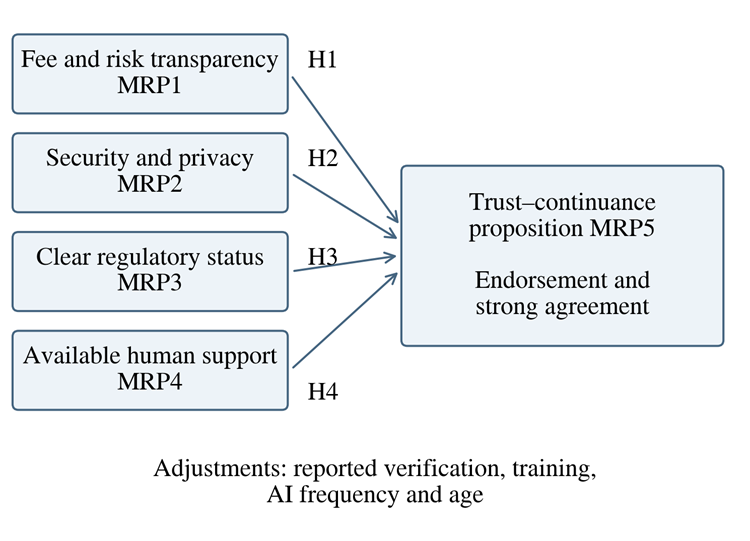
Figure 1. Exploratory framework for response alignment
The framework separates the four measured assurances from the item-specific outcome. It includes no mediator because the data do not establish a sequence from service experience to trust and then to use. It also excludes satisfaction and realised transaction safety, which were not measured. The proposed relationships are useful as a test of response alignment while leaving stronger behavioural and institutional claims for research designed to observe them.
3. Methodology
The research combines a quantitative cross-sectional analysis with a focused examination of consumer-protection and service-governance literature. The numerical analysis follows the content and response scale of the available instrument. It prioritises transparent item-level estimation, paired ordinal comparisons and threshold-specific associations over an unsupported latent measurement model. Ethical safeguards are detailed in Section 3.8 and correspond to the authors’ declarations.
3.1 Research design
The dataset is the Group 11 Law-SDG database for Summer 2026, containing 385 respondent records. The unit of analysis is an adult participant’s questionnaire response. The study is observational and does not manipulate service features, expose participants to financial transactions or evaluate legal advice given in an actual dispute. The policy sources provide context for interpretation; they do not constitute additional respondent observations. All model coefficients describe contemporaneous associations. The design cannot identify the causal effect of disclosure, privacy protection or regulatory communication on real platform use.
3.2 Respondents and analytical scope
Recorded eligibility requires agreement to participate, age 18 or above and relevant AI awareness. All 385 records satisfy these fields. Current status includes law students, law graduates, advocates or legal professionals, and another relevant respondent category. The last category is not further disaggregated. No field separately verifies migration history, migrant-family membership, remittance receipt or previous use of a specific financial or legal information platform. The analytical population is therefore the respondents represented in this mixed sample, not a verified cohort of migrant households. General AI experience is not substituted for migrant-service experience.
3.3 Sampling and sample size
The analysis includes all 385 eligible questionnaire records and uses quantitative survey responses without a qualitative interview component. Recruitment dates, invitation counts, selection probabilities and a sampling frame are not recorded in the analytical dataset. Consequently, a response rate and probability-based national representativeness cannot be established. The sample supports an exploratory assessment of the recorded opinions, with generalisation bounded by the documented respondent characteristics rather than the intended service population.
The sample size permits useful descriptive estimates and exploratory multivariable analysis, but its numerical proximity to a conventional large-population proportion calculation does not establish a probability design. Such calculations depend on assumptions about selection and precision that a row count alone cannot verify. All available eligible records are retained in the primary analyses. Intervals are conditional on independent-record and model assumptions; they do not account for unknown recruitment clustering or correct possible selection bias.[19]
3.4 Measurement and questionnaire interpretation
Agreement items use five ordered categories from strongly disagree to strongly agree, with neutral at three. The migrant-service block contains five statements, MRP1-MRP5. Table 1 maps their content and roles. The distinction between conditional trust, willingness to use, support expectations and the trust-continuance proposition is maintained throughout. Self-reported verification, AIL2, is an adjustment rather than an objective literacy score. Training and use-frequency variables refer to AI generally, not necessarily to a remittance service.
Table 1. Measurement content and analytical roles
| Code | Abbreviated content | Analytical role |
| MRP1 | Trust increases with transparent fees and risks | Conditional trust; H1 predictor |
| MRP2 | Security and privacy increase trust | Conditional trust; H2 predictor |
| MRP3 | Regulatory clarity increases willingness to use | Institutional assurance; H3 predictor |
| MRP4 | Human support for complex or disputed transactions | Support expectation; H4 predictor |
| MRP5 | Trust affects continued-use intention | Trust-continuance proposition; outcome |
| AIL2 | Verify important AI information | Reported checking; adjustment |
Source: Group 11 Codebook. The items address separate propositions; none verifies current trust in a named platform or actual continued use. Appendix A reproduces exact wording.
Cronbach’s alpha is examined for each five-item block as a descriptive measurement diagnostic. Low internal consistency is considered together with item content rather than used mechanically to remove items. The study does not claim that a high alpha alone would validate a trust scale, and it does not present composite reliability or convergent-validity statistics for a reflective model whose indicators address different propositions. Full focal wording is retained in Appendix A.[20]
3.5 Instrument development and pilot evidence
The analytical materials do not include a separate pilot dataset, cognitive interview record or documented translation-validation process. A completed pilot, expert panel or item revision procedure is therefore not reported as a study event. The questionnaire supports exploratory analysis of its observed statements. Developing a multi-item latent trust measure would require additional work on content coverage and respondent interpretation. In particular, future items should separate current platform trust from hypothetical conditions for increased trust, and distinguish remittance transactions from legal information services. The present analysis does not reconstruct those uncollected measures retrospectively.
3.6 Screening and data management
The numerical audit checks missingness, valid response ranges, identifiers and response patterns. None of the 20 agreement items is missing or outside the one-to-five range. There are no duplicate identifiers, duplicate complete 20-item response vectors or records selecting one identical answer across all 20 items. These checks describe the dataset and cannot independently establish attentive responding or authenticate participant identities. Seventeen tool-name fields are missing; they are not required in the models.
Experience and frequency differ in their use of “Never”: 12 records report never by experience but some frequency, while nine show the reverse. One further record reports never in both fields. The primary analysis retains all records. A sensitivity analysis excludes any record marked never in either field, leaving 363. Contextual comments are excluded from numerical interpretation and quotations. Respondent identifiers are used only for record management. The analysis uses numerical questionnaire responses; identifier and contextual-text labels are not treated as substantive variables or evidence of actual service behaviour.
3.7 Statistical analysis
Descriptive results include all five-category counts, means and standard deviations, and endorsement proportions with Wilson intervals. Endorsement means four or five; it does not distinguish neutrality from disagreement within its complement. An omnibus Friedman test examines differences among the five related responses. All ten item pairs then receive exact two-sided sign tests, with ties excluded from each test and Holm adjustment across ten comparisons. Effect summaries use the paired ordering probability, P(first response exceeds second) plus half the probability of a tie, with 10,000 whole-record percentile bootstrap intervals and seed 20261026.[21]
The outcome MRP5 is examined at two thresholds: four or five versus lower responses, and five versus all lower responses. A preliminary cumulative-logit model and correlated binary-fit diagnostic assess the common-slope assumption across cutpoints three, four and five. Threshold heterogeneity motivates separate binary models. Each model includes MRP1-MRP4, AIL2, any training, frequency and age 27+. Agreement scores are centred at three; frequency is coded zero to four and centred at monthly. HC1 sandwich intervals use n/(n−k), including the intercept in k. Holm adjustment covers the eight focal coefficients jointly. Rank correlations and subset analyses provide additional descriptive checks. All estimates are exploratory.[22]
3.8 Ethical safeguards
Formal ethical approval was not obtained under the institutional circumstances stated in Section 8. The absence of an accessible review mechanism is reported as institutional context, rather than described as a formal exemption or an external determination that review was unnecessary. Responsibility for ethical conduct remained with the researchers. Participants received information about the study purpose, voluntariness, anonymity and the opportunity to discontinue before completion. Adult eligibility and affirmative consent were required; every analysed record meets those recorded conditions.
The study used an anonymous questionnaire and reports aggregate findings. Analysis excludes contextual comments and does not attempt to identify respondents. Financial account credentials, transaction histories and individually identifiable legal case details are not part of the analytical variables. Data-sharing requests remain subject to confidentiality and institutional requirements. An opportunity to discontinue during completion is distinct from a promise to locate and remove a later anonymous submission; no post-submission identification mechanism is asserted. These safeguards explain how participants were protected without implying that ethical practice retrospectively creates formal approval.
4. Results
Results are reported in four stages: respondent composition, item distributions, within-person comparisons and threshold-specific associations. Joint patterns complement the marginal summaries by showing how frequently respondents affirm several propositions together. Unless otherwise stated, the denominator is 385. The estimates concern this sample and the stated statistical models, not the prevalence of trust among migrant families nationally.
4.1 Respondent composition
The current-status categories comprise 152 other relevant respondents (39.5%), 138 law students (35.8%), 55 law graduates (14.3%) and 40 advocates or legal professionals (10.4%). The database does not identify a migrant-household subset within these categories. Age 21-23 is the largest group, with 154 records; 291 respondents (75.6%) are below 27. Men account for 210 records, women for 162, another gender category for seven and nondisclosure for six.
Table 2. Profile of the complete survey database
| Characteristic | Recorded categories and counts |
| Age | 21-23: 154; 24-26: 75; 18-20: 62; 27-30: 48; 31+: 46 |
| Gender | Male: 210; Female: 162; Other: 7; Prefer not to say: 6 |
| Current status | Other relevant respondent: 152; Law student: 138; Law graduate: 55; Advocate or legal professional: 40 |
| Education | Undergraduate: 223; Graduate: 81; Postgraduate: 45; Professional: 36 |
| Location | Dhaka: 156; District town: 92; Other city corporation: 69; Upazila-rural area: 59; Other: 9 |
| Experience | 1-2 years: 140; 6-12 months: 91; Less than 6 months: 79; More than 2 years: 62; Never: 13 |
| Frequency | Weekly: 163; Daily or almost daily: 111; Monthly: 69; Less than monthly: 32; Never: 10 |
| Training | No: 222; Yes, short orientation: 110; Yes, course or certified training: 53 |
N = 385. Counts are unweighted and sum to 385 within each characteristic. Current status and education are separate fields. Migrant-family membership and remittance-platform use are not identified.
Dhaka contributes 156 records (40.5%), district towns 92 and other city corporations 69. Fifty-nine respondents select an upazila-rural location. Education and current professional status are distinct: 36 select professional education, while 40 identify as advocates or legal professionals. Training is absent for 222 respondents (57.7%); 110 report a short orientation and 53 a course or certification. Weekly AI use is reported by 163 and daily or almost daily use by 111. These categories characterise the sample but do not establish experience with migrant-service transactions.
4.2 Distributions and measurement properties
Endorsement is highest for security and privacy, at 332/385 (86.2%), followed by fee and risk transparency at 329/385 (85.5%). Regulatory clarity is endorsed by 252 (65.5%), human support by 257 (66.8%) and the trust-continuance proposition by 267 (69.4%). Table 3 presents the complete category counts and intervals, preserving the distinction between neutral and negative responses. No respondent selects strongly disagree on any of the five focal items.
Table 3. Full agreement distributions for migrant-service statements
| Item abbreviated | Mean (SD) | Counts 1 / 2 / 3 / 4 / 5 | Endorsed n (%) | 95% interval % |
| MRP1: Transparency | 4.24 (0.71) | 0 / 3 / 53 / 179 / 150 | 329 (85.5%) | 81.6-88.6 |
| MRP2: Security and privacy | 4.26 (0.71) | 0 / 3 / 50 / 176 / 156 | 332 (86.2%) | 82.4-89.3 |
| MRP3: Regulatory clarity | 3.79 (0.76) | 0 / 13 / 120 / 185 / 67 | 252 (65.5%) | 60.6-70.0 |
| MRP4: Human support | 3.80 (0.78) | 0 / 18 / 110 / 188 / 69 | 257 (66.8%) | 61.9-71.3 |
| MRP5: Trust-continuance | 3.86 (0.81) | 0 / 18 / 100 / 183 / 84 | 267 (69.4%) | 64.6-73.7 |
N = 385. One strongly disagree; two disagree; three neutral; four agree; five strongly agree. Endorsement is four or five. Intervals are pointwise Wilson intervals conditional on independent records.
Neutrality accounts for much of the lower endorsement of the final three statements. Regulatory clarity has 120 neutral responses, human support 110 and the trust-continuance proposition 100. The corresponding disagree counts are 13, 18 and 18. Transparency has 53 neutral and three disagree responses; security has 50 neutral and three disagree responses. Thus it would be inaccurate to describe one-third of respondents as opposing regulation or human assistance. The result is a difference in affirmative endorsement and response intensity, with substantial neutrality on some propositions.
The block-level alpha estimates are 0.234 for AI literacy statements, 0.345 for migration-information statements, 0.134 for migrant-service trust statements and 0.234 for worker-rights statements. These values, together with the mixed content of the focal items, do not support a well-established reflective trust scale in this sample. The analysis therefore retains separate statements. Means range from 3.79 for regulatory clarity to 4.26 for security and privacy, but those means are descriptive summaries of agreement categories rather than calibrated measures of actual trustworthiness.
4.3 Paired ordinal comparisons
The Friedman statistic is 138.90 with four degrees of freedom, p < .001, indicating differences among the five related response distributions. Table 4 then reports all ten paired comparisons. The ordering probability is close to 0.50 for transparency versus security and regulatory clarity versus human support, while comparisons between either conditional-trust statement and each of the remaining three statements exceed 0.62.
Table 4. All paired ordinal response comparisons
| First versus second | Higher / lower / equal | Ordering probability | 95% interval | Holm p |
| MRP1 versus MRP2 | 115 / 119 / 151 | 0.495 | 0.456-0.534 | 1.000 |
| MRP1 versus MRP3 | 173 / 63 / 149 | 0.643 | 0.606-0.679 | < .001 |
| MRP1 versus MRP4 | 179 / 61 / 145 | 0.653 | 0.617-0.688 | < .001 |
| MRP1 versus MRP5 | 167 / 72 / 146 | 0.623 | 0.586-0.661 | < .001 |
| MRP2 versus MRP3 | 202 / 64 / 119 | 0.679 | 0.642-0.716 | < .001 |
| MRP2 versus MRP4 | 188 / 66 / 131 | 0.658 | 0.621-0.695 | < .001 |
| MRP2 versus MRP5 | 186 / 81 / 118 | 0.636 | 0.596-0.675 | < .001 |
| MRP3 versus MRP4 | 123 / 128 / 134 | 0.494 | 0.453-0.534 | 1.000 |
| MRP3 versus MRP5 | 116 / 143 / 126 | 0.465 | 0.425-0.505 | 0.424 |
| MRP4 versus MRP5 | 114 / 134 / 137 | 0.474 | 0.434-0.516 | 0.683 |
N = 385. Ordering probability = P(first > second) + 0.5P(equal). A value of 0.5 indicates balanced ordering, including ties. Intervals use 10,000 whole-record bootstrap resamples; exact sign tests condition on unequal responses. Holm adjustment covers ten tests; intervals are pointwise.
For security versus regulatory clarity, 202 respondents give security a higher score, 64 give it a lower score and 119 give equal scores. The paired ordering probability is 0.679, with a 95% bootstrap interval of 0.642-0.716. Transparency versus human support gives a probability of 0.653 (0.617-0.688). These summaries use the direction of within-person responses, assigning half weight to ties. They are not the probability that one service feature is objectively more important, nor are they comparisons between independent groups.
All six comparisons linking transparency or security to regulatory clarity, human support or MRP5 have adjusted p values below .001. Transparency versus security has adjusted p = 1.000, as does regulatory clarity versus human support. Regulatory clarity versus MRP5 has adjusted p = .424, and human support versus MRP5 has adjusted p = .683. The data therefore show a clear separation between the first two propositions and the remaining three, but do not establish a strict ranking within either set. Different wording and referents remain relevant to interpretation.
4.4 Joint endorsement patterns
Both conditional-trust statements are endorsed by 286 respondents (74.3%). Within that group, 95 do not endorse regulatory clarity and 87 do not endorse human support. These conditional proportions are 33.2% and 30.4%, respectively. Table 5 also reports all-four and all-five conjunctions. Their purpose is to show whether strong marginal support corresponds to endorsement of the wider set of propositions within the same records.
Table 5. Joint endorsement of trust and governance propositions
| Response configuration | Count and percentage |
| Both transparency and security endorsed | 286 (74.3%) |
| All four assurance statements endorsed | 139 (36.1%) |
| All five focal statements endorsed | 91 (23.6%) |
| Both conditional statements, without regulatory endorsement | 95 / 286 (33.2%) |
| Both conditional statements, without human-support endorsement | 87 / 286 (30.4%) |
The first three rows use N = 385; the final two use 286 respondents endorsing both MRP1 and MRP2. Configurations overlap. Without endorsement includes neutrality and disagreement, not necessarily opposition.
All four assurance statements are endorsed by 139 respondents (36.1%), while 91 (23.6%) endorse all five statements including MRP5. A conjunction is not a validated scale and does not classify a respondent as adequately informed or deficient. Nonendorsement includes neutrality, and the survey does not observe how participants would respond to an actual dispute. The joint results identify incomplete alignment among affirmative responses; they do not demonstrate refusal to seek a remedy or actual exposure to unsafe services.
4.5 Threshold-specific adjusted associations
MRP5 has 267 endorsement events and 84 strong-agreement events. A cumulative-logit specification was examined initially, but the correlated binary-fit diagnostic gives Wald χ² = 32.58, 16 degrees of freedom, p = .008. This result does not support a common slope across the examined cutpoints for all eight predictors. The main adjusted estimates consequently use separate thresholds rather than interpreting a single pooled ordinal odds ratio as applying throughout the response scale.
Table 6. Adjusted associations with the trust-continuance proposition
| Predictor | Endorsement OR (95% CI) | Holm p | Strong agreement OR (95% CI) | Holm p |
| Transparency | 1.00 (0.72-1.40) | 1.000 | 1.05 (0.72-1.51) | 1.000 |
| Security/privacy | 0.89 (0.66-1.20) | 1.000 | 1.07 (0.74-1.56) | 1.000 |
| Regulatory clarity | 0.85 (0.64-1.13) | 1.000 | 0.95 (0.68-1.32) | 1.000 |
| Human support | 0.86 (0.65-1.15) | 1.000 | 1.34 (0.94-1.91) | 0.814 |
N = 385. Endorsement events = 267; strong-agreement events = 84. OR = odds ratio per agreement-score point. Intervals use HC1 covariance and are pointwise. Holm correction covers all eight focal coefficients. Both models include the four focal and four contextual predictors.
For endorsement, transparency has an adjusted odds ratio of 1.00 (95% HC1 interval 0.72-1.40), security 0.89 (0.66-1.20), regulatory clarity 0.85 (0.64-1.13) and human support 0.86 (0.65-1.15). For strong agreement, the corresponding estimates are 1.05 (0.72-1.51), 1.07 (0.74-1.56), 0.95 (0.68-1.32) and 1.34 (0.94-1.91). No focal coefficient has an interval excluding one, and none is clearly supported after the eight-test Holm adjustment. The hypotheses therefore receive no clear support at either threshold.
The maximum variance inflation factor is 1.08, giving no indication of substantial linear collinearity in the specified predictors. Independent binary-logistic estimation reproduces coefficients within 0.000001. AIL2, a contextual adjustment, has odds ratios of 1.56 (1.12-2.16) for endorsement and 1.21 (0.84-1.74) for strong agreement. This difference is exploratory and does not establish that verification causes trust-related intention. Full contextual estimates appear in Appendix C and are not treated as a separate confirmatory discovery family.
4.6 Rank associations and sensitivity checks
Unadjusted Spearman correlations between MRP1-MRP4 and MRP5 are 0.015, 0.006, −0.046 and 0.026. All four Holm-adjusted p values equal 1.000. These near-zero sample correlations are compatible with the absence of a clearly positive pattern in the adjusted models. They are not formal evidence of equivalence within a prespecified practically negligible range, because no such equivalence design was established.
The consistent-use subset contains 363 records, excluding the 22 records marked never in at least one AI-use field. The law-student subset contains 138 records and represents a narrower constituency. Table 7 presents all four focal associations under both thresholds in each subset, making the changes in scope and response definition visible. These analyses are sensitivity checks rather than additional confirmatory tests, and their intervals are pointwise.
Table 7. Subset sensitivity of focal associations
| Subset | Predictor | Endorsement OR (95% CI) | Strong agreement OR (95% CI) |
| Consistent-use subset (n = 363) | Transparency | 0.96 (0.68-1.35) | 0.98 (0.67-1.43) |
| Security/privacy | 0.96 (0.70-1.31) | 1.12 (0.76-1.67) | |
| Regulatory clarity | 0.87 (0.65-1.17) | 0.96 (0.68-1.36) | |
| Human support | 0.89 (0.66-1.20) | 1.38 (0.96-1.99) | |
| Law students (n = 138) | Transparency | 1.03 (0.60-1.75) | 2.04 (0.98-4.26) |
| Security/privacy | 0.79 (0.47-1.35) | 1.40 (0.67-2.93) | |
| Regulatory clarity | 1.06 (0.65-1.72) | 1.24 (0.70-2.19) | |
| Human support | 0.98 (0.59-1.61) | 1.08 (0.56-2.08) |
Intervals are pointwise HC1 intervals, without a new confirmatory test family. The consistent-use subset has 252 endorsement and 79 strong-agreement events; students have 95 and 25. The latter model is especially imprecise given its small strong-agreement event count.
The subgroup estimates have wider uncertainty than the full-sample estimates. They do not supply a basis for a new causal interpretation or for treating students as a proxy for migrant families. Taken together, the results establish an uneven distribution of endorsement across the five statements and no clear positive adjusted alignment with MRP5 among the focal predictors. They leave open how verified users would respond to a named platform, a documented security feature or a real opportunity for redress.
Figure 2. Adjusted focal associations at the endorsement and strong-agreement thresholds. N = 385; pointwise 95% HC1 intervals. Both models adjust for all eight predictors.
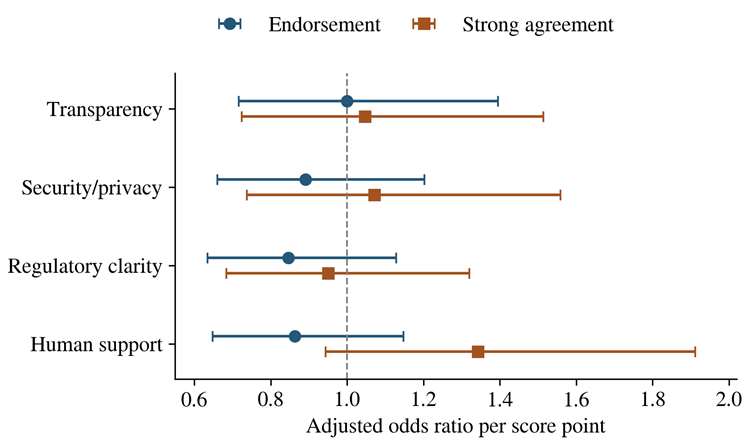
Figure 2. Adjusted focal associations at the endorsement and strong-agreement thresholds
Figure 2 displays the focal adjusted estimates at both thresholds. The intervals make clear why a point estimate above one, such as human support under strong agreement, cannot by itself be described as a supported effect. The visual comparison also preserves the distinction between ordinary endorsement and the most affirmative response category.
5. Discussion
The study identifies strong support for transparency and security as conditions that could increase trust, alongside weaker endorsement of regulatory clarity, human support and the trust-continuance proposition. The adjusted analysis does not show that stronger assurance responses translate clearly into stronger MRP5 responses. This combination contributes to the literature by separating the popularity of trust-building conditions from individual-level coherence and from actual service reliance.
5.1 Conditional trust is different from current confidence
The high transparency and security percentages should be read in their conditional form. Respondents largely agree that these protections would increase trust. They were not asked to rate the present conduct of an identified provider. This difference is consequential because an apparently optimistic headline could otherwise be produced from responses that express caution: a person may demand protection precisely because they do not yet trust a service. Organisational and e-commerce trust frameworks provide a clear conceptual basis for distinguishing perceived assurance from trusting intention.[23]
The findings therefore do not establish that AI enabled migrant services currently enjoy high trust. They identify features that respondents recognise as trust relevant. That contribution remains useful for interface and service-governance design, provided it is not converted into an adoption forecast. Reviews of trust in automation and AI similarly emphasise the importance of the object, context and grounds of reliance. The proper design objective is confidence that corresponds to the service’s demonstrated capabilities and protections, rather than confidence increased by presentation alone.[24]
5.2 Transparency and protection need institutional connections
The paired analysis places transparency and security above the other statements consistently, even when the full ordered categories are retained. One possible interpretation is that visible service assurances are easier to endorse than institutional arrangements whose practical relevance is less immediate. Another is that the wording of the first two items explicitly connects a desirable feature to increased trust, making agreement more natural. The survey cannot distinguish these explanations because it does not experimentally vary wording or measure familiarity with regulation.
Institution-based trust scholarship nevertheless clarifies why the difference matters. A transaction depends on structures outside the interface, including who bears responsibility and which mechanisms support recourse. Financial consumer protection principles likewise distinguish disclosure from fraud protection, privacy and complaints handling. The results suggest a need to examine whether people understand those connections, not a conclusion that respondents oppose regulation. The substantial neutral categories make the latter interpretation particularly inappropriate.[25]
5.3 Human support and the meaning of redress
Human support receives 66.8% endorsement, while 110 respondents remain neutral. Among those endorsing both conditional-trust statements, almost one-third do not affirm the human-support item. This pattern indicates that demanding secure and transparent services does not automatically imply the same explicit support for escalation arrangements in respondents’ answers. It does not show that those respondents would decline assistance if money were missing or legal information were disputed.
The practical question is what human support can accomplish. A representative who repeats the AI answer without access to transaction records may offer reassurance without resolving the problem. A complex legal issue may require expertise and authority that ordinary customer support does not possess. Green’s critique of oversight requirements supports specifying the conditions under which human involvement is meaningful. The Bangladesh MFS framework’s complaints provisions and the OECD principles’ attention to redress provide relevant institutional reference points, while remaining distinct from a generic promise that a person is available.[26]
5.4 Why high endorsement does not imply strong associations
The sample has high marginal agreement with several statements, but the individual responses show little rank association with MRP5. A feature can be widely regarded as desirable without explaining variation in another broadly favourable proposition. Restricted variation at the upper end may also reduce the ability to detect relationships. Moreover, MRP5 has a different referent from MRP1-MRP4: it asks about the importance of trust for continued use, not the respondent’s present trust in the conditions described.
These findings do not contradict the general proposition that trust can matter for technology acceptance. Gefen and colleagues studied trust, acceptance beliefs and intended behaviour with a different design and measurement model; Bhattacherjee examined post-adoption continuance processes. The present instrument cannot be treated as a direct replication of those models. Its unsupported hypotheses instead identify a measurement and interpretation boundary: propositions about trust-related features cannot be assumed to act as interchangeable measures of trust or as direct predictors of behaviour.[27]
5.5 Threshold heterogeneity and statistical interpretation
The proportional-odds diagnostic provides a methodological reason to retain response thresholds separately. A single coefficient would require the same predictor relationship across transitions in the ordered outcome. The evidence does not support that assumption for the full specification. Separate binary models preserve the distinction between affirming a proposition and choosing the strongest response, although they do not explain the source of the heterogeneity. The diagnostic is exploratory and includes a cutpoint with relatively few negative responses, so its result should be considered alongside the threshold-specific estimates.[28]
None of the focal estimates is clearly positive after adjustment, but the intervals do not prove that all associations are negligible. Strong agreement with human support, for example, permits a range of relationships with MRP5. Interpreting that range is more informative than either calling the coefficient a proven influence or declaring that human support does not matter. Statistical guidance on p values and uncertainty supports this restrained reading, particularly in an exploratory observational study.[29]
5.6 Bangladesh and the boundaries of service responsibility
The local policy relevance concerns the relationship between information and regulated activity. A tool that explains a remittance is not necessarily the institution authorised to process it. Similarly, a general legal information system should not be presented as an equivalent substitute for qualified advice in every dispute. Bangladesh’s MFS regulatory document helps locate functions such as charge disclosure, security and complaints handling, while legal hallucination research explains why fluent answers require scrutiny. The survey does not assess compliance with those requirements or test the accuracy of any platform.[30]
The sample boundary is equally important. The results concern adults from mixed legal and other relevant backgrounds, rather than a verified migrant-family population. Their expectations can inform instrument development and early service design, but they cannot diagnose migrant households’ current experiences. The integrated implication is a research agenda that connects clearly specified assurances with verified use and outcomes. That agenda should examine whether users understand institutional responsibility and can obtain remedies, not merely whether a service receives a favourable trust score.
6. Theoretical and Practical Implications
The findings support a more specific account of how trust-related expectations should be measured and addressed in AI assisted migrant services. They distinguish conditions that respondents consider trust enhancing from evidence that a provider is trustworthy or that continued use will follow. The recommendations below combine this pattern with established governance scholarship; their effectiveness was not tested by the survey.
6.1 Theoretical implications
First, conditional trust statements should be retained as a distinct measurement category. A statement that greater protection would increase trust can be compatible with present confidence, uncertainty or distrust. Its interpretation depends on the baseline that the questionnaire specifies. Future instruments should measure present trusting beliefs, willingness to rely and desired assurances separately. This follows the conceptual differentiation in trust scholarship and avoids treating favourable responses to security language as a direct trust estimate.[31]
Second, institutional assurance should not be collapsed into interface quality. Regulatory identity and access to support concern responsibility and recourse, while fee disclosure and privacy protection address other aspects of the service relationship. The joint patterns show why endorsement of the latter cannot stand in for endorsement of the former. A more complete model would examine how users understand those relationships, potentially distinguishing knowledge, perceived effectiveness and actual availability of institutional mechanisms.[32]
Third, the contribution to acceptance research is a boundary condition on measurement, rather than confirmation of an entire theory. The available questionnaire does not capture a full TAM or expectation-confirmation model. Its threshold-specific findings suggest that response intensity can vary in ways a pooled coefficient conceals. Future research should therefore test the measurement assumptions before estimating latent paths, and connect intentions to a specified platform and period of use. Validated constructs and observed behaviour would allow stronger claims about how trust contributes to sustained adoption.[33]
6.2 Service design and professional practice
A migrant-service interface should distinguish what it explains from what it executes. Users should be able to identify the payment provider, the organisation producing AI information and the party responsible for a complaint. Fee information should be available before commitment, with relevant risks and service limits presented in usable language. A disclosure should help a person make a decision, rather than merely record that a notice was displayed. These proposals follow from the conceptual separation of assurances; the survey does not estimate how much they would change transaction choices.[34]
Security and privacy communication should describe meaningful safeguards without encouraging users to disclose credentials or sensitive legal details unnecessarily. Providers should consider how information moves to external AI processors and who can access it. The FSB’s work highlights why third-party dependencies and governance deserve attention alongside model capabilities. Institutions should evaluate the operational arrangements behind a privacy claim rather than relying on a reassuring statement at the interface.[35]
Human support should have a defined remit. Transaction disputes require a route to staff able to inspect relevant records and pursue a resolution. Complex legal matters require a distinction between general information and appropriately qualified advice. Escalation should preserve a record of the issue, identify the responsible organisation and explain the next step. Availability of a human should be evaluated through resolution quality and accessibility, not only through the presence of a contact button. Those outcomes are suitable targets for subsequent service audits and field experiments.[36]
6.3 Policy and sustainable development
Regulators and educators can use scenario-based materials to explain the difference between a provider’s regulatory standing, an AI system’s information quality and a user’s route to redress. Evaluations should separately measure understanding, service performance and outcomes for migrant households. SDG target 10.c provides a reason to assess actual remittance costs, while target 16.3 directs attention to access to justice. Neither goal can be assessed from conditional trust responses alone. The present results help identify questions for that evaluation, while leaving the achievement of development outcomes to evidence designed to measure them.[37]
7. Conclusion Limitations and Future Research
This study examined five trust-related propositions about AI assisted remittance and legal information services in a Bangladesh based survey of 385 adults. Transparency and security were endorsed more frequently and at higher response levels than regulatory clarity, human support and the proposition that trust affects continued use. Joint patterns showed that support for the two conditional-trust statements did not consistently extend to the broader set of assurances. The adjusted models did not establish clear positive alignment between the four focal assurances and MRP5 under either outcome threshold.
The main contribution is a distinction between desired grounds for trust, response alignment and observed reliance. That distinction supports more precise service governance and more defensible research measurement. Transparent fees, protection of information, institutional identity and meaningful support remain relevant design concerns, but their practical effectiveness cannot be inferred from endorsement alone. Evidence from verified users and documented service encounters is required to connect those concerns with safe transactions and reliable legal assistance.
The sample is mixed and does not separately identify migrant-family membership or remittance-platform experience. Recruitment probabilities, dates and invitation counts are unavailable in the analytical record, restricting assessment of selection and nonresponse. Cross-sectional self-reports cannot establish temporal order, causality or realised service outcomes. Unknown recruitment clustering is not captured by the independent-record covariance estimates.
The focal statements combine different referents and use positively phrased, partly conditional wording. Internal consistency is low, and the outcome is agreement with a trust-continuance proposition rather than a validated behavioural intention scale. Predictor score effects are modelled linearly within each threshold. Separate binary models accommodate threshold differences but do not remove measurement error or unobserved confounding. The hypotheses and diagnostic choices are exploratory, and subgroup analyses have reduced precision. No legal advice accuracy, financial loss, actual complaint resolution or cost reduction was measured.
Future studies should recruit verified remittance senders and recipients, record household migration links and distinguish service users from nonusers. They should separate financial transactions from legal information tasks and identify the platform or service relationship being rated. Cognitive interviews can test how participants understand regulatory status, privacy and support. A revised instrument should include direct trusting beliefs, specific willingness to rely, current use and post-adoption experience, with measurement properties evaluated before structural modelling.
Experiments could vary fee disclosure, verifiable regulatory information, privacy explanations and effective escalation independently. Outcomes should include comprehension, appropriate reliance, service choice and successful resolution of a simulated or documented problem. Longitudinal studies could then examine whether trustworthy performance sustains use without increasing reliance on inaccurate legal information. Such designs would connect the present expectations to the practical objective: services that migrant households can understand, use safely and challenge when something goes wrong.
Declarations
Ethical approval and oversight
Formal ethical approval was not obtained because, at the time of the study, the authors’ institutional setting did not provide an accessible formal review mechanism applicable to this non-interventional adult questionnaire research. The study nevertheless followed participant-protection safeguards, including informed consent, voluntary participation, the opportunity to discontinue, an anonymous questionnaire and aggregate reporting. The methodological safeguards are detailed in Section 3.8.
Informed consent
Informed consent was obtained from adult participants before questionnaire completion. The questionnaire explained the study purpose, voluntary participation, anonymity and the option to discontinue. All analysed records contain affirmative consent and adult-eligibility responses.
Data availability
The numerical data supporting the reported analyses are held by the research team. Requests for de-identified data and analytical specifications may be directed to the corresponding author. Any sharing is subject to participant confidentiality and applicable institutional requirements. The contextual-text field was excluded from the analysis.
Author contributions
Fahmida Faria Iva: Lead student researcher; conceptualisation; preparation of study materials; organisation and curation of survey data; manuscript development. The project was conducted under the supervision of Prof. Dr Kazi Abdul Mannan.
Kazi Abdul Mannan: Conceptual and methodological guidance; supervision; interpretation of statistical findings; critical review and editing of the manuscript.
Generative AI disclosure
Generative AI assisted manuscript drafting, language editing, organisation and the development of analytical code. Statistical estimates were computed programmatically from the numerical survey data. Responsibility for the study’s analysis, interpretation and reporting rests with the authors.
Bibliography
Altman DG and Bland JM, ‘Absence of Evidence Is Not Evidence of Absence’ (1995) 311 BMJ 485
Bangladesh Bank, Bangladesh Mobile Financial Services (MFS) Regulations 2022 (PSD Circular No 04/2022, 15 February 2022), regs 7.6, 9, 12 and 17
Bhattacherjee A, ‘Understanding Information Systems Continuance: An Expectation-Confirmation Model’ (2001) 25 MIS Quarterly 351
Brant R, ‘Assessing Proportionality in the Proportional Odds Model for Ordinal Logistic Regression’ (1990) 46 Biometrics 1171
Cochran WG, Sampling Techniques (3rd edn, John Wiley & Sons 1977)
Cronbach LJ, ‘Coefficient Alpha and the Internal Structure of Tests’ (1951) 16 Psychometrika 297
Dahl M and others, ‘Large Legal Fictions: Profiling Legal Hallucinations in Large Language Models’ (2024) 16 Journal of Legal Analysis 64
Davis FD, ‘Perceived Usefulness, Perceived Ease of Use, and User Acceptance of Information Technology’ (1989) 13 MIS Quarterly 319
Dixon WJ and Mood AM, ‘The Statistical Sign Test’ (1946) 41 Journal of the American Statistical Association 557
Efron B and Tibshirani RJ, An Introduction to the Bootstrap (Chapman & Hall 1993)
Financial Stability Board, The Financial Stability Implications of Artificial Intelligence (FSB 2024)
——, Monitoring Adoption of Artificial Intelligence and Related Vulnerabilities in the Financial Sector (FSB 2025)
Friedman M, ‘The Use of Ranks to Avoid the Assumption of Normality Implicit in the Analysis of Variance’ (1937) 32 Journal of the American Statistical Association 675
Gefen D, Karahanna E and Straub DW, ‘Trust and TAM in Online Shopping: An Integrated Model’ (2003) 27 MIS Quarterly 51
Glikson E and Woolley AW, ‘Human Trust in Artificial Intelligence: Review of Empirical Research’ (2020) 14 Academy of Management Annals 627
Green B, ‘The Flaws of Policies Requiring Human Oversight of Government Algorithms’ (2022) 45 Computer Law & Security Review 105681
Holm S, ‘A Simple Sequentially Rejective Multiple Test Procedure’ (1979) 6 Scandinavian Journal of Statistics 65
Lee JD and See KA, ‘Trust in Automation: Designing for Appropriate Reliance’ (2004) 46 Human Factors 50
Mayer RC, Davis JH and Schoorman FD, ‘An Integrative Model of Organizational Trust’ (1995) 20 Academy of Management Review 709
McCullagh P, ‘Regression Models for Ordinal Data’ (1980) 42 Journal of the Royal Statistical Society Series B 109
McKnight DH, Choudhury V and Kacmar C, ‘Developing and Validating Trust Measures for e-Commerce: An Integrative Typology’ (2002) 13 Information Systems Research 334
OECD, G20/OECD High-Level Principles on Financial Consumer Protection 2022 (OECD Publishing 2022)
Pavlou PA and Gefen D, ‘Building Effective Online Marketplaces with Institution-Based Trust’ (2004) 15 Information Systems Research 37
Shaikh AA and Karjaluoto H, ‘Mobile Banking Adoption: A Literature Review’ (2015) 32 Telematics and Informatics 129
Sijtsma K, ‘On the Use, the Misuse, and the Very Limited Usefulness of Cronbach’s Alpha’ (2009) 74 Psychometrika 107
Stefanski LA and Boos DD, ‘The Calculus of M-Estimation’ (2002) 56 American Statistician 29
United Nations General Assembly, Transforming Our World: The 2030 Agenda for Sustainable Development (25 September 2015) UN Doc A/RES/70/1, targets 10.c and 16.3
Wasserstein RL and Lazar NA, ‘The ASA Statement on p-Values: Context, Process, and Purpose’ (2016) 70 American Statistician 129
Wilson EB, ‘Probable Inference, the Law of Succession, and Statistical Inference’ (1927) 22 Journal of the American Statistical Association 209
Appendix A Focal questionnaire wording
Table A1 reproduces the exact statements used in the focal analyses and the verification adjustment. The wording makes explicit which propositions are conditional and which concern support or continuance.
Table A1. Exact focal statements and verification adjustment
| Code | Statement |
| MRP1 | I would trust an AI-enabled remittance or legal information platform more if it were transparent about fees and risks. |
| MRP2 | Strong security and privacy protections increase my trust in migrant-service platforms. |
| MRP3 | Clear regulatory status increases my willingness to use AI-enabled migrant services. |
| MRP4 | Human support should be available for complex or disputed transactions. |
| MRP5 | Trust affects my intention to continue using AI-enabled migrant services. |
| AIL2 | I verify important AI-generated information before relying on it. |
Source: Group 11 Codebook. Scale: one strongly disagree, two disagree, three neutral, four agree and five strongly agree.
All listed items use the same agreement scale. No focal item independently verifies a respondent’s migrant-family status, actual transaction experience or current confidence in a named provider.
Appendix B Analytical specifications
Paired comparisons use the same 385 records for each item pair. The sign test conditions on unequal responses. The effect summary equals (higher responses + half the equal responses)/385; its bootstrap resamples complete respondents 10,000 times, seed 20261026. Intervals are pointwise. Holm adjustment is applied separately to the ten paired tests and to the eight focal regression coefficients.
Binary outcomes are MRP5 ≥ 4 and MRP5 = 5. Each model includes an intercept, MRP1−3, MRP2−3, MRP3−3, MRP4−3, AIL2−3, any formal training, frequency−2 and age 27+. Training is zero only for No. Frequency is zero never, one less than monthly, two monthly, three weekly and four daily or almost daily. Age 27+ combines the 27-30 and 31+ categories. HC1 multiplies the sandwich covariance by n/(n−k), with k = 9 in the full models. Odds ratios are exponentiated coefficients with pointwise intervals from coefficient ±1.96 robust standard errors.
The proportional-odds diagnostic compares the eight slopes from binary models at cutpoints three, four and five. Their covariance is stacked by respondent using individual influence contributions, preserving dependence between thresholds. Sixteen adjacent-cutpoint equality constraints form the reported Wald test. It is a diagnostic of the common-slope specification, not a test that an individual predictor differs causally between thresholds. The consistent-use subset excludes Never in either use field; the student subset uses current status. No contextual text or respondent sequence enters a model.
Appendix C Complete adjusted estimates
Table C1 reports all eight non-intercept coefficients under both outcome thresholds. The contextual terms are adjustments and have not been selected as a confirmatory discovery family.
Table C1. Complete adjusted non-intercept coefficients
| Predictor | Endorsement OR (95% CI) | Strong agreement OR (95% CI) |
| MRP1 fee and risk transparency | 1.00 (0.72-1.40) | 1.05 (0.72-1.51) |
| MRP2 security and privacy | 0.89 (0.66-1.20) | 1.07 (0.74-1.56) |
| MRP3 clear regulatory status | 0.85 (0.64-1.13) | 0.95 (0.68-1.32) |
| MRP4 human support | 0.86 (0.65-1.15) | 1.34 (0.94-1.91) |
| AIL2 self-reported verification | 1.56 (1.12-2.16) | 1.21 (0.84-1.74) |
| Any formal AI training | 1.06 (0.67-1.66) | 0.75 (0.45-1.25) |
| AI frequency category | 1.02 (0.81-1.29) | 1.11 (0.87-1.41) |
| Age 27+ | 1.15 (0.67-1.97) | 0.64 (0.34-1.20) |
N = 385. HC1 pointwise intervals. Training compares any training with none; frequency is per category; age compares 27+ with younger groups. Appendix B specifies coding. Contextual intervals are descriptive and not multiplicity-adjusted.
Interpretation should follow the outcome wording and the study design. In particular, the verification coefficient is based on reported checking behaviour and does not estimate an effect of objective literacy on actual retention.
[1] Aijaz A Shaikh and Heikki Karjaluoto, ‘Mobile Banking Adoption: A Literature Review’ (2015) 32 Telematics and Informatics 129; David Gefen, Elena Karahanna and Detmar W Straub, ‘Trust and TAM in Online Shopping: An Integrated Model’ (2003) 27 MIS Quarterly 51.
[2] OECD, G20/OECD High-Level Principles on Financial Consumer Protection 2022 (OECD Publishing 2022); Financial Stability Board, The Financial Stability Implications of Artificial Intelligence (FSB 2024).
[3] Bangladesh Bank, Bangladesh Mobile Financial Services (MFS) Regulations 2022 (PSD Circular No 04/2022, 15 February 2022), regs 7.6, 9, 12 and 17.
[4] United Nations General Assembly, Transforming Our World: The 2030 Agenda for Sustainable Development (25 September 2015) UN Doc A/RES/70/1, targets 10.c and 16.3.
[5] Roger C Mayer, James H Davis and F David Schoorman, ‘An Integrative Model of Organizational Trust’ (1995) 20 Academy of Management Review 709; D Harrison McKnight, Vivek Choudhury and Charles Kacmar, ‘Developing and Validating Trust Measures for e-Commerce: An Integrative Typology’ (2002) 13 Information Systems Research 334; Fred D Davis, ‘Perceived Usefulness, Perceived Ease of Use, and User Acceptance of Information Technology’ (1989) 13 MIS Quarterly 319.
[6] Mayer, Davis and Schoorman (n 5).
[7] McKnight, Choudhury and Kacmar (n 5).
[8] John D Lee and Katrina A See, ‘Trust in Automation: Designing for Appropriate Reliance’ (2004) 46 Human Factors 50; Ella Glikson and Anita Williams Woolley, ‘Human Trust in Artificial Intelligence: Review of Empirical Research’ (2020) 14 Academy of Management Annals 627.
[9] Davis (n 5); Gefen, Karahanna and Straub (n 1).
[10] Anol Bhattacherjee, ‘Understanding Information Systems Continuance: An Expectation-Confirmation Model’ (2001) 25 MIS Quarterly 351.
[11] OECD (n 2).
[12] FSB, Financial Stability Implications (n 2); Financial Stability Board, Monitoring Adoption of Artificial Intelligence and Related Vulnerabilities in the Financial Sector (FSB 2025).
[13] Paul A Pavlou and David Gefen, ‘Building Effective Online Marketplaces with Institution-Based Trust’ (2004) 15 Information Systems Research 37.
[14] Bangladesh Bank, MFS Regulations (n 3); OECD (n 2).
[15] Ben Green, ‘The Flaws of Policies Requiring Human Oversight of Government Algorithms’ (2022) 45 Computer Law & Security Review 105681.
[16] Matthew Dahl and others, ‘Large Legal Fictions: Profiling Legal Hallucinations in Large Language Models’ (2024) 16 Journal of Legal Analysis 64.
[17] Lee and See (n 8); Green (n 15).
[18] Gefen, Karahanna and Straub (n 1); McKnight, Choudhury and Kacmar (n 5).
[19] William G Cochran, Sampling Techniques (3rd edn, John Wiley & Sons 1977).
[20] Lee J Cronbach, ‘Coefficient Alpha and the Internal Structure of Tests’ (1951) 16 Psychometrika 297; Klaas Sijtsma, ‘On the Use, the Misuse, and the Very Limited Usefulness of Cronbach’s Alpha’ (2009) 74 Psychometrika 107.
[21] Edwin B Wilson, ‘Probable Inference, the Law of Succession, and Statistical Inference’ (1927) 22 Journal of the American Statistical Association 209; Milton Friedman, ‘The Use of Ranks to Avoid the Assumption of Normality Implicit in the Analysis of Variance’ (1937) 32 Journal of the American Statistical Association 675; Wilfrid J Dixon and Alexander M Mood, ‘The Statistical Sign Test’ (1946) 41 Journal of the American Statistical Association 557; Sture Holm, ‘A Simple Sequentially Rejective Multiple Test Procedure’ (1979) 6 Scandinavian Journal of Statistics 65; Bradley Efron and Robert J Tibshirani, An Introduction to the Bootstrap (Chapman & Hall 1993).
[22] Peter McCullagh, ‘Regression Models for Ordinal Data’ (1980) 42 Journal of the Royal Statistical Society Series B 109; Rollin Brant, ‘Assessing Proportionality in the Proportional Odds Model for Ordinal Logistic Regression’ (1990) 46 Biometrics 1171; Leonard A Stefanski and Dennis D Boos, ‘The Calculus of M-Estimation’ (2002) 56 American Statistician 29; Ronald L Wasserstein and Nicole A Lazar, ‘The ASA Statement on p-Values: Context, Process, and Purpose’ (2016) 70 American Statistician 129.
[23] Mayer, Davis and Schoorman (n 5); McKnight, Choudhury and Kacmar (n 5).
[24] Lee and See (n 8); Glikson and Woolley (n 8).
[25] Pavlou and Gefen (n 13); OECD (n 2).
[26] Green (n 15); Bangladesh Bank, MFS Regulations (n 3); OECD (n 2).
[27] Gefen, Karahanna and Straub (n 1); Bhattacherjee (n 10).
[28] McCullagh (n 22); Brant (n 22).
[29] Wasserstein and Lazar (n 22); Douglas G Altman and J Martin Bland, ‘Absence of Evidence Is Not Evidence of Absence’ (1995) 311 BMJ 485.
[30] Bangladesh Bank, MFS Regulations (n 3); Dahl and others (n 16).
[31] Mayer, Davis and Schoorman (n 5); McKnight, Choudhury and Kacmar (n 5).
[32] Pavlou and Gefen (n 13).
[33] Davis (n 5); Bhattacherjee (n 10); McCullagh (n 22).
[34] OECD (n 2).
[35] FSB, Financial Stability Implications (n 2); FSB, Monitoring Adoption (n 12).
[36] Green (n 15); Bangladesh Bank, MFS Regulations (n 3).
[37] UNGA, 2030 Agenda (n 4).