Journal Home
OPEN ACCESS
AI Labour Rights Awareness and Career Adaptation Confidence among Respondents in Bangladesh
| Sadia Afrin Soma ORCID: https://orcid.org/0009-0000-2885-2692 Mst. Rafia Mahmuda Laboni ORCID: https://orcid.org/0009-0005-9752-3370 Md. Assiful Islam Rehad ORCID: https://orcid.org/0009-0003-3378-4593 Department of Law Shanto-Mariam University of Creative Technology Uttara, Dhaka, Bangladesh |
| Prof. Dr Kazi Abdul Mannan Department of Business Administration Faculty of Business Shanto-Mariam University of Creative Technology Dhaka, Bangladesh Email: drkaziabdulmannan@gmail.com ORCID: https://orcid.org/0000-0002-7123-132X Corresponding author: Sadia Afrin Soma: sadiaafrinsoma39@gmail.com |
Learn. polic. strategies. 2026, 5(4); https://doi.org/10.64907/xkmf.v5i4.lps.1
Submission received: 20 September 2026 / Revised: 25 October 2026 / Accepted: 28 October 2026 / Published: 30 October 2026
Download (PDF)
Abstract
Artificial intelligence changes both the skills used at work and the conditions under which employment decisions are made. Awareness of these changes does not necessarily coincide with confidence in adapting a career. This study examines that distinction in 385 adult, AI-aware survey records from Bangladesh, including 238 law students and 61 respondents classified as law graduates. Five statements separately assess awareness of workplace rights and responsibilities, recognition of protection from unfair automated decisions, reported complementary skill development, adaptation confidence and the perceived preparedness benefit of understanding labour issues. Analyses combine full response distributions, joint endorsement patterns, paired comparisons, ordinal correlations and an exploratory proportional-odds model. Recognition of the need for protection was endorsed by 79.2%, compared with 48.8% endorsing adaptation confidence, a paired difference of 30.4 percentage points (95% bootstrap interval 23.9-36.6). General rights awareness and skill development had small positive ordinal associations with confidence. In the adjusted ordinal model, their odds ratios were 1.30 (95% interval 1.04-1.61; Holm p = 0.038) and 1.40 (1.09-1.79; Holm p = 0.024) respectively. The protection-recognition estimate was less certain, although the two awareness coefficients were not demonstrably different. The findings distinguish rights recognition, reported action and confidence rather than establish a causal awareness-to-adaptability pathway. They support evaluating legal-literacy education alongside practical career tasks and institutional safeguards. The mixed sample, study-specific single items, undocumented recruitment and fieldwork dates, and source-documentation limitations constrain inference. A subsequent study should use verified graduate eligibility, independent legal-knowledge assessments and longitudinal career outcomes.
Keywords: career construction; labour rights; artificial intelligence; career confidence; legal literacy; decent work
1. Introduction
Artificial intelligence can change the work a person performs and the decisions an employer makes about that person. A graduate may encounter AI as a writing assistant, a source of occupational information or part of a recruitment or monitoring system. These situations raise different questions. Learning to complete a task with AI concerns skills and judgement; understanding how an employment decision can be challenged concerns rights and institutional procedures. Career preparation needs to address both, without assuming that technical familiarity supplies legal knowledge or that knowing about protection creates confidence in navigating change.
Evidence of AI-related work transformation is substantial but specific to the setting examined. Noy and Zhang’s experiment assessed performance on professional writing tasks, while Brynjolfsson, Li and Raymond examined deployment of an AI assistant in customer support.[1] Neither study establishes how every occupation will change. The ILO’s refined exposure index likewise estimates the potential exposure of occupational tasks rather than counting realised job losses.[2] These distinctions matter when graduates interpret forecasts and decide which skills to develop.
Algorithmic management adds another dimension. Software can support or automate activities previously performed by managers, including allocating work and assessing performance. An OECD employer survey across six countries documents both perceived advantages and concerns about accountability, understandable decisions and worker protection.[3] Career preparedness in such environments cannot be reduced to using a tool more frequently. It can also involve asking what an assessment measures, recognising a possible unfair outcome and locating a legitimate route for advice or review.
Bangladesh is the context for the present survey. Constitutional equality before the law and equality of opportunity in public employment provide relevant legal principles, with the latter specifically addressing service of the Republic.[4] The 2026 labour amendment also introduced a prohibition of discrimination in its specified statutory context.[5] These provisions do not by themselves establish an unrestricted right to human review of every AI-assisted decision in every workplace. Legal coverage depends on the applicable instrument, employment relationship and facts.
The questionnaire does not test respondents’ knowledge of these provisions or record experiences of a particular automated decision. Its wording asks broadly about workplace rights, the possible need for protection, skill development and career confidence. The article therefore examines perceived awareness and preparation in the supplied Bangladesh sample. It does not infer legal compliance, a national prevalence of discrimination or knowledge of a particular legislative reform. Fieldwork dates are not documented, so responses cannot be attributed to exposure to the 2026 amendment.
The central question is whether self-reported rights awareness is associated with confidence in adapting career plans as AI changes professional work. A respondent can recognise that workers may need protection yet remain uncertain about personal career plans. Another can develop complementary skills without knowing the legal options available after an unfair decision. Those possibilities suggest that awareness, action and confidence should be distinguished before the relationship between them is estimated.
Career-construction research separates the resources used to adapt from adapting responses and the outcomes of adaptation.[6] The five focal survey statements combine several of these ideas rather than reproduce a validated multidimensional adaptability scale. One statement also says that understanding AI-related labour issues improves preparedness. Treating agreement with that attribution as independent proof of improvement would incorporate the proposed relationship into the outcome itself. The measurement problem therefore precedes the choice of statistical model.
The study addresses a defined empirical question within this constraint: how the separately worded awareness and skill-development statements relate to independently worded adaptation confidence. It does not claim that rights and careers have never previously been connected. Recent research already examines AI readiness and career adaptability in university settings.[7] The contribution here is to specify the legal-awareness content, preserve the distinction between confidence and reported action, and examine their associations without constructing an unsupported overall adaptability score.
The general objective is to describe AI-related labour-rights awareness and career preparation in the recorded sample. Four questions guide the analysis. How frequently are the five statements endorsed? How do recognition of protection needs and skill development coexist with confidence within respondents? Are the two awareness statements and reported skill development associated with higher confidence after limited adjustment? How stable are the results across confidence thresholds and recorded student and graduate categories?
The database contains a mixed legal-education and professional sample. The analytical scope reflects that composition and includes a descriptive analysis of the explicitly recorded law-graduate category. This avoids treating a sample-size target or an education label as proof of graduate eligibility.
The article contributes an empirical distinction between recognising protection, reporting preparation and expressing confidence. It also identifies the measurement and institutional conditions needed for a stronger theory test. Section 2 develops that foundation; Section 3 explains the records and methods. Section 4 reports results, followed by interpretation and implications in Sections 5 and 6. Section 7 sets out limitations and a research agenda, and Section 8 provides the study declarations.
2. Literature Review and Theoretical Foundation
Career Construction Theory supplies the principal framework for interpreting preparation under technological change. The Job Demands-Resources perspective and psychological-contract theory help locate individual preparation within working conditions and organisational obligations. These perspectives guide the questions rather than create constructs that the questionnaire did not measure.
2.1 Adaptability resources and career confidence
Career adaptability concerns resources for addressing career tasks and transitions. Savickas and Porfeli’s Career Adapt-Abilities Scale operationalises concern, control, curiosity and confidence through a multidimensional instrument developed across countries.[8] Confidence in adapting career plans is relevant to this framework, but one AI-specific confidence statement is narrower than the full construct. The present study consequently uses the term adaptation confidence for its principal outcome and reserves career adaptability for the broader theoretical concept.
This distinction affects interpretation. A person can feel capable of changing plans without having explored alternatives or developed a feasible plan. Conversely, someone who actively studies a new skill may still be unsure about future employment. Hirschi, Herrmann and Keller’s conceptual and empirical investigation distinguishes adaptivity, adaptability and adapting responses, providing a reason to avoid treating every career-related belief or activity as the same resource.[9] Here, skill development is analysed as a reported action, not combined with confidence to make a single outcome.
The wider literature also distinguishes resources from career results. Rudolph, Lavigne and Zacher’s meta-analysis examines relationships across those domains, and Zacher’s research studies subjective career success in relation to adaptability.[10] Those outcomes are not available in this survey. There is no record of employment quality, sustained job search, earnings or successful transition. Any implication for later success therefore remains a question for follow-up rather than a finding of the current analysis.
2.2 Rights awareness as a possible career resource
Rights awareness may contribute to preparation by helping people identify the employment conditions that require attention. A person who recognises that AI can affect assessment, monitoring or access to opportunities may be better positioned to ask relevant questions. Awareness might also help distinguish an individual learning problem from an organisational practice that warrants explanation or challenge. These are plausible functions of legal literacy; they do not mean that awareness alone enables a person to exercise a remedy.
The instrument contains two different awareness statements. LCA1 concerns awareness that AI may create workplace rights and responsibilities. LCA2 concerns knowing that workers may need protection from unfair automated decisions. The first is broad and includes obligations; the second identifies a possible protection need. Neither is an objectively scored test of law. The reference to “new” rights in LCA1 is part of the question, not a legal conclusion that AI itself creates enforceable rights.
A future knowledge measure would need to specify the jurisdiction, employment setting and relevant procedure. It might ask whether a scenario raises a recognised concern, where authoritative information could be found or what facts are needed before advice can be given. The present statements instead reveal respondents’ assessments of their own awareness. That narrower interpretation allows a useful association study while leaving the accuracy and practical usability of knowledge open.
2.3 Career construction as the primary framework
Career Construction Theory explains career development through the ways people respond to vocational tasks and transitions and make meaning of their experiences.[11] It is relevant because AI can alter expectations about both tasks and future roles. For this article, the key analytical implication is that adaptation should be connected to a specified challenge. Confidence in changing career plans under AI-related work change is more clearly defined than a generic claim of employability.
The framework also points toward a temporal design. Awareness, development of resources, adaptive actions and later results need not occur simultaneously. The current cross-sectional survey observes statements about several parts of that process at one time. It cannot determine whether awareness preceded skill development, whether confidence encouraged learning or whether a third factor contributed to both. A positive association therefore provides a reason to study a sequence rather than evidence that the sequence has been established.
Measurement quality is part of that theoretical discipline. Recent reliability-generalisation work on the Career Adapt-Abilities Scale examines variation across applications of a recognised instrument.[12] Reliability evidence from that instrument cannot be transferred to the five locally supplied statements simply because their topic is similar. This study preserves the item meanings and tests associations at the level the available measurement supports.
2.4 Work demands and institutional resources
The Job Demands-Resources perspective distinguishes demands that require sustained effort from resources that support goals, development and the management of those demands.[13] In an AI-changing workplace, learning new procedures or responding to an unfamiliar assessment could constitute a demand. Clear information, accessible training and support from others are possible resources. The framework helps prevent the analysis from treating adaptation entirely as a personal responsibility.
The current data do not directly measure workplace demands, supervisor support or access to a functioning grievance procedure. They record general AI-use frequency and formal training categories. Those variables describe experience and can be used as limited covariates; they are not comprehensive measures of job resources. Nor can their coefficients identify the effectiveness of training, because course content, timing, participation conditions and baseline confidence are unknown.
This limitation has a practical implication. If confidence is lower than recognition of protection needs, an educational response should investigate what support is missing rather than assume that respondents need more awareness alone. That investigation might concern learning opportunities, reliable legal information or the usability of an institutional process. These possibilities are proposed for evaluation; the survey does not establish which explanation applies.
2.5 Organisational obligations and worker voice
Psychological-contract theory concerns individuals’ beliefs about reciprocal obligations between themselves and organisations.[14] AI-enabled work can raise expectations about explanations, fair assessment and reasonable opportunities to learn. Such expectations may matter for confidence, but they are distinct from legally enforceable duties. The present questionnaire does not assess promises, contract fulfilment or breach, so this perspective provides context rather than a measured mechanism.
Research on algorithms at work further locates individual responses within organisational control and contestation.[15] Worker representatives can also participate in shaping deployment and its conditions, as illustrated by ILO case studies of social dialogue.[16] These contributions provide a basis for considering collective support alongside individual upskilling. They do not establish that respondents in this sample have access to a representative organisation or have participated in such dialogue.
The analytical consequence is to avoid interpreting confidence as the only desirable outcome. A person may make an informed decision to question a system or seek advice rather than adapt uncritically to its use. Career education should therefore recognise responsible challenge as well as competent tool use. Whether those responses improve career outcomes requires direct observation and an account of the institutional setting.
2.6 Evidence on AI learning and career preparation
AI research demonstrates that effects depend on the activity and implementation. Controlled writing tasks and customer-support deployment provide different evidence about assistance at work.[17] Occupational exposure analysis asks another question: which tasks may be affected by the technology.[18] These studies motivate career preparation, but they cannot specify the future experience of a particular Bangladesh graduate or justify treating every AI user as equally prepared.
Testa, Apuzzo and Pittaway’s study in business and management education distinguishes AI literacy, self-efficacy, readiness and career adaptability.[19] Its relevance is conceptual differentiation within the education-to-work transition. The current legal-awareness analysis does not reproduce its instrument or estimate its proposed mechanism. Instead, it asks whether awareness of workplace rights and reported complementary learning align with confidence in the supplied records.
AI literacy itself includes more than familiarity with a tool. Long and Magerko’s competencies framework considers understanding, evaluation and interaction with AI.[20] A career task may consequently involve recognising an output’s limits, deciding when human judgement is needed and identifying the employment implications of a system. The survey’s common AI-literacy block covers several such ideas, but it is not aggregated here because the focal analysis concerns labour-rights awareness and preparation. General awareness of AI is used for eligibility rather than as proof of competence.
2.7 Analytical expectations and research questions
The substantive proposition concerns a positive association between rights awareness and career preparation. With the available instrument, this is examined through the separate associations of LCA1 and LCA2 with the independently worded confidence item, LCA4. Skill development, LCA3, is included as a related reported action. LCA5 states that understanding labour issues improves preparedness, so it is described separately and is not treated as an independent estimate of improvement.
The exploratory expectation is that greater awareness and reported complementary learning may accompany higher confidence. The two awareness statements need not behave identically because they refer to different content. However, finding evidence for one coefficient and uncertainty for another would not by itself establish that their associations differ. A direct coefficient comparison is therefore reported as a diagnostic interpretation check.
The questions were refined for this analysis after the supplied instrument and data structure were examined. They are not preregistered confirmatory hypotheses. An ordinal model retains the ordering of confidence responses and permits a comparison of the focal associations after limited adjustment for experience and sample composition. Figure 1 identifies the measured variables and the outcomes that remain unobserved.
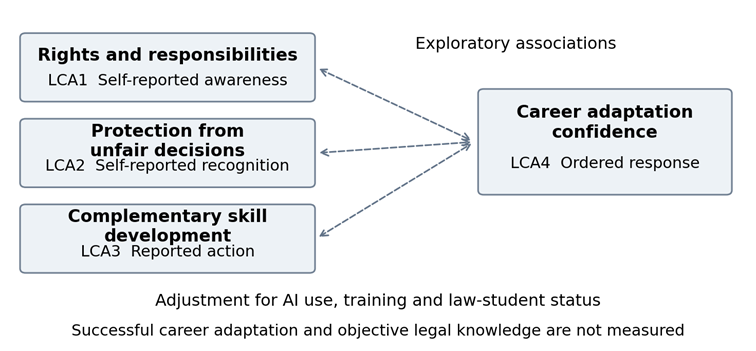
Figure 1. Analytical framework for awareness preparation and confidence
Dashed connections identify exploratory associations. LCA5 is described separately as an attributed preparedness benefit. The diagram does not represent an estimated causal pathway or a complete Career Construction model.
3. Methodology
The study analyses the numerical Group 9 workbook as supplied by the researchers as real survey data. It uses a cross-sectional observational design and reports item-level responses rather than constructing a broad adaptability score. The description separates source documentation, the analytical procedures implemented here and ethical arrangements confirmed by the researchers, consistent with transparent observational reporting.[21]
3.1 Sample and unit of analysis
The workbook contains 385 records with affirmative consent, adult eligibility and relevant AI awareness. The unit of analysis is an individual recorded response. Current status identifies 238 law students, 61 law graduates, 53 advocates or legal professionals and 33 other relevant respondents. The principal analysis retains the full mixed sample. It does not describe all records as university graduates or currently employed workers.
Education is recorded separately as undergraduate, graduate, postgraduate or professional level, with no supplied rule establishing whether a category means completed or current study. Its cross-classification with status does not independently verify graduate eligibility. We therefore use the explicitly recorded law-graduate category only for descriptive sensitivity analysis. It is a status-defined subset, not a verified probability sample of all university graduates.
3.2 Sampling and source documentation
A conventional large-population calculation at Z = 1.96, p = 0.50 and e = 0.05 gives 384.16 responses, rounded upward to 385.[22] The numerical correspondence with the workbook count does not establish that a probability design was implemented. A sampling frame, actual recruitment channels, fieldwork dates, invitation counts and response-rate denominator are not documented in the supplied materials. No selection probabilities or survey weights can be recovered from them.
The Codebook describes the respondent sequence as synthetic and the optional comments as synthetic contextual text. These labels do not alone establish that the numerical answers are simulated. They require explanation against original source records. The analysis excludes contextual comments and uses identifiers only to distinguish rows. The researchers should retain the original questionnaire and consent documentation, together with a record of any identifier replacement or text generation. The findings are conditional on the supplied numerical records; the analysis does not independently authenticate participant recruitment.
3.3 Measures and their interpretation
All five LCA statements use a five-category agreement scale from strongly disagree to strongly agree. Table 1 specifies their wording focus and role in the analysis. Their source is the workbook Codebook, matching the focal items reproduced in the supplied article. An adaptation record linking the items to a validated published scale is unavailable, so no such provenance is asserted.
Table 1. Focal measures and analytical roles
| Item | Statement focus | Interpretation |
| LCA1 | Awareness of workplace rights and responsibilities | Perceived awareness; not an objective legal test |
| LCA2 | Recognition of protection from unfair automated decisions | Perceived protection need; not verified legal knowledge |
| LCA3 | Developing skills that complement AI | Reported action; not assessed skill performance |
| LCA4 | Confidence in adapting career plans | Single-item confidence outcome; not a full adaptability scale |
| LCA5 | Understanding labour issues improves preparedness | Attributed benefit; not an independently measured improvement |
Source: Group 9 Codebook and focal wording reproduced in the supplied article. Exact statements appear in Appendix A.
Preliminary coefficient alpha for the five-item block is 0.289. This statistic is reported as a diagnostic, not a sufficient test of dimensionality or validity.[23] The stronger conceptual reason for separate analysis is that awareness, reported action, confidence and attributed benefit are different objects. A high alpha would not make them interchangeable. No composite reliability, AVE, HTMT, latent mediation or SEM paths are inferred from a block without an adequately specified measurement model.
3.4 Screening and retained records
All focal items and model covariates are complete. Eleven records lack the optional AI-tool response, which is not used in the focal model. Identifiers are unique, and no exact duplicate appears after excluding identifier and contextual comment. Eight records contain a constant response across the five LCA items; none is constant across all 20 Likert statements. These records are retained because similar answers across related items are not sufficient evidence of inattentiveness.
The materials do not provide completion times, an objectively scored attention check or a separate pilot dataset. Pilot size, translation procedures and item revisions are therefore not reported as completed activities. Screening describes numerical consistency and recorded eligibility rather than verifying identity or attention. No imputation, weighting or outcome-based deletion is performed, and all 385 records enter the main model.
3.5 Descriptions and paired response comparisons
Full response-category counts, means, standard deviations and endorsement proportions are reported. Endorsement combines agree and strongly agree; neutral remains a separate category in the full distributions. Wilson intervals provide pointwise summaries of endorsement uncertainty under conventional assumptions.[24] They do not establish representative coverage of a national population.
Joint summaries compare protection recognition with confidence and skill development with confidence. Each partitions all records into both endorsed, first only, second only and neither. Two exact McNemar tests compare the corresponding paired endorsement proportions, with Holm adjustment within that two-test family.[25] Percentile intervals for the differences use 10,000 whole-respondent bootstrap resamples, preserving pairing.[26] Different content means that these contrasts are response differences, not validated measures of a psychological or behavioural deficit.
3.6 Ordinal association model and diagnostics
Six exploratory Spearman correlations examine the two awareness statements with skill development and confidence, skill development with confidence, and protection recognition with the attributed-preparedness statement. Intervals use 3,000 respondent bootstrap resamples and are pointwise. Holm correction covers the six correlation tests as one family.
The main proportional-odds logistic model uses LCA4 as its ordered outcome. Its single strongly-disagree observation is combined with the 42 disagree observations, producing four ordered categories: disagreement, neutral, agree and strongly agree. The model estimates the odds of being above an outcome threshold per one-point increase in LCA1, LCA2 or LCA3. It also adjusts for weekly-or-more AI use, any formal AI training and law-student status, each versus its complementary category. These covariates describe exposure and composition; they are not a sufficient causal adjustment set.[27]
Maximum-likelihood estimates use observed-information Wald intervals. Holm correction covers the three focal coefficients as a separate family. The proportionality assumption is assessed through a cluster-robust Wald comparison of slopes from stacked threshold-specific binary logistic models, accounting for the repeated thresholds within each respondent. The diagnostic evaluates the common-slope restriction rather than assuming that it holds.[28] Separate robust binary estimates at neutral-or-higher, agree-or-higher and strongly-agree thresholds are reported as sensitivity summaries.[29]
Variance inflation factors assess collinearity. Two optimisers are compared for numerical stability. A direct Wald contrast compares the two awareness coefficients; this additional diagnostic is not a separate confirmatory hypothesis. Software comprises Python, pandas, NumPy, SciPy and statsmodels. All analyses are exploratory, and the separate correction families do not establish an article-wide error guarantee.
3.7 Ethical safeguards and oversight
Ethical approval for this study was obtained from the Center for Academic & Professional Career Development and Research (CAPCDR), an external institutional body, under approval reference CAPCDR: SMUCT/LLB/SS-0020261012-04. External ethical review was sought because Shanto-Mariam University of Creative Technology does not have an institutional ethics committee responsible for reviewing this type of research.
The researchers confirm informed consent before questionnaire completion, voluntary participation, anonymity and the option to discontinue. All analysed records carry affirmative consent and adult-eligibility codes. The analysis excludes contextual text, reports aggregate findings and does not attempt to identify individuals. Discontinuation concerns participation before completion; anonymous records are not presented as individually traceable for later withdrawal.
4. Results
Results are organised around separate response objects rather than an overall adaptability score. Counts and percentages describe the supplied records. The ordinal model estimates associations with career adaptation confidence; it does not estimate employment success or the effect of a rights-education intervention.
4.1 Respondent profile and analytical coverage
Table 2 describes the recorded status and education categories. The inclusion of these variables makes the difference between the intended graduate focus and the achieved mixed sample explicit. The full sample remains the principal analytical group.
Table 2. Recorded respondent status and education
| Measure | Category | Count (%) |
| Current status | Law student | 238 (61.8%) |
| Law graduate | 61 (15.8%) | |
| Advocate or legal professional | 53 (13.8%) | |
| Other relevant respondent | 33 (8.6%) | |
| Education level | Undergraduate | 222 (57.7%) |
| Graduate | 86 (22.3%) | |
| Professional | 42 (10.9%) | |
| Postgraduate | 35 (9.1%) |
N = 385. Status and education are separate recorded variables. The materials do not establish whether education denotes completed or current study; no graduate eligibility is inferred from the full sample.
Law students account for 238 records (61.8%), law graduates for 61 (15.8%), advocates or legal professionals for 53 (13.8%) and other respondents for 33 (8.6%). The largest age category is 21-23 years, with 159 respondents (41.3%), followed by 18-20 years with 74 (19.2%). There are 212 male respondents (55.1%), 163 female respondents (42.3%), eight preferring not to say and two selecting other. These are descriptive categories rather than evidence of representative recruitment.
Education is recorded as undergraduate for 222 respondents (57.7%), graduate for 86 (22.3%), postgraduate for 35 (9.1%) and professional for 42 (10.9%). Education and status do not establish the same classification. For example, the law-graduate category includes 29 records also labelled undergraduate. The materials do not explain whether this reflects current study, a coding convention or an error, so no degree-completion status is reconstructed from that combination.
Weekly-or-more AI use is reported by 273 respondents (70.9%). Any formal training is recorded for 177 (46.0%), including 118 short orientations and 59 courses or certified training experiences. Nine respondents report never using generative AI, which does not conflict with eligibility based on having heard of AI. All main-model variables are complete for the 385 retained records.
4.2 Distributions of awareness and preparation
Table 3 presents all five response-category counts and the endorsement summaries. Keeping these categories separate shows where neutral responses occur and avoids interpreting non-endorsement as rejection of rights or unwillingness to prepare for a career.
Table 3. Distributions of labour rights awareness and career preparation
| Item | Counts 1 / 2 / 3 / 4 / 5 | Mean | SD | Endorsed n (%) | 95% CI (%) |
| LCA1 | 3 / 39 / 144 / 149 / 50 | 3.53 | 0.87 | 199 (51.7%) | 46.7 to 56.6 |
| LCA2 | 0 / 7 / 73 / 173 / 132 | 4.12 | 0.77 | 305 (79.2%) | 74.9 to 83.0 |
| LCA3 | 1 / 28 / 127 / 183 / 46 | 3.64 | 0.80 | 229 (59.5%) | 54.5 to 64.3 |
| LCA4 | 1 / 42 / 154 / 154 / 34 | 3.46 | 0.81 | 188 (48.8%) | 43.9 to 53.8 |
| LCA5 | 2 / 31 / 126 / 174 / 52 | 3.63 | 0.83 | 226 (58.7%) | 53.7 to 63.5 |
N = 385. Categories run from 1 strongly disagree to 5 strongly agree. Endorsement combines agree and strongly agree. Wilson intervals are pointwise; means and SDs summarise ordered responses descriptively.
General workplace-rights awareness, LCA1, is endorsed by 199 respondents (51.7%), with a mean of 3.53 and standard deviation of 0.87. Recognition that workers may need protection from unfair automated decisions, LCA2, is endorsed by 305 (79.2%; mean 4.12, standard deviation 0.77). Reported complementary skill development, LCA3, is endorsed by 229 (59.5%; mean 3.64, standard deviation 0.80).
Adaptation confidence, LCA4, is endorsed by 188 respondents (48.8%; mean 3.46, standard deviation 0.81). The attributed-preparedness statement, LCA5, is endorsed by 226 (58.7%; mean 3.63, standard deviation 0.83). Neutral answers account for 154 confidence responses (40.0%), compared with 73 protection-recognition responses (19.0%). Strong agreement with confidence occurs in 34 records (8.8%). The distribution therefore contains substantial middle-category responses, rather than a uniformly negative assessment of career capacity.
4.3 Joint patterns and paired response differences
Table 4 examines whether respondents endorse protection recognition and confidence together, and whether reported skill development coexists with confidence. Both panels partition all 385 records. They describe combinations of answers rather than stable types of respondent.
Table 4. Joint endorsement of protection skills and confidence
| Item pair | Response combination | Count (%) |
| LCA2 / LCA4 | Both endorsed | 151 (39.2%) |
| First only | 154 (40.0%) | |
| Second only | 37 (9.6%) | |
| Neither | 43 (11.2%) | |
| LCA3 / LCA4 | Both endorsed | 126 (32.7%) |
| First only | 103 (26.8%) | |
| Second only | 62 (16.1%) | |
| Neither | 94 (24.4%) |
N = 385. LCA2 is protection recognition, LCA3 reported skill development and LCA4 confidence. First and second refer to the listed pair. Non-endorsement includes neutral responses.
Protection recognition and confidence are both endorsed in 151 records (39.2%). Protection alone is endorsed by 154 respondents (40.0%), confidence alone by 37 (9.6%), and neither by 43 (11.2%). Among the 305 respondents endorsing protection recognition, 49.5% also endorse confidence. Recognition of a possible protection need therefore does not entail a confident personal career assessment within these records.
Skill development and confidence coexist in 126 records (32.7%). Another 103 respondents endorse skill development without confidence, 62 endorse confidence without skill development, and 94 endorse neither. These combinations do not show whether a skill is effective or whether confidence is well calibrated. They show that reported action and confidence are not interchangeable answers.
Table 5 reports paired contrasts for the same two comparisons. The tests retain the relationship between answers supplied by the same respondent. Positive differences indicate higher endorsement of the first listed statement.
Table 5. Paired differences in endorsement
| Contrast | First only / second only | Difference pp | 95% CI pp | Holm p |
| LCA2 − LCA4 | 154 / 37 | 30.4 | 23.9 to 36.6 | <0.001 |
| LCA3 − LCA4 | 103 / 62 | 10.6 | 4.4 to 17.1 | 0.002 |
N = 385; pp = percentage points. Exact McNemar tests use discordant pairs. Holm correction covers two comparisons. Pointwise percentile intervals use 10,000 respondent bootstrap resamples; item meanings differ.
Protection recognition exceeds confidence endorsement by 30.4 percentage points, with a pointwise bootstrap interval of 23.9-36.6 points and Holm-adjusted p below 0.001. Reported skill development exceeds confidence by 10.6 points, with an interval of 4.4-17.1 points and Holm p = 0.002. These contrasts establish differences in response proportions under the selected threshold. They are not estimates of the amount by which legal knowledge or skills fail to produce confidence, because the items measure different content and no causal sequence is observed.
4.4 Ordinal associations among focal responses
Table 6 retains all five ordered categories. It reports six selected correlations and their uncertainty. The two awareness statements are evaluated separately, and the preparedness attribution is not used as proof that understanding labour issues caused an improvement.
Table 6. Exploratory ordinal associations
| Item pair | Spearman ρ | 95% CI | Raw p | Holm p |
| LCA1 / LCA3 | 0.076 | -0.020 to 0.167 | 0.136 | 0.407 |
| LCA1 / LCA4 | 0.157 | 0.064 to 0.250 | 0.002 | 0.011 |
| LCA2 / LCA3 | -0.029 | -0.133 to 0.075 | 0.574 | 0.574 |
| LCA2 / LCA4 | 0.069 | -0.028 to 0.165 | 0.176 | 0.407 |
| LCA3 / LCA4 | 0.156 | 0.051 to 0.254 | 0.002 | 0.011 |
| LCA2 / LCA5 | 0.159 | 0.065 to 0.250 | 0.002 | 0.011 |
N = 385. Six correlations form the Holm family. Bootstrap intervals use 3,000 whole-respondent resamples and are pointwise. Positive associations are not causal estimates.
The rights-awareness-confidence correlation is 0.157, with a 95% bootstrap interval of 0.064-0.250 and Holm p = 0.011. Skill development has a similar estimated correlation with confidence, 0.156 (0.051-0.254; Holm p = 0.011). Protection recognition correlates with the attributed-preparedness statement at 0.159 (0.065-0.250; Holm p = 0.011). These are small positive ordinal associations.
The remaining estimates are less certain: rights awareness with skill development, 0.076 (Holm p = 0.407); protection recognition with skill development, −0.029 (Holm p = 0.574); and protection recognition with confidence, 0.069 (Holm p = 0.407). Their intervals include both negative and positive values. The findings do not establish zero relationships, and their differing threshold decisions do not by themselves demonstrate differences between coefficients.
4.5 Adjusted ordinal model of confidence
Table 7 presents the proportional-odds estimates. A positive odds ratio indicates higher odds of being above a confidence threshold, conditional on the other included variables. It does not express a percentage-point change in confidence or an effect of changing a predictor experimentally.
Table 7. Proportional odds model of career adaptation confidence
| Predictor | aOR | 95% CI | Raw p | Holm p |
| Rights awareness LCA1 | 1.30 | 1.04 to 1.61 | 0.019 | 0.038 |
| Protection recognition LCA2 | 1.18 | 0.92 to 1.51 | 0.190 | 0.190 |
| Skill development LCA3 | 1.40 | 1.09 to 1.79 | 0.008 | 0.024 |
| Weekly-or-more AI use | 1.63 | 1.07 to 2.47 | 0.023 | — |
| Any formal AI training | 1.02 | 0.70 to 1.49 | 0.908 | — |
| Law-student status | 0.70 | 0.47 to 1.03 | 0.072 | — |
N = 385. Confidence categories are disagree or strongly disagree (n = 43), neutral (154), agree (154) and strongly agree (34). Focal estimates are per one-point increase. Reference categories: less frequent AI use, no training and non-student status. Intervals use observed-information covariance and are pointwise. Holm correction covers the three focal coefficients; covariate estimates are descriptive. aOR means adjusted odds ratio.
General rights awareness has an adjusted odds ratio of 1.30 per one-point increase (95% interval 1.04-1.61; raw p = 0.019; Holm p = 0.038). Reported skill development has an odds ratio of 1.40 (1.09-1.79; raw p = 0.008; Holm p = 0.024). Protection recognition has an estimate of 1.18 (0.92-1.51; raw and Holm p = 0.190). The direct contrast between the two awareness coefficients is uncertain: log-odds difference 0.096, with an interval of −0.225 to 0.417 and raw diagnostic p = 0.558. Accordingly, evidence for one awareness coefficient does not establish that its association is stronger than the other’s.
Weekly-or-more AI use has a descriptive adjusted odds ratio of 1.63 (1.07-2.47), any formal training 1.02 (0.70-1.49), and law-student status 0.70 (0.47-1.03). These covariate comparisons are not multiplicity-adjusted confirmatory findings. Variance inflation factors range from 1.004 to 1.043. The ordinal fit converges, and coefficients from the two optimisers agree to within 0.001.
4.6 Threshold diagnostics and subset descriptions
Table 8 reports threshold-specific binary summaries for the three focal predictors. The global cluster-robust comparison provides no evidence of unequal slopes across these thresholds (Wald χ² = 4.78; 12 degrees of freedom; p = 0.965). This diagnostic does not prove proportionality, particularly at the sparse strongest-agreement threshold.
Table 8. Threshold sensitivity for confidence associations
| Threshold | Predictor | Events n | aOR | 95% CI |
| Neutral or higher | Rights awareness LCA1 | 342 | 1.44 | 1.03 to 2.01 |
| Protection recognition LCA2 | 1.16 | 0.74 to 1.81 | ||
| Skill development LCA3 | 1.45 | 0.96 to 2.20 | ||
| Agree or higher | Rights awareness LCA1 | 188 | 1.29 | 1.01 to 1.64 |
| Protection recognition LCA2 | 1.19 | 0.91 to 1.56 | ||
| Skill development LCA3 | 1.41 | 1.07 to 1.85 | ||
| Strongly agree | Rights awareness LCA1 | 34 | 1.33 | 0.90 to 1.97 |
| Protection recognition LCA2 | 1.21 | 0.77 to 1.91 | ||
| Skill development LCA3 | 1.24 | 0.70 to 2.19 |
N = 385 at each threshold. Binary models include the same six predictors as the ordinal model and use robust sandwich intervals. Intervals are pointwise, with no separate multiplicity-adjusted threshold claims. The strongly-agree category has only 34 events.
The awareness and skill-development estimates remain positive across the three thresholds. Intervals are wider for strong agreement, where only 34 outcomes occur. The sensitivity estimates therefore support checking the model’s interpretation rather than making separate claims at every cut-off. Neutral-or-higher is also not equivalent to endorsement; its large event count includes middle-category responses.
Table 9 reports the recorded law-student and law-graduate subsets alongside the full sample. These overlapping samples provide descriptive context and are not independent replications or a formal test of status differences.
Table 9. Descriptive sensitivity by recorded status
| Item | Full sample n (%) | Law students n (%) | Law graduates n (%) |
| LCA1 | 199 (51.7%) | 127 (53.4%) | 29 (47.5%) |
| LCA2 | 305 (79.2%) | 192 (80.7%) | 45 (73.8%) |
| LCA3 | 229 (59.5%) | 147 (61.8%) | 35 (57.4%) |
| LCA4 | 188 (48.8%) | 109 (45.8%) | 37 (60.7%) |
| LCA5 | 226 (58.7%) | 137 (57.6%) | 34 (55.7%) |
Denominators: full sample 385, law students 238 and law graduates 61. These are overlapping descriptive subsets. The graduate category is a recorded status rather than independently verified degree completion; no between-population test is implied.
Among 238 law students, confidence is endorsed by 109 (45.8%) and protection recognition by 192 (80.7%). Among 61 law graduates, the corresponding counts are 37 (60.7%) and 45 (73.8%). The contrast is less pronounced in the recorded graduate category, but its smaller size and uncertain eligibility documentation preclude a general graduate-population conclusion. The full-sample findings should therefore retain their stated mixed-sample scope.
5. Discussion
The findings connect legal awareness and career preparation through modest associations rather than a comprehensive adaptability pathway. Recognition of the need for worker protection is common, while confidence and reported learning vary substantially. The discussion considers what that combination means for career-construction research and for education about AI-related employment decisions.
5.1 Recognising protection and feeling prepared
The largest descriptive contrast concerns protection recognition and confidence: endorsement differs by 30.4 percentage points. This is a meaningful distinction between questionnaire responses. It is not a validated measure of a knowledge-to-action gap, because knowing that protection may be needed and feeling able to change a career plan refer to different judgements. A respondent can reasonably recognise a difficult employment problem while remaining uncertain about personal options.
Career Construction Theory offers a way to ask what resources and experiences connect those judgements over time.[30] However, the present survey contains no observed transition or subsequent career action. It cannot establish whether rights education would improve confidence, whether confidence encourages people to seek information or whether both reflect other support. The results are most useful for specifying what an intervention should measure, rather than for announcing that an intervention has already been shown effective.
The joint responses strengthen that interpretation. Protection recognition without confidence occurs in 154 records, but there are also 151 respondents endorsing both. The sample therefore does not exhibit one uniform response to technological change. An educational programme could investigate the needs of participants who express uncertainty without labelling them deficient or assuming they hold inaccurate beliefs. Accurate awareness of uncertainty may itself be relevant to responsible career planning.
5.2 General rights awareness and confidence
The adjusted ordinal association between LCA1 and confidence is positive and modest. This is compatible with the idea that a person who feels informed about workplace rights and responsibilities may also feel better able to navigate change. It does not establish that the awareness is legally accurate or that providing information alone will alter confidence. Independent tests of legal knowledge and later decisions would be required to assess those propositions.
The distinction between resources, adapting responses and results in Hirschi and colleagues’ work is helpful here.[31] The current outcome is an AI-specific self-assessment, while career success and demonstrated adaptation remain unobserved. Zacher’s work on subjective career success examines a different outcome and should not be treated as if it validates the present single-item measure.[32] The current result belongs within a broader research programme, with its own measurement limits.
The protection-recognition coefficient is less certain, but this does not establish a stronger role for general awareness. The direct comparison between the awareness coefficients is inconclusive. A future study should therefore investigate their content and distinct predictive value rather than prioritise one solely because its individual p-value falls below a threshold. Confidence intervals and direct comparisons are necessary to support claims about differences.[33]
5.3 Reported skill development and adaptation confidence
Skill development is associated with higher confidence in the ordinal model, and its bivariate relationship is similarly small. This pattern is compatible with learning as one part of career preparation. It also permits reverse direction: people who already feel capable may be more likely to report or undertake complementary learning. The same survey cannot distinguish these possibilities or determine which skills were developed.
The Job Demands-Resources perspective highlights the possible importance of opportunities and support alongside personal effort.[34] Learning under technological change may require time, access, feedback and a realistic understanding of tasks. Those resources are not measured directly here. The absence of a clear association for the broad training category consequently cannot be read as evidence that training is ineffective. The variable combines experiences of unknown duration and content and does not establish whether training preceded the confidence assessment.
Experimental and workplace research also cautions against treating all AI learning as one intervention. Noy and Zhang examine assistance with defined writing tasks, whereas Brynjolfsson and colleagues study a specific service setting.[35] Their findings motivate task-sensitive evaluation rather than a generic promise that frequent AI use produces career adaptability. A legal-education programme should test whether learners can complete and justify relevant tasks, with confidence assessed alongside performance.
5.4 Awareness of a relationship is not evidence of improvement
LCA5 receives substantial endorsement and has a small positive association with protection recognition. Its wording states that understanding AI-related labour issues improves preparedness. Agreement indicates that respondents see such understanding as useful. It does not independently establish an improvement or identify its size. Using that item as the main adaptability outcome would risk treating an attributed relationship as the relationship to be demonstrated.
The current separation therefore serves a theoretical purpose. It allows rights awareness to be compared with confidence without building the proposed benefit into the outcome statement. Career-adaptability scholarship distinguishes related constructs and measures resources across multiple dimensions.[36] The five focal items cannot be assumed to reproduce those dimensions, and their low internal consistency supplies an additional reason for caution about a total score.
Measurement refinement should preserve content rather than delete items until alpha increases. As Sijtsma explains, alpha has important limitations as an indicator of score quality.[37] A stronger instrument would assess knowledge, confidence and action independently, then evaluate whether their relationships accord with the proposed theory. The present analysis identifies these requirements and provides descriptive evidence for developing that instrument.
5.5 Institutional protection and individual adaptability
A focus on confidence should not shift responsibility for fair employment practices entirely onto the individual. A person may be skilled and well informed yet lack access to an explanation, a representative or a meaningful avenue for review. Research on algorithmic control and international social-dialogue cases places those issues within organisational relationships and collective action.[38] The present survey does not measure the availability of those mechanisms, but they remain relevant to interpreting what confidence can and cannot represent.
Psychological-contract theory also distinguishes beliefs about organisational obligations from the formal terms of law.[39] In education, this distinction can help learners ask whether a concern involves an expectation, an employer policy, a contractual commitment or a statutory protection. Those categories can overlap, but they should not be treated as equivalent. The questionnaire’s broad reference to rights does not identify which category respondents have in mind.
For Bangladesh, the constitutional and statutory context must be examined with attention to scope, as outlined in Section 1.2. The analysis does not establish that every respondent has the same legal protection, that an automated decision has occurred or that a particular remedy is available. Educational recommendations should therefore include locating current authoritative information and obtaining appropriate advice, rather than converting a broad awareness score into a legal diagnosis.
5.6 The mixed sample and theoretical interpretation
A university-graduate interpretation is not supported for the full database. Law students form the majority of the records, and the explicitly recorded law-graduate subset contains only 61 observations. Its confidence percentage differs from the full sample, illustrating why sample definition changes substantive interpretation. These descriptive differences are not evidence of a causal effect of graduation or a confirmed population difference.
The overall contribution is correspondingly delimited. General rights awareness and reported skill development accompany higher confidence, while recognition of protection needs is more commonly endorsed than confidence. This combination fits a differentiated account of preparation under AI-related change, but it does not confirm the full Career Construction, Job Demands-Resources or psychological-contract models. Recent work separating AI literacy, readiness and adaptability provides a relevant comparison in its emphasis on distinct constructs.[40] The present article adds legal-awareness content and an explicit account of what the supplied responses can support.
6. Theoretical and Practical Implications
The implications concern how researchers measure preparation and how institutions could evaluate education and support. They distinguish evidence from proposed interventions. The survey did not assess the effectiveness of a course, employer policy or legal remedy, so recommendations identify testable next steps rather than guaranteed improvements.
6.1 Implications for career theory
The first implication is that rights awareness should be located within a sequence of preparation rather than equated with adaptability. Awareness may help a person recognise an issue; a resource may help the person respond; an action may produce a later result. The present data observe self-reports concerning several parts of that sequence without establishing the links over time. A theoretical extension would require a design that distinguishes those stages and measures the organisational context in which action becomes possible.
Second, confidence requires calibration. A higher self-assessment is not automatically better if it exceeds actual knowledge or available support. Conversely, uncertainty after learning about a complex employment issue may reflect a more informed judgement. Career interventions should therefore assess the quality of choices as well as confidence. A learner might correctly identify the need for further information rather than give a confident answer about an unfamiliar right.
Third, related awareness measures should be compared directly before their theoretical roles are ranked. The current coefficient contrast is uncertain. Future work can use multiple items and independent knowledge tasks to determine whether broad awareness of responsibilities and recognition of unfair-decision risks operate differently. Published reliability evidence from established adaptability instruments remains relevant to instrument design, but cannot be borrowed as evidence for a new short block.[41]
6.2 Implications for universities and career services
Universities could combine legal-literacy content with realistic career tasks. A fictional recruitment or performance-assessment scenario could ask students to identify what the system is doing, what information is missing, which sources are authoritative and what action is proportionate. A complementary exercise could require a practical plan for developing a skill that remains useful when AI assists part of the task. These exercises would make knowledge and preparation observable without using actual personal disputes.
Assessment should keep legal accuracy, task performance and confidence separate. Teachers could compare a student’s explanation with the relevant rules and evaluate whether the career plan has specific, feasible steps. Confidence could be measured before and after feedback, while later follow-up examines whether the learner acts on the plan. This would provide better evidence of educational value than a single agreement statement about feeling prepared.
Career services should also identify support beyond technical training. Learners may need guidance about occupational information, employment procedures or how to seek advice. The current broad training variable cannot specify which component matters, so programmes should document content, duration, access and completion. Long and Magerko’s AI-literacy framework offers a reference for defining competencies, while the study’s findings indicate why career and legal outcomes need additional measurement.[42]
6.3 Implications for employers and decent work
Employers can evaluate whether information about AI-assisted assessment is understandable and whether channels for questions or challenge are usable. Such evaluation should examine the actual employment practice and the people affected, rather than assume that technically capable workers can resolve every problem individually. OECD employer evidence and ILO social-dialogue cases provide comparative grounds for examining governance and worker participation.[43] They do not establish what arrangements exist in the current sample.
The topic also connects education for employment with labour protection. SDG target 4.4 concerns relevant skills, while target 8.8 concerns labour rights and safe working environments.[44] The survey is relevant to those objectives but measures neither official indicator nor national progress toward them. A later evaluation could assess demonstrated skills, access to reliable advice and organisational practice using appropriate measures. That would connect educational ambition to evidence without treating a favourable awareness response as proof of decent work.
7. Conclusion Limitations and Future Research
The analysis distinguishes perceived AI-related labour-rights awareness from reported skill development and confidence in adapting career plans. Among 385 supplied records, protection recognition is endorsed by 79.2%, skill development by 59.5% and confidence by 48.8%. General rights awareness and skill development have modest positive associations with confidence in the adjusted ordinal model. The protection-recognition estimate is uncertain, and a direct comparison does not establish a difference between the awareness coefficients.
The article’s contribution is an empirical account of these distinct judgements in a mixed Bangladesh sample. It replaces an unsupported overall adaptability score with a clearly defined confidence outcome and preserves an attributed-preparedness statement as a separate belief. The findings identify a useful research question about how legal awareness and practical preparation develop together. They do not show that information causes adaptability, that confidence is accurate or that a person can exercise a workplace remedy.
Several limits constrain interpretation. The data are cross-sectional self-reports, and the items are study-specific measures rather than an objective legal test or the full Career Adapt-Abilities Scale. Recruitment, dates and response-rate information are undocumented. The sample is dominated by law students; status and education categories do not verify a graduate population. The Codebook’s synthetic identifier and comment labels require explanation against original records, although the numerical responses were supplied as real data. Contextual comments were excluded. Statistical adjustment and narrow intervals cannot resolve selection bias or independently authenticate recruitment.
Future research should begin with a documented eligibility rule and a sampling process matched to the intended population. A graduate study should verify completed degree status and distinguish job seekers, employed graduates and further-study participants. Cognitive interviews can establish how people interpret “rights and responsibilities”, “protection” and “adapting career plans”. A revised instrument should then assess specific legal knowledge, multidimensional adaptability resources and independently reported actions.
Longitudinal follow-up can examine whether knowledge precedes changes in planning, whether learning experiences alter confidence and whether those changes correspond to later outcomes. A course evaluation could compare educational conditions while recording baseline differences and the support participants can access. It should assess justified caution and appropriate help-seeking alongside successful task completion, rather than define improvement as confidence alone.
Finally, qualitative work can examine how graduates understand automated employment decisions and distinguish a personal skill concern from an organisational or legal issue. Such accounts can guide task design and identify barriers that a questionnaire misses. Combining that evidence with properly specified measures would permit a stronger test of how individual resources and institutional protections jointly support career preparation. The current study provides a focused starting point for that work, with claims limited to the records and questions analysed.
Declarations
Ethical approval and oversight
Ethical approval for this study was obtained from the Center for Academic & Professional Career Development and Research (CAPCDR), an external institutional body, under approval reference CAPCDR: SMUCT/LLB/SS-0020261012-04. External ethical review was sought because Shanto-Mariam University of Creative Technology does not have an institutional ethics committee responsible for reviewing this type of research.
Informed consent
The researchers confirm informed consent, voluntary participation, anonymity and the opportunity to discontinue. All analysed records contain affirmative consent and adult-eligibility responses.
Data availability
De-identified numerical data and analytical specifications may be requested from the corresponding author, subject to confidentiality and applicable institutional requirements. Contextual comments were excluded.
Funding and competing interests
The authors report no external funding and no competing interests.
Author contributions
Sadia Afrin Soma: Conceptualisation; study materials; data preparation and curation; manuscript development. Prof. Dr Kazi Abdul Mannan: Methodological guidance; supervision; interpretation of findings; critical review and editing.
Generative AI disclosure
Generative AI assisted literature searching, drafting, language editing, organisation and analytical-code development. Numerical estimates were calculated programmatically from the supplied records. The authors are responsible for the analysis, interpretation, source verification and final manuscript, including the target journal’s disclosure requirements.
Bibliography
Bakker AB and Demerouti E, ‘Job Demands-Resources Theory: Taking Stock and Looking Forward’ (2017) 22 Journal of Occupational Health Psychology 273
Brant R, ‘Assessing Proportionality in the Proportional Odds Model for Ordinal Logistic Regression’ (1990) 46 Biometrics 1171
Brynjolfsson E, Li D and Raymond L, ‘Generative AI at Work’ (2025) 140 Quarterly Journal of Economics 889
Cochran WG, Sampling Techniques (3rd edn, John Wiley & Sons 1977)
Demirtaş-Zorbaz S, Ulaş Kılıç Ö and Akın Arıkan Ç, ‘Career Adapt-Abilities Scale: Reliability Generalization Meta-Analysis’ (2026) 129 Psychological Reports 2640
Doellgast V and others, Global Case Studies of Social Dialogue on AI and Algorithmic Management (ILO Working Paper 144, International Labour Organization 2025)
Efron B and Tibshirani RJ, An Introduction to the Bootstrap (Chapman & Hall 1993)
Gmyrek P and others, Generative AI and Jobs: A Refined Global Index of Occupational Exposure (ILO Working Paper 140, International Labour Organization 2025)
Hirschi A, Herrmann A and Keller AC, ‘Career Adaptivity, Adaptability, and Adapting: A Conceptual and Empirical Investigation’ (2015) 87 Journal of Vocational Behavior 1
Holm S, ‘A Simple Sequentially Rejective Multiple Test Procedure’ (1979) 6 Scandinavian Journal of Statistics 65
Hosmer DW Jr, Lemeshow S and Sturdivant RX, Applied Logistic Regression (3rd edn, John Wiley & Sons 2013)
Kellogg KC, Valentine MA and Christin A, ‘Algorithms at Work: The New Contested Terrain of Control’ (2020) 14 Academy of Management Annals 366
Liang KY and Zeger SL, ‘Longitudinal Data Analysis Using Generalized Linear Models’ (1986) 73 Biometrika 13
Long D and Magerko B, ‘What Is AI Literacy? Competencies and Design Considerations’ in Proceedings of the 2020 CHI Conference on Human Factors in Computing Systems (ACM 2020) 1
McCullagh P, ‘Regression Models for Ordinal Data’ (1980) 42 Journal of the Royal Statistical Society Series B 109
McNemar Q, ‘Note on the Sampling Error of the Difference between Correlated Proportions or Percentages’ (1947) 12 Psychometrika 153
Milanez A, Lemmens A and Ruggiu C, Algorithmic Management in the Workplace: New Evidence from an OECD Employer Survey (OECD Artificial Intelligence Papers No 31, OECD Publishing 2025)
Noy S and Zhang W, ‘Experimental Evidence on the Productivity Effects of Generative Artificial Intelligence’ (2023) 381 Science 187
Rousseau DM, ‘Psychological and Implied Contracts in Organizations’ (1989) 2 Employee Responsibilities and Rights Journal 121
Rudolph CW, Lavigne KN and Zacher H, ‘Career Adaptability: A Meta-Analysis of Relationships with Measures of Adaptivity, Adapting Responses, and Adaptation Results’ (2017) 98 Journal of Vocational Behavior 17
Savickas ML, ‘Career Construction Theory and Practice’ in Steven D Brown and Robert W Lent (eds), Career Development and Counseling: Putting Theory and Research to Work (2nd edn, John Wiley & Sons 2013) 147
Savickas ML and Porfeli EJ, ‘Career Adapt-Abilities Scale: Construction, Reliability, and Measurement Equivalence across 13 Countries’ (2012) 80 Journal of Vocational Behavior 661
Sijtsma K, ‘On the Use, the Misuse, and the Very Limited Usefulness of Cronbach’s Alpha’ (2009) 74 Psychometrika 107
Testa M, Apuzzo A and Pittaway L, ‘AI Literacy Alone Is Not Enough: Student AI Readiness and Career Adaptability in Business and Management Education’ (2026) 24 International Journal of Management Education 101394
United Nations General Assembly, ‘Transforming Our World: The 2030 Agenda for Sustainable Development’ (25 September 2015) UN Doc A/RES/70/1, targets 4.4 and 8.8
von Elm E and others, ‘The Strengthening the Reporting of Observational Studies in Epidemiology (STROBE) Statement: Guidelines for Reporting Observational Studies’ (2007) 4 PLOS Medicine e296
Wasserstein RL and Lazar NA, ‘The ASA Statement on p-Values: Context, Process, and Purpose’ (2016) 70 American Statistician 129
White H, ‘A Heteroskedasticity-Consistent Covariance Matrix Estimator and a Direct Test for Heteroskedasticity’ (1980) 48 Econometrica 817
Wilson EB, ‘Probable Inference, the Law of Succession, and Statistical Inference’ (1927) 22 Journal of the American Statistical Association 209
Zacher H, ‘Career Adaptability Predicts Subjective Career Success above and beyond Personality Traits and Core Self-Evaluations’ (2014) 84 Journal of Vocational Behavior 21
Appendix A Questionnaire wording
Table A1 reproduces the five focal statements so that the statistical results can be assessed against the wording and the objects measured.
Table A1. Exact focal wording
| Code | Questionnaire statement |
| LCA1 | I am aware that AI may create new workplace rights and responsibilities. |
| LCA2 | I know that workers may need protection from unfair automated employment decisions. |
| LCA3 | I actively develop skills that can complement rather than merely compete with AI. |
| LCA4 | I am confident that I can adapt my career plans as AI changes professional work. |
| LCA5 | Understanding AI-related labour issues improves my career preparedness. |
Source: Group 9 workbook Codebook, matching the focal items in the supplied article. Responses: 1 strongly disagree, 2 disagree, 3 neutral, 4 agree and 5 strongly agree.
LCA1 and LCA2 concern perceived awareness or recognition; LCA3 reports action; LCA4 is confidence; LCA5 attributes a preparedness benefit. No total score is treated as a validated adaptability measure.
Table of legislation
The Constitution of the People’s Republic of Bangladesh, arts 27 and 29
Bangladesh Labour (Amendment) Act 2026 (Act No 43 of 2026), s 86 (inserting s 345A into the Bangladesh Labour Act 2006) <https://bdlaws.minlaw.gov.bd/act-print-1672/section-print-58638.html> accessed 28 October 2026
[1] Shakked Noy and Whitney Zhang, ‘Experimental Evidence on the Productivity Effects of Generative Artificial Intelligence’ (2023) 381 Science 187; Erik Brynjolfsson, Danielle Li and Lindsey Raymond, ‘Generative AI at Work’ (2025) 140 Quarterly Journal of Economics 889.
[2] Paweł Gmyrek and others, Generative AI and Jobs: A Refined Global Index of Occupational Exposure (ILO Working Paper 140, International Labour Organization 2025).
[3] Anna Milanez, Annikka Lemmens and Carla Ruggiu, Algorithmic Management in the Workplace: New Evidence from an OECD Employer Survey (OECD Artificial Intelligence Papers No 31, OECD Publishing 2025).
[4] The Constitution of the People’s Republic of Bangladesh, arts 27 and 29.
[5] Bangladesh Labour (Amendment) Act 2026 (Act No 43 of 2026), s 86 (inserting s 345A into the Bangladesh Labour Act 2006) <https://bdlaws.minlaw.gov.bd/act-print-1672/section-print-58638.html> accessed 28 October 2026.
[6] Mark L Savickas, ‘Career Construction Theory and Practice’ in Steven D Brown and Robert W Lent (eds), Career Development and Counseling: Putting Theory and Research to Work (2nd edn, John Wiley & Sons 2013) 147; Andreas Hirschi, Anne Herrmann and Anita C Keller, ‘Career Adaptivity, Adaptability, and Adapting: A Conceptual and Empirical Investigation’ (2015) 87 Journal of Vocational Behavior 1.
[7] Mario Testa, Adriana Apuzzo and Luke Pittaway, ‘AI Literacy Alone Is Not Enough: Student AI Readiness and Career Adaptability in Business and Management Education’ (2026) 24 International Journal of Management Education 101394.
[8] Mark L Savickas and Erik J Porfeli, ‘Career Adapt-Abilities Scale: Construction, Reliability, and Measurement Equivalence across 13 Countries’ (2012) 80 Journal of Vocational Behavior 661.
[9] Hirschi, Herrmann and Keller (n 6).
[10] Cort W Rudolph, Kristi N Lavigne and Hannes Zacher, ‘Career Adaptability: A Meta-Analysis of Relationships with Measures of Adaptivity, Adapting Responses, and Adaptation Results’ (2017) 98 Journal of Vocational Behavior 17; Hannes Zacher, ‘Career Adaptability Predicts Subjective Career Success above and beyond Personality Traits and Core Self-Evaluations’ (2014) 84 Journal of Vocational Behavior 21.
[11] Savickas (n 6).
[12] Selen Demirtaş-Zorbaz, Özlem Ulaş Kılıç and Çiğdem Akın Arıkan, ‘Career Adapt-Abilities Scale: Reliability Generalization Meta-Analysis’ (2026) 129 Psychological Reports 2640.
[13] Arnold B Bakker and Evangelia Demerouti, ‘Job Demands–Resources Theory: Taking Stock and Looking Forward’ (2017) 22 Journal of Occupational Health Psychology 273.
[14] Denise M Rousseau, ‘Psychological and Implied Contracts in Organizations’ (1989) 2 Employee Responsibilities and Rights Journal 121.
[15] Katherine C Kellogg, Melissa A Valentine and Angèle Christin, ‘Algorithms at Work: The New Contested Terrain of Control’ (2020) 14 Academy of Management Annals 366.
[16] Virginia Doellgast and others, Global Case Studies of Social Dialogue on AI and Algorithmic Management (ILO Working Paper 144, International Labour Organization 2025).
[17] Noy and Zhang (n 1); Brynjolfsson, Li and Raymond (n 1).
[18] Gmyrek and others (n 2).
[19] Testa, Apuzzo and Pittaway (n 7).
[20] Duri Long and Brian Magerko, ‘What Is AI Literacy? Competencies and Design Considerations’ in Proceedings of the 2020 CHI Conference on Human Factors in Computing Systems (ACM 2020) 1.
[21] Erik von Elm and others, ‘The Strengthening the Reporting of Observational Studies in Epidemiology (STROBE) Statement: Guidelines for Reporting Observational Studies’ (2007) 4 PLOS Medicine e296.
[22] William G Cochran, Sampling Techniques (3rd edn, John Wiley & Sons 1977).
[23] Klaas Sijtsma, ‘On the Use, the Misuse, and the Very Limited Usefulness of Cronbach’s Alpha’ (2009) 74 Psychometrika 107.
[24] Edwin B Wilson, ‘Probable Inference, the Law of Succession, and Statistical Inference’ (1927) 22 Journal of the American Statistical Association 209.
[25] Quinn McNemar, ‘Note on the Sampling Error of the Difference between Correlated Proportions or Percentages’ (1947) 12 Psychometrika 153; Sture Holm, ‘A Simple Sequentially Rejective Multiple Test Procedure’ (1979) 6 Scandinavian Journal of Statistics 65.
[26] Bradley Efron and Robert J Tibshirani, An Introduction to the Bootstrap (Chapman & Hall 1993).
[27] Peter McCullagh, ‘Regression Models for Ordinal Data’ (1980) 42 Journal of the Royal Statistical Society Series B 109.
[28] Rollin Brant, ‘Assessing Proportionality in the Proportional Odds Model for Ordinal Logistic Regression’ (1990) 46 Biometrics 1171; Kung-Yee Liang and Scott L Zeger, ‘Longitudinal Data Analysis Using Generalized Linear Models’ (1986) 73 Biometrika 13.
[29] David W Hosmer Jr, Stanley Lemeshow and Rodney X Sturdivant, Applied Logistic Regression (3rd edn, John Wiley & Sons 2013); Halbert White, ‘A Heteroskedasticity-Consistent Covariance Matrix Estimator and a Direct Test for Heteroskedasticity’ (1980) 48 Econometrica 817.
[30] Savickas (n 6).
[31] Hirschi, Herrmann and Keller (n 6).
[32] Zacher (n 10).
[33] Ronald L Wasserstein and Nicole A Lazar, ‘The ASA Statement on p-Values: Context, Process, and Purpose’ (2016) 70 American Statistician 129.
[34] Bakker and Demerouti (n 13).
[35] Noy and Zhang (n 1); Brynjolfsson, Li and Raymond (n 1).
[36] Savickas and Porfeli (n 8); Rudolph, Lavigne and Zacher (n 10).
[37] Sijtsma (n 23).
[38] Kellogg, Valentine and Christin (n 15); Doellgast and others (n 16).
[39] Rousseau (n 14).
[40] Testa, Apuzzo and Pittaway (n 7).
[41] Demirtaş-Zorbaz, Ulaş Kılıç and Akın Arıkan (n 12).
[42] Long and Magerko (n 20).
[43] Milanez, Lemmens and Ruggiu (n 3); Doellgast and others (n 16).
[44] United Nations General Assembly, ‘Transforming Our World: The 2030 Agenda for Sustainable Development’ (25 September 2015) UN Doc A/RES/70/1, targets 4.4 and 8.8.