Journal Home
OPEN ACCESS
Theorising Migration in the Global South: A Critical Review of Dominant and Emerging Sociological Perspectives
| Dr Khandaker Mursheda Farhana Associate Professor Department of Sociology & Anthropology Shanto-Mariam University of Creative Technology Uttara, Dhaka-1230, Bangladesh ORCID: https://orcid.org/0009-0009-1526-6147 |
| Jamsedur Rahman Associate Professor & Chairman Department of Sociology Dhaka International University (DIU) Saturkul, Badda, Dhaka-1212, Bangladesh Email: jamsedurc@diu.ac Corresponding author: Dr Khandaker Mursheda Farhana, Email: drfarhanamannan@gmail.com |
Migration diaspora and remittance review. 2026, 6(2); https://doi.org/10.64907/xkmf.v6i2.mdrr.3
Submission received: 21 March 2026 / Revised: 02 May 2026 / Accepted: 15 May 2026 / Published: 21 May 2026
Download PDF (778 KB)
Abstract
This article advances a theoretically integrative and decolonial re-examination of migration in the Global South through a critical review of dominant and emerging sociological perspectives. While neoclassical, structural, network, and transnational theories have significantly shaped migration scholarship, they remain limited by methodological nationalism, economic reductionism, and Eurocentric epistemologies. Drawing on postcolonial, decolonial, feminist, and Southern sociological traditions, this article proposes the Relational–Decolonial Structural Framework (RDSF) as a heuristic model for theorising migration beyond core–periphery binaries and state-centric assumptions. Methodologically, the study employs a systematic qualitative meta-theoretical review protocol to synthesise foundational and contemporary scholarship across sociology, political economy, and migration studies. The analysis demonstrates that migration in the Global South is historically embedded in colonial and neoliberal restructuring, structured by stratified border regimes and racialised citizenship hierarchies, and enacted through situated intersectional agency within transnational social fields. By centring epistemic pluralism and Southern theory, the article calls for a reconstruction of migration sociology that recognises the Global South not as peripheral but as constitutive of global modernity. The findings contribute to ongoing debates on decolonising social theory and advancing multi-scalar, historically grounded approaches to global mobility.
Keywords: Migration theory; Global South; Decolonial sociology; Intersectionality; South–South migration; Transnationalism; Methodological nationalism
1. Introduction
Migration has long occupied a central place within sociological inquiry. From the early works of the Chicago School to contemporary analyses of transnationalism, scholars have attempted to explain why people move, how they integrate, and what migration signifies for social transformation. Yet much of this theoretical canon has been shaped by experiences rooted in Europe and North America, producing what critics identify as an implicit Eurocentrism within migration theory (Bhambra, 2014; Castles, 2010). The Global South, comprising regions of Africa, Latin America, South Asia, Southeast Asia, and parts of the Middle East, has often been theorised as a source of migrants rather than as a site of theoretical production.
Dominant theories such as neoclassical economics, push–pull frameworks, and modernisation perspectives conceptualise migration primarily as an individual or household response to wage differentials and developmental disparities (Massey et al., 1993). Structural theories, including world-systems theory (Wallerstein, 1974) and dependency theory (Frank, 1967), have attempted to situate migration within global capitalist expansion, yet they often reproduce a centre–periphery binary that flattens regional specificities. More recent paradigms-transnationalism (Glick Schiller et al., 1992), network theory (Massey et al., 1993), and migration systems theory (Kritz et al., 1992)-have advanced more dynamic understandings of mobility, but they remain grounded in conceptual frameworks developed largely within Northern academia.
This article critically reviews these dominant perspectives and juxtaposes them with emerging theoretical interventions rooted in postcolonial sociology (Said, 1978; Bhambra, 2014), decolonial thought (Mignolo, 2011), intersectionality (Crenshaw, 1989), and Southern epistemologies (Connell, 2007). The central argument is that migration in the Global South cannot be adequately theorised without accounting for colonial histories, uneven development, racialised border regimes, gendered labour markets, and epistemic hierarchies that shape knowledge production itself.
Rather than proposing a singular alternative theory, this article advances a relational and plural theoretical synthesis. Migration is conceptualised not merely as movement across space but as a historically embedded social process shaped by global power asymmetries and localised forms of agency.
2. Dominant Sociological Theories of Migration
Dominant sociological theories of migration have historically been shaped by Euro-American epistemological traditions, privileging models developed in and for the Global North. Foundational perspectives such as neoclassical economics, push–pull theory, structural functionalism, and world-systems analysis conceptualise migration primarily as a response to labour market imbalances, capitalist expansion, or individual cost–benefit calculations (Massey et al., 1993; Wallerstein, 1974). While these frameworks offer important macro-structural and meso-level insights, they often universalise experiences rooted in transatlantic migration histories and industrial capitalism. As a result, South–South mobility, postcolonial state formation, informal economies, and climate-induced displacement remain under-theorised. A critical re-examination of these dominant paradigms is therefore necessary to assess their explanatory adequacy for migration processes unfolding across Asia, Africa, and Latin America.
2.1 Neoclassical and Push–Pull Frameworks
Neoclassical economic theory conceptualises migration as an outcome of rational individual decision-making based on wage differentials between regions (Todaro, 1969). The push–pull model similarly identifies structural “push” factors (poverty, unemployment, political instability) and “pull” factors (higher wages, security, opportunities) (Lee, 1966). While these models offer parsimonious explanatory mechanisms, they reduce migration to cost–benefit calculations and abstract individuals from social relations.
Critics argue that such approaches universalise market rationality and obscure historical and structural forces that produce inequality in the first place (Castles & Miller, 2009). In Global South contexts, where informal economies, kinship networks, and political violence often intersect, migration decisions cannot be understood solely through wage differentials. Moreover, these models implicitly frame migration as a development strategy, reinforcing modernisation narratives that position the Global South as lagging behind the North.
2.2 The New Economics of Labour Migration (NELM)
The New Economics of Labour Migration shifts the unit of analysis from individuals to households (Stark & Bloom, 1985). Migration is interpreted as a strategy for risk diversification in contexts of imperfect credit and insurance markets. While NELM introduces a social dimension, it remains embedded within rational-choice assumptions.
In many Global South settings, however, migration decisions are deeply entangled with colonial land dispossession, state restructuring, and neoliberal reforms (Harvey, 2005). By focusing primarily on household strategies, NELM risks depoliticising structural inequality.
2.3 World-Systems and Dependency Perspectives
Structural theories such as world-systems theory (Wallerstein, 1974) situate migration within the historical expansion of capitalism. Migration flows are understood as consequences of core–periphery relations, where labour moves from peripheral regions integrated into global markets toward core economies.
Similarly, dependency theorists (Frank, 1967) argue that underdevelopment is actively produced through colonial and neocolonial extraction. These perspectives foreground structural inequality more effectively than neoclassical models. However, they have been critiqued for determinism and insufficient attention to agency (Portes & Walton, 1981).
Furthermore, the binary distinction between core and periphery fails to capture South–South migration flows, which now constitute a significant proportion of global mobility (Castles et al., 2014). Migration within Africa, Latin America, and Asia challenges simplistic hierarchical models.
2.4 Migration Systems and Network Theories
Migration systems theory conceptualises migration as embedded in relational linkages between sending and receiving regions (Kritz et al., 1992). Network theory emphasises the role of social ties in sustaining migration flows (Massey et al., 1993). These frameworks recognise the cumulative causation of migration and the importance of social capital.
Yet even these relational approaches often assume relatively stable nation-state units and overlook colonial borders that arbitrarily divided communities. In many African and South Asian contexts, migration predates the formation of modern states. Thus, the assumption of bounded national societies reflects methodological nationalism (Wimmer & Glick Schiller, 2002).
3. Emerging Theoretical Interventions from the Global South
In response to the epistemic limitations of dominant paradigms, emerging theoretical interventions from the Global South seek to provincialise Eurocentric migration theory and foreground historically situated, relational, and decolonial analyses. Postcolonial sociology, decolonial thought, feminist political economy, and Southern urban theory reconceptualise migration as embedded within colonial legacies, racial capitalism, border regimes, and uneven development (Bhambra, 2014; Mignolo, 2011; Sassen, 2001). These approaches emphasise agency, informality, circular mobility, and translocal networks beyond the North–South binary. By centring South–South migration corridors and subaltern knowledge production, they challenge methodological nationalism and offer alternative conceptual vocabularies for understanding mobility as both structural constraint and transformative praxis.
3.1 Postcolonial and Decolonial Critiques
Postcolonial theory challenges Eurocentric epistemologies and interrogates how colonial histories shape contemporary power relations (Said, 1978; Bhambra, 2014). Migration from former colonies to colonial metropoles cannot be understood outside imperial histories. Decolonial scholars further argue that modernity itself is inseparable from coloniality (Mignolo, 2011).
From this perspective, migration is not merely economic mobility but a continuation of colonial entanglements. Labour recruitment, racial hierarchies, and border controls are embedded within what Mbembe (2003) describes as necropolitical governance.
3.2 Southern Sociology and Epistemic Pluralism
Connell (2007) calls for “Southern Theory,” emphasising knowledge production from the Global South. Rather than treating Southern contexts as empirical testing grounds for Northern theory, this approach recognises intellectual traditions emerging from Africa, Latin America, and Asia.
In migration studies, this means centring perspectives from migrant-sending regions, including indigenous concepts of mobility, kinship obligations, and spiritual geographies.
3.3 Intersectionality and Gendered Migration
Intersectionality (Crenshaw, 1989) highlights how race, gender, class, and legal status intersect to shape migrant experiences. Feminist scholars have demonstrated how global care chains and gendered labour markets structure migration flows (Hochschild, 2000).
In the Global South, women’s migration is often shaped by patriarchal norms, labour precarity, and informal economies. A purely economic lens fails to capture these layered inequalities.
3.4 Transnationalism and Diaspora
Transnationalism emphasises sustained cross-border ties (Glick Schiller et al., 1992). Diaspora theory highlights identity formation beyond territorial boundaries (Clifford, 1994). While these perspectives move beyond assimilationist models, they must be re-grounded in unequal global mobility regimes that privilege certain passports and racial identities.
4. Theoretical and Conceptual Framework
This article advances a Relational-Decolonial Structural Framework (RDSF) for theorising migration in the Global South. The framework integrates four core dimensions:
- Historical-Structural Dimension: Migration is embedded in colonial histories, capitalist expansion, and state formation (Wallerstein, 1974; Harvey, 2005).
- Relational Power Geometry: Mobility is structured by unequal border regimes, racial hierarchies, and geopolitical asymmetries (Mbembe, 2003).
- Situated Agency: Migrants exercise constrained agency shaped by gender, class, and kinship networks (Crenshaw, 1989).
- Epistemic Decentering: Knowledge production must incorporate Southern perspectives (Connell, 2007; Bhambra, 2014).
The framework rejects both methodological nationalism and economic reductionism. Migration is conceptualised as a historically situated relational process rather than a linear developmental trajectory.
4.1 Conceptualise Relational–Decolonial Structural Framework (RDSF)
The Relational–Decolonial Structural Framework (RDSF) conceptualises migration in the Global South as a multi-scalar, historically embedded, and relational process shaped by intersecting structures of power. At its core, the model integrates three analytical axes: structural political economy, relational social fields, and decolonial epistemics. Rather than treating migration as an outcome of isolated economic rationality or demographic imbalance, the RDSF situates mobility within the longue durée of colonialism, racial capitalism, and uneven development (Wallerstein, 1974; Quijano, 2000).
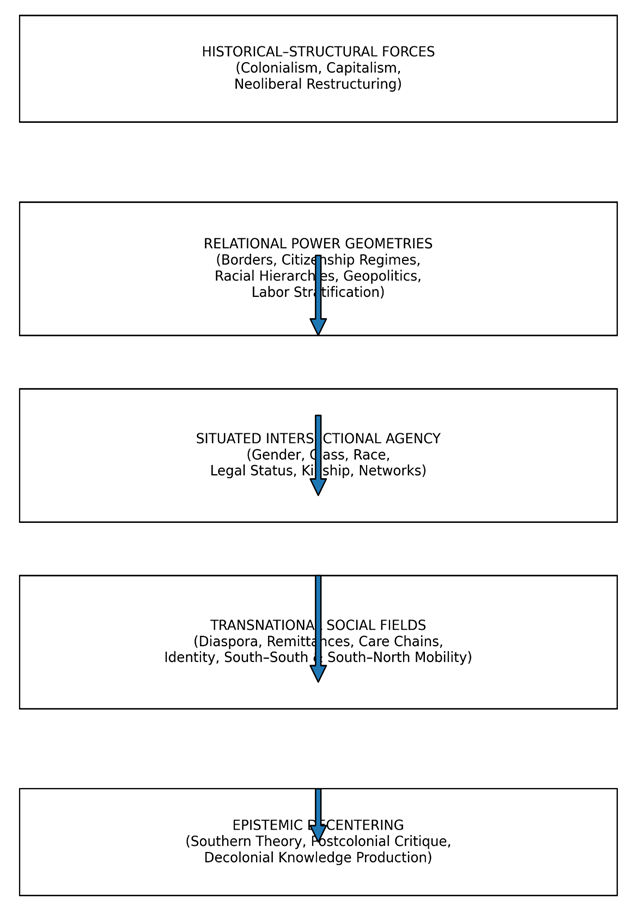
Figure 1: The Relational–Decolonial Structural Framework (RDSF) for Theorising Migration in the Global South
The first dimension-structural political economy-draws from world-systems theory and global labour market analyses to emphasise how peripheral and semi-peripheral regions are integrated into global capitalism through extractive development, labour export regimes, and structural adjustment (Massey et al., 1993; Sassen, 2001). Migration emerges as both a symptom and a constitutive feature of global inequality. However, unlike deterministic macro-structural models, the RDSF embeds these dynamics within historically specific postcolonial state formations.
The second dimension, relational social fields, adapts transnational and network approaches by conceptualising migration as embedded in dynamic social fields that span origin and destination contexts (Levitt & Glick Schiller, 2004). Social networks, kinship systems, gender regimes, and informal economies mediate structural pressures, shaping differentiated mobility trajectories. Here, migration is neither purely voluntary nor wholly coerced; it is negotiated within relational matrices of obligation, aspiration, and constraint.
The third dimension-decolonial epistemics-centres knowledge production itself as a site of power. Drawing from decolonial theory, the framework interrogates how dominant migration categories (e.g., “illegal,” “refugee,” “skilled”) reproduce colonial hierarchies and border epistemologies (Mignolo, 2011; Bhambra, 2014). By foregrounding subaltern experiences and South–South mobilities, the RDSF challenges methodological nationalism and Eurocentric universals.
Visually, the RDSF diagram positions “Migration Processes” at the centre, surrounded by three intersecting spheres representing structural political economy, relational social fields, and decolonial epistemics. Arrows indicate bidirectional influence, highlighting feedback loops between agency and structure. The outer layer represents global power regimes-coloniality, capitalism, patriarchy, and border governance-within which all mobility is embedded.
In sum, the RDSF offers an integrative theoretical architecture that moves beyond economistic reductionism and methodological nationalism, providing a historically grounded and epistemically reflexive model for theorising migration in the Global South.
5. Research Methodology
This study adopts a qualitative systematic review methodology to critically synthesise dominant and emerging sociological theories of migration. Drawing on interpretive and constructivist epistemologies, the review examines peer-reviewed journal articles, seminal theoretical texts, and key monographs published between 1970 and 2024. Following systematic review principles (PRISMA-informed screening procedures), sources were selected through structured database searches and thematic inclusion criteria focused on theoretical contributions to migration studies. A reflexive thematic analysis was employed to identify conceptual convergences, tensions, and epistemic silences across bodies of literature. This qualitative design enables a theoretically grounded and critically engaged reconstruction of migration theory, particularly as it pertains to the Global South.
5.1 Research Design
This study employs a systematic qualitative meta-theoretical review, combining elements of systematic literature review methodology with critical interpretive synthesis. Unlike purely aggregative reviews, meta-theoretical analysis interrogates the epistemological, ontological, and normative assumptions embedded within theoretical frameworks (Connell, 2007). The objective is not to quantify findings but to critically synthesise paradigms shaping migration scholarship in and about the Global South.
The methodological approach draws inspiration from systematic review protocols commonly used in social sciences to enhance transparency and replicability (Arksey & O’Malley, 2005; Page et al., 2021), while adapting them to theoretical analysis.
5.2 Search Strategy and Database Selection
A structured search was conducted across major academic databases, including:
- Scopus
- Web of Science
- JSTOR
- Google Scholar
Search strings included combinations of keywords such as:
- “migration theory” AND “Global South”
- “postcolonial migration”
- “decolonial migration studies”
- “South–South migration theory”
- “methodological nationalism” AND migration
- “intersectionality” AND migration
Boolean operators and truncation were applied to broaden the scope while maintaining relevance.
5.3 Inclusion and Exclusion Criteria
To ensure theoretical rigour and relevance, the following inclusion criteria were applied:
- Peer-reviewed journal articles, books, and foundational theoretical texts.
- Works published between 1960 and 2024 (to capture classical and contemporary theory).
- Texts explicitly engaging with migration theory or its critique.
- Scholarship addressing Global South contexts or postcolonial/decolonial analysis.
Exclusion criteria included:
- Purely quantitative econometric analyses lacking theoretical engagement.
- Policy reports without theoretical framing.
- Opinion pieces without scholarly grounding.
This filtering process resulted in approximately 180 initial sources, which were refined to 75 core theoretical works through iterative screening.
5.4 Screening and Selection Process
The review followed a modified PRISMA-informed logic (Page et al., 2021):
- Identification: Initial database search produced 180 sources.
- Screening: Titles and abstracts were reviewed for theoretical relevance.
- Eligibility: Full texts were examined to assess epistemological contribution.
- Inclusion: 75 texts were selected for deep coding and thematic analysis.
Although PRISMA is traditionally associated with empirical health research, its structured transparency enhances credibility in social science reviews.
5.5 Data Extraction and Coding
Selected texts were subjected to qualitative thematic coding using a manual analytic matrix. Coding categories included:
- Theoretical paradigm (neoclassical, structural, transnational, etc.)
- Unit of analysis (individual, household, system, relational field)
- Epistemological orientation (positivist, critical, postcolonial)
- Treatment of colonial history
- Conceptualisation of agency
- Treatment of gender and intersectionality
- Assumptions about the nation-state
Coding followed principles of reflexive thematic analysis (Braun & Clarke, 2006), allowing themes to emerge iteratively rather than imposing rigid predefined categories.
5.6 Analytical Strategy: Meta-Theoretical Synthesis
The analytical process involved three levels:
- Internal Theoretical Analysis: Each paradigm was examined on its own terms to identify foundational assumptions and explanatory logic.
- Comparative Theoretical Juxtaposition: Theories were compared to identify convergences and tensions-e.g., rational-choice assumptions versus structural determinism.
- Epistemic Critique: The final layer interrogated whose knowledge is privileged. Drawing from postcolonial sociology (Bhambra, 2014) and Southern theory (Connell, 2007), the analysis examined whether theories universalised Northern experiences.
5.7 Epistemological Positioning
This study adopts a critical realist–decolonial epistemology. Critical realism recognises the existence of structural mechanisms shaping migration (e.g., labour markets, borders) while acknowledging that knowledge of these mechanisms is socially situated. A decolonial orientation further asserts that knowledge production is historically embedded in colonial hierarchies (Mignolo, 2011).
Reflexivity was central to the research process. The review acknowledges that migration scholarship itself operates within global academic power structures, privileging English-language and Northern institutions.
5.8 Validity and Trustworthiness
To enhance methodological rigour, the following strategies were adopted:
- Transparency: Clear documentation of search strategy and selection criteria.
- Theoretical Saturation: Iterative review continued until no substantially new paradigmatic insights emerged.
- Triangulation: Cross-referencing multiple paradigms to avoid single-theory bias.
- Reflexive Memoing: Ongoing documentation of interpretive decisions.
These strategies align with qualitative standards for credibility and confirmability (Braun & Clarke, 2006).
5.9 Limitations
Despite systematic procedures, the review has limitations:
- Language bias toward English-language scholarship.
- Unequal accessibility of Global South publications.
- The inherently interpretive nature of meta-theoretical synthesis.
These limitations reinforce the article’s central argument: migration knowledge remains unevenly structured.
5.10 Methodological Contribution
By combining systematic review transparency with decolonial critique, this methodology advances migration scholarship in two ways:
- It strengthens theoretical synthesis through replicable procedures.
- It foregrounds epistemic justice as a methodological principle.
Thus, the methodology is not merely technical but political, challenging whose knowledge counts in global migration studies.
6. Findings
This section synthesises the findings of the qualitative systematic review, identifying key theoretical patterns, epistemic tensions, and conceptual gaps across dominant and emerging sociological approaches to migration. The analysis reveals three overarching dynamics. First, dominant migration theories-while analytically powerful-tend to universalise Eurocentric historical trajectories and privilege North–South mobility frameworks (Massey et al., 1993; Wallerstein, 1974). Second, emerging perspectives from the Global South challenge methodological nationalism and foreground coloniality, informality, and relational agency (Bhambra, 2014; Mignolo, 2011). Third, there remains a persistent fragmentation between macro-structural analyses and lived, everyday mobility practices. By thematically organising these findings, this section demonstrates the necessity of a relational–decolonial synthesis capable of bridging structural inequality, transnational social fields, and epistemic critique.
6.1 Neoliberal Globalisation and the Reconfiguration of Migration Regimes
The transformation of migration regimes since the late twentieth century cannot be disentangled from the consolidation of neoliberal globalisation (Farhana & Mannan, 2023). Neoliberalism, characterised by deregulation, privatisation, and the flexibilization of labour markets, has reshaped both the structural drivers of migration and the governance frameworks that regulate it (Harvey, 2005). Structural adjustment programs imposed across the Global South during the 1980s and 1990s, particularly under the auspices of the International Monetary Fund and the World Bank, destabilised rural livelihoods, weakened public sectors, and intensified labour precarity. Migration thus emerged not simply as an economic choice but as a structural compulsion embedded within global capitalist restructuring.
From a political economy perspective, contemporary migration reflects the contradictions of neoliberal accumulation. While capital enjoys increasing mobility, labour mobility remains selectively regulated. States simultaneously rely on migrant labour and criminalise undocumented mobility (Sassen, 1991). This paradox produces what De Genova (2002) conceptualises as the “legal production of migrant illegality,” whereby legal categories themselves generate precarious subjectivities. In Global South contexts, this dynamic manifests through temporary labour migration schemes, guest worker programs, and restrictive visa regimes that institutionalise circularity without guaranteeing rights.
Neoliberal globalisation also intensifies intra-South migration flows. Economic corridors linking South Asia to the Gulf, Sub-Saharan Africa to Southern Africa, and Central America within the region illustrate that migration is not exclusively oriented toward the Global North (Castles et al., 2014). Yet even South–South mobility is structured by hierarchies shaped by oil economies, regional hegemonies, and uneven development. The assumption that South–South migration escapes global inequality, therefore, requires critical interrogation.
6.2 Border Regimes, Sovereignty, and the Politics of Mobility
Migration theory has traditionally treated the state as a neutral regulatory actor. However, critical scholarship reveals that borders are not merely territorial lines but socio-political institutions embedded in racialised and colonial logics (Mbembe, 2003). Contemporary border regimes combine surveillance technologies, securitisation discourses, and humanitarian narratives, producing what some scholars term “border spectacles” (De Genova, 2002).
In many Global South contexts, colonial boundaries artificially divided ethnic communities and created mobility patterns that predate the nation-state. Postcolonial states inherited these borders, often reinforcing them through nationalist ideologies. Thus, migration governance is shaped by layered sovereignties-colonial legacies, postcolonial nationalism, and global security regimes.
Methodological nationalism-the tendency to treat the nation-state as the natural unit of analysis- obscures these historical complexities (Wimmer & Glick Schiller, 2002). For instance, cross-border pastoral mobility in the Sahel or seasonal migration in South Asia cannot be adequately conceptualised through rigid citizenship frameworks. Migration theory must therefore decenter the nation-state and adopt a relational understanding of sovereignty.
Moreover, global border regimes are stratified. Passport hierarchies and visa restrictions produce differentiated mobility rights. The global mobility regime privileges citizens of wealthy states while restricting those from the Global South (Castles et al., 2014). This stratification underscores the need to theorise migration not merely as movement but as unequal access to mobility.
6.3 South–South Migration and the Limits of Core–Periphery Models
World-systems theory (Wallerstein, 1974) provides a powerful macro-structural lens for understanding migration as an outcome of capitalist expansion. However, the empirical growth of South–South migration complicates the core–periphery binary. Labour mobility between countries such as Bangladesh and the Gulf states, or within West Africa, illustrates that migration flows are increasingly multi-directional.
Yet these flows do not invalidate structural theory; rather, they demand its refinement. Instead of a simple dichotomy, the global system may be conceptualised as a stratified network of semi-peripheries and regional cores. Gulf Cooperation Council states, for example, function as regional labour hubs dependent on migrant labour from South and Southeast Asia while remaining embedded within global capitalist circuits.
Dependency perspectives (Frank, 1967) highlight how underdevelopment is relationally produced. However, dependency theory’s emphasis on economic extraction must be supplemented with analyses of labour regimes, citizenship stratification, and transnational governance. South–South migration often involves temporary labour systems that restrict settlement rights, thereby reproducing precarious inclusion.
The expansion of South–South migration thus challenges universalist models and requires a nuanced structural-relational approach attentive to regional power hierarchies.
6.4 Intersectionality, Gender, and the Social Reproduction of Migration
Migration in the Global South is profoundly gendered. Feminist scholars have demonstrated how global care chains connect women from poorer regions to households in wealthier economies (Hochschild, 2000). This phenomenon reveals that migration is embedded in the transnational organisation of social reproduction.
Intersectionality (Crenshaw, 1989) provides a critical analytical tool for understanding how gender, race, class, and legal status intersect to shape migrant experiences. For instance, female domestic workers from South Asia or Africa often occupy precarious positions defined by restrictive sponsorship systems, racialised hierarchies, and limited labour protections. Their migration cannot be understood solely through wage differentials; it is shaped by patriarchal norms in sending societies and racialised labour markets in receiving contexts.
Intersectional analysis also highlights intra-migrant inequalities. Elite expatriates, skilled professionals, and refugees experience mobility differently. Thus, migration theory must move beyond generalised categories and attend to differentiated subjectivities.
Furthermore, feminist critiques challenge the assumption that migration necessarily empowers women. While remittances may increase household bargaining power, migration can also reinforce gendered expectations of care and obligation. A relational approach recognises both constraint and agency.
6.5 Transnationalism, Diaspora, and the Reconstitution of Belonging
Transnationalism emerged as a corrective to assimilationist models that assumed linear incorporation into host societies (Glick Schiller et al., 1992). Migrants sustain cross-border ties, creating social fields that transcend territorial boundaries. Diaspora theory further explores identity formation across dispersed communities (Clifford, 1994).
In Global South contexts, however, transnationalism must be situated within unequal mobility regimes. Sustaining transnational ties often requires financial resources, digital access, and legal status. Irregular migrants may experience constrained transnationalism.
Moreover, diaspora politics are shaped by postcolonial histories. Migrant communities from formerly colonised regions often navigate racialised citizenship structures in former metropoles. Thus, diaspora is not merely cultural hybridity but a site of contestation over belonging and recognition.
The relational-decolonial framework advanced in this article conceptualises transnationalism as embedded within global power geometries rather than as a neutral social phenomenon.
6.6 Epistemic Hierarchies and the Production of Migration Knowledge
A critical review of migration theory must interrogate not only substantive assumptions but also epistemic hierarchies. Connell (2007) argues that social theory has historically privileged Northern experiences, marginalising Southern intellectual traditions. Bhambra (2014) similarly critiques the Eurocentric framing of modernity.
Migration research frequently positions the Global South as a field site rather than as a source of theoretical innovation. Decolonial scholarship challenges this hierarchy by emphasising knowledge production from the margins (Mignolo, 2011).
An epistemically plural migration theory would engage with indigenous concepts of mobility, non-Western philosophical traditions, and subaltern narratives. Such an approach resists the universalisation of Northern categories and acknowledges the co-constitution of global modernity through colonial encounters.
6.7 Toward a Relational-Decolonial Structural Synthesis
The Relational-Decolonial Structural Framework (RDSF) proposed in Part I integrates structural political economy, relational power analysis, intersectionality, and epistemic decentering.
This synthesis rests on five propositions:
- Migration is historically embedded in colonial and capitalist transformations.
- Mobility is stratified through racialised and geopolitical hierarchies.
- Agency is situated and intersecting, not abstractly rational.
- South–South migration demands theoretical recalibration beyond core–periphery binaries.
- Knowledge production must incorporate Southern epistemologies.
Rather than replacing existing theories, the RDSF reframes them within a plural relational paradigm. Neoclassical insights into wage differentials, structural analyses of capitalism, and transnational perspectives on social fields all retain partial explanatory value. However, they must be situated within a broader decolonial critique.
7. Discussion
The preceding analysis critically reviewed dominant and emerging sociological theories of migration and proposed the Relational–Decolonial Structural Framework (RDSF) as an integrative model for theorising migration in the Global South. This discussion section synthesises the theoretical implications of that review, addresses conceptual tensions across paradigms, and reflects on the broader epistemological and methodological stakes of re-centring migration theory in Southern contexts.
7.1 Reframing the Structure–Agency Debate
One of the enduring tensions in migration theory concerns the relationship between structure and agency. Neoclassical and push–pull frameworks privilege individual rationality (Lee, 1966; Todaro, 1969), whereas structural theories such as world-systems theory emphasise macro-level capitalist dynamics (Wallerstein, 1974). Network and transnational approaches attempt to bridge this divide by recognising social embeddedness (Massey et al., 1993; Glick Schiller et al., 1992). However, these paradigms often operate within implicit ontological separations between macro-structures and micro-actors.
The RDSF reconceptualises structure and agency as relationally co-constitutive. Structural forces-colonial histories, neoliberal restructuring, labour market stratification-do not operate as external constraints alone but shape the very horizons of possibility within which migrants act (Harvey, 2005). At the same time, migrants’ practices reconfigure social fields through remittances, political mobilisation, and transnational identity formation. This dialectical understanding aligns with critical realist sociology, which recognises underlying structural mechanisms while affirming the transformative potential of social action.
In Global South contexts, this reframing is particularly salient. Migration often emerges from historically sedimented inequalities rooted in colonial extraction and postcolonial state formation. Yet migrants are not passive victims of structural forces. Their strategies-whether circular labour mobility, informal entrepreneurship, or diaspora activism- demonstrate situated agency embedded within relational power geometries. Thus, migration theory must move beyond the binary of voluntarism versus determinism.
7.2 Decentering Methodological Nationalism
Another central implication concerns methodological nationalism, defined as the tendency to treat the nation-state as the natural container of social processes (Wimmer & Glick Schiller, 2002). Classical assimilation theory, modernisation models, and even some transnational frameworks assume bounded national units as the primary analytical frame. However, many Global South mobility patterns predate colonial borders and contemporary citizenship regimes.
By situating migration within historical–structural forces, the RDSF challenges the assumption that the nation-state is the primary locus of social belonging. Colonial cartographies fragmented preexisting mobility circuits across Africa, South Asia, and the Middle East. Postcolonial sovereignty further reified these divisions. Consequently, migration often represents a continuation of long-standing regional mobility rather than a rupture from static national communities.
Decentering methodological nationalism also has implications for citizenship theory. Migrants frequently inhabit liminal legal positions-temporary worker, refugee, undocumented labourer- revealing citizenship as stratified rather than universal (De Genova, 2002). Border regimes are not neutral regulatory mechanisms but technologies of differential inclusion shaped by racialised hierarchies (Mbembe, 2003). A relational framework thus reconceptualises sovereignty as layered and contested rather than territorially fixed.
7.3 South–South Migration and the Reconfiguration of Global Hierarchies
The growth of South–South migration constitutes one of the most significant empirical developments challenging classical migration paradigms (Castles et al., 2014). Traditional core–periphery models conceptualised migration primarily as movement from peripheral regions to metropolitan centres (Wallerstein, 1974). While such flows remain significant, regional labour corridors within Asia, Africa, and Latin America complicate this narrative.
However, the existence of South–South migration does not imply the dissolution of global inequality. Instead, it reveals a more differentiated hierarchy in which regional powers function as semi-peripheries. Gulf states, for instance, rely heavily on migrant labour from South Asia while maintaining restrictive citizenship regimes. Such systems reproduce precarious inclusion rather than egalitarian mobility.
The RDSF accommodates these complexities by conceptualising global capitalism as a stratified network rather than a simple binary. Migration flows reflect intersecting scales of power: global financial circuits, regional hegemonies, and local labour markets. The challenge for sociological theory is to map these multi-scalar relations without collapsing them into reductive schemas.
7.4 Intersectionality and the Politics of Social Reproduction
Intersectionality has reshaped migration scholarship by foregrounding how gender, race, class, and legal status intersect to produce differentiated experiences (Crenshaw, 1989). Feminist analyses of global care chains demonstrate that migration is embedded within the transnational organisation of social reproduction (Hochschild, 2000). Women from poorer regions often assume care responsibilities in wealthier households, enabling the reproduction of labour in receiving societies while delegating caregiving responsibilities to other women in sending communities.
The RDSF incorporates intersectionality as a core dimension of situated agency. Migration decisions and outcomes are mediated by patriarchal norms, labour market segmentation, and racialised citizenship regimes. For example, domestic workers may face legal precarity and social isolation despite contributing significantly to host economies.
Moreover, intersectional analysis reveals that migration can simultaneously produce empowerment and exploitation. Remittances may enhance household autonomy, yet migration can also reinforce gendered expectations of obligation and sacrifice. A relational approach resists simplistic narratives of victimhood or empowerment, emphasising the ambivalent dynamics of mobility.
7.5 Epistemic Decolonisation and the Politics of Theory
Perhaps the most significant theoretical contribution of this discussion lies in the call for epistemic decentering. Migration scholarship has historically privileged Euro-American experiences, treating them as universal benchmarks of modernity (Bhambra, 2014). Southern contexts often appear as empirical anomalies rather than sources of theoretical innovation.
Connell’s (2007) notion of Southern theory challenges this hierarchy by recognising intellectual production emerging from the Global South. Postcolonial and decolonial perspectives further argue that modern social theory cannot be disentangled from colonial histories (Mignolo, 2011). Thus, migration theory must interrogate not only empirical patterns but also its own epistemological foundations.
Epistemic decentering entails methodological reflexivity: questioning whose knowledge is cited, which languages dominate academic discourse, and which regions set theoretical agendas. It also involves engaging indigenous and non-Western conceptualisations of mobility, kinship, and belonging. Such engagement does not reject existing theory wholesale but situates it within a broader pluralistic framework.
7.6 Theoretical and Methodological Implications
The integration of structural political economy, relational power analysis, intersectionality, and epistemic critique has several implications for future research:
- Multi-Scalar Analysis: Migration studies should analyse global, regional, and local dynamics simultaneously rather than privileging a single scale.
- Historical Grounding: Colonial histories and postcolonial state formation must be treated as constitutive elements rather than background context.
- Intersectional Methodology: Research designs should incorporate gendered and racialised dimensions of mobility as analytical priorities.
- Epistemic Pluralism: Scholars should diversify theoretical references and incorporate Southern scholarship more systematically.
- Policy Reflexivity: Migration policy analysis must recognise that border regimes and labour systems are embedded in global power asymmetries.
By advancing these directions, migration sociology can move toward a genuinely global theoretical orientation.
The discussion underscores that theorising migration in the Global South requires more than empirical expansion; it necessitates conceptual reconstruction. Dominant paradigms offer valuable insights but remain limited by economic reductionism, methodological nationalism, and epistemic hierarchies. Emerging postcolonial, feminist, and Southern interventions challenge these constraints and open space for plural theoretical synthesis.
The RDSF does not claim finality. Rather, it serves as a heuristic device for reorienting migration theory toward relationality, historical consciousness, and epistemic justice. In doing so, it seeks to contribute to a broader project of decolonising sociology-an endeavour that recognises the Global South not as peripheral to theory but as central to its renewal.
8. Conclusion
This article has argued that migration in the Global South cannot be adequately theorised through dominant paradigms that emerged primarily from Euro-American intellectual traditions. While neoclassical, structural, network, and transnational theories have provided important analytical tools (Lee, 1966; Massey et al., 1993; Wallerstein, 1974), they remain limited by economic reductionism, methodological nationalism, and insufficient engagement with colonial histories and epistemic hierarchies (Wimmer & Glick Schiller, 2002; Bhambra, 2014). By integrating political economy, relational power analysis, intersectionality, and decolonial critique, the Relational–Decolonial Structural Framework (RDSF) offers a plural and historically grounded approach to understanding migration as a socially embedded and power-laden process.
The analysis underscores that migration flows in and from the Global South are shaped by layered historical–structural forces, including colonial extraction, postcolonial state formation, and neoliberal restructuring (Harvey, 2005). These forces intersect with racialised border regimes and stratified citizenship systems that differentially allocate mobility rights (Mbembe, 2003). At the same time, migrants exercise situated and intersectional agency, navigating constraints through networks, remittances, and transnational practices (Crenshaw, 1989; Glick Schiller et al., 1992). The challenge for contemporary sociology is therefore not to replace existing theories but to reframe them within a relational and decolonial horizon that recognises the Global South as central to theoretical innovation rather than peripheral to it.
8.1 Recommendations
First, migration scholarship should adopt multi-scalar analysis, systematically linking the global political economy to regional labour regimes and local social reproduction processes. Second, researchers must move beyond methodological nationalism by conceptualising mobility within historical and relational geographies rather than bounded nation-states (Wimmer & Glick Schiller, 2002). Third, intersectionality should be treated as a core analytical principle rather than a supplementary dimension, ensuring that gendered, racialised, and class-based inequalities are integral to theoretical models (Crenshaw, 1989). Fourth, epistemic diversification is imperative: greater engagement with Southern scholarship, non-Western intellectual traditions, and locally grounded conceptual categories will help address entrenched knowledge asymmetries (Connell, 2007).
From a policy perspective, migration governance must acknowledge that restrictive border regimes and temporary labour systems often reproduce precarity rather than development. A theoretically informed policy framework would address structural inequalities in labour markets, enhance migrant rights protections, and recognise the developmental contributions of South–South mobility.
8.2 Future Research
Future research should deepen comparative analysis of South–South migration corridors, particularly within Africa, South Asia, and Latin America, to refine theoretical models beyond core–periphery binaries (Castles et al., 2014). Empirical studies grounded in decolonial and intersectional methodologies can further illuminate how migrants negotiate layered power structures in everyday life. Additionally, interdisciplinary collaboration between sociology, political economy, anthropology, and postcolonial studies will be essential for advancing a genuinely global migration theory.
Ultimately, theorising migration in the Global South demands not only analytical expansion but conceptual transformation-one that situates mobility within histories of inequality while affirming the transformative capacities of migrants themselves.
References
Arksey, H., & O’Malley, L. (2005). Scoping studies: Towards a methodological framework. International Journal of Social Research Methodology, 8(1), 19–32.
Bhambra, G. K. (2014). Connected sociologies. Bloomsbury.
Braun, V., & Clarke, V. (2006). Using thematic analysis in psychology. Qualitative Research in Psychology, 3(2), 77–101.
Castles, S. (2010). Understanding global migration: A social transformation perspective. Journal of Ethnic and Migration Studies, 36(10), 1565–1586.
Castles, S., & Miller, M. J. (2009). The age of migration (4th ed.). Guilford Press.
Castles, S., de Haas, H., & Miller, M. J. (2014). The age of migration (5th ed.). Guilford Press.
Clifford, J. (1994). Diasporas. Cultural Anthropology, 9(3), 302–338.
Connell, R. (2007). Southern theory. Polity Press.
Crenshaw, K. (1989). Demarginalizing the intersection of race and sex. University of Chicago Legal Forum, 1989(1), 139–167.
De Genova, N. (2002). Migrant “illegality” and deportability in everyday life. Annual Review of Anthropology, 31, 419–447.
Farhana, K. M., & Mannan, K. A. (2023). Motivational factors of migration from Bangladesh to Italy. Routledge Handbook of South Asian Migrations, Edited by Ajaya K. Sahoo, Routledge, 1st Edition, 195-207. eBook ISBN9781003327363, DOI: https://doi.org/10.4324/9781003327363
Frank, A. G. (1967). Capitalism and underdevelopment in Latin America. Monthly Review Press.
Glick Schiller, N., Basch, L., & Blanc-Szanton, C. (1992). Towards a transnational perspective on migration. New York Academy of Sciences.
Harvey, D. (2005). A brief history of neoliberalism. Oxford University Press.
Hochschild, A. R. (2000). Global care chains and emotional surplus value. In W. Hutton & A. Giddens (Eds.), On the edge (pp. 130–146). Jonathan Cape.
Kritz, M. M., Lim, L. L., & Zlotnik, H. (Eds.). (1992). International migration systems. Oxford University Press.
Lee, E. S. (1966). A theory of migration. Demography, 3(1), 47–57.
Levitt, P., & Glick Schiller, N. (2004). Conceptualising simultaneity: A transnational social field perspective on society. International Migration Review, 38(3), 1002–1039.
Massey, D. S., Arango, J., Hugo, G., Kouaouci, A., Pellegrino, A., & Taylor, J. E. (1993). Theories of international migration: A review and appraisal. Population and Development Review, 19(3), 431–466.
Mbembe, A. (2003). Necropolitics. Public Culture, 15(1), 11–40.
Mignolo, W. D. (2011). The darker side of Western modernity. Duke University Press.
Page, M. J., McKenzie, J. E., Bossuyt, P. M., et al. (2021). The PRISMA 2020 statement: An updated guideline for reporting systematic reviews. BMJ, 372, n71.
Portes, A., & Walton, J. (1981). Labour, class, and the international system. Academic Press.
Quijano, A. (2000). Coloniality of power, Eurocentrism, and Latin America. Nepantla: Views from South, 1(3), 533–580.
Sassen, S. (1991). The global city. Princeton University Press.
Stark, O., & Bloom, D. E. (1985). The new economics of labour migration. American Economic Review, 75(2), 173–178.
Todaro, M. P. (1969). A model of labour migration and urban unemployment in less developed countries. American Economic Review, 59(1), 138–148.
Wallerstein, I. (1974). The modern world-system. Academic Press.
Wimmer, A., & Glick Schiller, N. (2002). Methodological nationalism and beyond: Nation–state building, migration and the social sciences. Global Networks, 2(4), 301–334.